Showing posts with label First Nations. Show all posts
Tuesday, 11 August 2020
EcoSask News, August 11, 2020
Upcoming Events
Native Plant Gardens, Aug. 15 (Regina)
Families can learn about native plants and participate in a flower scavenger hunt on a visit to several of Regina’s native plant gardens from 10 am-12 pm, Aug. 15. RSVP to Nature Regina to confirm participation.
WUQWATR AGM, Aug. 27 (online & Lumsden)
WUQWATR is holding its annual general meeting at 3:30 pm, Aug. 27. Members are encouraged to participate virtually due to limited space for in-person attendance in Lumsden. RSVP to Kirsten Colvin at 306-946-6533 or info@wuqwatr.ca
50th Anniversary Picnic, Aug. 30 (Saskatoon)
The Saskatchewan Environmental Society will be celebrating its 50th anniversary with a riverside picnic from 12:30-2 pm, Aug. 30. Registration is required as participation is limited to 30 people.
Looking Ahead
Standard Wilderness First Aid Recertification, Oct. 17 (Regina)
SaskOutdoors is offering a standard wilderness first aid recertification course from 8 am-6 pm, Oct. 17, in Regina.
Wilderness First Aid, Oct. 23-25 (Lumsden)
SaskOutdoors is offering a 20-hour basic wilderness first aid course in Lumsden from Oct. 23-25.
A full list of upcoming events (online and in person) can be found on the EcoFriendly Sask Calendar
Local News
Saskatoon’s Compost Coaches are back in business answering inquiries and offering online workshops.
The City of Saskatoon is proposing an energy loan program and would like residents’ input on priorities and potential concerns. Respond to the public survey by Friday, Aug. 14.
Proponents of coal-fired carbon capture projects "are selling an unproven dream that in all likelihood will become a nightmare for unsuspecting investors”
The Bobolink combines its musical voice with that of the Frenchman River. [audio]
From Information to Action
Wilfred Buck “has helped inspire a new generation of Indigenous astronomy leaders—not just among elementary and high-school educators but also in university departments across North America.” There are plans to hold an international Indigenous star conference in Canada in 2021.
China Goes Green: Coercive Environmentalism for a Troubled Planet by Yifei Li and Judith Shapiro is “a nuanced account of what China has done so far, and what lessons the world can learn from the authoritarian tone of environmentalism in China.” [book review]
The cliff-face front grille on trucks was deliberately designed to create an angry, aggressive face that will intimidate pedestrians – and it’s deadly
Bioplastic - there are limits to its usefulness. [infographic]
A new lithium-ion battery storage facility in Alberta has been designed to store energy from a nearby wind farm and discharge it when needed.
Nature’s Wonders
Communal latrines keep river otters “up to date on who is around, how they are feeling, and who’s ready to have babies.”
EcoSask News is a weekly round-up of local news and events. Email us if you have items you would like us to include.
You can follow EcoFriendly Sask by liking us on Facebook, following us on Twitter, or by email (top right corner).
Check out EcoFriendly Sask’s Nature Companion, a free nature app for Canada’s four western provinces
Tuesday, 16 June 2020
EcoSask News, June 16, 2020
Upcoming Events
From Information to Action
Ours to Save, Ours to Lose, June 18 (webinar)
Join Dan Kraus, Nature Conservancy of Canada, as he discusses the plants and animals that are unique to Canada at 11:30 am (SK time), June 18.
Summer Solstice, June 21 (Regina)
You’re invited to gather on Wascana Hill to greet the sunrise and the beginning of summer at 4:45 am, June 21.
Nature Sask AGM, June 22 (online)
Nature Saskatchewan will be holding its annual general meeting online at 7 pm, June 22.
Wildlife Research during a Global Quarantine, June 22 (webinar)
Ryan Brook will discuss wildlife research during a global quarantine: tracking the rapid spread of invasive wild pigs during a noon-hour webinar on June 22.
Group Excursion Leadership & Preparedness, June 23 (online)
SaskOutdoors and Back40 Wilderness First Aid are hosting a webinar on group excursion leadership and preparedness from 7:30-8:30 pm, June 23.
Women & the Energy Transition, June 23 (online)
Pembina Institute is hosting a webinar panel discussion on the role of women in a changing energy economy from 11 am-12:15 pm (SK time), June 23.
Sask River Basin AGM, June 24 (Saskatoon)
The annual general meeting of Partners FOR the Saskatchewan River Basin will be held at 10 am, June 24.
Carrot River Valley Watershed AGM, June 26 (Melfort)
The Carrot River Valley Watershed Association is holding its annual general meeting at 1 pm, June 26, in Melfort. Email crwatershed@gmail.com by June 23 to register.
Supporting Wild Bee Diversity, June 26 (webinar)
Join SaskOrganics for a live webinar on supporting wild bee diversity on farms from 9:30-10:30 am, June 26.
Zoo Training, June 29 (Saskatoon)
The Saskatoon Zoo Society is looking for volunteer interpreters to help with their Wild Weekends programming. Find out more at the volunteer training session from 6-8 pm, June 29.
Creating an Ecological Society, June 29 (webinar)
This 2 ½ hour UK-based webinar on creating an ecological society will explore the relationship between social and ecological problems on June 29, 8-10:30 am (SK time).
A full list of upcoming events can be found on the EcoFriendly Sask Calendar
Local News
Explore Regina's green spaces with self-directed guides from Nature Regina
Nature Saskatchewan is asking residents to post sightings of burrowing owls
Prince Albert’s plastic bag ban has been put on hold until the end of the current state of emergency
A Yukon First Nation plans to open a native plant nursery to support mine reclamation work
Could cabbages, rapeseed, and sunflowers replace mining as a source of lithium, a key component of electronics and electric vehicles?
Carbon-neutral coffee via wind power: “Sometimes long-distance transport is necessary for a balanced and sustainable supply chain, so sail cargoes have a role to play in that”
We’re drowning in light: human beings, when faced with the availability of a cheaper and more efficient lighting technology, simply use more of it
“Spending time with wild animals and plants, observing them, considering what they need to survive and thrive, exponentially expands our sense of family. . . . All of these plants and animals, these urban trees, sidewalk beetles, pearl-winged pigeons, are our neighbors”
Miyawaki Forests – converting barren land into a thriving forest in a span of 3 years
5 inventions illustrating the future of solar energy [10-minute video]
Natural Wonders
Parenting helps shape bigger brains – in jays, crows, and ravens
The Big Bat Year – 29 countries, 396 species
EcoSask News is a weekly round-up of local news and events. Email us if you have items you would like us to include.
Labels:
Bats,
Bees,
Canada,
Energy,
Farming,
First Nations,
Forest,
Indigenous,
Lighting,
Mining,
Native Plants,
Nature Conservancy,
Outdoors,
Owls,
Regina,
Solar,
Trees,
Urban,
Urban Wildlife
Tuesday, 9 June 2020
EcoSask News, June 9, 2020
Young Naturalists Bluebird Trail, June (Saskatoon)
Sign up to participate in the Saskatoon Young Naturalists bluebird monitoring trail program on June 15, 17, 19, 22, 23, or 24. Register early as dates are filling up fast.
Plants of the Opimihaw Valley, June 11 (online)
Find out about the plants of the Opimihaw Valley from 12-12:30 pm, June 11, as part of Wanuskewin’s Snax & Facts series.
Teacher/Outdoor Educator Forum, June 11/12 (online)
SaskOutdoors is hosting a follow-up forum for teachers and outdoor educators on June 11 and 12 with various time slots for different age groups.
Wascana Marsh Tour, June 13 (Regina)
Take a guided tour of Wascana Marsh at 11 am, June 13, by emailing friendsofwascanamarsh@gmail.com or download a self-guided tour pamphlet.
Native Prairie Appreciation Week, June 14-20 (online)
Native Prairie Appreciation Week 2020 is online with a video, webinars (including one with Candace Savage), a plant Id presentation and quiz.
Woodland Caribou, June 16 (online)
There will be a webinar on the efficacy of habitat restoration for woodland caribou at 2 pm, June 16. Email Caribou.Webinars@gmail.com to participate.
Navigating Risky Play, June 16 (online)
SaskOutdoors is hosting a webinar on navigating risky outdoor play from 11 am-noon, June 16.
Overnight/Emergency Preparedness, June 17 (online)
Join SaskOutdoors and Back40 Wilderness First Aid for a webinar about overnight/emergency preparedness from 7:30-8:30 pm, June 17.
Teacher/Outdoor Educator Discussion Panel, June 18 (online)
SaskOutdoors is hosting an online panel discussion with experienced environmental educators sharing their tips for taking learning outside from 11am-noon, June 18.
Wilderness First Aid, June 19-21 (Saskatoon)
Back40 Wilderness First Aid Training is offering a 20-hour wilderness first aid training course in Saskatoon June 19-21.
Looking Ahead
Waste ReForum, July 14-16 (online)
The Saskatchewan Waste Reduction Council has switched to an online format for this year's Waste ReForum from 10:30 am-3 pm, July 14-16.
A full list of upcoming events (online and in person) can be found on the EcoFriendly Sask Calendar
Local News
Sign up for Nature Regina’s newsletter and receive information about self-directed family hikes, citizen science projects, and much more.
The University of Saskatchewan has been awarded a $2.5 million grant to increase climate change education, training and public awareness on a global scale.
University of Saskatchewan researchers have developed an app that shows the economic value of shelterbelts while helping landowners determine the best trees to grow.
Where you live in Saskatchewan has an impact on your attitudes towards power production sources.
Stories along the Qu’Appelle Valley offers land-based Indigenous wisdom from Treaty 4 territory, the land of the Saulteaux-Cree, Saulteaux, Dakota, and Nakota peoples.
From Information to Action
The incredibly biodiverse world of soil and how it connects to the ground above that we as humans inhabit
Back Market is an online retail platform for secondhand electronics. “They sell refurbished goods through a network of partners, with careful vetting to ensure quality. That allows them to offer a warranty and to provide customer service.”
Rattlesnake populations are declining, and that’s a problem because they’re “key players in grassland food chains, acting as mid-level predators that control rodent populations and serve as a food source for larger predators.”
Manitoba’s Boreal Wetlands Conservation Codes of Practice are designed to “provide guidance on how to avoid, minimize, and offset impacts to boreal wetlands that result from resource roads, access roads, and crossings.”
Austin, TX, is keeping racial equity front and centre in revising its community climate plan.
Conservation planning should ensure a network of protected areas that plants and animals can retreat to as their habitats are altered due to climate change.
EcoSask News is a weekly round-up of local news and events. Email us if you have items you would like us to include.
You can follow EcoFriendly Sask by liking us on Facebook, following us on Twitter, or by email (top right corner).
Labels:
Birds,
Caribou,
Conservation,
Education,
First Aid,
First Nations,
Native Plants,
Prairie,
Recycling,
Regina,
Snakes,
Soil,
Trees,
Urban Planning,
Waste,
Wetlands,
Youth
Tuesday, 19 May 2020
EcoSask News, May 19, 2020
Upcoming Events
Genereux Park/Baker Area Eco-Quest (ongoing)
Join a virtual eco-quest of the Richard St. Barbe Baker Afforestation Area and/or the George Genereux Urban Park.
Gardening @ USask, May 19 & 26 (online)
The University of Saskatchewan is offering a variety of online gardening workshops: Compost 101: Scraps to Soil – May 19, 7 pm; The Growing Buzz (bees) – May 26, 7 pm.
Rubbish Roundup, May 20-24 (Saskatoon)
Join Saskatoon's Rubbish Roundup, May 20-24, organized by Wildernook Fresh Air Learning. For each bag of garbage collected and reported, EcoFriendly Sask will donate $10 to the charity of your choice (Saskatoon Search and Rescue, Saskatoon Crisis Nursery, or One School One Farm.
TimberNook Family Sessions, May 20-June 27 (Saskatoon)
TimberNook Saskatoon is hosting self-guided outdoor family experiences in May/June. Week-day, evening, and Saturday time slots are available.
Covid-19 & Energy Transition, May 20 (online)
Martin Boucher will focus on the recent COVID-19 pandemic and its implications on climate change and the energy transition from 12-1 pm, May 20.
First Aid for Day Trips, May 21 (webinar)
SaskOutdoors and Back40 Wilderness First Aid Training are offering a mini first aid webinar on how to prepare for day trips from 7:30-8:30 pm, May 21.
Candace Savage’s Prairie Live, May 27 (online)
Join Candace Savage online at Cranberry Flats from 12-1 pm, May 27, for the launch of the revised edition of Prairie: A Natural History of the Heart of North America.
Forum for Educators, May 29 (online)
SaskOutdoors is hosting an online forum from 10-11 am, May 29, to discuss how to bring outdoor and environmental education into remote teaching.
May Day Bird Count, May 30 (Saskatoon)
The Saskatoon Nature Society is inviting experienced birds who are healthy and not in quarantine to participate in the May Bird Count. Different sectors (or sub-sectors) will be assigned to each individual or family to follow Covid-safe self-isolation steps. Email your name, phone number, and email address to trips@saskatoonnature.org if you wish to participate. If you have questions, call Stan Shadick at 306.652.5975.
A full list of upcoming events (online and in person) can be found on the EcoFriendly Sask Calendar
Local News
EnviroCollective (Regina) has teamed up with Climate Reality Canada to form a climate hub. They’re looking for supporters and Climate Hub Captains.
From Information to Action
Cobalt is critical to the renewable energy transition. How can we minimize its social and environmental cost?
“We should be aiming to identify diseases in other animals as early as possible, when there’s still a chance of preventing them from spreading to humans.”
To ensure healthy bird populations, cities need to increase their insect populations by planting trees and incorporating good management practices in their green spaces.
Tips for helping trees and beavers to coexist side by side.
Energy
White River First Nation plans to construct the largest solar farm in the Yukon as well as a biomass plant and district heating system.
How can we promote a green recovery with renewables emerging stronger than ever?
Books
The Bird Way: A New Look at How Birds Talk, Work, Play, Parent, and Think by Jennifer Ackerman reveals that birds are “capable of nuanced, highly intelligent behavior that we once believed to be uniquely human.”
Entangled Life: How Fungi Make our Worlds, Change our Minds and Shape our Futures by Martin Sheldrake opens up “a vast unseen world that surrounds each one of us.”
Tearfund’s The World Rebooted – how can you, your church, and your network play a part in reshaping society?
Read an extract from Diary of a Young Naturalist by Dara McAnulty, a 16-year-old nature writer, who describes bats as origami taking flight.
Even successful scientists struggle – 14 books to motivate teens to study science.
Natural Wonders
“Ants use their numbers to overcome navigational challenges that are too large and disorienting to be tackled by any single individual.”
“Older barn owl chicks will share food with younger ones.”
The tenacity of trees: surviving – and thriving – in difficult circumstances.
EcoSask News is a weekly round-up of local news and events. Email us if you have items you would like us to include.
You can follow EcoFriendly Sask by liking us on Facebook, following us on Twitter, or by email (top right corner).
Tuesday, 8 January 2019
EcoSask News, January 8, 2019
Happy New Year! There's lots to look forward to.
Upcoming Events
Rob Dumont Principles in Action, Jan. 9 (Saskatoon)
Dave Palibroda will discuss putting Rob Dumont’s principles into action at the Jan. 9 breakfast meeting of EMTF Saskatchewan.
Carbonless Concert, Jan. 10 (Saskatoon)
Enjoy a free carbonless concert at Louis’ Loft on campus from 6:30-9:30 pm, Jan. 10.
Regina Beach Enviro Collective, Jan. 12 (Regina Beach)
The Regina Beach Enviro Collective is meeting at 3 pm, Jan. 12.
Soil & Permaculture, Jan. 12 (Regina)
Join Permaculture Regina at 1:30 pm, Jan. 12, at the Cathedral Neighbourhood Centre for a brief AGM and to share knowledge about soil and upcoming permaculture projects.
Year-round Composting, Jan. 12 (Regina)
Learn how to compost year-round from 2-3 pm, Jan. 12, at the Central Library.
Zero Waste 101, Jan. 15 (Saskatoon)
Meg Dorwart will share how she’s lived waste-free for the past 2 years from 7-8:30 pm, Jan. 15, as part of the Sustainable Speaker Series organized by the Saskatoon Public Library and the Saskatchewan Environmental Society.
Smarter Science, Better Buildings, Jan. 15 - Feb. 15 (Saskatoon)
Grade 7 students and the general public are invited to view the Smarter Science, Better Buildings exhibit at Saskatoon’s Western Development Museum, Jan. 15-Feb. 15.
Saskatoon Nature Society Field Trips
Jan. 13, 9-11 am – Chorney acreage bird feeders
Jan. 20, 2:15-3:15 pm – Visit to Living Sky Wildlife Rehabilitation facility
Jan. 27, 9 am-4 pm – Snowy Owl census
Everyone is welcome. Check the Saskatoon Nature Society’s website for full details and updated information.
A full list of upcoming events can be found on the EcoFriendly Sask Calendar
In the News
Changes are afoot at the Saskatoon Forestry Farm Park and Zoo. But is the City paying attention to the important issues of animal welfare, environmental conservation, and education?
Michelle Brass is offering climate change workshops to Saskatchewan First Nations to discuss and develop solutions rooted in Indigenous values.
City Councillor Andrew Stevens discusses the evolution of Renewable Regina: “Even in the heartland of oil and gas there is excitement about the potential of increasing our reliance on renewable energy and in moving away from fossil fuels as a source of electricity.”
Oil Fall - how clean energy, electric cars, and grid technology will profoundly impact the oil market [book review]
Spain is making sure displaced workers are taken care of when they shut 26 coal mines.
Walkable cities are good for the economy - and for people!
EcoSask News is a weekly round-up of local news and events. Email us if you have items you would like us to include.
You can follow EcoFriendly Sask by liking us on Facebook, following us on Twitter, or by email (top right corner).
Labels:
Advocacy,
Birds,
Coal,
Composting,
First Nations,
Housing,
Music,
Permaculture,
Regina,
Walking,
Waste,
Zoo
Tuesday, 3 July 2018
EcoSask News, July 3, 2018
Blue Hill Wind Energy Project, July 10
Nature Regina is urging concerned citizens to contact the Ministry of Environment by July 10 to raise concerns about the siting of the Blue Hill Wind Energy Project. According to Nature Regina, the site chosen is in a major migration corridor close to Chaplin Lake and over 200 bird species have been sighted in this nesting and staging area.
Email, write, or call (deadline July 10, 2018): Aimann Sadik, Senior Environmental Assessment Administrator, Environmental Assessment and Stewardship Branch, Saskatchewan Ministry of Environment, 3211 Albert Street, Regina, SK S4S 5W6 Phone: (306) 787-7706 Fax: 306 787 0930 Email: environmental.assessment@gov.sk.ca
Upcoming Events
Invasive Plants: The Urban/Rural Interface, July 5 (Saskatoon)
Learn about invasive plants while visiting 5 Meewasin-managed properties from 6:30-9:30 pm, July 5.
Garden Patch Bioblitz, July 11 (Saskatoon)
The Saskatoon Nature Society and the Saskatoon Food Bank and Learning Centre are hosting a bioblitz at the Garden Patch from 6-8 pm, July 11.
Nocturnal Birds, July 12 (Saskatoon)
Lyndon Penner will talk about birds that live in the dark at 7 pm, July 12, at Wild Birds Unlimited.
Bat Chat & Bat House Build, July 14 (Redberry Lake)
Join Melanie Elliot, Batrick, and Elizabat to chat about bats, make a bat house, and look for bats in the park on July 14 at Redberry Lake Regional Park.
Geeking Out, July 14 (Prince Albert)
Kids from grades K-6 are invited to attend interactive science activities presented by the Saskatchewan Science Centre from 9-12 am, July 14, at the John M. Cuelenaere Library.
Summer Plant Walk, July 14 (Regina)
Edible Landscapes Permaculture Design is hosting a walk on July 14 to learn about local wild edible and medicinal plants in the Regina area.
Looking Ahead
Waste Reduction Workshops
Saskatchewan Waste Reduction Council will be holding the following workshops:
Weyburn – Oct. 30
Prince Albert – Nov. 6
Kindersley – Nov. 14
Humboldt – Nov. 21
A full list of upcoming events can be found on the EcoFriendly Sask Calendar
In the News
Economists question Saskatchewan’s government-funded anti-carbon tax study
In considering oilsands projects, First Nations face impossible choices: “They are saying in order for you to survive in the economic system we have imposed on you, you have to join us”
Biological poverty - Why we need cities where you can take your shoes off and reconnect with the ground [book review]
Red wiggler worms could make stinky outhouses a thing of the past
Resurgence Voices - podcasts from The Resurgence Trust on ethical living, ecoactivism, and the arts
EcoSask News is a weekly round-up of local news and events. Email us if you have items you would like us to include.
You can follow EcoFriendly Sask by liking us on Facebook, following us on Twitter, or by email (top right corner).
Labels:
Bats,
Birds,
First Nations,
Government,
Humboldt,
Invasive Plants,
Kindersley,
Oil,
Plants,
Podcast,
Prince Albert,
Redberry Lake,
Regina,
Saskatoon,
Waste,
Weyburn,
Wind,
Youth
Thursday, 14 June 2018
The Transition to Renewable Energy in Saskatchewan
The University of Saskatchewan, in collaboration with World Wildlife Fund Canada, hosted two renewable energy panel discussions on May 28, 2018. The following article summarizes some of the key points raised by presenters.
Meeting Saskatchewan’s Long-term Energy Needs
Douglas Opseth, Director of Generation Asset Management and Resource Planning at SaskPower, started off the morning’s discussion by outlining the challenges the company faces in meeting Saskatchewan’s long-term energy needs. There is a growing demand for electricity; however, Saskatchewan’s coal and natural gas plants and wind farms are aging and SaskPower is spending a lot on maintenance and building new facilities. The company plans to reduce emissions by 40% by 2030 with 50% renewables (30% wind, 15% hydro, 5% solar and biomass), but the other half of the mix is more uncertain. SaskPower would like to continue using coal, which is available in province. It’s still unclear whether this will be allowed under federal regulations. Natural gas is a good fit with renewables as it’s flexible; however, there are concerns about a sufficient supply if everyone switches to natural gas and/or if there is increased concern about fracking.
Guy Lonechild, CEO, First Nations Power Authority, pointed out that many First Nations communities have no reliable source of power and continue to use diesel. Opseth explained that the northern transmission line is completely separate and is only connected to the south through Manitoba. It is a long line over rough terrain and experiences a great many lightning strikes. In addition, northern residents are more vulnerable to power outages as the majority heat their homes with electricity.
Lonechild would like to see the Small Producers program expanded to 1 megawatt as this could help relieve power fluctuations in many communities. He sees lots of opportunity for geothermal, which is expensive but could also supply heat and be used in conjunction with greenhouses. Lonechild views partnerships on renewable energy projects as a valuable opportunity for First Nations people to obtain education, training, and jobs. He pointed to SIGA’s success, identifying renewable energy as a new opportunity for Saskatchewan’s Indigenous people to be involved in the provincial economy. Lonechild also raised the possibility of increased self-government that would include environmental assessments and monitoring, wildlife management, and community energy. In closing, Lonechild emphasized bold thinking as we look to 2050 and beyond. He stated that Saskatchewan was a pioneer in carbon capture: why not look at battery storage?
Lonechild’s interest in community energy planning was shared by Ray Orb, President, Saskatchewan Association of Rural Municipalities. Orb stated that rural residents recognize the climate is changing but are strongly opposed to wind farms. People on acreages moved to the country to enjoy the wide-open prairie view and don’t want to live across from a wind farm. There is more support for solar farms on wasteland and SARM has identified an opportunity for rural municipalities, such as Corman Park, to provide power to nearby cities. Orb also suggested looking at new hydro projects with their spin-off benefits of irrigation, drinking water, recreation, and flood mitigation.
Opseth explained that renewables present new challenges. SaskPower currently has full control over power generation. They’ll lose that control as they introduce variable energy sources such as wind and solar. This is particularly challenging in Saskatchewan which has a very flat load demand as most electricity is sold to commercial customers that operate 24/7 (as opposed to a more residential region where there are peaks at different times of the day). SaskPower was set up to be the province’s sole energy provider. Individuals and groups are now introducing self-generation; however, they all want SaskPower as a backup.
A member of the audience emphasized the need for increased efficiency and energy conservation. Opseth noted that Saskatchewan has more transmission lines than anywhere else in North America. SaskPower is looking at ways to reduce losses that are inherent in moving energy over large distances to a dispersed population. One option is greater regional production. The company is also doing more work with industrial customers to enhance efficiency and energy conservation.
Habitat-Friendly Renewable Energy
The goal of World Wildlife Fund Canada is to work with key partners in all sectors to advance science-based, solutions-oriented approaches to conservation problems. The organization recognizes that a large-scale transition to renewable energy will require new uses of landscapes and seascapes and have started developing a tool that maps both sustainable energy potential and areas with significant conservation value. The tool isn’t intended to bypass the regulatory process but is instead a broad brushstrokes approach to identifying potential sites, saving time and money by avoiding conflict with community and wildlife interests and enabling developers, governments, and communities to make better and faster decisions.
The tool was initially developed for New Brunswick and the Bay of Fundy and is now being rolled out to Alberta and Saskatchewan. Using a high conservation value framework (previously used by the Forest Stewardship Council), the tool maps species diversity, ecosystems, threatened habitats, ecosystem services, community and cultural values. It combines regulated (Saskatchewan’s wind directive, Alberta’s solar directive, historic sites) and non-regulated elements (important bird areas, endangered species, intact forests, potential for agriculture) with additional factors such as wind speed, hours of sunlight, distance from transmission lines. The focus in Alberta and Saskatchewan is on identifying opportunities for large-scale wind and solar farms.
The World Wildlife Fund is looking for partners, such as the University of Saskatchewan, to help them enhance the tool. For example, the community and cultural values need to be strengthened and they see potential for enhancing the tool’s predictive value based on past projects and shifting land use.
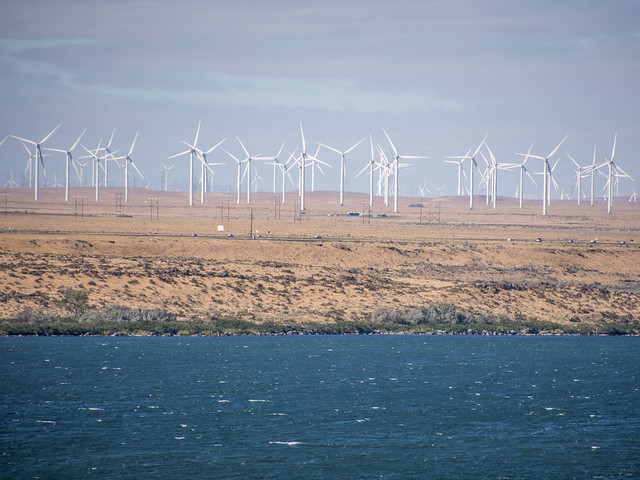
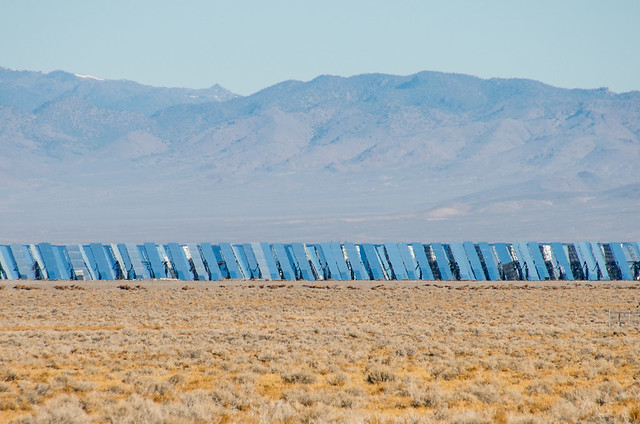
Photos: Esmeralda, Nevada, Solar Reserve; Columbia River Wind Farm
Labels:
First Nations,
Renewable Energy,
Rural,
Saskatchewan,
SaskPower,
Solar,
University,
Wildlife,
Wind
Thursday, 17 November 2016
Water Policy: Roadblocks and Opportunities
The Husky Oil spill made many people in Saskatchewan aware of water vulnerability in our province. Hayley Carlson, a Master’s student in the Johnson-Shoyama Graduate School of Public Policy, University of Saskatchewan, is studying the attitudes of different stakeholder groups to water management in the Saskatchewan River Basin.
Hayley began doing some preliminary research and immediately ran into a problem. Different people were telling completely different stories. Some expressed concern about water security. Others said there was no problem. It was time to dig a little deeper and see what she could discover.
Complex Water System
Saskatchewan is very fortunate. For the moment, we have enough water to meet most of our needs. However, that means the time for good planning is now – before, not after, we’re faced with water shortages.
The Saskatchewan River Basin provides water to Alberta, Saskatchewan, and Manitoba. The river travels through many different areas, from large cities to rural farms to northern forests. It provides water to 70% of Saskatchewan.
The water system’s complexity leads to a wide variety of challenges:
- Arid climate;
- Many different stakeholders with competing values, perspectives, and mandates: industry, agriculture, residential, wildlife and the natural environment;
- Diverse jurisdictional interests and trans-boundary management: federal, provincial, municipal, First Nations;
- Future uncertainty: population growth, economic development, climate change, and climate extremes; and
- Inadequacy of the current governance framework and tools to manage future changes.
The World Wildlife Fund claims 70% of the natural flow is allocated in the South Saskatchewan River Basin, the highest amount on any Canadian river. Some researchers suggest that the status of the largest food-producing region in Canada has come at the expense of water security.
The Prairie Adaptation Research Collaborative (PARC) is mandated to pursue climate change impacts and adaptation research in the Prairie provinces. They point out that Saskatchewan has one of the world’s most variable climates and has warmed at a faster rate than the global average. While their models indicate increased water flow in the near term, they also indicate a dramatic drop-off after 2050.
The impact of competing water interests are already being felt in the Saskatchewan River Delta, the largest inland freshwater delta in North America and a nationally significant wildlife area. The E.B. Campbell Dam has disrupted the seasonal water patterns, eliminating spring flooding, increasing winter flows, and decreasing surface water coverage. The Delta is becoming arid, with large fish kills near the dams and fewer moose.
Lack of a Shared Vision
Hayley began talking with and reading material produced by local stakeholders – industry, irrigation-based agriculture, Aboriginal groups, and environmentalists – to obtain a better understanding of how they viewed Saskatchewan’s water supply. It soon became clear that each group was telling a different story about Saskatchewan’s water, using different terminology to emphasize different facts, and measuring different things.
Irrigation Agriculture
Irrigation interest groups around Lake Diefenbaker are eager to expand irrigation infrastructure by 400%. Irrigation is very expensive and is only used by a small group of farmers growing specialty crops. Their calculations do not take into consideration possible changes in water supply due to climate change. In addition, they measure annual average usage rather than weekly or daily flow, which may mean water isn’t available when it’s most needed for production.
Industry
Industry maintains that the change caused by development is an illusion and, at the end of the day, you won’t notice any significant social or environmental change from industrial activity. They focus on how little water they actually consume, how much money they donate to conservation efforts, and how environmental regulation is ultimately in the hands of government. Industry fails to take into consideration how much water is cumulatively withdrawn, water quality when it is returned, and where it’s returned, which may be in a different location.
Aboriginal Groups
Seasonal fluctuations, as opposed to annual averages, are particularly important to Aboriginal groups, such as those living in or near the Saskatchewan Delta, as their traditional activities tend to depend on the ecosystem functions closely tied with seasonal changes. They claim human impact in the river basin has resulted in significant environmental degradation and an erosion of their ability to live a traditional lifestyle. First Nations reserves are often concerned about ensuring fresh drinking water for their residents. Aboriginal groups emphasize the importance of meaningful involvement in decision-making rather than cursory consultations.
Environmentalists
Like Aboriginal groups, environmentalists have concerns around water usage and availability in Saskatchewan. They assert the province is facing water security concerns, emphasizing emerging pressures from population growth, increased consumption, and climate change.
Environmentalists have tended to focus their concerns on industry. “I’d recommend addressing an equal attention to the big water users, such as irrigation agriculture, particularly in southern Alberta,” Hayley says. “Individual industrial projects need to be considered within the context of the bigger picture.”
Lateral Discussions Can Lead to Shared Vision
“People were all seeing completely different realities,” exclaims Hayley. “We assume we’re all looking at the same picture, but we’re not. It’s a fundamental human condition to believe that others are seeing and interpreting things the same way we do. We have to acknowledge that fact before we can start addressing water policy questions.”
There are competing values and priorities; however, adversity makes people uncomfortable, so we tend to avoid sitting down with all the stakeholders and holding a frank discussion about what we want in the future, what we’re prepared to give up, who’s involved in the discussion, and who are the winners and losers.
Policy analysts tend to view competing perspectives as nuisances, getting in the way of “objective” and “consensus-based” policy creation. Hayley disagrees. “Competing perspectives represent opportunities,” she says. “By listening to competing perspectives we can see what we’re missing and how we could work together in the face of emerging challenges.”
To avoid conflict, we rely on government to consult individually with each of the interested parties and use empirical methods to derive a policy solution. This method places a heavy burden of responsibility on government, leaves individual groups unaware of each other’s concerns, and does nothing to move stakeholders from policy positions that may be very different and often at odds with one another.
Hayley believes that lateral discussions involving all the different stakeholders would improve decision-making by ensuring that groups were aware of each other’s concerns. “People are more ready to negotiate a mutually beneficial solution once they’ve heard other people explain their perspective.” Hayley says.*
In addition, stakeholders need to have continuous access to policy-making with ongoing lateral discussions. “Situations evolve,” Hayley says. “You don’t want a policy that’s set in stone.” A shared vision becomes a foundation for evaluating and addressing the complexity and uncertainty of water security issues.
Accommodating Uncertainty
In Getting Outside the Water Box: The Need for New Approaches to Water Planning and Policy, Patricia Gober states that “Too much attention has been focused on reducing, clarifying, and representing climatic uncertainty and too little attention has been directed to building capacity to accommodate uncertainty and change. Given the limited ability to forecast the future climate, emphasis must shift to the human actors and social dynamics of water systems, including planning processes, work practices, operational rules, public attitudes, and stakeholder engagement.”
She goes on to say that decision-making under uncertainty strategies “change the research and policy question from what is the most likely future to what kind of future do we want and what decisions do we need to make to get there. These questions are political, not scientific; they require participation from a very wide range of water stakeholders—from farmers, industries, and municipal water providers and customers to environmental groups and linked land and energy sectors. Engaging these diverse stakeholders in an iterative, long-term discussion about the future of water systems is essential for deciding how much risk of deficit we are willing to take and what sacrifices we are willing to make to mitigate this risk.”
It’s time we step up to the challenge, recognize the fundamental role water plays in our lives, and embrace the complexity of listening to different points of view.
See Also
South Saskatchewan River Watershed Stewards
Climate Change and Water in the South Saskatchewan River Basin, PARC (2007)
Saskatchewan’s Natural Capital in a Changing Climate: An Assessment of Impacts and Adaptation, PARC (2009)
Cumberland House Councillor Raises Alarm over the ‘Dying’ Saskatchewan River Delta, Saskatoon StarPhoenix (August 1, 2016)
Saskatchewan Adds New Secretary for Farm Irrigation, Canadian Cattlemen (August 23, 2016)
* In Narrative Policy Analysis and the Integration of Public Involvement in Decision Making, Greg Hampton recounts the story of two communities with divergent opinions about the construction of a water treatment plant to improve water quality across the region. After listening to each other’s opinions, they were able to develop a new proposal which would address the needs of both communities.
Thursday, 29 October 2015
First Nations Power Authority of Saskatchewan
For many years if you wanted hydro-electrical power in our province, you needed a connection to SaskPower’s province-wide grid. But now circumstances have changed.
Rapid advancement in renewable energy, battery storage technologies, and micro grid options provide individuals and communities with an opportunity to generate power themselves or at least increase reliability and lower power bills. Economics are changing too, and the self-generation costs per unit of electricity (the kilowatt-hour or kWh) with solar panels are at parity with retail power costs from SaskPower.
First Nations Power Authority is leading the way as it assists First Nations communities to meet their own energy needs, placing First Nations’ interests front and centre.
First Nations Power Authority of Saskatchewan
Communities and power project development companies approach SaskPower with their needs and proposals, but there isn’t always a good fit between the two perspectives. “Developers have a lot of different irons in the fire across Canada, North America, and globally,” says Ian Loughran, Vice-President of Projects and Business Development for First Nations Power Authority (FNPA) of Saskatchewan. “For a typical power project development company, the close rate on large-scale projects (over 10 megawatts) is about 5 to 10 per cent. The successful projects typically cover the business development costs of all the others.”
This approach doesn’t always work for local communities, such as First Nations reserves. They have very specific needs and requirements but generally don’t have the expertise to identify valid options and have limited control over the final decision.
First Nations Power Authority of Saskatchewan (FNPA) was established to assist First Nations communities to identify and address their energy needs and help validate projects before they are sent to SaskPower for consideration.
FNPA has two primary objectives:
1. To provide economic development opportunities in larger-scale power projects; and
2. To ensure lower energy prices for First Nations people and their communities through conservation, energy efficiency, and self-generation options.
They do this by providing expertise and building relationships between interested parties (First Nations community members, SaskPower and other utilities, industry partners, developers, installers, and construction companies).
FNPA also explores renewable and clean energy generation options – such as flare gas – to assist with lowering Saskatchewan’s intense carbon footprint. Many First Nations communities align with this direction as it is closely linked with traditional teachings about respecting Mother Earth.
In establishing FNPA, Saskatchewan is following the lead of Ontario and Alberta:
1. The Aboriginal Energy Partnerships Program supports the participation of First Nations and Metis communities in Ontario’s energy sector by helping to fund community energy planning and renewable energy project development as well as building energy knowledge and skills related to energy projects. Wataynikaneyap Power is a First Nations-led transmission company that intends to connect remote First Nations communities currently serviced by diesel generation.
2. Green Arrow Renewable Energy Corporation in Alberta is owned by Montana First Nation. Its goal is to assist First Nations communities in assessing the feasibility of renewable energy projects on reserve lands.
FNPA Membership
Established in 2012, FNPA has two types of memberships. It provides annual general memberships to entities wholly owned by First Nations, including economic development corporations, bands, and tribal councils. FNPA assists its general members in establishing a vision, auditing their energy needs, and obtaining financing.
Annual industry memberships are available to all other organizations or corporations interested in working with Aboriginal business interests in the power industry. FNPA can leverage industry members for advice and information on the latest technology while in turn providing developers with a heads-up on SaskPower’s current and future priorities.
How It Works
FNPA has a 10-year Master Agreement with SaskPower that sets out how the two parties will work together and provides FNPA with access to the crown corporation’s Master Supply Plan. In addition, FNPA meets with SaskPower’s Generation Supply Planning Team and executive management group on a regular basis.
As a result, FNPA is aware of SaskPower’s current objectives and knows when the time is right to submit a particular utility-scale project. For example, developers have been eager to promote solar projects due to their success in Ontario, but SaskPower hasn’t been ready to consider solar projects at this time.
A process is also in place for FNPA to submit unsolicited proposals with various power generation types.
At present FNPA has one gigawatt of power projects in various stages of development. These projects are established in four different ways:
1. SaskPower provides them with a set-aside or project to work on;
2. A developer approaches FNPA with a project and, if it looks promising, they try to match it with a First Nations community;
3. A First Nations community, often with a developer in mind, comes to FNPA with a project and asks for help in making it happen; and
4. FNPA identifies opportunities and looks for First Nations and industry partners.
At the community level, residents and community buildings can take advantage of SaskPower’s Net Metering Program. FNPA is leading two solar power generation projects to install solar PV systems at two schools in northern Saskatchewan – Father Megret Elementary School in Hatchet Lake Denesuline First Nation and Father Gamache Memorial School in Fond du Lac Denesuline First Nation. Both projects are generously funded through multiple funding partners, including Western Economic Diversification Canada, Aboriginal Affairs and Northern Development Canada’s Community Opportunity Readiness Program and ecoENERGY for Aboriginal and Northern Communities Program, and Bullfrog Power.
It is anticipated that the projects will significantly lower the schools’ energy bills. Results will be measured in order to determine how well the solar option works in more northerly communities. “FNPA isn’t specifically mandated to provide green energy, but it makes a lot of sense,” Ian says. “It aligns with First Nations’ beliefs, provides more reliability options, and is an increasingly important source of energy for lowering our carbon footprint.”
Preparing for the Future
FNPA is eager to develop not only utility-scale projects but also community energy projects that will help remote communities and families with limited incomes to reduce their energy costs.
They are working on a sustainable funding model to decrease dependency on government funding through the implementation of successful projects. FNPA hopes to become self-sustaining in the next five years and, once that goal is achieved, will use the revenue from large-scale industrial projects to help fund community energy projects.
A total of 70% of FNPA’s staff are Aboriginal and they are working hard to develop credibility with First Nations community members and their leadership. They recognize that First Nations communities have many competing needs and that economic development is of primary importance. Leading the team at FNPA are CEO, Leah Nelson Guay, and Chair of the Board of the Directors, Tribal Chief Felix Thomas. Both have contributed significantly to the vision, direction, and progression of the organization.
Distributed vs. Centralized Energy
Ian Loughran believes that the trend towards distributed renewable energy will move rapidly over the next decade with the introduction of increasingly powerful storage batteries, both for the residential and commercial sectors (think Tesla Power Wall) and for utility scale power storage (e.g. vanadium flow batteries). District energy projects, solar-co-operatives, and wind farms will allow communities to choose greener options and generate their own power.
Will communities be able to separate themselves completely from the centralized grid? Do they need to? Should they? These questions are still up in the air.
Many experts believe that a centralized grid is essential to ensure stability and reliability. Others foresee the potential of a low-carbon distributed energy sector led by civil society.
First Nations Power Authority has the potential to lead the way in Saskatchewan through its community/developer partnerships and its close relationship to SaskPower. FNPA is also expanding its reach into Alberta, Nunavut, and the Northwest Territories.

Subscribe to:
Posts (Atom)