Showing posts with label University. Show all posts

Tuesday, 26 January 2021

EcoSask News, January 26, 2021

frost over the river

Upcoming Events 
Graduate Program Overviews, Jan. 27, Feb. 11, Mar. 2 (online) 
The School of Environment and Sustainability, University of Saskatchewan, is offering online overviews of their programs on Jan. 27 (7:30 pm), Feb. 11 (1:30 pm), or Mar. 2 (7:30 am)

Get Outside! Kids’ Club, Feb. 3/10 (Regina) 
Children ages 6-12 are invited to register for the Get Outside! Kids’ Club at 10 am, Feb. 3 or 10. 

Looking Ahead 
Outdoor Experience (North Battleford, Prince Albert, Rosthern)
Enjoy an all ages-friendly, outdoor event with your bubble hosted by SaskOutdoors and Wildernook Fresh Air Learning: 
Feb. 21 - Rosthern 
Feb. 28 - North Battleford 
Mar. 7 - Prince Albert 

Native Plant Society AGM, Feb. 27 (online) 
The Native Plant Society of Saskatchewan will be hosting an online annual general meeting on Feb. 27. This year’s theme is Nature to the Rescue and will discuss how we can be more involved with nature on a local scale. 

A full list of upcoming events (online and in person) can be found on the EcoFriendly Sask Calendar 

Local News 
Local groups are asking for support on three petitions. You can: 

CPAWS SK reminds us that our water systems are all connected. The Saskatchewan River Delta will be greatly impacted by the Lake Diefenbaker irrigation plan.
 
frosty pigeon

Educational Resources 
Earth Rangers School Clubs are a new program for elementary students and their teachers. Environmental-based lessons, activities, and worksheets are available free of charge. 

The Alberta WaterPortal Society provides online games and videos for water learning at home


From Information to Action 
Canadians drive the most polluting cars in the world – participate in a Feb 17 webinar on fixing Canada's car conundrum. 

Your Zoom work conferences, Netflix binging, and video chats with friends are all adding up in your carbon footprint.

“Creating a new, renewable electricity grid is going to require substantial new transmission capacity. In terms of direct impacts, there isn’t necessarily much difference between siting a pipeline and siting a transmission line.” 

The lithium-ion batteries in electric vehicles carry a huge environmental burden and could cause a health and environmental crisis

A Finnish hockey team has gone carbon neutral. 

EcoSask News is a weekly round-up of local news and events. Email us if you have items you would like us to include. 

You can follow EcoFriendly Sask by liking us on Facebook, following us on Twitter, or by email (top right corner).

Check out EcoFriendly Sask’s Nature Companion, a free nature app for Canada’s four western provinces 

Tuesday, 17 November 2020

EcoSask News, November 17, 2020

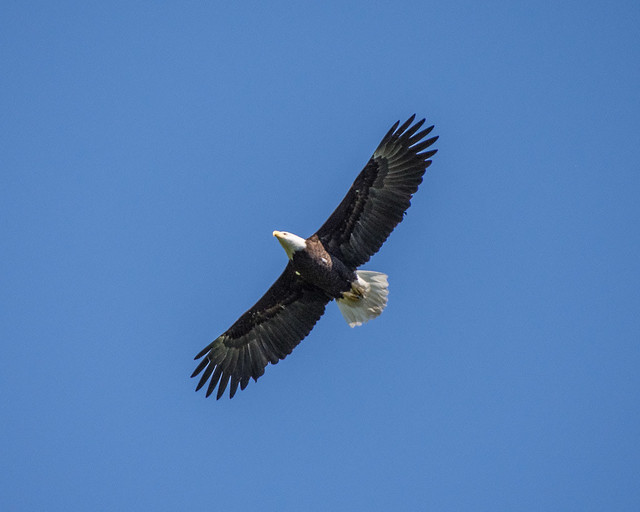
Bald Eagle

Upcoming Events 
LEED Green Associate Training, Nov. 19 (online) 
USask students are invited to attend a LEED Green Associate training from 4-8:30 pm, Nov. 19. Check the CPAWS announcement for a discount code. 

Ministry Research, Nov. 20 (online) 
Learn about current wildlife research at the Saskatchewan Ministry of the Environment at the Wild Ecol Seminar at 3:30 pm, Nov. 20. 

Oil, Noise & Songbirds, Nov. 24 (online) 
There will be a discussion about the effects of oil development and anthropogenic noise on grassland songbirds at noon, Nov. 24, as part of SK PCAP’s Native Prairie Speaker Series. 

Natural Ecosystems, Nov. 24 (online) 
Branimir Gjetvaj will offer insights into ways to increase resilience of natural ecosystems in an online Sustainable Speakers series presentation from 7-8:30 pm, Nov. 24. 

Winter Cycling 101, Nov. 24 (online) 
Bridge City Bicycle Co-op and Saskatoon Cycles are offering tips and tricks on winter cycling at 7 pm, Nov. 24. 

Arthropod Enthusiasts, Nov. 27 (online) 
Arthropodata is offering a series of monthly webinars for arthropod and insect enthusiasts. The first webinar is from 1-2 pm, Nov. 27; register online. Follow Arhropodata on Twitter to stay up to date on speakers and seminars. 

Looking Ahead 
Teaching Outside in Cold Weather, Dec. 2 (online) 
Presented by Green Teacher, 4 Saskatchewan-based teachers from different age groups will answer questions about practical approaches to teaching outside in cold weather at 6:30 pm, Dec. 2.

A full list of upcoming events (online and in person) can be found on the EcoFriendly Sask Calendar 

Organizational Updates 
The Prince Albert Parkland Permaculture Guild is looking for volunteers to help replenish and organize the seed library (Covid protocols will be observed). 

The Saskatchewan Chapter of the Wildlife Society is encouraging wildlife and conservation professionals to purchase a membership to help keep the organization viable in a difficult period. Follow them on Facebook for the latest wildlife conservation news and events. 

SOS Trees Coalition is looking for volunteers to join their planning committee for the 2021 Arbor Week celebration. If you’re interested, email trees@sostrees.ca

In place of the traditional NatureCity Festival, Wild About Saskatoon will be launching the NatureCity Experience with adventure guides to local natural areas, a podcast, a potential speaker series, as well as contests, prizes, and posts to help build community. 

Campus Corps, an offshoot of The Climate Reality Project Canada, offers university students an opportunity to lead climate action and raise ambitions on their campuses. Complete information is available on the Campus Corps website.

Local News 
FSIN Vice-Chief Heather Bear says, “Not only in our region but throughout Canada, throughout North America, water is a resource that is so at risk right now because of industry.” 

Fields with “messy” stuff – wetlands, wooded areas, fence rows, pastures – are more productive. 

bald eagle

From Information to Action 
The shipping of goods around the world produces more CO2 than the aviation industry. The industry must set a net-zero target for 2050 and a realistic plan to meet it


For the Young (and the Young at Heart) 
Kids can explore sailing, coastal communities, and marine conservation virtually with Outdoor Council of Canada’s Ships2Shores

Imaginative program adaptations – an online summer camp, streets for kids, and a park scavenger hunt. 

Save the Earth with a Sketch - looks like fun and you could win a contest and get published as well. 

Just for Fun 
From a hippo herd to graceful seals, photographs remind us why conservation matters

Dutch students have built a two-seater electric car made entirely from waste

EcoSask News is a weekly round-up of local news and events. Email us if you have items you would like us to include. 

You can follow EcoFriendly Sask by liking us on Facebook, following us on Twitter, or by email (top right corner). 


Did you know? The bald eagle’s wings are flat as a board when they fly.

Thursday, 23 July 2020

Environmental History: Placing Human History within its Natural Environment


“I’ve always had an underlying interest in the environment,” says Justin Fisher, “but I thought of environmental issues as being science-based and technical and I’m more on the humanities side.” Justin’s perspective shifted when he moved to the United Kingdom to work on his Master’s and took a course in environmental history. “Environmental history is about how we understand ourselves in relation to the environment,” Justin says. “It helped me realize that people with an interest in history, research, and writing could contribute to the environmental movement and I looked for more ways to get involved when I moved back to Saskatoon.”

Environmental history focuses on the interrelationships between humans and nature. It’s a two-way relationship with human actions impacting the environment while also being shaped by it. “At its best,” Justin says, “I think it actually forces us to break down the fundamental distinction between humans and nature." The study of environmental history emerged from the environmental movement in the United States in the ‘60s and ‘70s. Issues such as rampant pesticide use and the green revolution started to affect how some historians were thinking about people and the environment and represented an attempt to push back against the common belief of a linear progression in human history. “It’s a growing discipline with sub-fields and interdisciplinary work and also lots of young scholars,” Justin says. “I also know I’m not alone in continuing on this path because of twin interests in academics and activism.”

Environmental history is a strong point of the University of Saskatchewan’s History Department these days. Professor Andrew Watson is exploring histories of energy, agriculture, and sustainability, while Geoff Cunfer specializes in the sustainability of land use on the Great Plains, and Jim Clifford is looking at the intersections between environmental, social, and political history, with a particular focus on industrialization.


Justin’s academic interest in energy history, an emerging sub-field of environmental history, has been informed by his involvement in several fossil fuel divestment campaigns and he is an active member of Climate Justice Saskatoon. In 2017, Climate Justice Saskatoon undertook a major project to investigate the future of coal in Saskatchewan. They visited the mining communities of Estevan and Coronach where they held interviews and workshops with coal and service industry workers, union representatives, town administrators, and farmers. Their goal was to build bridges between urban environmental groups and coal-producing communities in Saskatchewan. The full report is available online.

Justin realized that fossil fuel production was an important part of these mining communities' identities. “Transitioning may feel like a threat to their history,” he explains. “How can we discuss transitioning to renewable energy while respecting that history?” Justin will be exploring this topic more deeply as he begins work on his PhD research into the history of fossil fuels in Saskatchewan.

“The transition to fossil fuel dominance was relatively rapid,” Justin says. “From the ‘60s onwards, it has become the province’s predominant industry. I want to look at how that has affected not only the environment but also labour, land use, and governance. I’m interested in the ‘energy crisis’ period in the ‘70s and ‘80s when energy prices rose and there was a lot of research into alternate energy sources and energy efficiency. Why didn’t it translate into action? What can we learn from that experience as we try to expand our use of renewable energy?”

Justin will be exploring the topic through the lens of a just transition. “Fossil fuel extraction and use has had a diverse and uneven impact. There are costs and benefits that get distributed within society,” Justin says. “There are important questions to ask. How have fossil fuels factored into rural depopulation and urbanization? The provincial government is largely funded by fossil fuel interests. How does that affect how the province has been run over the last few decades?”

Justin represents new scholars on the executive committee of NiCHE, the Network in Canadian History & Environment, a group of scholars and researchers who are trying to make their work more accessible and relevant to the general public. Their website includes a blog and podcast and delves into a wide variety of topics ranging from an article on black birds, black lives, and the unfinished work of queer ecologies to second homes during a time of crisis.

If you are interested in becoming involved in the environmental movement in Saskatoon, Justin encourages you to check out existing groups such as Climate Justice Saskatoon, the Saskatoon Youth Climate Committee, the Saskatchewan Environmental Society, and/or The Stand - Community Organizing Centre.


Reading List
Justin suggests the following books may be of interest to local environmentalists:

Wet Prairie: People, Land, and Water in Agricultural Manitoba, Shannon Stunden Bower (2011)

States of Nature: Conserving Canada's Wildlife in the Twentieth Century, Tina Loo (2006)

Forest Prairie Edge: Place History in Saskatchewan, Merle Massie (2014)

Inventing Stanley Park: An Environmental History, Sean Kheraj (2013)

The War on Weeds in the Prairie West: An Environmental History, Clinton L. Evans (2002)

Photo Credit
Mine tour in Coronach, Rachel Malena-Chan

You can follow EcoFriendly Sask by liking us on Facebook, following us on Twitter, or by email (top right corner).

Tuesday, 21 July 2020

EcoSask News, July 21, 2020

forest

Upcoming Events
Logging in the Boreal Forest, July 23 (webinar) 
The results of a recent report on the challenges industrial logging in the boreal forest poses for Canada's climate change commitments is scheduled for 11 am-noon (SK time), July 23.

Scavenger Hunt, July 27 (Yorkton) 
4-12 year olds are invited to participate in a nature walk scavenger hunt hosted by the Yorkton Flyway Birding Trail Association from 2-3:30 pm, July 27. Register by phoning the Yorkton Public Library at (306) 783-3523.

Pronghorn Conservation, July 27 (webinar)
Join Nature Conservancy of Canada – Alberta for a webinar about Pronghorn Xing at 12 noon, July 27.

A full list of upcoming events (online and in person) can be found on the EcoFriendly Sask Calendar

Local News
The University of Saskatchewan has launched a Master of Energy Security program aimed at professionals and community members who are interested in a part-time, online program. Application deadline is July 31

The Moose Jaw River Watershed Stewards has received a $45,000 grant to establish a food farm and pollinator garden at Prince Arthur School

Proposed upgrades to Little Red River Park in Prince Albert include Indigenous ceremonial grounds, an outdoor environmental centre, and a pilot project for low-impact camping

The SK government is failing to consider the hidden costs and long-term consequences of a large-scale irrigation project at Lake Diefenbaker

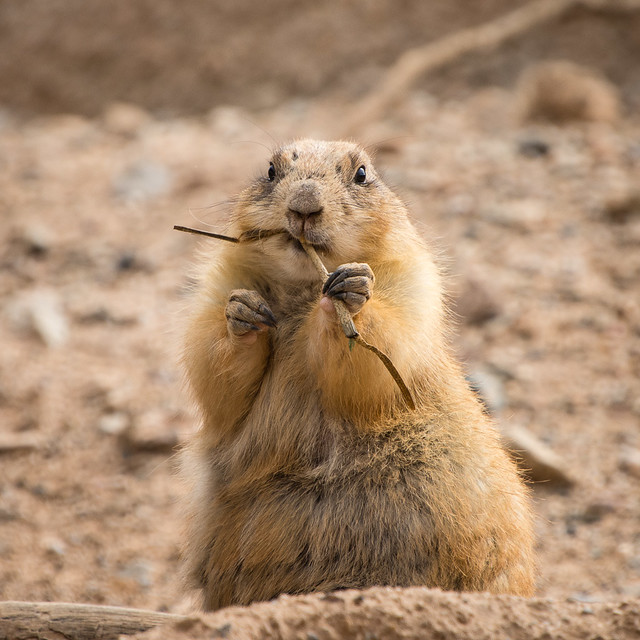
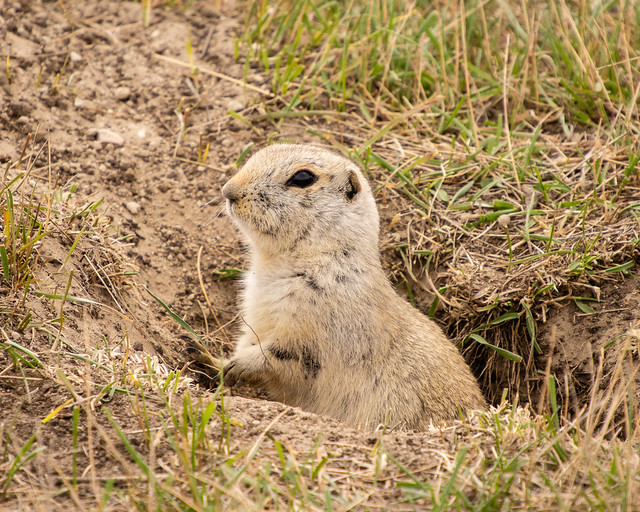
Prairie dog

Prairie dogs are ecological heroes, helping to conserve and manage grassland biodiversity

Reforestation project in the Canora area will act as an important green buffer and wildlife corridor

Nature Saskatchewan responds to social distancing with nature journals, bingo cards, and virtual tours

The Northeast Swale Watchers have resigned from the committee planning the Saskatoon Freeway: “Although we continue to believe that we have much to contribute to this discussion, it has become clear that our concerns are being ignored within this process”

From Information to Action
Understanding which birds are most likely to collide with buildings – migrants, insect-eaters, woodland species – we are better equipped to prevent it happening

10 suggestions for being an ally of Indigenous-led conservation

A growing number of PEI potato farmers are planting small plots of pollinator-friendly flowers and other plants in less productive parts of their fields

The future of Libraries of Things includes self-serve, tech-driven options with municipal support

Triodoos, an ethical banking group, has designed its new office building to be not only energy positive but also fully reconstructible

Andean condor

That’s Amazing!
Some deep-sea fish camouflage themselves by absorbing up to 99.956 percent of the light that hits them. Some even have ultra-black gut linings, likely to keep them from glowing like lanterns when they eat bioluminescent prey

Riding the air currents – the Andean Condor can fly for more than 5 hours without flapping its wings

EcoSask News is a weekly round-up of local news and events. Email us if you have items you would like us to include. 

You can follow EcoFriendly Sask by liking us on Facebook, following us on Twitter, or by email (top right corner). 

Download EcoFriendly Sask’s Nature Companion, a free nature app for Canada’s four western provinces


Tuesday, 5 May 2020

EcoSask News, May 5, 2020

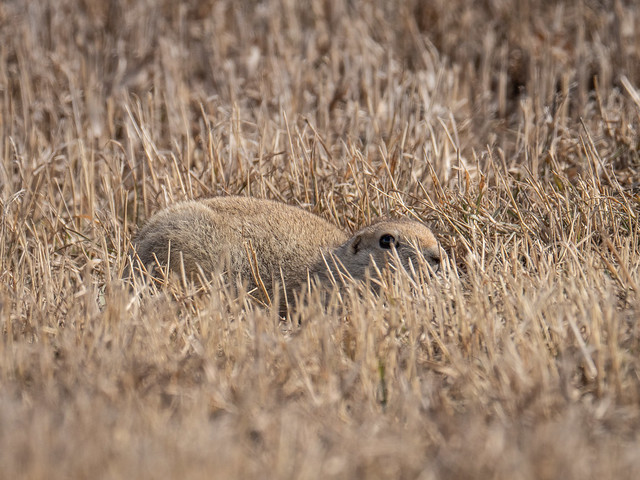
gopher (Richardson's Ground Squirrel)

Upcoming Events (online)
Caring Sustainably for Saskatchewan, May 12-June 16 (webinars) 
The Caring Sustainably for Saskatchewan Collaboration is hosting a free webinar series on Tuesdays and Thursdays from May 12 to June 16 about addressing climate change at the local and provincial levels.

Sustainability Awards, May 13 
RCE Saskatchewan's 2020 Education for Sustainable Development Recognition Event is a virtual event from 9:30-noon, May 13. To attend, email the Event Coordinator at rcesk.event@gmail.com.

Environmental Philanthropy, May 14 (webinar) 
The Sustainability Network is offering a webinar on environmental philanthropy: what now, what next? at 11 am (in Saskatchewan), May 14.

More and more events are going online. Be sure to check the EcoFriendly Sask Calendar for details.

Local News
Birds in Real Danger, Saskatoon (BIRDS) needs your help in documenting bird window strikes in order to educate the public and gain support for the adoption of bird-friendly guidelines for buildings. Contact lswr@sasktel.net and join BIRDS in looking for evidence of window strikes in Saskatoon’s downtown area, on the University campus, or in your own neighbourhood.


The University of Saskatchewan’s 2019 Sustainability Report is now available online.

A new telescope at the Sleaford Observatory near Saskatoon allows users to go online, at any time of day, using a web-based program to schedule telescope observations.

Pronghorn are no longer at risk of extinction, but they still face many barriers.

Educational Resources
Basic bike maintenance: how to do your own spring tune-up.

The NatureForAll Discovery Zone includes resources from all its partners - from videos to lesson plans, comic books to coloring books.

Students across generations are flocking to online courses on movement building and the Green New Deal.

Build your own pinhole video camera.

gopher (Richardson's Ground Squirrel)

From Information to Action
Cleaning up orphan oil and gas wells is a good start, but we need a long-term strategy for industry responsibility, economic diversity, and sustainable systems.

A movement is growing to retrain oil workers for the emerging renewables sector.

Coronavirus counter-measures have resulted in a record drop in fossil-fuel demand, but will it have a lasting impact? [infographic]

Next to water, sand is our most consumed natural resource – and it’s becoming scarce.

Efforts to ban single-use plastic have come to a screeching halt, without evidence that plastic is safer than other reusable packaging.

The changing role of sidewalks – from hygiene to equality to transportation.

Good News
Europe's first solar panel recycling plant opens in France.

A Dutch company will lease you a pair of jeans for 12 months. When the year is up, you can keep them, exchange them, or return them for recycling.

Hydrogen has been used to power commercial steel production for the first time in a pilot project in Sweden.

The beauty and diversity of the world’s insects.

EcoSask News is a weekly round-up of local news and events. Email us if you have items you would like us to include. 

You can follow EcoFriendly Sask by liking us on Facebook, following us on Twitter, or by email (top right corner).

Tuesday, 7 April 2020

EcoSask News, April 7, 2020

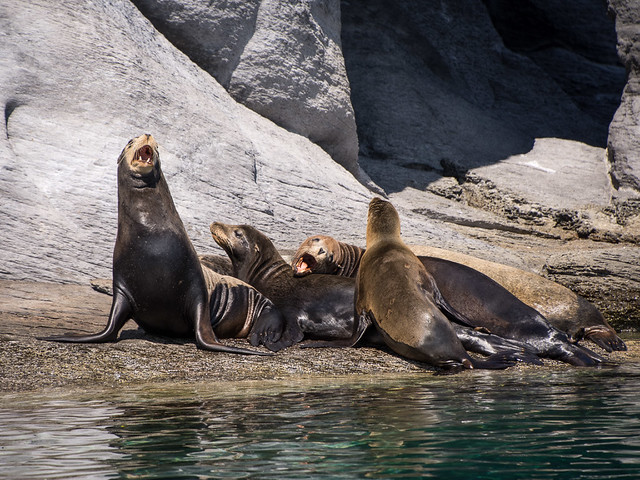
sea lions

Local News & Events
Changing the Climate, Apr. 11 (online)
Everyone is invited to join an online field trip from 1-3:30 pm, Apr. 11, in which U of R students share work from the multidisciplinary course, Engaging Climate Change: Creativity, Community, Intervention.

WILD Outside (Regina, Saskatoon)
WILD Outside, a national conservation-based youth leadership program designed for youth ages 15 to 18, is now recruiting for Saskatoon and Regina. Youth who join the program will explore the outdoors through a variety of activities (hiking, cross country skiing, and canoeing, to name a few) and plan and carry out community-based conservation action projects.

While COVID 19 currently prevents participants from gathering together in person, WILD Outside facilitators are adapting the programming to bring people together virtually across the country.

Go to http://wildoutside.ca/ for more information and to fill out the online inquiry form.


Buffalo Pound
The Nature Conservancy of Canada’s plan to protect shoreline and grasslands at Buffalo Pound is important for species at risk and water quality for surrounding communities.

Urban Wildlife
The Wildlife Rehabilitation Society of Saskatchewan is reminding the public that trapping and relocating wild animals is not a humane solution. “By relocating an animal, we are likely placing them in unfamiliar territory without any known food, water or shelter. Not only is this poor animal going to have to fight to find resources – it could be chased off, injured or killed by other animals whose territory they have been place upon! Don’t forget that there’s also the threat of diseases being spread when we relocate animals from one place to another. Bacteria, parasites and viruses can be easily spread and harm or kill a variety of wildlife. And what about babies? Often times, relocating an adult animal means that we are leaving behind helpless and orphaned baby animals who are unable to fend for themselves. Finally - relocating an animal just opens up the space for another animal to move right on in! We really aren’t solving any problems by forceably removing animals from their homes. We understand that wild animals can sometimes be a nuisance – especially if they are in your yard or house. However, we can help you find ways to make your area undesirable so the animal will naturally relocate itself! So please do not relocate any wild animals – give our hotline a call at 306-242-7177 and we’ll be happy to help!”

City birds: big-brained with few offspring or small-brained with a lot.

In the News
“What if concrete could be used to store climate-warming carbon?”

Lockdowns are changing the way the earth moves, making it easier to monitor for earthquake and volcano activity.

sea lion

Online Resources
From flying foxes to sea lions – nature cams bring nature to your screen.

Want to visit the world’s largest cave or head inside an active volcano – the 10 best natural wonders’ virtual tours.

That’s Amazing!
Squids communicate in the dark ocean by turning their bodies into animated message boards.

Peacock spiders are famous for their rainbow-hued buttocks, elaborate mating dances, and ninja-esque jumping skills.


EcoSask News is a weekly round-up of local news and events. Email us if you have items you would like us to include. 

You can follow EcoFriendly Sask by liking us on Facebook, following us on Twitter, or by email (top right corner).

Tuesday, 29 October 2019

EcoSask News, October 29, 2019

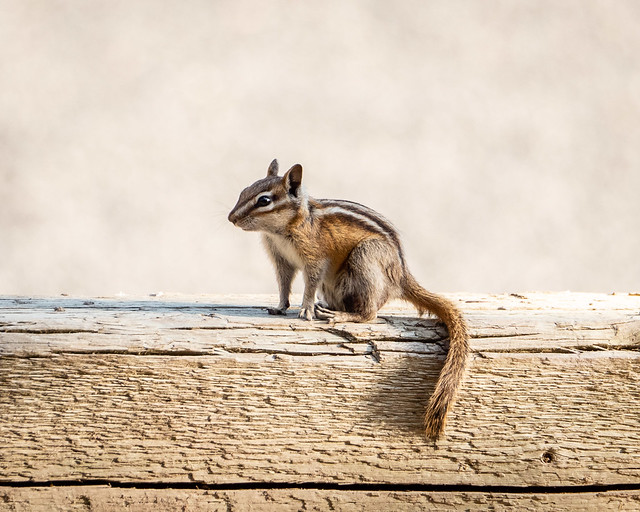
chipmunk

Upcoming Events
Place-Based Education, Nov. 1 (Saskatoon) 
Join Janet McVittie and Sonal Kavia to discuss place-based education: place, space, and mindfulness at 4:30 pm, Nov. 1, in the SERI Meeting Space, College of Education.

Household Hazardous Waste, Nov. 3 (Saskatoon) 
You can dispose of household hazardous waste at City of Saskatoon’s Civic Operations Centre from 9 am – 3:30 pm, Nov. 3.

Climate Youth Voice, Nov. 6 (Saskatoon) 
Saskatoon Enviro Collective is hosting a panel discussion and group conversation for adults to hear from youth about climate change from 7-8:30 pm, Nov. 6, at Station 20 West.

National Energy Code, Nov. 6 (Saskatoon) 
Kelly Winder will provide an overview of the National Energy Code for Buildings at the Nov. 6 breakfast meeting of the SK Energy Management Task Force.

The Pollinators, Nov. 11 (Regina, Saskatoon) 
Sign up now if you would like to attend a special screening of The Pollinators in Regina or Saskatoon.

Looking Ahead
Native Prairie Restoration/Reclamation and Transboundary Grasslands Workshop, Feb. 25-27 (Regina)
In 2020, SK PCAP is combining two workshops: the 7th Native Prairie Restoration and Reclamation Workshop and the 5th Transboundary Grassland Workshop, February 25-27 in Regina.

A full list of upcoming events can be found on the EcoFriendly Sask Calendar 

chipmunk

In the News
Urine diverting vermicomposting toilets are being installed along the Churchill River.

Positive media coverage of repair cafés in Regina and Swift Current this past weekend.

Citizens of all ages urge rethink of Saskatoon Freeway.

City of Victoria plans to protect any tree that is a foot thick or more.

SUVs have contributed more to the increase in global CO2 emissions than airlines, trucks, or heavy industry. And they’re far more likely than smaller vehicles to kill pedestrians and other drivers.

Kids raised in walkable communities earn more money as adults.

Small adjustments to wind turbines can reduce impacts on birds.

A visual depiction of the impact of the proposed Trans Mountain Pipeline on Vancouver’s harbor, Boundary Pass, and Juan de Fuca Strait.

Wilderness areas act as a buffer against species loss and could reduce extinction risks by more than half.

In an urban wilderness, “invasive” species may have a role to play.

David Attenborough, storyteller, and Yvon Chouinard, Patagonia, share their approaches to saving the planet.

Bat noises aren’t random. They’re complaining about food, position, unwanted sexual advances, and pushy neighbours.

Blueprint for Revolution: How to use rice pudding, Lego men, and other non-violent techniques to galvanise communities, overthrow dictators, or simply change the world [book review].

EcoSask News is a weekly round-up of local news and events. Email us if you have items you would like us to include. 

You can follow EcoFriendly Sask by liking us on Facebook, following us on Twitter, or by email (top right corner).

Sunday, 27 October 2019

Wildlife-Friendly Urban Planning

gopher (Richardsons ground squirrel)

Saskatoon Joins the Urban Wildlife Information Network

For the first time ever, over half the world’s population lives in urban areas, and that number is expected to grow to 68% by 2050. Most of this growth is expected to occur in small and medium-sized cities, such as Regina and Saskatoon. Sprawl magnifies the challenges of a rapidly growing urban population as our cities are growing twice as fast spatially as population-wise. “It’s not going to slow down,” Katie Harris says. “We need to start putting into place initiatives that will combat habitat fragmentation and barriers to wildlife movement.”

Urban centres such as Saskatoon are a mix of buildings, parking lots, and streets, but there is also river valley, swale, slough, and wetlands. “There are patches of wildlife habitat within the non-habitat,” Katie explains. “Animals use those areas.” One recent study found that green areas outside the downtown core contained as many ground-dwelling mammals as did rural areas. The researchers noted that “this phenomenon of relatively unchanged fauna outside the downtown area shows that small cities have the potential to maintain a high level of diversity of small ground-dwelling mammals if appropriate planning of further building expansion is implemented. More studies of small cities are needed to better assess their impact on biodiversity. This knowledge can then be applied in better planning for urban wildlife.”

No one knows what or how many wild animals live within the confines of Saskatoon. Katie Harris, in conjunction with the international Urban Wildlife Information Network (UWIN), plans to find out.

Katie is working on her Master’s degree at the University of Saskatchewan. She describes herself as a “northern Manitoba girl” who grew up watching wildlife and going for walks in the bush. This was supplemented by 10 years of camping and environmental initiatives through Girl Guides of Canada. Katie has a dual diploma in conservation/restoration ecology and wildlife/fisheries conservation from Lakeland College as well as a Bachelor’s degree majoring in environmental science. She has just started working on her Master’s degree in animal science with funding from an NSERC scholarship. “The scholarship has given me greater flexibility in choosing my research topic,” Katie says. “They’re highly competitive awards and I’m proud to have received one.”

jackrabbit

Katie will be studying urban mammals living in Saskatoon’s fragmented urban landscape. A key element of her research will be to establish Saskatoon’s first-ever database documenting the wildlife living within the city. Her findings will contribute to the Urban Wildlife Information Network’s database, providing an opportunity to compare what is happening in Saskatoon with what is happening around the world.

Saskatoon is the second Canadian city (after Edmonton) to join the Urban Wildlife Information Network. The Network’s partners contribute to the largest international study on urban wildlife in existence gaining valuable opportunities to share information based on comparative data. Dr. Maureen Murray of the Urban Wildlife Institute, Lincoln Park Zoo, Chicago, was the keynote speaker at the 2019 NatureCity Festival, providing an overview of the importance of the work being undertaken by UWIN's partners.

A small committee of community partners (University of Saskatchewan, City of Saskatoon, Meewasin Valley Authority, Saskatoon Forestry Farm Park and Zoo, Saskatoon Nature Society) is assisting Katie with her work. The Forestry Farm Park and Zoo generously contributed 25 trail cameras that will be used to track the wildlife that move about the city. Cameras already set up in the Northeast Swale will be used to provide supplementary data.

The cameras will be set up along a transect with north/south and east/west lines leading away from the central point at Meewasin’s downtown office building. The cameras will be set up within one kilometre on either side of the transect and about a kilometre apart. Their placement will carefully follow UWIN’s guidelines in order to provide relevant comparisons with other cities based on the degree of habitat fragmentation and population density.

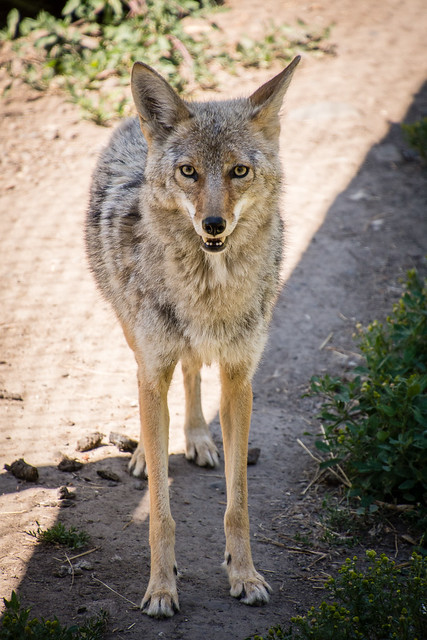
coyote

Katie’s focus will be on the mammals that show up on the cameras, but the material will be archived and available for other researchers who may want to study birds, reptiles, or other wild creatures. Privacy will be maintained by blurring human faces and making an effort not to install cameras on private property. There will be opportunities for the public to get involved in checking to make sure the cameras are still in place and in helping to identify wildlife on Zooniverse. Katie will also be sharing some of the photographs on social media.

Katie hopes the database will be a long-term, 30-50 year project providing a rich database for future biodiversity-friendly urban planning. “We need to adapt to the needs of urban wildlife,” Katie says. “It’s possible we won’t have these animals in future if we don’t become more flexible.”

If you would like to be involved in tracking urban wildlife, contact your local nature society or Nature Saskatchewan.

Tuesday, 22 October 2019

EcoSask News, October 22, 2019

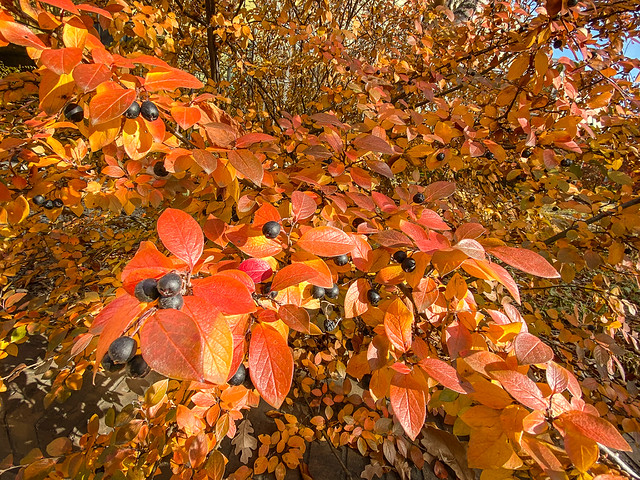
fall colors

Upcoming Events
Waste Reduction Conference, Oct. 22 (Prince Albert) 
The City of Prince Albert is hosting a Waste Reduction Week conference from 9:30 am-12 pm, Oct. 22.

Blood-Sucking Creatures, Oct. 25 (Moose Jaw) 
Richard Pickering will discuss blood-sucking creatures in Saskatchewan at the 7:30 pm, Oct. 25, meeting of the Moose Jaw Nature Society.

NWT Road Trip, Oct. 26 (Fort Qu’Appelle) 
There will be a presentation on a road trip through the Northwest Territories at the 7 pm, Oct. 26, meeting of the Fort Qu’Appelle Nature Society held at the Fort Qu’Appelle train station.

Repair Café, Oct. 26 (Gravelbourg) 
Gravelbourg is holding its first repair cafe from 9 am-12 pm, Oct. 26.

Repair Cafés, Oct. 26 (Saskatchewan)
Saskatchewan Waste Reduction Council is hosting repair cafés in a number of Saskatchewan cities on Oct. 26 from 10 am-2 pm as part of Waste Reduction Week.

Household Hazardous Waste Day, Oct. 26 (Regina) 
City of Regina is holding a Household Hazardous Waste Day on Oct. 26.

Dark Skies at the Creek, Oct. 26 (Saskatoon) 
Celebrate International Bat Week with Meewasin at Beaver Creek from 12 – 11 pm.

NatureCity 2020 Celebration, Oct. 28 (Saskatoon) 
There will be a planning meeting for NatureCity Festival 2020 at 7 pm, Oct. 28.

Scary Birds, Oct. 28 (Saskatoon) 
Just in time for Hallowe’en, Lyndon Penner will introduce unsettling birds from around the world at 7 pm, Oct. 28.

Car Share Co-op AGM, Oct. 30 (Regina) 
Regina Car Share Co-op is holding its annual general meeting at 7 pm, Oct. 30, at 1109 East Broadway Avenue.

Goatsuckers, Oct. 30 (webinar) 
Mark Brigham will discuss Goatsuckers: The Enigma of Feathered Bats in a noon-hour webinar on Oct. 30.

Sharp-tailed Grouse, Nov. 1 (Regina) 
Brandon Burda will discuss Sharp-tailed Grouse: Habitat Selection and Population Trends in Saskatchewan from 2:30-3:45 pm, Nov. 1, at the University of Regina.

fall colors

Looking Ahead
Build Sask Green, Nov. 14 (Regina) 
This year’s Build Sask Green conference is in Regina on Nov. 14.

A full list of upcoming events can be found on the EcoFriendly Sask Calendar 

In the News 

University of Saskatchewan 2018/2019 Greenhouse Gas Inventory Report.

Frugality is an environmental statement that’s far more powerful than empty words or bumper stickers.”

What if we thought of our world as something precious to be handed down through time?

Planting native prairie could be a secret weapon for farmers.

Wildlife road crossings not only protect vulnerable animals and genetic diversity – they save money by preventing car repair and medical expenses following a collision.

“Because the House Sparrow can digest agricultural grains, they thrive pretty much anywhere—as long as it’s near people and our foodstuffs.”

Wildlife photographer of the year award winners.

EcoSask News is a weekly round-up of local news and events. Email us if you have items you would like us to include. 

You can follow EcoFriendly Sask by liking us on Facebook, following us on Twitter, or by email (top right corner).

Thursday, 10 October 2019

DAM IT! Let's Live with Beavers


The University of Saskatchewan held an EcoHack on October 4 & 5, 2019. Multidisciplinary student teams worked together to identify viable solutions to problems presented by their community partners. Living Sky Wildlife Rehabilitation asked students how we might facilitate non-lethal coexistence with beavers in the city. Serafima Raskina and Saiyida Noor Fatima not only accepted the challenge but came up with the winning presentation. They generously agreed to share their ideas on EcoFriendly Sask. The following material has been pulled from their winning presentation.


Problem: Some People Don’t Like Beavers 
They chew trees
They build dams

What Is Done About It? 
Hunting and trapping
Breaking their dams
Relocation
Scaring them off


Why Do We Even Care? 
“Little climate change fighting machines”
Species richness & biodiversity
Adjust groundwater level
Store water for droughts

Eco-Friendly Solutions 
Tree wrapping
Grow the trees they prefer
Flowing devices
Place rocks & stones along the trails

But Most People Still Don’t Know That 

Photo credit: Sean Taylor

Our Proposal: Beaver Week, April 2020 
Children 
Education camps
Field trips to beaver dams
Beaver watching in spring
Spread the cuteness of beavers
(Young Naturalists)

Campus Clubs
Wildlife workshops
Lecture on beaver importance
Beaver watching in spring
DIY tree-wrapping
(SENSSA, Parks Canada)

City Council Presentation (depending on approval/availability)
Cost-effectiveness of tree wrapping & flow devices
Training & consultation proposal

Public
Beaver & dam watching
DIY tree-wrapping
Beaver Creek hiking & FREE FOOD

Let us know if you’d like to become involved in Beaver Week and we’ll pass your inquiry on to Serafima and Saiyida.

Further Information 
NEW! Beavers: Coexistence Strategies for Municipalities and Landowners (The Fur-Bearers)

10 Surprising Facts About Beavers – And Why They Make Great Neighbours

Living with Beavers

Tuesday, 8 October 2019

EcoSask News, October 8, 2019

pigeon and fall colors

Upcoming Events
Give-a-Dam Info Session, Oct. 10 (Moosomin) 
Lower Souris Watershed Committee will be holding an information session about the Moosomin Dam from 2-8 pm, Oct. 10. RSVP as session will be followed by a supper.

Singing for a Better World, Oct. 10 & 22/Nov. 14 & 26 (Saskatoon) 
Learn songs about protecting the earth and building peace and justice at 7 pm, Oct. 10, Oct. 22, Nov. 14, and Nov. 26.

Bats and You, Oct. 12 & 19 (Saskatoon) 
Kids are invited to find out about bats from 2-2:45 pm on Oct. 12 (Rusty Macdonald Branch Library) and Oct. 19 (Alice Turner Branch Library).

EnviroCollective, Oct. 15 (Regina)
EnviroCollective Regina will be meeting from 7-9 pm, Oct. 15.

Sustainable Saskatoon, Oct. 15 (Saskatoon)
Hilary Carlson and Kristin Bruce will speak about the City of Saskatoon’s Climate Action Plan at 7 pm, Oct. 15.

Campus Sustainability Tour, Oct. 15 (Saskatoon) 
Register to explore the hidden aspects of the U of S campus that drive sustainability from 1-2:30 pm, Oct. 15.

Climate Change: Myth vs. Reality, Oct. 16 (Saskatoon) 
The second annual U of S Senate Forum will be held from 4-6 pm, Oct. 16.

Snakes & River Valleys, Oct. 16 & 17 (Eastend, Mankota)
Ray Poulin, Royal Saskatchewan Museum, will explain why large river valleys are essential to rare snakes in Saskatchewan at 7 pm, Oct. 16, in Eastend and at 7 pm, Oct. 17, in Mankota. The presentation will be recorded and uploaded on the PCAP YouTube channel.

Heritage Landscapes, Oct. 17 (Eastend)
Clinton Westman will share his research project on heritage landscapes in southern Saskatchewan, including the reintroduction of bison at Old man on His Back, at 7:30 pm, Oct. 17, at Eastend Public Library.

The Art of Nature, Oct. 17 (Saskatoon)
Cam Forrester will share his love of painting, drawing, and nature at the 7:30 pm, Oct. 17, meeting of the Saskatoon Nature Society.

Zero Waste Workshop, Oct. 17 (Saskatoon) 
Learn how to reduce waste and get closer to a zero-waste lifestyle from 12-2 pm, Oct. 17, at the University of Saskatchewan.

Farmland Drainage, Oct. 18 (Regina) 
Jeff Olson, Citizens’ Environmental Alliance, will be discussing Saskatchewan farmland drainage and the environment from 2:30-3:45 pm, Oct. 18, at the University of Regina.

sun through fall colors

Saskatoon Nature Society Field Trips
Saskatoon Young Naturalists
Nov. 16, 1-2:30 pm – Bird Feeder Workshop
Space is limited; register early to avoid disappointment.

Golden Eagles
Oct. 17, 9 am – Birding at Ashworth Holmes Park
Oct. 24, 8:30 am – Watrous County Geological History
Retirees and partners who are interested in birds and the natural world are invited to participate.

Other Saskatoon Nature Society Field Trips 
Oct. 14, 9:30-11:30 am – Woodlawn Cemetery Bird Walk
Oct. 27, 1-5 pm – Blackstrap Lake Birding

Everyone is welcome. Check the Saskatoon Nature Society’s website for full details and updated information.

A full list of upcoming events can be found on the EcoFriendly Sask Calendar 

In the News
Unplastic Northern Sask focuses on reducing + reusing.

European Union approves right to repair law, including measures for repairability and recyclability.

Enviromenstrualism: Sanitary products are the fifth most common item found on Europe’s beaches, more widespread than single-use coffee cups, cutlery or straws.

“Claiming to fight climate change while subsidizing fossil fuels is as crazy as brushing your teeth while eating Oreos.”

Fish that thrive in toxic water, pigeons eating junk food without becoming hypoglycemic, ants that don’t mind urban heat – what can we learn from wildlife that is evolving rapidly in response to an urban environment?

A free online report outlines the key steps to take in building community power to win campaigns.

EcoSask News is a weekly round-up of local news and events. Email us if you have items you would like us to include. 

You can follow EcoFriendly Sask by liking us on Facebook, following us on Twitter, or by email (top right corner).

Tuesday, 1 October 2019

EcoSask News, October 1, 2019

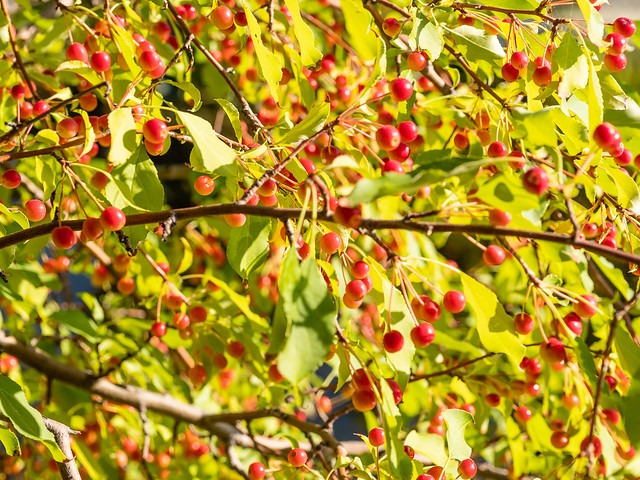
berries

Upcoming Events
Protect Our Boreal Forest, Oct. 2 (Prince Albert) 
Join the Council of Canadians in asking for a moratorium on logging in the boreal forest at 6:30 pm, Oct. 2.

100 Debates on the Environment, Oct. 3 (Saskatoon) 
Saskatoon University is hosting a debate on the environment at 7 pm, Oct. 3, during the federal election campaign.

90 Years of Conservation, Oct. 3 (Moose Jaw) 
Learn about the history and purpose of the Saskatchewan Wildlife Federation at 2:30 pm, Oct. 3.

Library of Things Fall Meeting, Oct. 3 (Saskatoon) 
Learn what’s happening at the Library of Things at 6 pm, Oct. 3.

100 Debates on the Environment, Oct. 4 (Fort Qu’Appelle) 
Regina Qu’Appelle is hosting a debate on the environment from 7-9 pm, Oct. 4, during the federal election campaign.

SaskOutdoors 50th Birthday Party, Oct. 4 (Echo Lake) 
Join SaskOutdoors in celebrating their 50th anniversary with outdoor activities from 5-10 pm, Oct. 4.

EcoHack, Oct. 4 & 5 (Saskatoon) 
EcoHack will bring together students from across the U of S campus to solve locally sourced environmental/sustainability-related problems.

Traditional Plant Walk, Oct. 6 (Saskatoon) 
The Saskatchewan Archaeological Society is hosting a traditional plant walk from 10:30 am-12:30 pm, Oct. 6.

Household Hazardous Waste, Oct. 6 (Saskatoon) 
You can dispose of household hazardous waste at City of Saskatoon’s Civic Operations Centre from 9 am – 3:30 pm, Oct. 6.

Wildlife Friendly Fencing, Oct. 6 & 8 (Saskatoon) 
Help Meewasin install wildlife friendly fencing around the Northeast Swale at 2 pm, Oct. 6, and 4 pm, Oct. 8. There will be more opportunities in October; register to stay informed.

The Importance of Grasslands, Oct. 7 (Saskatoon) 
Renny Grilz will discuss the importance of grasslands and show a film about Grasslands National Park at 7:30 pm, Oct. 7, at Grace-Westminster United Church.

Starlight at Sunrise, Oct. 8 (Regina) 
Explore the universe with the Royal Astronomical Society from 7-8:30 pm, Oct. 8.

Organic Waste Diversion, Oct. 9 (Saskatoon) 
Find out about the City of Saskatoon’s plans for organic waste diversion at noon, Oct. 9, at Innovation Place.

Hug a Tree and Survive, Oct. 10 (Prince Albert) 
Find out how children can stay safe in the woods at 7 pm, Oct. 10.

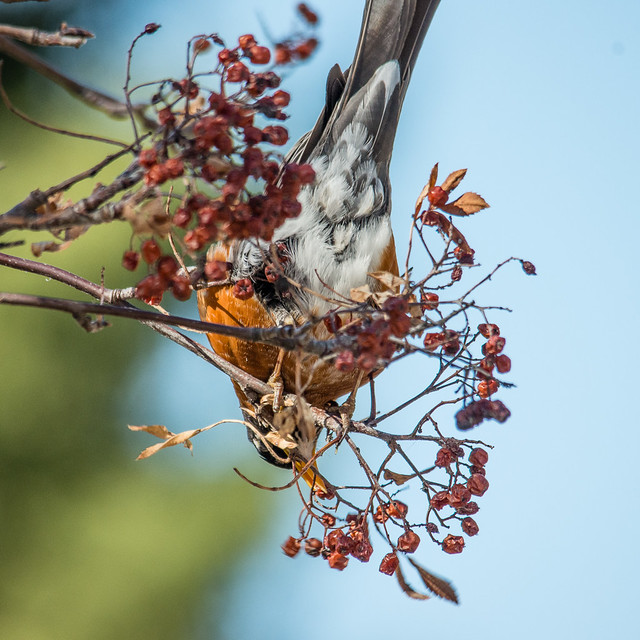
American Robin eating berries

Looking Ahead
Putting Beavers to Work, Oct. 23 & 24 (Calgary) 
A two-day seminar in Calgary on Oct. 23 & 24 will look at beavers’ role in watershed resiliency and restoration through both talks and a coexistence tools demonstration.

Project Wet, Nov. 16 & 30 (Saskatoon, Regina) 
SaskOutdoors is hosting Project Wet workshops in Saskatoon on Nov. 16 and in Regina on Nov. 30.

A full list of upcoming events can be found on the EcoFriendly Sask Calendar

In the News
Be sure to sign the petition to save Saskatoon’s Northeast Swale, which is currently under threat from the Saskatoon Freeway.

“Now is the time for climate change frames that question whether a finite planet can sustain eternal growth.”

Scenarios for a zero-waste future.

“If you see how cars, streetcars, bikes, and pedestrians use this street in Zürich, you can better understand what’s wrong with so many other urban thoroughfares.”

The 3 best eco-friendly toilet papers.

EcoSask News is a weekly round-up of local news and events. Email us if you have items you would like us to include. 

You can follow EcoFriendly Sask by liking us on Facebook, following us on Twitter, or by email (top right corner).

Tuesday, 24 September 2019

EcoSask News, September 24, 2019

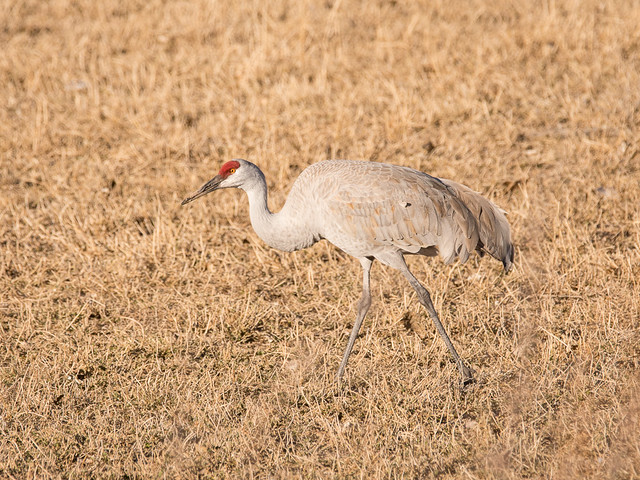
Sandhill crane

Upcoming Events
Singing for a Better World, Sept. 24 (Saskatoon)
There will be a choir practice at 7 pm, Sept. 24.

Recycling Workshop, Sept. 25 (Lloydminster)
Find out what can and can’t be recycled at a workshop in Lloydminster from 10-11:30 am, Sept. 25.

Restoring Arctic/Alpine Ecosystems, Sept. 25 (Saskatoon)
Katherine Stewart, U of S, will discuss Letting Nature Lead the Way: Restoring Arctic and Alpine Ecosystems at 7 pm, Sept. 25.

Climate Strike Prince Albert, Sept. 27 (Prince Albert)
Prince Albert will be joining the global climate strike at noon, Sept. 27.

Astronomy Night Open House, Sept. 28 (Saskatoon)
The Royal Astronomical Society of Canada – Saskatoon Centre is hosting an open house from 7:30-11 pm, Sept. 28.

Fall Walk & Picnic, Sept. 29 (Moose Jaw)
Join the Moose Jaw Nature Society for a fall walk and picnic on Sept. 29.

Science in the Park, Sept. 30 (Regina)
Science in the Park will be at Crosbie Park from 6-8 pm, Sept. 30.

Wanted - Research Participants, Sept. 30 (Saskatoon)
Participants are needed for a university research project into attitudes towards options for reduction of GHG emissions. An information meeting will be held from 7-8:30 pm, Sept. 30.

Keep Bees Buzzing, Oct. 1 (Regina)
Find out what to plant in your garden to provide native bees with food and nesting material at 6:30 pm, Oct. 1.

Energy Management Opportunities, Oct. 2 (Saskatoon)
Yi Liu will discuss energy management opportunities and the Federation of Canadian Municipalities at the Oct. 2 breakfast meeting of the SK Energy Management Task Force.

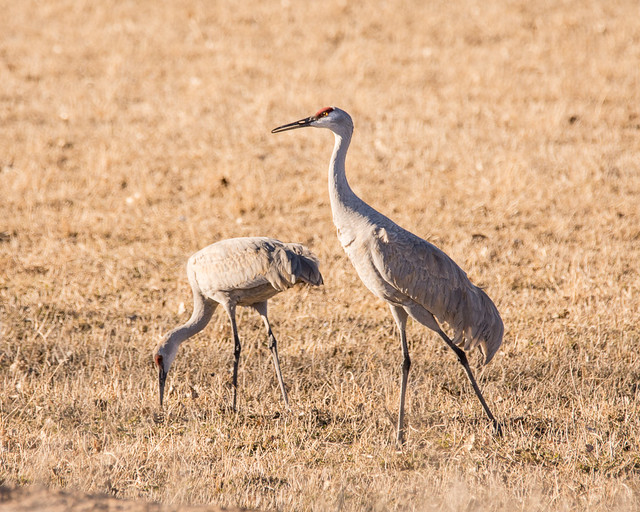
Sandhill cranes

Looking Ahead
Passive House Trades Course, Oct. 22-24 (Saskatoon)
Passive House Canada is offering a 3-day course teaching the skills and knowledge required for the Certified Passive House Tradesperson - Building Envelope Specialization exam from Oct. 22-24 in Saskatoon.

Meewasin 40th Anniversary Gala, Oct. 22 (Saskatoon)
Meewasin Valley Authority is hosting a fundraising 40th anniversary gala at the Radisson Hotel in Saskatoon from 5:30-8:30 pm, Oct. 22.

Rob Dumont Energy Management Awards Dinner, Oct. 23 (Saskatoon)
The 2019 Rob Dumont Energy Management Awards Dinner will be held from 5-9 pm, Oct. 23.

Agricultural Drainage & the Environment, Nov. 6 (Regina)
The Nov. 6 Agricultural Drainage & the Environment conference will cover a wide range of topics including water quality, habitat loss, hydrology, and carbon losses presented by well-known researchers and experts.

Passive House Design & Construction, Nov. 7-10 (Saskatoon)
Passive House Canada is offering a 4-day course in passive house design and construction in Saskatoon from Nov. 7-10.


Saskatoon Nature Society
Golden Eagles
Sept. 26, 8:30 am – Beland Acreage
Oct. 3, 8:30 am – Ponds & Prairie
Oct. 10, 9 am – Whooping Cranes
Retirees and partners who are interested in birds and the natural world are invited to participate.

A full list of upcoming events can be found on the EcoFriendly Sask Calendar

In the News
Friends of the Saskatoon Afforestation Areas Inc. is now incorporated and seeking new members to help protect the Richard St. Barbe Baker and George Genereux Afforestation Areas.

The nitrogen crisis: “It’s fertilizer, not diesel fuel, that’s the largest emissions source on many farms.”

Saskatoon airport receives level one sustainability accreditation. Regina airport received level one accreditation in 2018.

“Before mass electrification of cars and decarbonizing the grid, Americans will need to reckon with two big facts: The population is growing and people are driving more.”

Raincoast Conservation Foundation has published Reform Proposals for Managing Human-Wildlife Conflict in British Columbia, many of which are also relevant in Saskatchewan. “British Columbia should take the lead to proactively prevent the unnecessary killing of wildlife by adopting a more restrained approach to the use of lethal force.”

Fairphone 3 – longer lasting, responsible material sourcing, less waste, easier repairs.

EcoSask News is a weekly round-up of local news and events. Email us if you have items you would like us to include. 

You can follow EcoFriendly Sask by liking us on Facebook, following us on Twitter, or by email (top right corner).