Showing posts with label Wind. Show all posts

Tuesday, 25 May 2021

EcoSask News, May 25, 2021

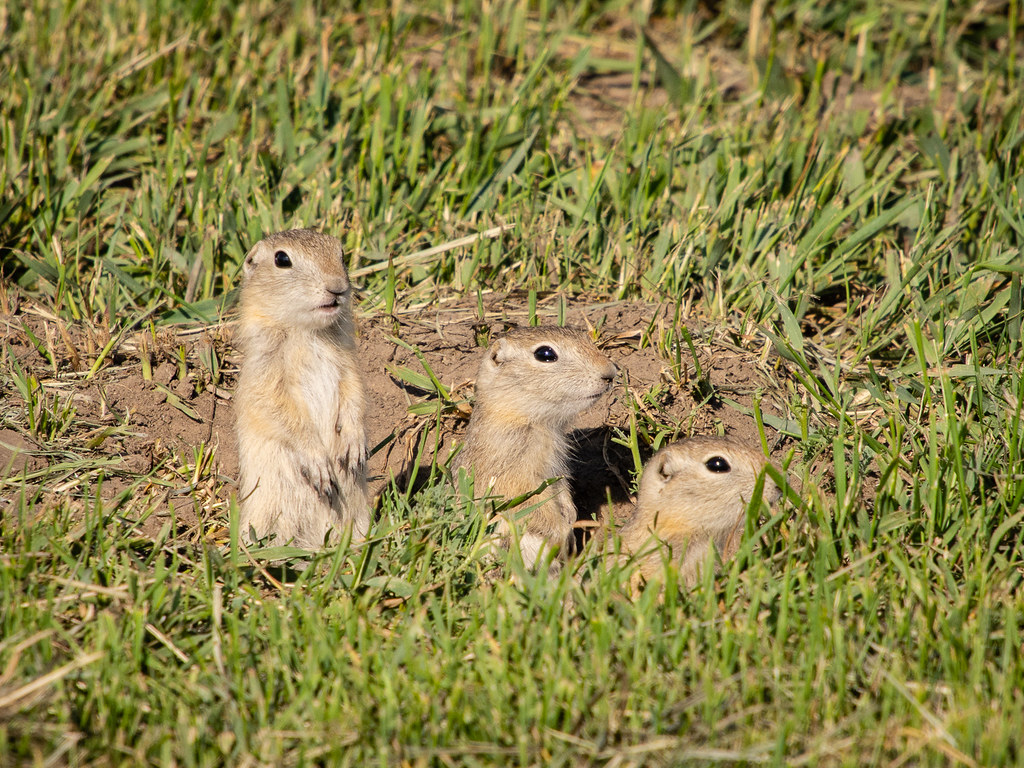
gophers (Richardsons ground squirrels)

This Week’s Highlights 
“Storing and transporting excess renewable energy as hydrogen could reshape global energy politics. . . . Because the ones [countries] best equipped to export green hydrogen are so geographically and politically diverse—from Morocco to Australia to Norway—the rise of green hydrogen may lower the temperature on international oil and gas politics, as well as the global climate.” 

Regina Public Library is hosting an online program about artists who focus on sustainability at 7 pm, June 3. 

Upcoming Events 
City of Regina residents can dispose of hazardous waste from 4-7 pm on Friday, 9 am-4 pm, Saturday, and 9 am-4 pm, Sunday, May 28-30. 

Nature Saskatchewan is hosting World Migratory Bird Day celebrations on May 29 in Regina. Register in advance. 

Learn wildlife tracking skills and how to put them to use in the summer in a Nature Conservancy of Canada webinar at 6:30 pm, May 31. 

Nature Regina will hold an online annual general meeting at 7 pm, May 31. 

The Provincial Association of Resort Communities of Saskatchewan is hosting a webinar on keeping invasive species out of our lakes at 7 pm, June 2. 

Mark Jaccard will host a discussion of his book, The Citizen’s Guide to Climate Success, at the breakfast meeting of the Energy Management Task Force. 


Saskatoon Nature Society – Golden Eagles 
June 3, 9 am – Donna Birkmaier Park 
June 10, 9 am – Chappell Marsh/Richard St. Barbe Baker Afforestation Area 
Retirees and partners who are interested in birds and the natural world are invited to participate

Other Saskatoon Nature Society Field Trips 
June 5, 8 am-noon – Birding in Dundurn Area Pastures 
June 6, 1-3 pm – Arbor Week Hike 
June 11, 9:30-11:30 pm – Firefly Hike to NE Swale 
June 13, 8:30 am-2 pm – Member Visit to NCC Asquith Site 
June 15, 6:30-9 pm – Wildflowers at the Small Swale 
Field trips are currently for members only, so sign up now. Advance registration is required.
 
Golden bean

Did you know? Indigenous peoples of North America used the golden bean flowers to make a yellow dye (Nature Companion, a free nature app for Canada’s 4 western provinces is downloadable directly from its website

Plastics 
Every year 380 million tonnes of plastic are produced and just 16% is recycled. But what if we could unmake it? “Chemical recycling is an attempt to recycle the unrecyclable. Instead of a system where some plastics are rejected because they are the wrong colour or made of composites, chemical recycling could see all types of plastic fed into an ‘infinite’ recycling system that unmake plastics back into oil, so they can then be used to make plastic again.” 


Wind Energy 
Wind turbines pose a threat to birds. Fortunately, high-tech safeguards are being developed to ensure birds’ safety


EcoFriendly Sask supports Saskatchewan environmental initiatives through an online publication, an events calendar, small grants, and the Nature Companion website/app. You can follow EcoFriendly Sask by liking us on Facebook, following us on Twitter, or by email (top right corner).

Tuesday, 29 October 2019

EcoSask News, October 29, 2019

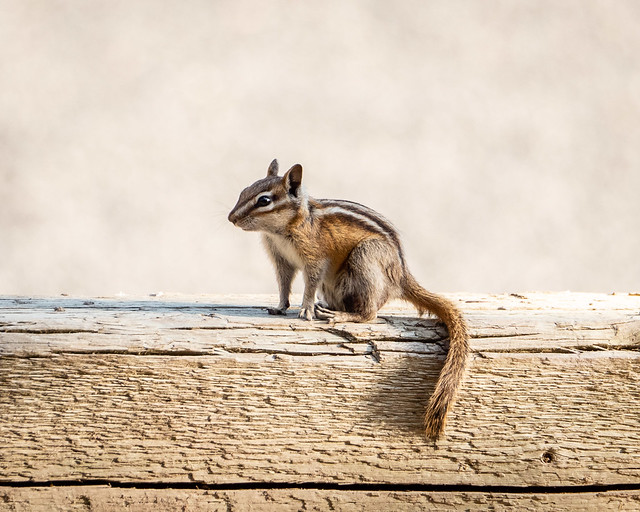
chipmunk

Upcoming Events
Place-Based Education, Nov. 1 (Saskatoon) 
Join Janet McVittie and Sonal Kavia to discuss place-based education: place, space, and mindfulness at 4:30 pm, Nov. 1, in the SERI Meeting Space, College of Education.

Household Hazardous Waste, Nov. 3 (Saskatoon) 
You can dispose of household hazardous waste at City of Saskatoon’s Civic Operations Centre from 9 am – 3:30 pm, Nov. 3.

Climate Youth Voice, Nov. 6 (Saskatoon) 
Saskatoon Enviro Collective is hosting a panel discussion and group conversation for adults to hear from youth about climate change from 7-8:30 pm, Nov. 6, at Station 20 West.

National Energy Code, Nov. 6 (Saskatoon) 
Kelly Winder will provide an overview of the National Energy Code for Buildings at the Nov. 6 breakfast meeting of the SK Energy Management Task Force.

The Pollinators, Nov. 11 (Regina, Saskatoon) 
Sign up now if you would like to attend a special screening of The Pollinators in Regina or Saskatoon.

Looking Ahead
Native Prairie Restoration/Reclamation and Transboundary Grasslands Workshop, Feb. 25-27 (Regina)
In 2020, SK PCAP is combining two workshops: the 7th Native Prairie Restoration and Reclamation Workshop and the 5th Transboundary Grassland Workshop, February 25-27 in Regina.

A full list of upcoming events can be found on the EcoFriendly Sask Calendar 

chipmunk

In the News
Urine diverting vermicomposting toilets are being installed along the Churchill River.

Positive media coverage of repair cafés in Regina and Swift Current this past weekend.

Citizens of all ages urge rethink of Saskatoon Freeway.

City of Victoria plans to protect any tree that is a foot thick or more.

SUVs have contributed more to the increase in global CO2 emissions than airlines, trucks, or heavy industry. And they’re far more likely than smaller vehicles to kill pedestrians and other drivers.

Kids raised in walkable communities earn more money as adults.

Small adjustments to wind turbines can reduce impacts on birds.

A visual depiction of the impact of the proposed Trans Mountain Pipeline on Vancouver’s harbor, Boundary Pass, and Juan de Fuca Strait.

Wilderness areas act as a buffer against species loss and could reduce extinction risks by more than half.

In an urban wilderness, “invasive” species may have a role to play.

David Attenborough, storyteller, and Yvon Chouinard, Patagonia, share their approaches to saving the planet.

Bat noises aren’t random. They’re complaining about food, position, unwanted sexual advances, and pushy neighbours.

Blueprint for Revolution: How to use rice pudding, Lego men, and other non-violent techniques to galvanise communities, overthrow dictators, or simply change the world [book review].

EcoSask News is a weekly round-up of local news and events. Email us if you have items you would like us to include. 

You can follow EcoFriendly Sask by liking us on Facebook, following us on Twitter, or by email (top right corner).
Tuesday, 27 August 2019

EcoSask News, August 27, 2019

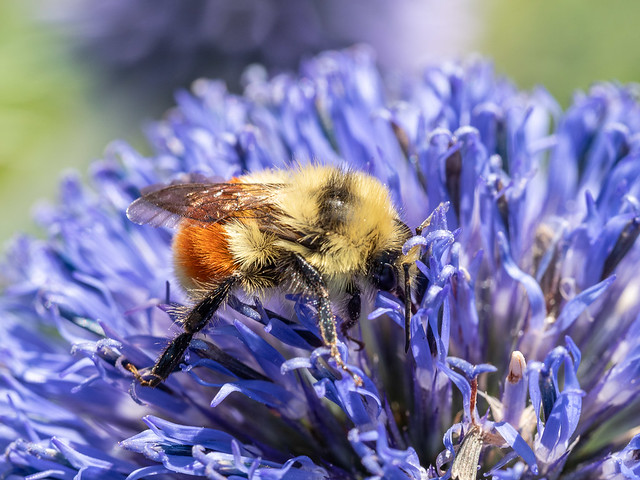
bee on globe thistle

Upcoming Events
Eco-Scavenger Hunt, Aug. 31 & Sept. 7 (Saskatoon) 
Join Meewasin’s Eco-Scavenger Hunts on Aug. 31 and Sept. 7. Great opportunities to explore the Northeast Swale in the company of experts and try your hand at identifying all the species you discover. The Small Swale isn’t normally open to the public so don’t miss this opportunity on Sept. 7.

Energy Usage & GHG, Sept. 4 (Saskatoon) 
Kevin Hudson will discuss energy usage and greenhouse gas emissions at the Sept. 4 breakfast meeting of the SK Energy Management Task Force.


Looking Ahead 
Saving the Sage Grouse, Sept. 14 (Val Marie) 
Help make the fencing more wildlife-friendly at the Nature Conservancy’s Wideview property from 10 am-3 pm, Sept. 14.

Junior Nature Sketch, Sept. 21-Nov. 2 (Saskatoon) 
Junior Nature Sketch, Sept. 21-Nov. 2, is a 6-week program guided by an artist and a naturalist for children ages 5-12.

Adult Nature Sketch, Sept. 21-Nov. 2 (Saskatoon) 
Adult Nature Sketch, Sept. 21-Nov. 2, is a 6-week program guided by an artist and a naturalist.

Festival for Future, Sept. 27 (Regina) 
Regina Festival for Future is looking for speakers, musicians, artists, poets, and more to participate in the festival from 7-10 pm, Sept. 27.

Nature Retreat, Sept. 27-29 (Ness Creek) 
Join SaskOutdoors for a nature retreat at Ness Creek from Sept. 27-29.

Nebo Photography Walk, Sept. 28 (Prince Albert) 
Practise your photography at Nature Conservancy’s Nebo property from 10 am-3 pm, Sept. 28.

A full list of upcoming events can be found on the EcoFriendly Sask Calendar 

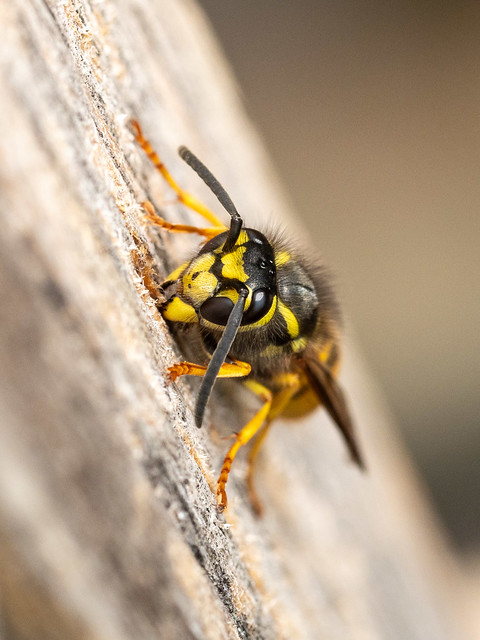
Yellowjacket wasp collecting wood fiber

In the News
Waterflooding, a conventional form of oil extraction, could contaminate Saskatchewan’s drinking water. [@BeingGreenSask told us on Twitter, “Stopped recently at #alberta tourism in Lloydminster. Temporary boilwater signs getting old there now. Staff advised not filling our water bottles. Quote: 'This is Husky land'. Yes. Seriously said that.”]

Prairie grasslands – diversity rivalling anything you've ever seen – and all below knee level.

Eleven nature books for children, including one by Saskatchewan’s own Candace Savage.

UK scientists have found that biodiversity, particularly water plants and beetles, is much higher in beaver ponds than in other wetlands in the same region.

The Netherlands’ climate plan is wide-ranging, from overhauling homes to better manure-processing techniques.

Littering the moon's surface are 181,000 kg of forgotten trash. From outer space to the depths of the ocean, “we are garbage.”

Reinventing the small wind turbine could address issues of reliability, embodied energy, and limited power output – and improve public acceptance.

“The ‘war on cars’ is a bad joke. . . . Much of what motorists call a ‘war on cars’ consists of efforts to increase the safety, convenience and comfort of other travel modes.”

The media plays a role in shaping societal attitudes. It’s encouraging to see The Guardian newspaper promoting car-free holidays, such as Leave the car at home, see the UK coast without driving or How to see five UK national parks by public transport.

EcoSask News is a weekly round-up of local news and events. Email us if you have items you would like us to include. 

You can follow EcoFriendly Sask by liking us on Facebook, following us on Twitter, or by email (top right corner).
Tuesday, 4 June 2019

EcoSask News, June 4, 2019

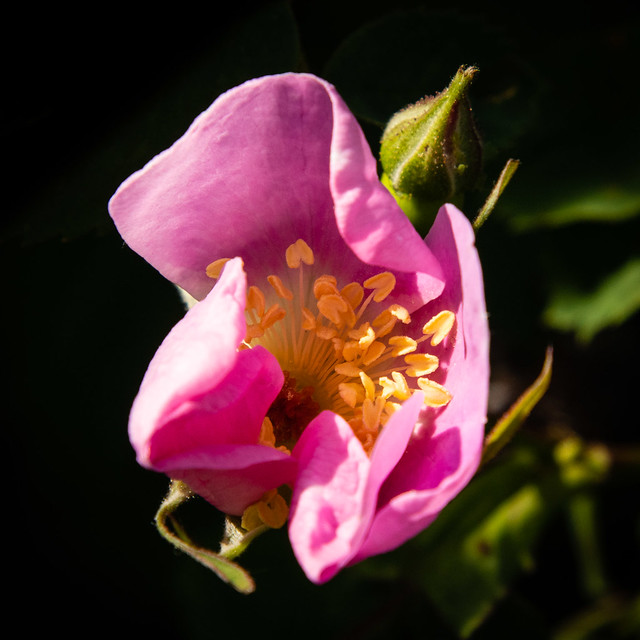
wild roses

Upcoming Events
Green New Deal Town Hall, June 5 (Prince Albert)
Prince Albert Council of Canadians is hosting a Green New Deal Town Hall at 7 pm, June 5.

North Sask River Basin Council AGM, June 5 (Cochin)
The North Saskatchewan River Basin Council is holding its annual general meeting from 9:30 am-2 pm, June 5, in Battlefords Provincial Park. There will be speakers on agricultural water management and stream flow response to anthropogenic change.

Will Carbon Pricing Cause a Recession in SK, June 6 (Regina)
There will be a presentation on the impact of carbon pricing on Saskatchewan’s economy at noon, June 6, in the Multipurpose Hall, CB 139, College Avenue Campus, University of Regina.

School Climate Strike, June 7, 14, 21, 28 (Regina)
School Climate Strikes are ongoing in Regina with events planned on June 7, 14, 21, and 28.

Planting Summer, June 8 (North Battleford)
Kids ages 5-12 are invited to help plant the children’s garden at North Battleford Library starting at 2 pm, June 8.

Snakes in Saskatchewan, June 11 (webinar) 
Christopher Somers will discuss snakes in Saskatchewan in a noon-hour webinar on June 11.

Hug a Tree and Survive, June 13 (Prince Albert)
Prince Albert North Search and Rescue is offering an Adventure Smart program that helps kids lost in the woods at 7 pm, June 13, in Prince Albert.

Looking Ahead 
Sask Summer Star Party, Aug. 28-Sept. 2 (Cypress Hills) 
The annual Saskatchewan summer star party will be held Aug. 28-Sept. 2 at Cypress Hills Interprovincial Park.

A full list of upcoming events can be found on the EcoFriendly Sask Calendar 


wild roses

In the News
If you see a bullsnake (dead or alive) during your summer travels, especially in southwest Saskatchewan, email the Royal Saskatchewan Museum at snakes@royalsaskmuseum.ca to contribute to a current research project.

Recycling successes and failures in Regina and Saskatoon.

It’s taken 8 years, but a settlement in a long-running drainage dispute in east-central Saskatchewan is finally in the works.

First Nations Power Authority has entered into an agreement with SaskPower to add 20 megawatts of solar power to the grid in the next 20 years through 2 projects: a solar farm to be constructed by the George Gordon and Starblanket First Nations near Weyburn and a partnership with Cowessess First Nation.

Alberta and Saskatchewan's ever-rising share of Canada's climate pollution is making it increasingly impossible for Canada to meet its climate obligations.

Whistles and cameras could prevent bats and birds from running into wind turbines.

“The Center for Biological Diversity today launched a lawsuit against the U.S. Department of Agriculture’s Wildlife Services program for killing California beavers: ‘Our federal government needs to stop shooting and trapping native beavers whose ponds are safe havens for other wildlife.’ Last year, in response to a similar litigation threat, Wildlife Services agreed to stop killing beavers, river otter, muskrat and mink in Oregon.”

Waitrose, a major supermarket chain in the UK, is trialling package-free shopping.

10 tips to help you save money and reduce vehicle pollution.

EcoSask News is a weekly round-up of local news and events. Email us if you have items you would like us to include. 

You can follow EcoFriendly Sask by liking us on Facebook, following us on Twitter, or by email (top right corner).

Tuesday, 3 July 2018

EcoSask News, July 3, 2018

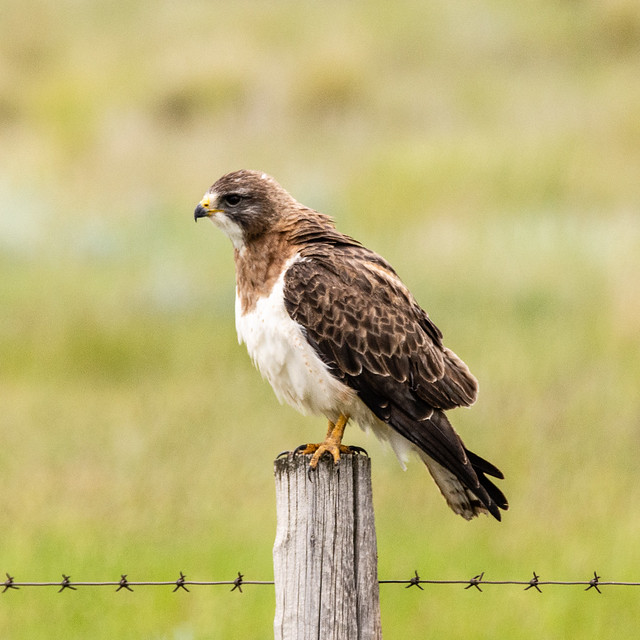
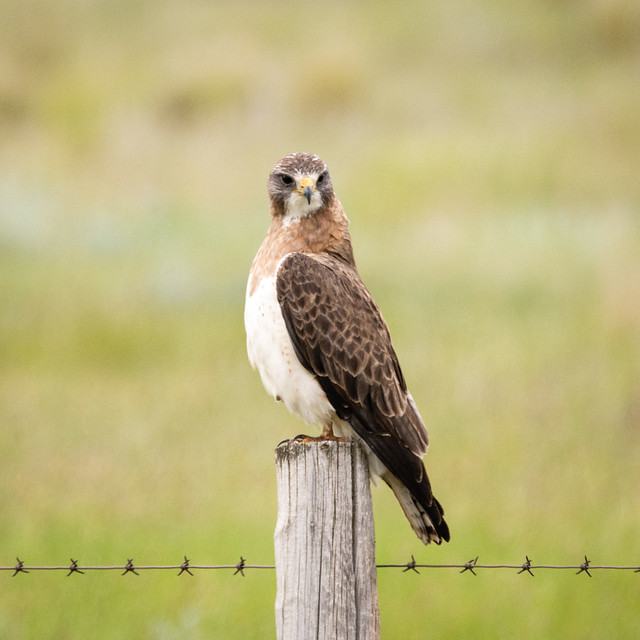
Swainson's hawk

Blue Hill Wind Energy Project, July 10
Nature Regina is urging concerned citizens to contact the Ministry of Environment by July 10 to raise concerns about the siting of the Blue Hill Wind Energy Project. According to Nature Regina, the site chosen is in a major migration corridor close to Chaplin Lake and over 200 bird species have been sighted in this nesting and staging area.

Email, write, or call (deadline July 10, 2018): Aimann Sadik, Senior Environmental Assessment Administrator, Environmental Assessment and Stewardship Branch, Saskatchewan Ministry of Environment, 3211 Albert Street, Regina, SK S4S 5W6 Phone: (306) 787-7706 Fax: 306 787 0930 Email: environmental.assessment@gov.sk.ca

Upcoming Events 
Invasive Plants: The Urban/Rural Interface, July 5 (Saskatoon) 
Learn about invasive plants while visiting 5 Meewasin-managed properties from 6:30-9:30 pm, July 5.

Garden Patch Bioblitz, July 11 (Saskatoon) 
The Saskatoon Nature Society and the Saskatoon Food Bank and Learning Centre are hosting a bioblitz at the Garden Patch from 6-8 pm, July 11.

Nocturnal Birds, July 12 (Saskatoon) 
Lyndon Penner will talk about birds that live in the dark at 7 pm, July 12, at Wild Birds Unlimited.

Bat Chat & Bat House Build, July 14 (Redberry Lake) 
Join Melanie Elliot, Batrick, and Elizabat to chat about bats, make a bat house, and look for bats in the park on July 14 at Redberry Lake Regional Park.

Geeking Out, July 14 (Prince Albert)
Kids from grades K-6 are invited to attend interactive science activities presented by the Saskatchewan Science Centre from 9-12 am, July 14, at the John M. Cuelenaere Library.

Summer Plant Walk, July 14 (Regina)
Edible Landscapes Permaculture Design is hosting a walk on July 14 to learn about local wild edible and medicinal plants in the Regina area.

Swainson's hawk

Looking Ahead
Waste Reduction Workshops 
Saskatchewan Waste Reduction Council will be holding the following workshops:
Weyburn – Oct. 30
Prince Albert – Nov. 6
Kindersley – Nov. 14
Humboldt – Nov. 21

A full list of upcoming events can be found on the EcoFriendly Sask Calendar 

In the News 
Economists question Saskatchewan’s government-funded anti-carbon tax study

In considering oilsands projects, First Nations face impossible choices: “They are saying in order for you to survive in the economic system we have imposed on you, you have to join us”

Biological poverty - Why we need cities where you can take your shoes off and reconnect with the ground [book review]

Red wiggler worms could make stinky outhouses a thing of the past

Resurgence Voices - podcasts from The Resurgence Trust on ethical living, ecoactivism, and the arts

EcoSask News is a weekly round-up of local news and events. Email us if you have items you would like us to include. 

You can follow EcoFriendly Sask by liking us on Facebook, following us on Twitter, or by email (top right corner).
Thursday, 14 June 2018

The Transition to Renewable Energy in Saskatchewan

Columbia River wind farm

The University of Saskatchewan, in collaboration with World Wildlife Fund Canada, hosted two renewable energy panel discussions on May 28, 2018. The following article summarizes some of the key points raised by presenters.

Meeting Saskatchewan’s Long-term Energy Needs
Douglas Opseth, Director of Generation Asset Management and Resource Planning at SaskPower, started off the morning’s discussion by outlining the challenges the company faces in meeting Saskatchewan’s long-term energy needs. There is a growing demand for electricity; however, Saskatchewan’s coal and natural gas plants and wind farms are aging and SaskPower is spending a lot on maintenance and building new facilities. The company plans to reduce emissions by 40% by 2030 with 50% renewables (30% wind, 15% hydro, 5% solar and biomass), but the other half of the mix is more uncertain. SaskPower would like to continue using coal, which is available in province. It’s still unclear whether this will be allowed under federal regulations. Natural gas is a good fit with renewables as it’s flexible; however, there are concerns about a sufficient supply if everyone switches to natural gas and/or if there is increased concern about fracking.

Guy Lonechild, CEO, First Nations Power Authority, pointed out that many First Nations communities have no reliable source of power and continue to use diesel. Opseth explained that the northern transmission line is completely separate and is only connected to the south through Manitoba. It is a long line over rough terrain and experiences a great many lightning strikes. In addition, northern residents are more vulnerable to power outages as the majority heat their homes with electricity.

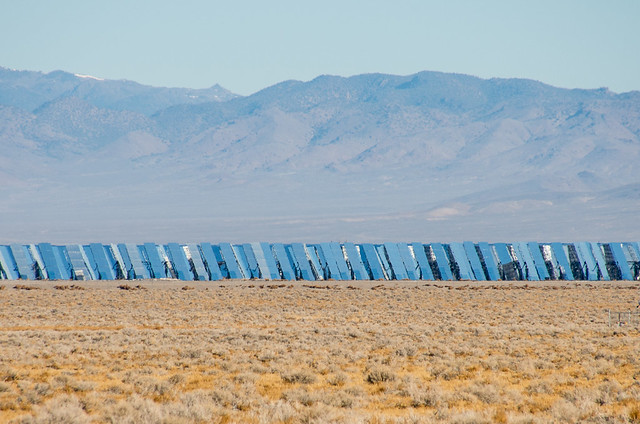
Solar Reserve

Lonechild would like to see the Small Producers program expanded to 1 megawatt as this could help relieve power fluctuations in many communities. He sees lots of opportunity for geothermal, which is expensive but could also supply heat and be used in conjunction with greenhouses. Lonechild views partnerships on renewable energy projects as a valuable opportunity for First Nations people to obtain education, training, and jobs. He pointed to SIGA’s success, identifying renewable energy as a new opportunity for Saskatchewan’s Indigenous people to be involved in the provincial economy. Lonechild also raised the possibility of increased self-government that would include environmental assessments and monitoring, wildlife management, and community energy. In closing, Lonechild emphasized bold thinking as we look to 2050 and beyond. He stated that Saskatchewan was a pioneer in carbon capture: why not look at battery storage?

Lonechild’s interest in community energy planning was shared by Ray Orb, President, Saskatchewan Association of Rural Municipalities. Orb stated that rural residents recognize the climate is changing but are strongly opposed to wind farms. People on acreages moved to the country to enjoy the wide-open prairie view and don’t want to live across from a wind farm. There is more support for solar farms on wasteland and SARM has identified an opportunity for rural municipalities, such as Corman Park, to provide power to nearby cities. Orb also suggested looking at new hydro projects with their spin-off benefits of irrigation, drinking water, recreation, and flood mitigation.

Opseth explained that renewables present new challenges. SaskPower currently has full control over power generation. They’ll lose that control as they introduce variable energy sources such as wind and solar. This is particularly challenging in Saskatchewan which has a very flat load demand as most electricity is sold to commercial customers that operate 24/7 (as opposed to a more residential region where there are peaks at different times of the day). SaskPower was set up to be the province’s sole energy provider. Individuals and groups are now introducing self-generation; however, they all want SaskPower as a backup.

A member of the audience emphasized the need for increased efficiency and energy conservation. Opseth noted that Saskatchewan has more transmission lines than anywhere else in North America. SaskPower is looking at ways to reduce losses that are inherent in moving energy over large distances to a dispersed population. One option is greater regional production. The company is also doing more work with industrial customers to enhance efficiency and energy conservation.

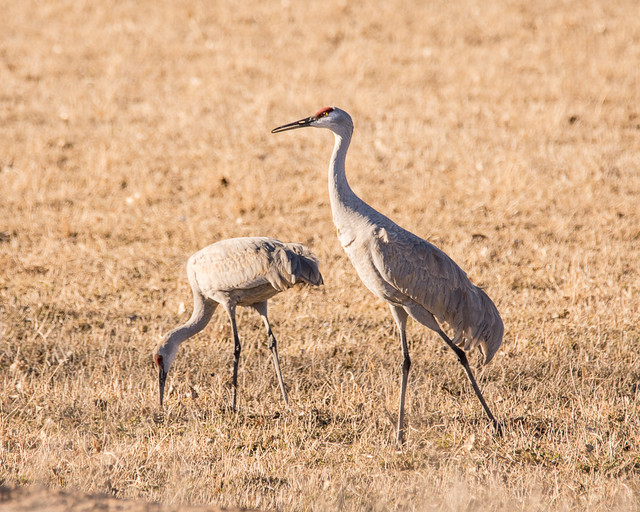
Sandhill cranes

Habitat-Friendly Renewable Energy
The goal of World Wildlife Fund Canada is to work with key partners in all sectors to advance science-based, solutions-oriented approaches to conservation problems. The organization recognizes that a large-scale transition to renewable energy will require new uses of landscapes and seascapes and have started developing a tool that maps both sustainable energy potential and areas with significant conservation value. The tool isn’t intended to bypass the regulatory process but is instead a broad brushstrokes approach to identifying potential sites, saving time and money by avoiding conflict with community and wildlife interests and enabling developers, governments, and communities to make better and faster decisions.

The tool was initially developed for New Brunswick and the Bay of Fundy and is now being rolled out to Alberta and Saskatchewan. Using a high conservation value framework (previously used by the Forest Stewardship Council), the tool maps species diversity, ecosystems, threatened habitats, ecosystem services, community and cultural values. It combines regulated (Saskatchewan’s wind directive, Alberta’s solar directive, historic sites) and non-regulated elements (important bird areas, endangered species, intact forests, potential for agriculture) with additional factors such as wind speed, hours of sunlight, distance from transmission lines. The focus in Alberta and Saskatchewan is on identifying opportunities for large-scale wind and solar farms.

The World Wildlife Fund is looking for partners, such as the University of Saskatchewan, to help them enhance the tool. For example, the community and cultural values need to be strengthened and they see potential for enhancing the tool’s predictive value based on past projects and shifting land use.

Photos: Esmeralda, Nevada, Solar Reserve; Columbia River Wind Farm

Tuesday, 6 February 2018

EcoSask News, February 6, 2018

winter sunrise

Upcoming Events
Winter Sustainability Week, Feb. 7-9 (Saskatoon)
It’s Winter Sustainability Week at the University of Saskatchewan with a winter cycling and maintenance workshop from 10 am-3 pm, Feb. 7; a sustainable clothes swap from 9 am-2 pm, Feb. 8; and a farmers’ market from 9 am-2 pm, Feb. 9.

We Were Once Wolves, Feb. 13 (Prince Albert)
Brad Muir, Sundogs Excursions, will discuss the boreal forest ecosystem and its canine representatives at 7 pm, Feb. 13, at the John M. Cuelenaere Library.

Food Evolution, Feb. 13 (Prince Albert)
The John M. Cuelenaere Library is showing the film Food Evolution at 7 pm, Feb. 13.

Climate Change & Canadian Public Opinion, Feb. 14 (webinar)
The Sustainability Network is hosting a webinar on Climate Change & Canadians: New Public Opinion Research by Ecoanalytics on Feb. 14.

Wind Energy & Bats, Feb. 14 (Saskatoon)
Erin Baerwald will discuss wind energy development and bats at 3:30 pm, Feb. 14, at the U of S as part of the Wild Ecol Seminar series.

Beringia: Relics from the Ice Age, Feb. 15 (Regina)
Syd Cannings will share stories from his explorations in Beringia and discuss how an environment’s past shapes its future at 7:30 pm, Feb. 15, at the Royal Saskatchewan Museum.

Australia’s Biological System, Feb. 15 (Saskatoon)
There will be a presentation on Australia’s biological system at the Feb. 15 meeting of the Saskatoon Nature Society.

Sustainability Slam, Feb. 15 (Saskatoon)
The U of S Graduate Students’ Association is holding a Sustainability Slam on Feb. 15.

Winter Birds & Wildlife, Feb. 17 (Regina)
Join Nature Regina for a Wascana winter birds and wildlife field trip from 10 am-12 pm, Feb. 17.

Looking Ahead
Winter Family Nature Play Retreat, Feb. 19 (Earl Grey)
Wild Spirit Prairie Sanctuary is hosting an outdoor play day for the whole family on Feb. 19.

Compost Coach Training, Mar. 3 & 4 (Saskatoon)
Take the two-day training on Mar. 3 & 4 and join Saskatoon’s team of compost coaches.

Basic Wildlife Rehabilitation Course, Mar. 17-18 (Saskatoon)
The International Wildlife Rehabilitation Council is offering an introductory course for beginning or novice wildlife rehabilitators Mar. 17-18.

Passive House Designer/Consultant Exam, Mar. 24 (Saskatoon)
Passive House Canada is providing an opportunity to take the Certified Passive House Designer/Consultant exam on Mar. 24 in Saskatoon.

Untitled

Saskatoon Nature Society
Feb. 11, 1-3 pm – Chorney Acreage Bird Feeders
Feb. 17, 1-3 pm – Weir & City Park Birding
Check the Saskatoon Nature Society’s website for full details and updated information.

A full list of upcoming events can be found on the EcoFriendly Sask Calendar 

Water Security/Sustainable Environmental Management
Apply by March 30 for the U of S School of Environment and Sustainability’s Master’s programs. The Master of Water Security investigates concerns such as drought and climate change using a holistic approach that incorporates science, social dynamics, and policy. The Master of Sustainable Environmental Management, a transdisciplinary, project-based degree, develops a student’s ability to assess and evaluate sustainability issues and their potential solutions.

Marsh Monitoring Program
Bird Studies Canada is looking for volunteers to install wetland monitoring recording units. Email LeeAnn Latremouille for more information.

Marcella Pedersen: Global Citizen Award 2018
Marcella Pedersen has received a 2018 Global Citizen Award from the Saskatchewan Council for International Cooperation. She and her husband are members of the North Saskatchewan River Environmental Society, live in a passive solar-heated house, have installed 4 wind turbines on their farm, and use solar panels to heat the honey house. Marcella promotes “food sovereignty through sustainable cropping practices, such as gardening, saving seeds, mulching, and protecting the soil rather than mining it.”

In the News
Don’t have a compost bin? Maybe your neighbours will share theirs: Share Waste.

Edmonton's green spaces network is designed to support healthy ecosystems, diverse wildlife habitats, and quality of life.

"Beetles are, without a doubt, the most important organisms on the planet."

EcoSask News is a weekly round-up of local news and events. Email us if you have items you would like us to include. 

You can follow EcoFriendly Sask by liking us on Facebook, following us on Twitter, or by email (top right corner).
Tuesday, 21 November 2017

EcoSask News, November 21, 2017

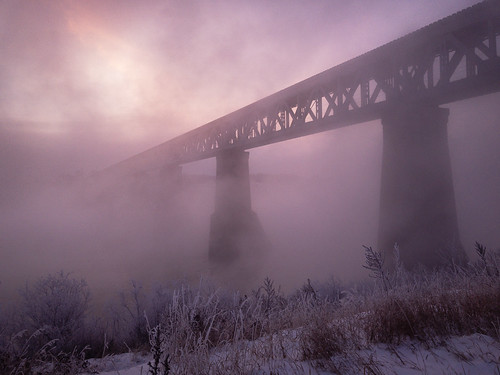
foggy winter sunrise

Upcoming Events
Fall Food Fair, Nov. 22 (Prince Albert) 
The Prince Albert Food Coalition is holding a Fall Food Fair from 5:30-7:30 pm, Nov. 22.

Bird Habitat & Biodiversity at the NE Swale, Nov. 22 (Saskatoon) 
Renny Grilz, Meewasin Valley Authority, will discuss Enhancing Grassland Bird Habitat & Biodiversity at the Northeast Swale as part of the WildEcol seminar series at the University of Saskatchewan at 3:30 pm, Nov. 22.

Not Just Flat: SK Geological Sites, Nov. 23 (Regina) 
The University of Regina’s Science Pub series is offering a talk, Not Just Flat: Top Geological Sites of Saskatchewan, from 5-7 pm, Nov. 23.

Why Grasslands Matter, Nov. 23 (Regina) 
Nature Conservancy of Canada is presenting a panel discussion on Why Grasslands Matter at 7 pm, Nov. 23, in Regina.

Walking Saskatoon, Nov. 26 (Saskatoon) 
Everyone is welcome at the upcoming meeting of Walking Saskatoon from 1-3 pm, Nov. 26.

Moose Jaw Nature Society, Nov. 27 (Moose Jaw)
Moose Jaw Nature Society will be meeting on Nov. 27 at 6:30 pm to make ornaments and decorate a tree for wildlife. Check out the recipes and ideas on their Facebook page.

From Global to Local, Nov. 28 (webinar)
Nature Canada is hosting a webinar panel to discuss interdependencies and the need for global governance systems to protect critical habitats and migratory paths from 10-11:30 am PST, Nov. 28.

The Battle for Dark Skies in Saskatchewan, Nov. 28 (Saskatoon)
Rick Huziak will discuss what stands in the way of eliminating light pollution at the 7:30 pm, Nov. 28, meeting of Café Scientific.

Want Local Food?, Nov. 29 (Regina) 
Permaculture Regina is screening the documentary, Cultivating Calgary’s Local Food Resiliency followed by a discussion about local food production at 7 pm, Nov. 29.

Sagebrush Restoration for Greater Sage-Grouse, Nov. 29 (webinar) 
Autumn Watkinson will present a webinar on Sagebrush Grasslands Restoration for Greater Sage-Grouse Recovery at noon, Nov. 29. (EcoFriendly Sask is pleased to be a sponsor of the PCAP-SK Native Prairie Speaker series.)

Wymark Wind Project Open House, Nov. 29 (Swift Current) 
ENGIE Canada Inc. is holding an open house from 4-8 pm, Nov. 29, in the Chinook Golf Course restaurant to solicit feedback on their plans for the Wymark Wind Project, 25 km southeast of Swift Current.

Benchlands Wind Project Open House, Nov. 30 (Gull Lake)
ENGIE Canada Inc. is holding an open house from 4-8 pm, Nov. 30, in the Gull Lake Community Hall to solicit feedback on their plans for the Benchlands Wind Project, 80 km southwest of Swift Current.

Co-existing with Coyotes (webinar) 
Join Lesley Sampson of Coyote Watch Canada for a webinar on co-existence programs, community buy-in, and what can lead to success or failure for co-flourishing with coyotes.

foggy winter sunrise

Saskatoon Nature Society Field Trips
Saskatoon Young Naturalists 
Jan. 13, 1-3 pm – Snowshoeing
Jan. 20, 1-3 pm – Tracks and Scats
Space is limited; register early to avoid disappointment.
Other Saskatoon Nature Society Field Trips 
Nov. 26, 2-3 pm – Pre-Grey Cup Birding at President Murray Park
Dec. 2, 9 am-5 pm – Gardiner Dam Birding
Check the Saskatoon Nature Society’s website for full details and updated information.

Looking Ahead 
Native Plant Society of Saskatchewan AGM & Conference, Jan. 27 & 28 (Regina)
The Native Plant Society of Saskatchewan will hold their annual general meeting and conference in Regina, Jan. 27 & 28. This year’s theme is A Prairie Patchwork: Selected Topics on Native Prairie and keynote speakers are Branimir Gjetvaj and Trevor Herriot.

The Prairie Ecosystems learning module of the Saskatchewan Master Naturalist program is scheduled for Jan. 28.

A full list of upcoming events can be found on the EcoFriendly Sask Calendar 

In the News
Let’s give this road to the birds.

“A coal phase-out is not only attainable but an imperative for better health and climate change mitigation, and the longer the province puts off planning for this inevitable transition the more difficult it is going to be.” (Climate Justice Saskatoon)

“H. sapiens depends utterly on a rich diversity of life-forms to provide various life-support functions essential to the existence and continued survival of human civilization.” Accelerating biodiversity loss poses as big a threat as climate change.

Armchair ecotourism: “For no reason that I can describe, I have a deep yearning to visit the desert south of Arizona. However, this would involve an 11-hour flight each way – bypassing so many other places en route – and then lots of driving, and I'd be exerting ecological pressure on an ecosystem from which it would be unfair to expect support for large numbers of non-desert humans. So I've opted, instead, for an armchair surrogate in the form of second-hand copy of the Time-Life natural history book Cactus Country.”

Solar power is expanding - but so is oil use. “It is far too early to write the obituary of oil as growth for trucks, aviation, petrochemicals, shipping, and aviation keep pushing demand higher.”

EcoSask News is a weekly round-up of local news and events. Email us if you have items you would like us to include. 

You can follow EcoFriendly Sask by liking us on Facebook, following us on Twitter, or by email (top right corner).

Thursday, 7 September 2017

Renewable Energy Success Stories from Indigenous and Remote Communities in Alaska

Fire Island wind turbine

The School of Environment and Sustainability, University of Saskatchewan, in conjunction with Saskatchewan Polytechnic held a one-day public symposium on Renewable Energy in Remote and Indigenous Communities on September 5 in Saskatoon. 

The symposium was the first step towards creating “the world’s first global consortium focused on addressing the challenges and possibilities associated with renewable energy in remote and Indigenous communities. . . . Investment in the renewable energy sector provides an enormous opportunity to address local energy needs and increase quality of life, while meeting regional, national and international emissions targets. Our work will not only produce critical research and innovation in the field of renewable energy, but help Indigenous and remote communities enjoy the benefits of stable power sources.”

See also: The Future of Renewable Energy in Indigenous and Remote Communities

AVEC wind tower crew travel arrangements

The Alaska Experience 
The symposium’s first panel was composed of three people from Alaska: Gwen Holdmann, Director, Alaska Center for Energy and Power; Meera Kohler, CEO, Alaska Village Electric Cooperative; and Ethan Schutt, Senior Vice-President Land and Energy Development, Cook Inlet Region Incorporated.

Gwen Holdmann explained that Alaska is twice the size of Texas with a dispersed population, fragmented grid, a limited road network, a harsh and changing climate, stranded resources, and at the end of supply lines. 200 to 250 communities are not connected to the grid, and there are over 92 utilities (village and regional, profit and not-for-profit).

Alaska has made a stronger per capita investment in renewable energy than other states with a strong focus on wind energy. Initiatives have been community-driven: “That’s how we operate in Alaska” Holdmann says. Alaska's Renewable Energy Fund has played a key role in financing project start-ups.

AVEC tug and barge sets

Alaska Village Electric Cooperative 
The Alaska Village Electric Cooperative (AVEC) was established in 1967 and now incorporates 11,000 meters, 50 geographically dispersed communities, 50 power plants, 8.5 million gallons of diesel, 34 wind turbines, and 2 solar PV arrays. They operate two tug and barge sets to deliver diesel fuel to communities; fuel is flown in to 3 other communities. They are currently setting up additional wind turbines and hope to produce 2900 KW of wind energy in 2018. Their goal is to reduce diesel by 35% in the next 3 years.

Meera Kohler explained that AVEC’s key challenges are small power plants with low generation efficiencies, a lack of technical resources and manpower, the high cost of fuel, lack of capital for renewals and overhauls, and alternative technology that is too expensive to operate and maintain. 

AVEC “officials see hybrid microgrids, harnessing renewable energy and emerging technologies as keys to cost stability and savings to its members.”

Fire Island Wind

Fire Island Wind
Cook Inlet Region Inc. (CIRI) is one of 12 land-based Alaska Native regional corporations created by the Alaska Native Claims Settlement Act of 1971. CIRI’s mission is to promote the economic and social well-being, native heritage, and self-sufficiency of its 8,800 Native shareholders.

It operates a number of different energy projects. One of these is Fire Island Wind. 11 turbines on an island 3 miles off the coast of Anchorage supply energy to Alaska’s largest city. The project began delivering energy in 2012 and has the capacity to deliver energy to 7,000 homes.

Ethan Schutt says that Fire Island Wind faces some unique challenges. The only access is by plane or barge, and they have an insurance policy to cover lost production as winter repairs would be difficult. Laying the underwater transmission line was a complex process. Plans for a second phase have so far been unsuccessful. On the positive side, most of the energy is produced in winter when heavier loads of energy are required.

Fire Island Wind

Cordova Electric Cooperative
Representatives of Cordova Electric Cooperative also participated in the symposium. Cordova Electric Cooperative is the sole provider of electricity to an isolated coastal community. The Cooperative is member owned and operates a diesel plant and two hydroelectric plants. It has an underground electrical system to ensure reliability during wind, snow, and ice storms and has a strong focus on conservation and energy efficiency to reduce the community’s use of diesel fuel.

Local Initiatives
Saskatchewan Environmental Society Solar Co-operative
First Nations Power Authority


Tuesday, 10 January 2017

EcoSask News, January 10, 2017

late light

Upcoming Events
Endurance, Jan. 6 – Feb. 19 (Regina)
Todd Mintz’s underwater and nature photography is on display at the Saskatchewan Science Centre from Jan. 6 to Feb. 19.

Let’s Talk Parks, Jan. 9-27
The federal government is hosting a public consultation on the future of Parks Canada. Share your views on Canada’s national parks, historic sites, and marine conservation areas from Jan. 9-27.

Contaminants in the Small Swale, Jan. 11 (Saskatoon)
Join the Northeast Swale Watchers at 4 pm, Jan. 11, for a discussion with guest speakers on contaminants in the Small Swale.

Secret Life of Owls, Jan. 12 
The Secret Life of Owls airs on CBC’s The Nature of Things on Jan. 12. The documentary “gives us a window into the life of this amazing species and introduces us to some passionate owl experts along the way.”

Procession West, Jan. 13 – Feb. 18 (Saskatoon)
Two photographers explore the Canadian West with large format cameras in the upcoming Procession West exhibit at the Saskatchewan Craft Council.

Reflections of a Farmer-Naturalist, Jan. 16 (Regina)
Lorne Scott will reflect on his life as a farmer-naturalist at the Jan. 16 meeting of Nature Regina.

The Messenger, Jan. 16 (Regina)
Watch The Messenger at 7 pm, Jan. 16, at the University of Regina.

Photography & Environmental Conservation, Jan. 17 (Saskatoon)
Photographer Branimir Gjetvaj will present his experiences working in the field of conservation photography and his efforts to inspire a deeper connection with nature at 7 pm, Jan. 17, at the Frances Morrison Library as part of the Sustainable Speaker Series.

Saskatoon’s Urban Forest, Jan. 19 (Saskatoon)
Jeff Boone, City of Saskatoon, will talk about Saskatoon’s urban forest at the Jan. 19 meeting of the Saskatoon Nature Society.

EcoParent, Jan. 19/25 (Regina)
Learn how to make reusable diapers that are both earth-friendly and affordable from 6:30-8:30 pm, Jan. 19, at the Prince of Wales Library, and from 6:30-8:30 pm, Jan. 25, at the Central Library in Regina.

Friends of Wascana Marsh AGM, Jan. 19 (Regina)
Friends of Wascana Marsh will be holding their AGM on Jan. 19 at the Saskatchewan Science Centre small theatre.

icy windows

Looking Ahead
SaskForward Summit, Jan. 28 (Regina)
The Government of Saskatchewan has embarked on a process of transformational change of the basic services it provides. SaskForward is a broad coalition of community organizations that believe that transformational change shouldn’t be carried out without public consultation. You can have your say online or by attending the SaskForward Summit, Jan. 28, in Regina.

Reclamation & Energy, Feb. 20-21 (North Dakota)
Reclamation & Energy: Innovation and Adaptation is the theme of the ND Reclamation Conference, Feb. 20-21, in Dickinson, North Dakota.

A full list of upcoming events can be found on the EcoFriendly Sask Calendar 

In the News
Small-scale, community-owned wind projects generate jobs and local support - but they’re not happening in Saskatchewan.

A new community program hopes to enlist homeowners in the battle to save Alberta’s bats from white-nose syndrome.

A new website showcases initiatives from around the world that might contribute to a sustainable future.

Check out this printable winter scavenger hunt for kids.

EcoSask News is a weekly round-up of local news and events. Email us if you have items you would like us to include. 

You can follow EcoFriendly Sask by liking us on Facebook, following us on Twitter, or by email (top right corner).
Tuesday, 8 November 2016

EcoSask News, November 8, 2016

autumn leaves

Upcoming Events
Tar Sands Art Exhibit, Nov. 4-Dec. 10 (Saskatoon)
Ernst Logar’s exhibit, Tar Sands: Approaching an Anthropocentric Site, is on display at Paved Arts from Nov. 4-Dec. 10. The exhibit focuses on the environmental impact that oil mining has upon the resource of water and the surrounding landscape.

Watching Wildlife in PANP, Nov. 9 (Saskatoon)
David Henry will present his book, Watching Wildlife in Prince Albert National Park, at 7:30 pm, Nov. 9, at Turning the Tide bookstore.


Passive House Days, Nov. 11-13 (Saskatoon)
Discover how a Passive House building is designed and built during International Passive House Days this coming weekend, Nov. 11-13: Friday 5 - 8 pm, Saturday & Sunday 10 - 3 pm, at 1104 Temperance Street.

Neonicotinoid Pesticides, Nov. 15 (Saskatoon)
Mike Cavallaro will discuss the environmental impacts of neonicotinoid pesticides at 7 pm, Nov. 15, as part of the Sustainable Speaker Series organized by the Saskatoon Public Library and the Saskatchewan Environmental Society.

John Murray @ Nature Moose Jaw, Nov. 16 (Moose Jaw)
Nature Moose Jaw is co-hosting a talk by John Murray on the flora and fauna of the boreal forest at noon, Nov. 16, at the Moose Jaw Public Library.

Milk River Meet & Greet, Nov. 16 (Mankota)
Join Nature Conservancy of Canada – Saskatchewan for a meet and greet in Mankota on Nov. 16.

Renewable Energy In and Around Saskatoon, Nov. 17 (Saskatoon)
David Henry will discuss renewable energy in and around Saskatoon at the Nov. 17 meeting of the Saskatoon Nature Society. The Saskatoon Nature Society meetings are held monthly at 7:30 pm in Room 106, Biology Building, University of Saskatchewan.

Porcupines to Polar Bears, Nov. 17 (Saskatoon)
Jerry Haigh reads from his latest book, Porcupines to Polar Bears: Adventures of a Wildlife Veterinarian, at 7 pm, Nov. 17, at McNally Robinson Booksellers.

For more book suggestions, check our list of Saskatchewan nature and environment books.

A full list of upcoming events can be found on the EcoFriendly Sask Calendar 

autumn leaves

"Kids in Nature" Grants
 The Saskatoon Nature Society is taking applications for the Kids in Nature Grant 2017. The Society has set aside approximately $2,000 for this year’s grant, designed to strengthen existing programs and encourage new initiatives that connect youth in the Saskatoon area with nature. Application deadline is December 31, 2016. Information and application are available on the Saskatoon Nature Society website.

In the News
SaskWind’s community renewable energy project in Swift Current has been put on hold as SaskPower refuses to consider the project at this time. Instead, SaskPower is proceeding with a gas-fired power station. SaskWind is calling for a federal Environmental Assessment of SaskPower’s project. They believe there are technically and economically feasible alternatives (i.e. wind) which SaskPower has not seriously considered prior to proposing this project.

Rock Paper Sun is posting great photo updates as they install a solar tracking system at the City of Saskatoon Landfill.


Los Angeles is taking a new approach to providing transportation services by focusing on mobility options, from car and bike sharing to addressing inequality and the needs of an aging population.

A six-storey, 85-unit, market-rental residential building in Vancouver aims to be Canada’s largest building certified as achieving the Passive House standard.

Quebec is investing in a multi-million dollar fence to protect drivers and wildlife. Along with the fence, there are new culverts and safe passages along the way for moose, deer, and bear to pass from one side of the highway to the other. There is also a smaller reptile barrier at the bottom of the same fence which is designed to save the many snakes and turtles killed on this road every year.

When will we make similar investments in Saskatoon and Saskatchewan?

EcoSask News is a weekly round-up of local news and events. Email us if you have items you would like us to include. 

You can follow EcoFriendly Sask by liking us on Facebook, following us on Twitter, or by email (top right corner).
Tuesday, 20 September 2016

EcoSask News, September 20, 2016

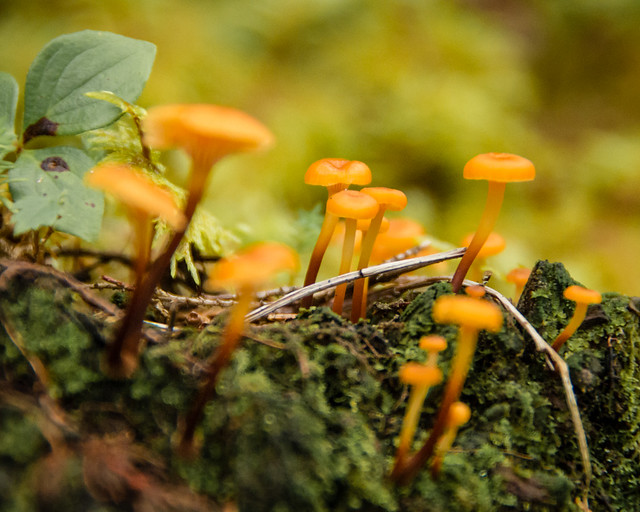
mushrooms

Upcoming Events
Saskatchewan’s Poisonous Plants, Sept. 20 (Prince Albert)
Forest ecologist Michael McLaughlan will talk about natural plant defence mechanisms in a National Forest Week presentation at 7 pm, Sept. 20, at the John M. Cuelenaere Public Library, Prince Albert.

Green Urban Initiatives, Sept. 20 (Prince Albert)
Brenda Wallace, Director, Environmental and Corporate Initiatives, City of Saskatoon, will be speaking about green urban initiatives at the annual general meeting of Renewable Power - the Intelligent Choice, 6:30 pm, Sept. 20.

Independent Assessment of Husky Oil Spill, Sept. 22 (Prince Albert)
Ricardo Segovia, an independent consultant with E-Tech International and Resurgence Environmental, will provide an overview of the results of the Husky Oil Spill at 7 pm, Sept. 22, at the John M. Cuelenaere Public Library, Prince Albert.

Hyde Wetland Fall Clean-Up, Sept. 24 (Saskatoon)
Rosewood Community Association is hosting a Fall Clean-up of the Hyde Wetland Naturalized Area from 10 am to noon on Sept. 24. Meet at the Hyde Park Bridge.

Science Fun, Sept. 24 (Saskatoon)
Celebrate Science Literacy Week with hands-on activities and a science show at J.S. Wood Library, 1-3 pm, Sept. 24.

Peregrine Falcons in Flight, Sept. 26 (Saskatoon) 
Observe peregrine falcons as they catch their prey on Sept. 26. Meet at Wild Birds Unlimited at 5:30 pm.

The Messenger, Sept. 29 (Saskatoon)
The Messenger, a documentary investigating the causes of songbird mass depletion, will be shown at 7 pm, Sept. 29, at the University of Saskatchewan.

Moose Mountain Wildlife Fundraiser, Oct. 1 (SK)
Moose Mountain R N R Wildlife Rehabilitation is holding a fundraiser on Oct. 1 at Kenosee Lake.

Jobs, Justice, Climate, Oct. 1 (Saskatoon)
Climate Justice Saskatoon is organizing a public march and rally for Jobs, Justice, Climate at 1 pm, Oct. 1, in Saskatoon. The event is a chance to compel the provincial premiers to develop a people’s climate plan.

Looking Ahead
Rubbish, Oct. 19 (Saskatoon)
The Saskatchewan Waste Reduction Council is celebrating its 25th anniversary with a 3-course meal prepared by The Hollows demonstrating how you can use “rubbish” such as beet leaves, carrot tops, or fruit pits to create a meal. There will also be a special “garbage” beer from Nine Mile Brewery.

A full list of upcoming events can be found on the EcoFriendly Sask Calendar

Save our Swale
Saskatoon residents, let’s tell our local politicians and political candidates to save our Northeast Swale - we’re not prepared to settle for anything less than the best we can imagine (https://www.youtube.com/watch?time_continue=13&v=tdXnT9y_5ow).


In the News
The Legend: Land of Gophers, a young adult fantasy novel by local author G. Garfield Storey, is in the tradition of Watership Down but with a prairie setting. For more book suggestions, check our list of Saskatchewan nature books.


The BirdSleuth Explorer’s Guidebook is a free guide to outdoor activities with kids published by the Cornell Lab of Ornithology.

The Saskatchewan government has denied the Chaplin Lake wind turbine project in order to protect migratory birds and has released new environmental siting guidelines.

Ontario's Climate Change Action Plan promotes near-net-zero housing and electric vehicles.

Killing predator animals doesn't prevent livestock loss - in fact, it could make it worse.

EcoSask News is a weekly round-up of local news and events. Email us if you have items you would like us to include. 

You can follow EcoFriendly Sask by liking us on Facebook, following us on Twitter, or by email (top right corner).