Showing posts with label Co-operative. Show all posts

Sunday, 21 March 2021

Regina Car Share Co-operative


1. How and when did you form your group? 
Regina Car Share Co-operative was formed in 2008 as an idea to reduce emissions and provide a service growing in popularity around the world. Regina is designed to be a car-centric city, so our members are typically people used to living without owning a vehicle but who like to use one occasionally to meet needs or desires not served by public transportation or bicycles. A few dozen people met a couple of times for community potlucks to discuss how to start a car share service, and we agreed a co-operative was the right way to proceed. With some government grant money to operate an office and a private loan to purchase a vehicle, we had our first car shared to members the following year. 

2. What are your principal activities and why do you believe they’re important? 
We principally exist as a way to reduce carbon emissions in our province, and we do that by operating a car share co-op in Regina. Members of our co-operative share use of vehicles that are generally better than ones they could privately own, and they take up less space and fewer resources by being shared. 

3. What were your successes (big or small) in 2020? 
We survived the first year of the pandemic without government assistance. Additionally, with the generous support of Affinity Credit Union, we were able to add 2 electric vehicles to our fleet, replacing one of our aging vehicles. 


4. What would you like to achieve in 2021? 
We hope to double our membership in 2021, which would support our expansion to other vehicle locations and types like a pickup truck. 

5. If you could have 3 wishes for improving your community, what would they be? 
Improved public transportation and cycling infrastructure are important to us because our members tend to use each when they don't use our service. The City Council motion to get Regina to 100% Renewable by 2050 is something we're interested in facilitating. 

6. Are there volunteer opportunities with your organization? If so, please describe them and indicate how people can contact you. 
Memberships in our Co-op are only $10, and members can serve on the Board of Directors. We're currently seeking 1-2 new board members to join our team of dedicated environmentalists who have a vision of a Renewable Regina and a passion to get there by operating Saskatchewan's first car share co-op. We could use a variety of skills, so please contact us at reginacarsharecoop@gmail.com or 306-550-7223. 

See Also 

We’re planning to highlight the work of volunteer organizations in our communities on a regular basis over the next year. Do email us if you would like your organization to be profiled on EcoFriendly Sask

EcoFriendly Sask supports Saskatchewan environmental initiatives through an online publication, an events calendar, small grants, and the Nature Companion website/app. 

You can follow EcoFriendly Sask by liking us on Facebook, following us on Twitter, or by email (top right corner).

Thursday, 11 March 2021

Community Highlight: Wascana Solar Co-operative


Wascana Solar Co-operative’s aim is to lead their community to cost-effective renewable energy solutions. 

1. How and when did you form your group? 
Wascana Solar Co-operative (WSC) began with two grassroots community meetings in Regina in 2017. It was at these meetings that our two foundational programs were born – Solar Investment Opportunity and Group Buy. 

2. What are your principal activities and why do you believe they’re important? 
With our Solar Investment Opportunity (SIO) program, co-op members purchase preferred shares ($1,000 each). We then reach out to potential partners who offer us space to install our systems. We help our partners “go green” while they pay us the cost of their power usage. 

In our Group Buy (GB) program, we organize a group of our members interested in purchasing panels, gather the technical requirements for solar projects, then tender it out in a request for proposal. In our first group buy we estimate that our group of 13 members collectively saved $67,000 off of the market rate on our panel purchases and installation (that’s an average of $5,000 each). To date, we have installed 353 solar panels through our three GB programs. 

3. What have been your successes and challenges? 
We have installed 468 panels in southern Saskatchewan through our SIO and GB programs. This is an estimated reduction of 150 tons of CO2 per year. We partnered with Conexus Credit Union and MiEnergy for our first SIO, installing 115 solar panels on the roof of the North Albert Conexus branch. 

In only our first year of incorporation as a co-operative (2018-2019), WSC installed a total of 398 panels through our SIO and GB programs. While some of this success was due to government subsidies at both the provincial and federal level, a very significant contributing factor was SaskPower's 1:1 net-metering program. The restructuring of this program into a net-billing program (more like 0.5:1) has devastated the solar energy industry in our province. 

In spite of this change, we remain confident in our ability to achieve our vision of "acting as a catalyst for growth in solar power." Both our SIO and GB programs still offer some of the most economical ways that Saskatchewanians can decrease their carbon footprints. 

4. What would you like to achieve in 2021? 
The Co-op enters 2021 with new board members and a revised business plan. We plan to introduce an energy monitoring program that would work in a similar way to our GB program. This program would enable those who were interested to assess their energy use throughout one calendar year so that the site-specific project economics could be evaluated and guide the property owner to better understand their project economics. 

We are also considering an industrial-size solar investment project such as the Saskatchewan Environmental Society Solar Co-op’s partnership with CNH Industrial and are considering several possible partnerships. 

The government has promised a home renovation incentive of up to $20,000 that applies to solar power installations, and this is being monitored by WSC. 

In addition to residential use, the GB program could also include one or more commercial projects. Please email info@wascanasolarcoop.com for more information. 

Under the direction of Andrew Tait, our second SIO installation is coming up soon. If you would like more information about this upcoming opportunity, please visit our website

If you live in Saskatoon, be sure to check out the SES Solar Co-operative

We’re planning to highlight the work of volunteer organizations in our communities on a regular basis. Do email us if you would like your organization to be profiled on EcoFriendly Sask

EcoFriendly Sask supports Saskatchewan environmental initiatives through an online publication, an events calendar, small grants, and the Nature Companion website/app. 

You can follow EcoFriendly Sask by liking us on Facebook, following us on Twitter, or by email (top right corner).

updated May 14, 2022 to remove personal phone numbers

Tuesday, 16 February 2021

EcoSask News, February 16, 2021

juvenile beaver

Good day! We’ve made a few changes to the newsletter this week. If you’re looking for additional information about one of the events, you’ll find it on the EcoFriendly Sask Calendar. We’ve also tried a new approach of grouping articles around a theme. We try very hard to find meaningful articles you might otherwise miss. Let us know what you think and have a good week. Andrew & Penny 

This Week’s Highlights 
Conscious consumerism: “Keep sustainability, love, and gratitude for the earth and all people at the centre of everything you do” 

The Let’s Talk About Water virtual film festival will be showing two films about groundwater (access, resource management, over-consumption) at 7:30 pm, Feb. 25, with a community discussion forum on Feb. 26

Upcoming Events 
EnviroCollective Regina will hold its monthly online meeting from 7-10 pm, Feb. 18

The WildEcol Seminar Series presents an online talk on tropical birds and forest fragmentation/restoration at 3:30 pm, Feb. 19

Join Saskatoon Nature Society on a birdwatching outing in City Park from 2-3 pm, Feb. 21
 
There will be an online panel discussion on creating a supportive policy environment for renewable energy co-operatives from 4-5:30 pm, Feb. 24

Children ages 6-12 are invited to register for Nature Regina's Get Outside! Kids’ Club at 10 am, Feb. 24 or Mar. 3

SaskOutdoors will train participants to become certified Growing Up WILD and Getting Little Feet WET Education facilitators from 7-9 pm, Feb. 25, Mar. 4, and Mar. 11 (online). 

Join Regina Public Library online to learn inexpensive strategies for building and living in an environmentally friendly way at 7 pm, Feb. 25

Find out all about burrowing owls in a Nature Saskatchewan webinar at 7 pm, Feb. 25

Explore Les Sherman Park with Nature Regina at 10, 11:15, 1, or 2:15 pm, Feb. 26

You’ll find information on these and other events on the EcoFriendly Sask Calendar

beaver

The Urban Environment 
Bird-friendly urban design makes for healthier and more pleasant cities for humans and other animals [interview with Timothy Beatley, author of The Bird-Friendly City

Construction projects threaten the urban forest by displacing trees and by damaging them during the construction process [more information is available from SOS Trees


Feeding pet cats meaty food and playing with them to simulate hunting stops them killing wildlife, according to a study 


Municipalities of Saskatchewan will lobby the provincial government for a water policy similar to Manitoba and Alberta and the publication of quarterly water test results [We’re Losing our Wetlands and That’s a Big Problem

EcoSask News is a weekly round-up of local news and events. Email us if you have items you would like us to include. 

You can follow EcoFriendly Sask by liking us on Facebook, following us on Twitter, or by email (top right corner). 

If you enjoyed this newsletter, please share it. Thank you! 


Thank goodness for our year-round avian friends who brighten our winter walks. One of our favorites is the magpie. [Nature Companion]

Sunday, 14 February 2021

Dragonfly Selfies & Powerful Discussions

dragonfly

Just for Laughs 
A pair of dragonflies offers lessons on the perfect Valentine’s Day selfie.

Upcoming Events 
Feb. 15 – role of small modular nuclear reactors in Saskatchewan
Feb. 18 – EnviroCollective Regina 
Feb. 19 – tropical birds & forest fragmentation/restoration 
Feb. 24 – support for renewable energy co-operatives 
Check the EcoFriendly Sask Calendar for full details 


Did you know? Dragonflies can only fly when it's warm, but some species can live for up to a year if they migrate away from the cold (Nature Companion)

Thursday, 30 January 2020

Regina's EnviroCollective


“A report came out recently saying we had only 12 years to make serious reductions in greenhouse gas emissions. That was a wake-up call for me,” says Shanon Zachidniak, Regina, Saskatchewan. “There had to be something more I could be doing.”

Shanon Zachidniak has a Master’s degree in Environmental Studies and has cared about the environment for as long as she can remember. In response to the report, Shanon posted on Facebook, inviting friends to get together to discuss climate change and see what could be done about it. “I thought we’d feel less isolated if we could discuss it as a group,” she says.

The response was far greater than expected, extending well beyond her group of friends, so Shanon moved the meeting to a public location. The group, now known as EnviroCollective, has continued on from there and celebrated its first-year anniversary at the end of November.

EnviroCollective is very much a grassroots initiative; nobody owns it. Participants are encouraged to propose initiatives and, if there’s enough interest and enough people who want to be involved, it ends up happening. The group has prioritized partnering with and maintaining good relationships with other environmental organizations. “We want to fill the gaps, not step on anyone’s toes,” Shanon explains.

“We are about connections, efficiencies. There is a role to play in helping connect groups, people, and resources. Funding dollars ask for more to be done with less, even though climate change is an actual existential threat. We need all-hands-on-deck, uniting behind the science,” offers Maureen Huot, a founding member.

One of the group’s first actions was to provide support for the intervenors in the carbon tax court case. EnviroCollective hosted a press conference for those intervening on behalf of the federal government and provided a space where intervenors could relax, conduct media interviews, network with each other, and watch a live stream of the court case. The space drew local activists as well as curious observers. Lasting connections were made as groups displayed banners, distributed information, and requested signatures on petitions. EnviroCollective was able to provide lunch and other refreshments each day thanks to local businesses and friends.


EnviroCollective was active in organizing the first student climate strikes in Regina. As an “adult ally” in a youth-led movement, they have helped the students take on the leadership role and EnviroCollective has stepped back, providing support as needed.

Mother Earth Justice Advocates (MEJA) is a local Indigenous-led group focusing on climate change and environmental initiatives through an Indigenous lens. EnviroCollective partnered with them to organize a book launch earlier this year and they have plans for several more joint activities. The partnership works well as the groups share a common belief in checking your ego at the door.

Partnership is a guiding principle for all EnviroCollective activities. When asked to speak to a high school class about climate change, EnviroCollective invited MEJA and Fridays for Future to join them. “There was nice representation from a variety of folks and perspectives and a good age range,” Shanon says. Some of the students attended the next event, a Youth Community Forum on Regina’s Energy Future, on November 30.

The Youth Community Forum was organized by EnviroCollective, Charged Up (David Suzuki Foundation), the Regina Public Interest Research Group ( RPIRG), and MEJA. Youth under 30 were invited to explore local actions on climate change in light of Regina City Council’s resolution to be 100% renewable by 2050. The crucial conversations that emerged from this event will be shared with City councillors and staff to help move forward with climate action. “We’re trying to build on the energy and the momentum from the global climate strikes and discuss some tangible actions people can be involved in here in Regina,” Shanon says.


EnviroCollective has also been approached by the Canadian Environmental Network (CEN) and Climate Reality, an international organization. CEN would like to reestablish an affiliate network in Saskatchewan, a role formerly filled by the Saskatchewan Eco Network, and Climate Reality has an opportunity for the group to be a hub for Regina.

The collective looks forward to further partnerships and is interested in playing a networking role with other organizations by giving them a platform to talk about what they’re involved in.

EnviroCollective is in the process of incorporating and has recently put in place a steering committee. Joining Shanon and Maureen are journalist Paul Dechene, former city councillor Rob Deglau, and lawyer Larry Kowalchuck. Shanon says future directions will depend on who’s involved, and EnviroCollective encourages anyone who is interested to get in touch.

“We welcome input from anyone interested,” Shanon says. “Come out and let your voice be heard.” 

You can contact Regina’s EnviroCollective on their Facebook page or by emailing envirocollective2018@gmail.com

Sunday, 20 October 2019

Supporting Sustainability Initiatives: Affinity Credit Union


As a Saskatchewan financial co-operative, Affinity Credit Union believes in building a better world by enabling members and communities to invest in one another. Approximately 6% of their pre-tax profits go back into the communities they serve through donations and sponsorships in four specific areas:

1. Building community assets and facilities (e.g. community rinks, parks, seniors’ centres);
2. Social and financial inclusion (e.g. financial literacy, anti-poverty, job readiness and mentoring programs);
3. Local economic development (other co-operatives, regional development authorities, non-profits engaged in revenue diversification, such as Habitat for Humanity ReStore, Crocus Co-op catering services); and
4. Environmental sustainability.

Community support is provided at a regional level through the district councils and at a provincial level by the head office. Along with the board and Indigenous Council, the districts help the corporate office stay in touch with what is happening around the province. The district councils often fund community assets and facilities, but they also work with the corporate office in considering sustainability projects. The corporate office funds province-wide initiatives as well as larger grants that will have a greater impact.

Environmental Sustainability 
Cara Bahr is the Community Engagement Manager for Affinity Credit Union and works with a six-person team to oversee the Credit Union’s donations and sponsorship program. “We’ve been supporting environmental initiatives for over 10 years. It’s very important,” she says. Here are a few of the many environmental sustainability projects the Credit Union has supported.

Solar-Powered Car Shares in Saskatoon and Regina
With support from Affinity and other community partners, the Saskatoon CarShare Co-operative became the first public carshare in Canada with 100% solar-powered electric vehicles. Affinity is now working with the Regina Car Share Co-operative to bring solar-powered electric carshare vehicles to Regina as well.


Zero-Waste Events
Over the past two years, Affinity has partnered with the Saskatchewan Waste Reduction Council to co-ordinate zero-waste events. They would like to expand the program to other major centres across the province but will need to ensure they have sufficient resources. For example, Saskatoon Loraas has a composting facility, which has been very useful in ensuring zero-waste events, but it’s the only one in the province.

Affinity is also providing financial support for many of the upcoming repair cafés being held across Saskatchewan during Waste Reduction Week.

Gasification Boiler
With financial assistance from Affinity, the Northwest YMCA in Regina installed a gasification boiler that converts garbage into biofuel to heat the swimming pool 365 days a year. This has enabled the YMCA to reduce their energy costs by as much as $30,000 a year.

Montreal Lake Greenhouse 
High school students from Montreal Lake Cree Nation built a four-season greenhouse using environmentally sustainable materials and solar panels. In addition to helping with the greenhouse, Affinity provided the students with financial literacy training.


Organizational Support 
Affinity Credit Union has been partnering with the Saskatchewan Environmental Society for at least 10 years on building operator training and energy audits for non-profit organizations. In addition, they sponsor the annual Living Green Expo. The Saskatchewan Waste Reduction Council’s annual Waste ReForum is also sponsored by Affinity.

Internal 
Affinity conducted an internal energy audit of its corporate office last year and is using as many sustainable and energy-efficient products as possible. Their organic waste is collected and composted by Loraas.

Future Plans 
Affinity is stepping up its environmental sustainability initiatives as they believe this is what their members are looking for. “There are going to be some great opportunities to do things differently and move things forward in the next few years,” Cara says.

They hope to help families finance solar panels, perhaps through a line of credit or a 10-year fixed consumer loan. They are also open to whatever opportunities present themselves.


How to Apply 
Online information as well as an electronic form are available to apply for a donation or sponsorship. Applications are considered once a week and Cara recommends applying early in the year as more of the money will still be available at the beginning of the Credit Union’s calendar year.

When reviewing applications, Affinity considers community impact, brand awareness, and whether the project provides hands-on opportunities for member/employee engagement (e.g. employees separating garbage at zero-waste events).

Further Information 
Cutting Down on Waste: Saskatchewan Waste Reduction Council
Saskatoon CarShare Co-operative (2015)

Photo Credit: Facebook pages for Affinity Credit Union and Saskatchewan Environmental Society

Thursday, 7 September 2017

Renewable Energy Success Stories from Indigenous and Remote Communities in Alaska

Fire Island wind turbine

The School of Environment and Sustainability, University of Saskatchewan, in conjunction with Saskatchewan Polytechnic held a one-day public symposium on Renewable Energy in Remote and Indigenous Communities on September 5 in Saskatoon. 

The symposium was the first step towards creating “the world’s first global consortium focused on addressing the challenges and possibilities associated with renewable energy in remote and Indigenous communities. . . . Investment in the renewable energy sector provides an enormous opportunity to address local energy needs and increase quality of life, while meeting regional, national and international emissions targets. Our work will not only produce critical research and innovation in the field of renewable energy, but help Indigenous and remote communities enjoy the benefits of stable power sources.”

See also: The Future of Renewable Energy in Indigenous and Remote Communities

AVEC wind tower crew travel arrangements

The Alaska Experience 
The symposium’s first panel was composed of three people from Alaska: Gwen Holdmann, Director, Alaska Center for Energy and Power; Meera Kohler, CEO, Alaska Village Electric Cooperative; and Ethan Schutt, Senior Vice-President Land and Energy Development, Cook Inlet Region Incorporated.

Gwen Holdmann explained that Alaska is twice the size of Texas with a dispersed population, fragmented grid, a limited road network, a harsh and changing climate, stranded resources, and at the end of supply lines. 200 to 250 communities are not connected to the grid, and there are over 92 utilities (village and regional, profit and not-for-profit).

Alaska has made a stronger per capita investment in renewable energy than other states with a strong focus on wind energy. Initiatives have been community-driven: “That’s how we operate in Alaska” Holdmann says. Alaska's Renewable Energy Fund has played a key role in financing project start-ups.

AVEC tug and barge sets

Alaska Village Electric Cooperative 
The Alaska Village Electric Cooperative (AVEC) was established in 1967 and now incorporates 11,000 meters, 50 geographically dispersed communities, 50 power plants, 8.5 million gallons of diesel, 34 wind turbines, and 2 solar PV arrays. They operate two tug and barge sets to deliver diesel fuel to communities; fuel is flown in to 3 other communities. They are currently setting up additional wind turbines and hope to produce 2900 KW of wind energy in 2018. Their goal is to reduce diesel by 35% in the next 3 years.

Meera Kohler explained that AVEC’s key challenges are small power plants with low generation efficiencies, a lack of technical resources and manpower, the high cost of fuel, lack of capital for renewals and overhauls, and alternative technology that is too expensive to operate and maintain. 

AVEC “officials see hybrid microgrids, harnessing renewable energy and emerging technologies as keys to cost stability and savings to its members.”

Fire Island Wind

Fire Island Wind
Cook Inlet Region Inc. (CIRI) is one of 12 land-based Alaska Native regional corporations created by the Alaska Native Claims Settlement Act of 1971. CIRI’s mission is to promote the economic and social well-being, native heritage, and self-sufficiency of its 8,800 Native shareholders.

It operates a number of different energy projects. One of these is Fire Island Wind. 11 turbines on an island 3 miles off the coast of Anchorage supply energy to Alaska’s largest city. The project began delivering energy in 2012 and has the capacity to deliver energy to 7,000 homes.

Ethan Schutt says that Fire Island Wind faces some unique challenges. The only access is by plane or barge, and they have an insurance policy to cover lost production as winter repairs would be difficult. Laying the underwater transmission line was a complex process. Plans for a second phase have so far been unsuccessful. On the positive side, most of the energy is produced in winter when heavier loads of energy are required.

Fire Island Wind

Cordova Electric Cooperative
Representatives of Cordova Electric Cooperative also participated in the symposium. Cordova Electric Cooperative is the sole provider of electricity to an isolated coastal community. The Cooperative is member owned and operates a diesel plant and two hydroelectric plants. It has an underground electrical system to ensure reliability during wind, snow, and ice storms and has a strong focus on conservation and energy efficiency to reduce the community’s use of diesel fuel.

Local Initiatives
Saskatchewan Environmental Society Solar Co-operative
First Nations Power Authority


Tuesday, 24 May 2016

EcoSask News, May 24, 2016

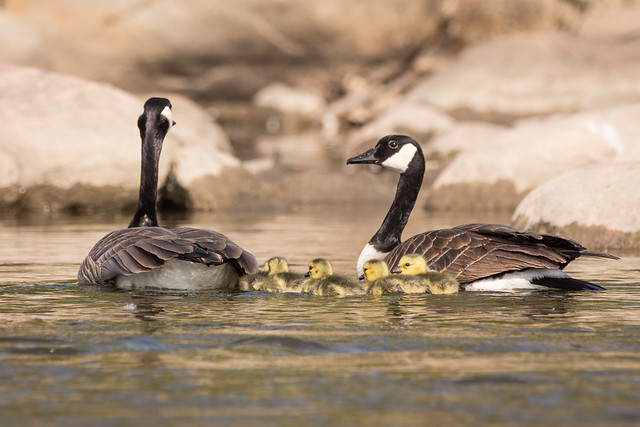
Canada geese and goslings

Upcoming Events
Climate Justice Primer, May 25 (Saskatoon)
Climate Justice Saskatoon is hosting a primer discussion before Saskatoon's Climate Change Town Hall Wednesday, May 25th, from 6:20-7:30pm. This is an opportunity to learn more about the People’s Climate Plan and get comfortable before the official Town Hall meeting. 

Perma Potluck Goes Wild, May 28 (Saskatoon)
As part of the Wild About Saskatoon NatureCity Festival, PermaSask is hosting its May 28 monthly gathering in the backyard of one of its 2015 permablitz hosts.

Energy Efficiency at Retail Co-ops, June 1 (Saskatoon)
Terry Nelson, Saskatoon Co-op, will discuss energy-efficiency initiatives at retail co-operatives in Western Canada at the June 1 breakfast meeting of the SK Energy Management Task Force.
See also: Federated Co-operatives Limited: Sustainable Business Practices

Alberta Saskatchewan Renewable Energy Finance Summit, June 2-3 (Calgary)
The two-day Renewable Energy Finance Summit will discuss realizing renewable energy project success under the Alberta and Saskatchewan competitive bids.

Grasslands National Park Volunteer Event, June 2-5 (Val Marie)
Help species at risk such as the Greater Sage-Grouse at Grasslands National Park’s volunteer event, June 2-5.

Petroglyph and Butterfly Habitat Tours, June 3-4 (St. Victor)
The Friends of St. Victor Petroglyphs are offering tours of the petroglyphs and Butterfly Habitat on June 3 and 4.

Canada geese goslings

Saskatoon Nature Society Field Trips
Golden Eagles 
June 3-5 – Shorebirds, Shorebirds, Shorebirds
June 9, 7:30 am – ‘Mara’, Eagle Creek Acreage
Retirees and partners who are interested in birds and the natural world are invited to participate in Golden Eagle field trips.

A full list of upcoming events can be found on the EcoFriendly Sask Calendar 

Photographer’s Guide to Saskatchewan
Robin and Arlene Karpan have just released their latest book, Photographer’s Guide To Saskatchewan. It includes the couple’s favourite photogenic haunts throughout the province as well as how-to details and 250 images.


Saskatchewan Snakes
Snakes Alive: Snakes of Saskatchewan is the latest exhibit at the Royal Saskatchewan Museum. Stephen Whitworth, Prairie Dog magazine, says:

“It promises to be an amazing exhibit, with interactive stations and informational displays. Poulin [Ray Poulin, the museum’s curator of zoology] sees it as a chance to get away from the sensationalism and macho posturing that often surrounds these reptiles. Instead of circus-sideshow shenanigans, museum visitors will learn about these misunderstood creatures through captive specimens and close-up photography that reveals an under-appreciated beauty.”

Urban Wonders
Meewasin Resource Management staff have discovered a Sharp-tailed Grouse lek on the Northeast Swale. A lek is the species’ ritual mating dancing grounds. The males dance in the centre of the lek while the females watch from the outside. The males puff out their tails, open their wings, and stomp the ground to attract the females: it’s an impressive sight. Meewasin staff have counted up to 26 males on the lek and a total of 40 birds in the area.

Here’s a video taken at the lek from a remote camera purchased by private donations from members of the Northeast Swale Watchers.

Sharp-tailed Grouse are an endangered species in Canada. Let’s hope that Meewasin Valley Authority and the City of Saskatoon  do all in their power to protect the birds and their lek from encroaching urban development.

EcoSask News is a weekly round-up of local news and events. Email us if you have items you would like us to include. 

You can follow EcoFriendly Sask by liking us on Facebook, following us on Twitter, or by email (top right corner).

Thursday, 19 March 2015

Saskatoon CarShare Co-operative


Many of us practise sustainable transportation options. We walk or bike to work. We take the bus. But sometimes those options just don’t work. We have errands to run all over town or we want to pick up a large load of groceries. We don’t want the expense of owning a car, but we would like the convenience of using one from time to time.

Approximately five years ago, a steering committee with members from the University of Saskatchewan (Sustainability Education Research Institute, Centre for the Study of Co-operatives, The Spatial Initiative), We Are Many, and the City of Saskatoon decided to investigate the possibility of establishing a car share co-operative in Saskatoon. A feasibility study helped them to establish the fee structure and initial car locations.

The Saskatoon CarShare Co-operative (SCC) was officially incorporated in 2012 and the first cars were purchased in February 2014.

Where are the cars? 
The cars are picked up and returned to set locations, so it’s important to choose the right neighbourhood, particularly when you’re starting up a brand new service.

Car share co-operatives work best in high-density neighbourhoods with low levels of car ownership. Pedestrian-friendly neighbourhoods with easy access to public transit are ideal because residents have various transportation options and aren’t reliant on cars. In addition, members from other areas can reach the cars easily by either bus or bike. (For more information, see Bringing Car-Sharing to your Community.)

The Saskatoon CarShare Co-operative chose to place its first cars close to Broadway. One is parked on Broadway Avenue at Five Corners, while the other is located at Broadway and 8th. The City of Saskatoon provided dedicated parking spaces and signage.

The SCC is considering expanding into other neighbourhoods in the future, but this won’t happen until they reach capacity with their current vehicles.

How do I book a car?
Cars can be booked online and are available 24 hours a day, 7 days a week. You can book as far in advance as you want. The Co-operative currently has approximately 40 members so even last-minute bookings shouldn’t pose a problem. Other car share co-operatives have found that cars are used regularly but everyone still has easy access with 50-60 members per car, so the SCC still has room to grow.

In purchasing their first vehicles, the Co-operative had to balance affordability and energy efficiency. They chose the 2011 Nissan Versa, a compact four-door car. In the future, the Co-operative may consider purchasing a six-person van to accommodate large loads or families with children.

The carsharing arrangement works best for in-town travel or short out-of-town trips. If you’re planning an extended road trip, you’ll get better rates by renting a car.

The SCC’s coordinator looks after day-to-day operations and works closely with members to make sure their needs are attended to.


How much will it cost? 
There are four different membership categories:

Casual: If you’re not sure that carsharing will work for you, you can test the waters by taking out a casual membership. You pay a monthly fee of $10 and an hourly rate of $8.

Co-Op Member: Co-op members purchase a $500 refundable share. There is no monthly fee and the hourly rate is only $6.

Family/Household: If more than one member of your household will be using the car, you can take out a Family/Household membership. The initial refundable share costs $750 with an hourly rate of $6.

Corporate: Businesses can purchase a corporate membership ($750 refundable share, $6/hour). Employees can use the Co-operative’s cars for work-related trips.

There is an initial application fee as well as an additional charge of $0.25 per kilometre with 5 free kilometres per trip. The cars’ onboard technology tracks time and mileage.

Members submit a driver’s abstract in order to qualify for the Co-operative’s comprehensive insurance. Individuals with a recent record of at-fault accidents generally aren’t accepted.

There is an optional damage pool of $5 a month to protect drivers against having to pay the full insurance deductible in the case of any partial or at-fault damage or accidents.

How much money will I save by not owning a car? 
The cost* of owning a 2011 Nissan Versa is approximately $3,127 per year with an annual mileage of 800 kilometres. This includes fuel, registration and licence fees, insurance, maintenance, and depreciation.

The comparable cost for a Co-op member would be $892 per year, although many SCC members drive less than that.

Who maintains the cars?
The Co-operative is responsible for gas and maintenance. Members will only have to purchase gas if they go on an extended outing.

A volunteer member monitors the vehicles once a day to make sure that they have gas and are clean. Board members take the cars to the car wash and for servicing.

The cars’ onboard technology is a small but constant drain on the electrical system. This can be a problem in very cold weather, but volunteer members start the cars once a day in the winter and the vehicles are equipped with booster cables.

Need more information?
Additional information is available on the Saskatoon CarShare Co-operative’s website. You can also reach Jessie Best, the Co-operative’s Coordinator, at scc.coordinator@gmail.com. SCC is also on Facebook.

* Costs were calculated using CAA’s Driving Cost Calculator.