Showing posts with label Lakes. Show all posts

Tuesday, 14 September 2021

EcoSask News, September 14, 2021

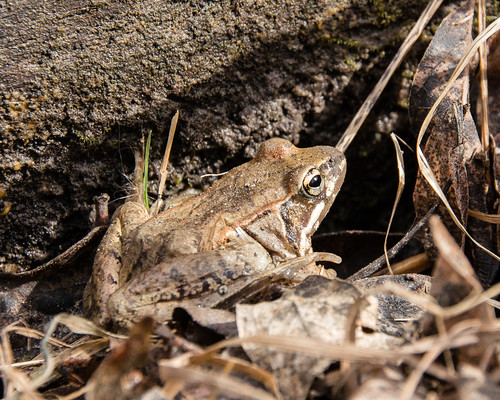
wood frog

Upcoming Events 
The Saskatoon Nature Society is hosting an online presentation on amphibians at 7:30 pm, Sept. 16. 

Library of Things, Saskatoon, will be open for pick-ups by reservation from the back door in the alley from 1-4 pm, Sept. 18. 

Nature Regina is hosting a presentation on the Treaty Land Sharing Network at 7:30 pm, Sept. 20, at the Royal Saskatchewan Museum. 

The Saskatoon Nature Society is inviting the public to attend a Sandhill Crane viewing from 6-8 pm, Sept. 20. 

The Saskatchewan Environmental Society and the Saskatoon Public Library are offering an online presentation on Electricity in Saskatchewan: Current Status, Future Prospects from 7-8:30 pm, Sept. 21. 

The Johnson-Shoyama Graduate School of Public Policy is hosting a video conference on nuclear development, communicating risk, and public engagement at noon, Sept. 23. 

There will be a global climate strike at noon, Sept. 24, in Saskatoon. 
 
Full event details can be found on the EcoFriendly Sask Calendar

Local News 
William Hale has opened a used electric vehicle dealership in Saskatoon. William says he’s driven an electric vehicle (EV), winter and summer, for 3 years and loves it. “The electrification of transportation is one of the principal pathways to a low carbon economy and I want to help with this transition in Saskatchewan,” he explains. The dealership offers a lower-priced entry into the EV market and an opportunity to ask questions and test drive the vehicles. They also sell and install EV chargers for home use. 

Green Shift Automotive in Regina sells a range of electric vehicles from bikes, scooters, and skateboards to hybrid and electric cars. 

Alberta Lake Management Society is offering a fall webinar series with applicability across Canada. 

Transportation 
Exposure to traffic noise is associated with a range of health problems, including dementia, heart disease, diabetes, and obesity. [The Guardian

The six problems aviation must fix to hit net zero: 1. fuel; 2. non-CO2 impacts, such as nitrogen oxides and contrail clouds; 3. frequent flyers; 4. policy development; 5. the new middle class; and 6. supersonic planes. [The Guardian]

Mormon cricket

Wildlife 
Wildlife rescuers are the first to provide medical care for injured or sick animals and could provide an early-warning system for illnesses that also affect humans. [The Revelator

“Mountain and boreal caribou are on a long-term slide to extinction; not because of what wolves and other predators are doing but because of what humans have already done.” [Raincoast Conservation Foundation

“Rebugging is looking at the ways, small and large, to nurture complex communities of these tiny, vital players in almost all the natural and not-so-natural places on earth. It means conserving them where they are managing to hang on, and restoring them where they are needed as part of a rewilding movement. And it means putting bugs back into our everyday lives, our homes and where we play and work.” [The Revelator, an excerpt from Rebugging the Planet: The Remarkable Things that Insects (and Other Invertebrates) Do – And Why We Need to Love Them More by Vicki Hird) 

When they’re not looking for a mate, some female hummingbirds are adopting the same brightly coloured ornamentation as males as it “helps them avoid aggressive male behaviors during feeding, such as pecking and body slamming.” [Science Daily

Energy 
“Air conditioning is the most obvious immediate response to the dangerous warming of the planet. It’s also making it worse. … People are going to keep buying air conditioners … so we need to offer them better, safer, cleaner devices … We’re doing a disservice to our citizenry when we let them buy something that is so expensive to operate, and so polluting that cooling is actually adding to the warming of the planet.” [The Guardian

Coal-fired plants made up 40% of global energy output in 2010. Here’s a breakdown of consumption on a country- by-country basis as well as a look at steps that could be taken to end coal use. [Climate Solutions

Despite what oil and gas companies would have you believe, blue hydrogen isn’t clean or economically viable. [DeSmog


Did you know?
Wood Frog hibernate under logs or leaf litter and can tolerate below-zero temperatures by increasing the amount of glucose in their blood, which lowers the freezing point and stops ice crystals from forming. [Nature Companion

EcoFriendly Sask supports Saskatchewan environmental initiatives through an online publication, an events calendar, small grants, and the Nature Companion website/app. You can follow EcoFriendly Sask by liking us on Facebook, following us on Twitter, or subscribing by email (top right corner).

Thursday, 19 August 2021

Water Rangers: Testing the Quality of Canada's Water


Many Canadians spend their summers at the lake, while others relish riverside walks or paddle boarding. We tend to assume that our waters are clean and healthy – but are they? According to the World Wildlife Fund’s 2017 Watershed Reports, we lack data on the water quality of 100 out of 167 of our watersheds. Of the ones that have been tested, 42 out of 67 are rated Poor or Fair. 

Getting Started 
In 2014, Kat Kavanagh was staying at her family’s lakefront cottage and went out with her father when he did his regular test for water quality. Her father had accumulated 10 years’ worth of data, but the lab results were hard to understand and there was no easy way to compare and share the information. Kat was determined to develop a public data-sharing platform, so she and a team of other web designers and developers took her idea and a team to the Aquahacking challenge in 2015. They won: Water Rangers was underway. 

Once the platform was in place, the organization took a look at the water testing kits that were currently on the market. They were dismayed to discover the kits were very expensive and difficult to use. Water Rangers went on to design and distribute their own kit to people in Canada and beyond so they could collect and share community data on the Water Rangers’ free, open platform. 


Water Testing Kit 
Water Rangers test kits can be purchased online and are also being distributed for use in a variety of grant-funded projects. Some groups are testing for changes over time while others, such as a group monitoring mining activity in New Brunswick, have a particular concern and want data so they can hold authorities responsible. 

The kits provide valuable information about water temperature, conductivity, pH, alkalinity, hardness, dissolved oxygen, and water clarity. Different species have different temperature and dissolved oxygen requirements, and many species such as fish, frogs and insects can’t survive without oxygen. Similarly, many species can only survive if the pH is within a certain range. The kits also measure the water’s ability to conduct an electrical current. “Higher conductivity means there are more dissolved ions in the water, which is usually associated with more pollution.” 

Graduate students at Carleton University compared the results from the Water Rangers’ kit with those obtained using a professional probe and determined the kits were very accurate and provided reliable data. 

The kits have some limitations. Tests for toxicity are not included in the kits as they are really expensive. However, participants are encouraged to take photographs, which provide a graphic record of dead fish or algae bloom. Drinking water quality must be tested in a lab, but some of the tests in the kit, such as high conductivity or low dissolved oxygen, do alert you to a potential problem. 

Participants can add their data to an open-source platform so anyone who is interested can check the water quality in their area or compare results with other areas and over time. One of the organization’s goals is to increase its capacity to share its results with researchers and decision-makers. 

Testing water quality on a regular basis benefits participants personally as they spend more time outdoors and visit new locations. They also share what they’ve learned about water and the importance of protecting the environment with their friends and families. 


Large Projects in Ontario & Saskatchewan 
Water Rangers is currently involved in two large water-testing projects. In partnership with Canadian Freshwater Alliance and the Government of Ontario’s Great Lakes Local Action Fund, volunteers in the Lake Erie watershed are using the Water Rangers kits to test their local water bodies on a monthly basis from April to October 2021. Volunteers will also help with shoreline clean-ups, plant trees and wildflowers, and learn about local wildlife. 

Dr. Kerri Finlay started a water monitoring project at the University of Regina with volunteers at 2 lakes in 2017 and 6 in 2018. Once she learned about Water Rangers, she reached out and began a partnership that would expand the program. 43 volunteers are testing water across Saskatchewan this summer, from the Qu’Appelle Valley to Emma Lake. Many of the volunteers have cottages or visit the lakes frequently, so they’re being encouraged to test frequently. The results are uploaded to the Water Rangers’ database and will also be shared on the Gordon Foundation’s DataStream. Long-term goals include expanding the testing to more remote sites that are visited less often, improving communication back to volunteers, and adding to the kit so users can test for nutrients in the water. Over time, they hope to verify the reliability of community-based water monitoring programs and enhance collaboration between citizen and professional stakeholders to inform policies and decisions that affect our lakes, rivers, and streams. 


Additional Activities 
Other organizations share the Water Rangers’ belief in the value of monitoring water quality. The Gordon Foundation’s DataStream is an online platform for sharing information about freshwater health. They are currently uploading water testing results from the Mackenzie Basin, the Atlantic provinces, Lake Winnipeg, and, starting in fall 2021, the Great Lakes and St. Lawrence region. 

In British Columbia, the Environment Ministry has established Algae Watch, relying on volunteers to contribute information to help the government obtain a better understanding of when and where algae blooms are happening around the province. Water Rangers hope to be able to test for algae blooms in future. Algae blooms have significant side effects on human and animal health and they are starting to appear in places such as Lake Superior where they never happened in the past. 

Dr. Elaine Ho-Tassone led the creation of a community-based water quality monitoring program at Garden River First Nation. Water Rangers test kits were used by community members to collect nearly a thousand data points over the pilot program in 2021, which (coupled with benthic surveys and, soon, E. coli testing) provides some of the most current and comprehensive data compiled in the area of the St. Marys River Area of Concern. Now, three other First Nations across the binational Area of Concern - including one in the United States - are interested in coordinating the collection of community data using Water Rangers test kits and/or their online open data app. This project's data were also part of the October 2021 launch of Gordon Foundation's Great Lakes DataStream platform.

Water First is a charitable organization addressing water issues faced by Indigenous communities. They have been using the Water Rangers test kits in their Indigenous school program. 

Acknowledgements 
Emelia Duguay, Sustainable Development Coordinator, Water Rangers, and Erin Ennis, Summer Student Coordinator – Citizen Science Project, University of Regina in partnership with Water Rangers, graciously provided a wealth of information about the work their organizations are doing – thank you!

Further information and clarification (see above) was provided by Dr. Elaine Ho-Tassone in November 2021.

Photo credits: Water Rangers

EcoFriendly Sask supports Saskatchewan environmental initiatives through an online publication, an events calendar, small grants, and the Nature Companion website/app. You can follow EcoFriendly Sask by liking us on Facebook, following us on Twitter, or subscribing by email (top right corner).

Tuesday, 25 May 2021

EcoSask News, May 25, 2021

gophers (Richardsons ground squirrels)

This Week’s Highlights 
“Storing and transporting excess renewable energy as hydrogen could reshape global energy politics. . . . Because the ones [countries] best equipped to export green hydrogen are so geographically and politically diverse—from Morocco to Australia to Norway—the rise of green hydrogen may lower the temperature on international oil and gas politics, as well as the global climate.” 

Regina Public Library is hosting an online program about artists who focus on sustainability at 7 pm, June 3. 

Upcoming Events 
City of Regina residents can dispose of hazardous waste from 4-7 pm on Friday, 9 am-4 pm, Saturday, and 9 am-4 pm, Sunday, May 28-30. 

Nature Saskatchewan is hosting World Migratory Bird Day celebrations on May 29 in Regina. Register in advance. 

Learn wildlife tracking skills and how to put them to use in the summer in a Nature Conservancy of Canada webinar at 6:30 pm, May 31. 

Nature Regina will hold an online annual general meeting at 7 pm, May 31. 

The Provincial Association of Resort Communities of Saskatchewan is hosting a webinar on keeping invasive species out of our lakes at 7 pm, June 2. 

Mark Jaccard will host a discussion of his book, The Citizen’s Guide to Climate Success, at the breakfast meeting of the Energy Management Task Force. 


Saskatoon Nature Society – Golden Eagles 
June 3, 9 am – Donna Birkmaier Park 
June 10, 9 am – Chappell Marsh/Richard St. Barbe Baker Afforestation Area 
Retirees and partners who are interested in birds and the natural world are invited to participate

Other Saskatoon Nature Society Field Trips 
June 5, 8 am-noon – Birding in Dundurn Area Pastures 
June 6, 1-3 pm – Arbor Week Hike 
June 11, 9:30-11:30 pm – Firefly Hike to NE Swale 
June 13, 8:30 am-2 pm – Member Visit to NCC Asquith Site 
June 15, 6:30-9 pm – Wildflowers at the Small Swale 
Field trips are currently for members only, so sign up now. Advance registration is required.
 
Golden bean

Did you know? Indigenous peoples of North America used the golden bean flowers to make a yellow dye (Nature Companion, a free nature app for Canada’s 4 western provinces is downloadable directly from its website

Plastics 
Every year 380 million tonnes of plastic are produced and just 16% is recycled. But what if we could unmake it? “Chemical recycling is an attempt to recycle the unrecyclable. Instead of a system where some plastics are rejected because they are the wrong colour or made of composites, chemical recycling could see all types of plastic fed into an ‘infinite’ recycling system that unmake plastics back into oil, so they can then be used to make plastic again.” 


Wind Energy 
Wind turbines pose a threat to birds. Fortunately, high-tech safeguards are being developed to ensure birds’ safety


EcoFriendly Sask supports Saskatchewan environmental initiatives through an online publication, an events calendar, small grants, and the Nature Companion website/app. You can follow EcoFriendly Sask by liking us on Facebook, following us on Twitter, or by email (top right corner).