Showing posts with label Wildflowers. Show all posts

Tuesday, 3 August 2021

EcoSask News, August 3, 2021

sun on trees and ferns

Upcoming Events 
Join CPAWS-SK in inventorying species in the boreal forest pre- and post-fire on Aug. 8 and 10 from 5:30-8 pm. 

SK-PCAP is hosting an online webinar about research into where bats hibernate in Saskatchewan at noon, Aug. 10. 

Passive House Canada is hosting an online conversation with Harold Orr, passive house pioneer, at 10 am (SK), Aug. 11. 

Golden Eagles, a sub-group of the Saskatoon Nature Society, will be holding a variety of events on Thursdays in August. 
Aug. 12 - Fall shorebirds 
Aug. 19 - Pike Lake area 
Aug. 26 - Petrofka Orchard & Crooked Trees 

All events are listed on the EcoFriendly Sask Calendar
 
cobblestones

Back to the Future 
"Like the stone lined canals in Kyoto, the terraced rice fields of Java allowing for millennia of continuous rice growing, the sandstone aqueducts of Italy still able to transport water after two millennia, the ancient Greek amphitheater still in use for plays and concerts, the cobblestone streets of Copenhagen that haven’t been resurfaced in five hundred years, we need to go back to thinking about our infrastructure not in terms of five year plans and technical efficiency, but in long term sustainability. If a bridge cannot be built that will last a thousand years, why build it? Why not build one that will last, even if it will be a less efficient or more expensive in the short run?" [Wrath of Gnon

Regina is a dusty ghost town; the legislature has moved north of La Ronge where water still flows in the Cumberland River system. The main characters are close to developing a genetic cross of wheat and perennial native grass. As Canada confronts drought and wildfires, Dry, Barbara Sapergia’s futuristic novel published in 2005 rings true today. [book review, Niche

Urban Planning 
Re-thinking the 15-minute city – not as an entity created with stopwatches timing how long it takes us to get from one location to another but as places with streets where people gather and enjoy themselves. [Governing

pond

Prairie Life 
The Government of Manitoba is asking its residents for feedback on a proposed water management policy. How could we adapt it for use in Saskatchewan? [Government of Manitoba

Fossil-fuel exporting countries could see a loss of jobs as a result of a switch to renewable energy but could more than make up for it by emphasizing renewables manufacturing. [Anthropocene

Biodiversity 
Is it time to put the brakes on beekeeping? “Campaigns encouraging people to save bees have resulted in an unsustainable proliferation in urban beekeeping. This approach only saves one species of bee, the honeybee, with no regard for how honeybees interact with other, native species.” [The Guardian

Firefly flashes – the ins and outs of how they create light and why. [Scientific American


Did you know? Goldenrod doesn't cause hay fever as the pollen is slightly sticky and can't blow on the wind. 

EcoFriendly Sask supports Saskatchewan environmental initiatives through an online publication, an events calendar, small grants, and the Nature Companion website/app. You can follow EcoFriendly Sask by liking us on Facebook, following us on Twitter, or subscribing by email (top right corner).

Tuesday, 29 June 2021

EcoSask News, June 29, 2021

Bumble bee on lilac

This Week’s Highlights 
Nature Conservancy of Canada – Saskatchewan is hosting a webinar at 6:30 pm, July 6, on the importance of dark skies as well as tips and tricks for stargazing and nighttime photography. 

Lone trees make it easier for birds and bees to navigate farmlands, providing shelter, food, and places to land. [The Conversation

Upcoming Events 
Saskatoon Nature Society has two upcoming field trips to look for orchids on July 1 and butterflies on July 3. 

Friends of the Saskatoon Afforestation Areas will be holding bio blitzes every Sunday at 2 pm from July 4-Sept. 26.

There will be a free online workshop on food forest design from 10:30 am-1:30 pm, July 6. 

Find out how time and weather influence Saskatchewan’s largest snake in a noon-hour webinar on July 8 with SK-PCAP. 

Local News 
The Water Security Agency has received a failing grade from the Provincial Auditor for failing to regulate wetland drainage. For further information, read the Citizens Environmental Alliance's newsletter.

The Nature Conservancy of Canada’s Asquith site is now open to the public and has a mowed trail with interpretive signs provided with the support of the Saskatoon Nature Society. 

Cindy Wright’s watercolours portraying the importance of bees in our society will be on display at Handmade House in Saskatoon from June 28-Aug. 21.
 
juvenile magpie beside nest

Light Pollution 
“Fireflies use their bioluminescence to flirt in the dark. . . . Under artificial light, males flash about half as often, while females rarely, if ever, flash back.” You can help by installing motion detectors, timers and shielding to ensure that light goes only where people need it, when they need it; keeping lights as dim as possible; and opting for monochrome red LEDs. [The Conversation

Office buildings that leave their lights on overnight pose a serious risk for migrating birds. A research team studied one building and estimated that turning off half the lights could reduce bird deaths by 11 times in the spring and 6 times in the fall. [Anthropocene

Do you wonder why some birds visit your backyard and not others? Many common species avoid noisy areas and even more will stay away when there is both noise and light pollution. [SciTech

Municipal Climate Action 
Miistakis Institute in Alberta has produced the following free, downloadable research reports to assist municipalities in addressing climate action: 

Did You Know? 
Wales plans to freeze road construction projects and focus on maintaining existing roads in a bid to reduce its carbon emissions. [Planetizen]

Project Noah is a site for photographers and naturalists. Share your photos, learn from the experts and take advantage of educational videos, lesson plans, and outdoor learning activities. [Project Noah]

Just for Fun 
How and what do you feed 2,700 animals on a daily basis? Take a look behind the scenes at the Smithsonian’s National Zoo. [Smithsonian Magazine]

EcoFriendly Sask supports Saskatchewan environmental initiatives through an online publication, an events calendar, small grants, and the Nature Companion website/app. You can follow EcoFriendly Sask by liking us on Facebook, following us on Twitter, or subscribe by email (top right corner).


Thursday, 3 June 2021

The Natural Wonders of Pine Cree Regional Park

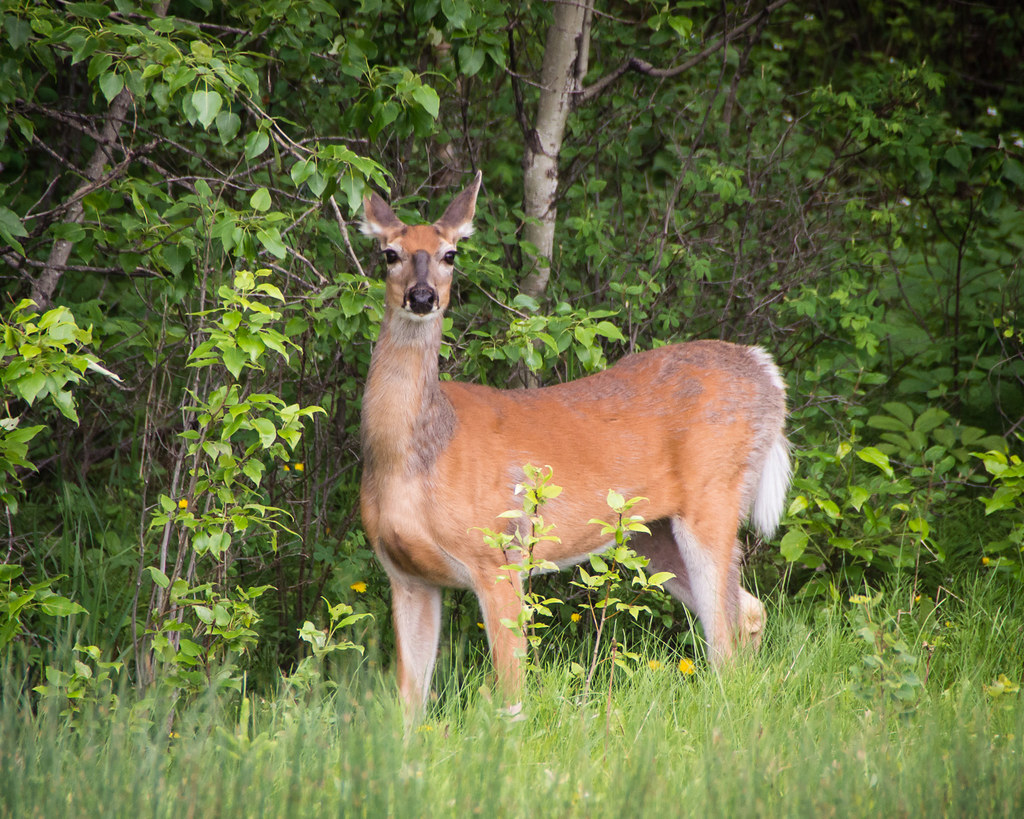
White-tailed deer

Just 300 metres below the sun-drenched prairie is a small campsite nestled in a grove of pine trees beside a quietly flowing stream. Pine Cree Regional Park, located 13 km northeast of Eastend, Saskatchewan, offers 28 non-serviced campsites and features rare orchids, possible cougar sightings, and a wide variety of birds and animals. There are three self-guided trails through the park that can be booked through the park officer. One trail takes you up to the highest point in the park where you will discover teepee rings, while another leads you up above the Hermit’s Cave. All three trails are described in Robin and Arlene Karpan’s book, Saskatchewan’s Best Hikes and Nature Walks

Wildflowers 
The park’s website provides lists of the flowers you may spot while walking on the prairie or in the forest. If you’re very fortunate, you’ll spot the blunt-leaved bog orchid, the green bog orchid, or the round-leaved orchid, all of which flower in June-July. You may also spot the northern bog violet, the western Canada violet, or the downy yellow violet. The western Canada violet spreads rapidly via its roots and is often found in clumps. 

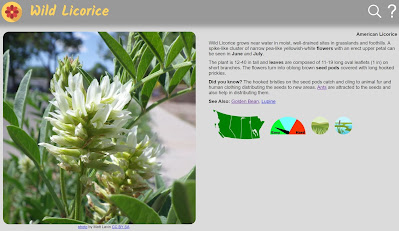
If you look closely, you’ll find so many different flowers among the prairie grasses. Wild licorice has spike-like clusters of narrow pea-like yellowish-white flowers with an erect upper petal. The hooked bristles on the seed pods catch and cling to animal fur and human clothing distributing the seeds to new areas. Later in the summer, you’ll see purple prairie clover and goldenrod.
 
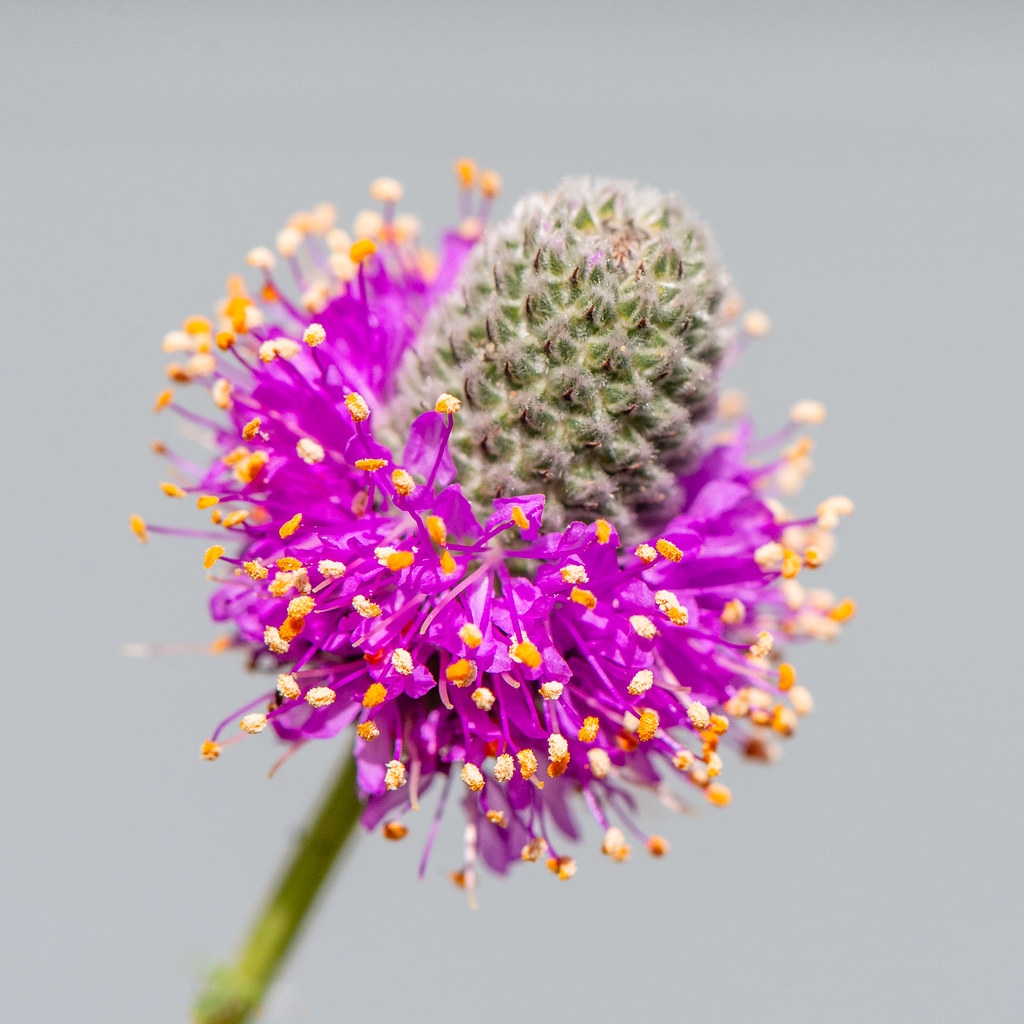
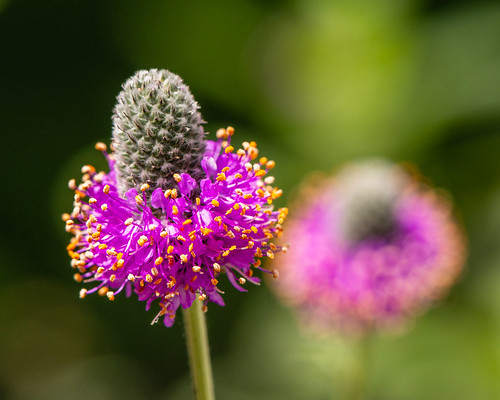
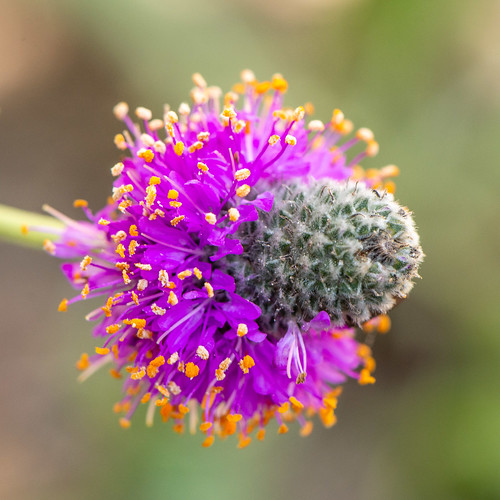
Purple prairie clover

Wildlife 
Sit quietly and you may be fortunate enough to spot moose, white-tailed deer, coyotes, and bobcats. Moose are the largest members of the deer family and are so tall that they prefer to browse on higher plants as it can be difficult to bend their head to ground level. They are often seen in lakes or wetlands feeding on aquatic plants. They have poor eyesight but a strong sense of smell. 

White-tailed deer are the smallest North American deer with white fur around their eyes and nose. They raise their tail, displaying its white underside, to signal danger. White-tailed deer use scent to communicate with other animals. Every step is marked by a smelly substance from glands between their toes. 

Listen for coyotes calling at night. They are very vocal with a wide range of calls to greet and communicate with each other or warn of danger. 

Bobcats are twice the size of a domestic cat. They are solitary animals and fierce hunters, silently stalking their prey before taking it down in one enormous leap. 

Cougars live in the Cypress Hills and there’s a chance you may spot one in the park. Cougars are shy animals that keep to themselves and prefer isolated areas. The park pamphlet explains that cougars will normally avoid people; “however, if you see a cougar and it doesn’t run off, it may be sick, have a food kill nearby, or young, and could feel threatened by you.” In this situation, “Make yourself big and loud. . . . Maintain eye contact, and back away slowly. . . . Cougars are big cats and lazy, so if you appear to be a lot of work, they will likely leave, or give you an opportunity to back away.” 

Birds 
Pine Cree Regional Park is home to pink-sided dark-eyed juncos, mountain bluebirds, great horned owls, and common poorwill. Great horned owl are forest dwellers and have a deep hooting voice that is unlike any other North American owl. They hunt at night, using their large, strong talons to break the spine of large prey.

great horned owl

Starry Skies 
The southwestern corner of Saskatchewan is an excellent spot for star-gazing as there are large wilderness areas and only small urban centres. Both Cypress Hills Interprovincial Park and Grasslands National Park are Dark Sky Preserves, sanctuaries where people can enjoy the night skies. 

See Also 

Heading outdoors? With the Nature Companion app on your phone, you’ll have easy access to information about over 300 common plants, trees, birds, animals, insects, reptiles and amphibians in Canada’s four western provinces. The Nature Companion app/website was developed by EcoFriendly Sask and is free (and ad-free) and can be downloaded directly from its website


EcoFriendly Sask
supports Saskatchewan environmental initiatives through an online publication, an events calendar, small grants, and the Nature Companion website/app. You can follow EcoFriendly Sask by liking us on Facebook, following us on Twitter, or subscribe by email (top right corner).

Tuesday, 6 April 2021

EcoSask News, April 6, 2021

squabbling geese

This Week’s Highlights 
An online webinar hosted by the Nature Conservancy of Canada will discuss the importance of community pastures at 11:30 am, Apr. 8. 

The Native Plant Society of Saskatchewan has added 3 new plant checklists to their website: two from Pine Cree Regional Park (grassland and forest) and one from Batoche National Historic Site. 

Upcoming Events 
Saskatoon Public Library is offering a virtual workshop on camping with babies and toddlers from 7-8 pm, Apr. 12. 

SaskOutdoors is hosting online training to introduce educators to Flying Wild from 7-9 pm, Apr. 14 and 21. 

Saskatoon Public Library is hosting an online discussion for teens about making our community more sustainable from 6-7 pm, Apr. 15. 

Katie Harris will discuss Saskatoon’s urban wildlife monitoring project at the 7:30 pm, Apr. 15, online meeting of the Saskatoon Nature Society. 

Looking Ahead 
Saskatoon Young Naturalists are planning a crocus hike on Apr. 24/25 and pond dipping on May 1. Space is limited; register early to avoid disappointment

Registration is now open for the Saskatchewan Waste Reduction Council’s virtual Waste ReForum from Apr. 27-29. 

Join Stan Shadick for a May series (May 9, 11, 15, 16, 17, 18, 24 & 25) of online and outdoor (Saskatoon) workshops designed to improve your skills at identifying common bird songs in the prairie provinces. Proceeds will go to support Living Sky Wildlife Rehabilitation

From Information to Action
Urban gardens are an important source of nectar and floral diversity for insects and compare favorably with rural areas. 

Greater sage-grouse populations in the US have fallen by 80% since 1965. The report recommends a proactive approach alerting government agencies when local sub-populations are in trouble

leafcutter ant

Ants 
Empire of Ants: The Hidden Worlds and Extraordinary Lives of Earth’s Tiny Conquerors, Susanne Foitzik & Olaf Fritsche: “Just like us, ants grow crops, raise livestock, tend their young and infirm, and make vaccines. And, just like us, ants have a dark side: They wage war, despoil environments, and enslave rivals—but also rebel against their oppressors.”

Kidnapper ants can’t feed themselves. Instead, they kidnap other ants and brainwash them into looking after the kidnapper ants’ young, foraging for food, chewing it, and feeding it to their kidnappers. [5-minute video

Book Reviews 
In A World on the Wing: The Global Odyssey of Migratory Birds, Scott Weidensaul conveys his joy and amazement at the ability of birds to navigate the hemisphere. 

Beyond Capitalist Realism: The Politics, Energetics, and Aesthetics of Degrowth by Samuel Alexander explores, in a series of essays, “post-capitalism by design not disaster,” covering topics such as simple living, land and housing options, and monetary theory. 

Post Growth: Life after Capitalism by Tim Jackson is “perhaps the most imaginative book I’ve read on the topic of economic growth, a lyrical and thoughtful account of where capitalism fails and the many ways that things could be done better.” 


Have you spotted any butterflies this spring? Mourning Cloak Butterfly overwinter as adults in tree cavities, under bark, or in unheated buildings. Once they come out of hibernation, the males perch in a sunny spot and wait for a female to flutter by so that they can mate. They die soon after the eggs are laid. 

Check out EcoFriendly Sask’s Nature Companion, a free nature app for Canada’s four western provinces 

EcoFriendly Sask supports Saskatchewan environmental initiatives through an online publication, an events calendar, small grants, and the Nature Companion website/app. You can follow EcoFriendly Sask by liking us on Facebook, following us on Twitter, or by email (top right corner).

Tuesday, 23 February 2021

EcoSask News, February 23, 2021

frost on grass

This Week’s Highlights 
Participants in a virtual roundtable on unleashing Regina’s energy-efficient economy agreed that the renewable energy, energy efficiency, and net-zero building sectors represent significant opportunities in terms of local job creation, economic diversification and growth, and are critical in building a thriving, more inclusive and sustainable economy. 

Kairos Regina is hosting an online discussion on creation, climate, and you at 7 pm, Feb. 23. 

Upcoming Events 
Renny Grilz, Blazing Star Wildflower Seed Company, will discuss how to grow native plants successfully in an online workshop at 1 pm, Feb. 27. 

Permaculture Regina will hold a brief online AGM followed by a discussion on starting seedlings and getting ready for spring planting at 2 pm, Feb. 28. 

Nathan Tedford will discuss the future of small modular reactors in Saskatchewan and Canada at the virtual breakfast meeting of the SK Energy Management Task Force. 

Swift Current Creek Watershed Stewards are holding a virtual annual general meeting at 1 pm, Mar. 4. 

Nature Saskatchewan is hosting an online nature trivia event at 7 pm, Mar. 4. 

Outdoor Education 
SaskOutdoors will be hosting 3 virtual workshops in March offering a host of outdoor education resource materials: 

Overview of the Natural Curiosity pedagogical framework for environmental inquiry and associated Indigenous lenses – 6:30-8:30 pm, Mar. 15 


Online training to introduce educators to Project Wild – 7-9 pm, Mar. 17, 24, and 31 

A full list of upcoming events (online and in person) can be found on the EcoFriendly Sask Calendar

Any guesses as to what made the indentations in the sand pile?

Local News 
Listen to a one-hour conversation with Passive House pioneer Harold Orr

Indigenous communities and environmental activists are speaking out against peat moss mining near La Ronge. 

Congratulations to Paul Loewen whose photograph of a peary caribou can be found on a new series of Canadian stamps

Rethinking Transportation 
Freight emissions are expected to surpass passenger vehicle emissions by 2030. Pembina Institute sets out 10 actions to ramp up adoption of a zero-emission freight sector

“As we envision a society that is less reliant on driving, who better to learn from than people who already don’t drive?” 

Major automakers are increasingly betting that the future of their business lies with electric cars, but consumers, who prefer large trucks and SUVs, aren’t there yet


A growing number of studies say that roads containing waste plastic have the potential to perform as well or better than traditional roads – and yes, they can tolerate wide temperature swings. Other options – make waste plastic into tiles or bricks.

EcoSask News is a weekly round-up of local news and events. Email us if you have items you would like us to include. 

You can follow EcoFriendly Sask by liking us on Facebook, following us on Twitter, or by email (top right corner). 

If you enjoyed this newsletter, please share it. Thank you! 


Did you know? Tiger salamanders don't need to drink. They absorb water by sitting in puddles or on dew-covered rocks. Follow the Saskatchewan Prairie Conservation Plan on Facebook or Twitter for more interesting information about tiger salamanders. 

Nature Companion is a free nature app for Canada’s four western provinces

Sunday, 6 October 2019

Grassland Neighbours

gopher (Richardsons ground squirrel)

Saskatchewan’s grasslands are home to a wide variety of species. It’s human nature to focus on the mammals, but there are thousands of other species – from bacteria and lichens to grasshoppers, snakes, ground squirrels, and coyotes. “It’s like going to the movies,” says Greg Fenty, coordinator, Saskatoon Young Naturalists. “We always focus on the movie stars and yet there are 7 minutes of credits. Without those people, Daniel Craig couldn’t jump from building to building. Everything is dependent on each other.”

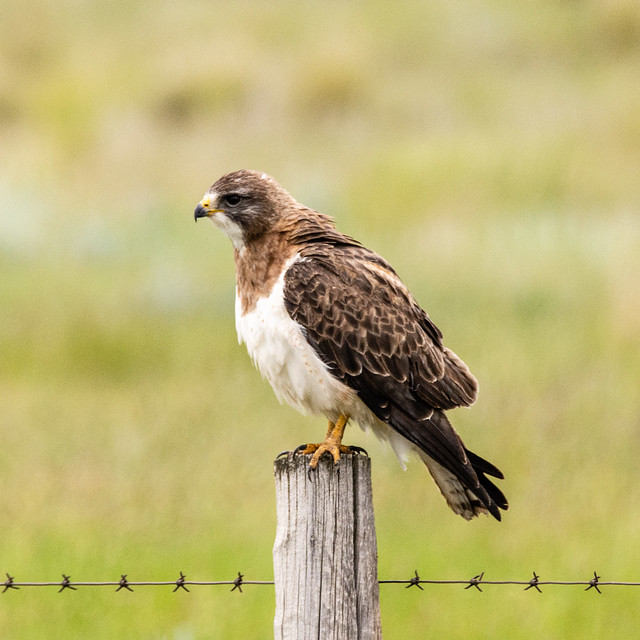
Swainson's hawk

Habitat Adaptation
Plants and animals can only live in a specific area, such as grasslands, if it meets their requirements for life – food, water, air, and shelter. “Animals must feel safe enough to reproduce,” Greg says. “If those basic conditions are met, the animals can often adapt to changes in their environment.”

Greg studied hawks with Stuart Houston, and it opened his eyes to why animals migrate. “It’s not about temperature,” Greg says. “The main driving factor is food. Richardson’s ground squirrels hibernate in the winter so the hawks head south to Argentina where they feed on grasshoppers until winter arrives in the southern hemisphere and they head back north.” What’s particularly surprising is how much the birds’ behaviour changes with the habitat. In Canada, they are solitary hunters, whereas in Argentina they congregate in large flocks to munch on grasshoppers. It’s all about adapting to the environment.

Evolution has played a big role in establishing a habitat that supports life. Greg says the prairie grasslands are “chock-a-block full of flowers – as many as an alpine meadow and you don’t have to climb 2000 meters to see them.” But the plants don’t all flower at once. Instead, they follow one another, providing food for pollinators over an extended period. “The crocuses are one of the first to flower in the spring, just when lots of insects are coming out of hibernation,” Greg explains. “Next is golden bean, and in the fall there’s goldenrod.”

Fruit-bearing plants are similar with Saskatoon berries ripening first, followed by chokecherries, and then buffalo berries. There’s always something for berry eaters to eat.

Prairie dog

Wild Neighbours
Grassland plants and animals cannot survive in isolation. In fact, at times, coexistence can upset the normal predator-prey relationship. Prairie dogs nest underground for protection from predators, such as snakes. However, snakes will use the prairie dog burrows when they need a spot below the frost line to hibernate.

Prairie dogs are a keystone species supporting over 130 other species. If they are wiped out, it sets off a whole chain of events affecting the whole ecosystem: "In addition to serving as a food source for coyotes, eagles, the endangered black-footed ferret, and other animals, they are ecosystem engineers, maintaining the health of arid grasslands by churning, aerating, and fertilizing soil as they create vast and intricate underground colonies. Their digging allows an array of vegetation to thrive, which in turn supports a greater number of elk, bison, and other grazers. And their burrows provide shelter for animals like rattlesnakes, burrowing owls, and jackrabbits. When prairie dogs disappear from their native grasslands habitat, woody plants can take over, fundamentally altering the prairie ecosystem." (Keystone Species 101)

Animals tend to become specialists in hunting specific species. Black-footed ferrets and swift fox don’t wander far from the prairie dog range, while Swainson’s, red-tailed, and ferruginous hawks’ territory overlaps almost exactly with that of Richardson’s ground squirrels. “The timing is ideal,” Greg says. “The hawklets are learning to hunt just when the naïve, goofy young ground squirrels are coming out of their burrows – a perfect opportunity for the young hawks to hone their hunting skills.”

Cougars used to be much more plentiful, but that situation changed as more and more people moved onto the prairies. “Humans and big cats don’t get along because humans are potential prey,” Greg explains. The cougars were almost wiped out from most agricultural areas, and remote areas such as the Cypress Hills uplands or Moose Mountain became refuges for cougars that were shot if they ventured out. Greg says the situation began to change during the first and second world wars as lots of young men left and there was an ammunition shortage. “The white-tailed deer got a really good foothold, their numbers increasing dramatically in the late ‘40s,” Greg says. “Cougars love to eat white-tailed deer so cougar numbers increased and they were forced to out-migrate to find food. Now we’re seeing more cougars along the Saskatchewan River valley and north of Cypress Hills.”

White-tailed deer

Habitat Is Everything
The complex relationships between species and their multiple adaptations to their shared habitat are impossible to reproduce. “We can try and restore an area, such as a wetland, but it’s guesswork,” Greg says. “We just don’t know what was there. Habitat is key. The only way to save species in decline is by saving the habitat.”

Saskatoon Young Naturalists
Saskatoon Young Naturalists has been introducing young people to nature since 1968 when Stuart and Mary Houston set up the Junior Naturalist Society. Greg Fenty has coordinated the Young Naturalists’ program since 1995. “I like working with kids,” Greg says. “They’re so open. You go out looking for a snake hibernaculum but come across something else and that’s a fun discovery. What’s interesting is often the offshoots. Just get out there and see what’s happening.”

Saskatoon Young Naturalists’ activities are open to all ages and offer nature-based activities designed for families. Content is geared towards the 5- 11 year old range. Upcoming programs include a bird feeder workshop and the Christmas bird count for kids.

Greg Fenty - identifying butterflies

Tuesday, 20 August 2019

EcoSask News, August 20, 2019

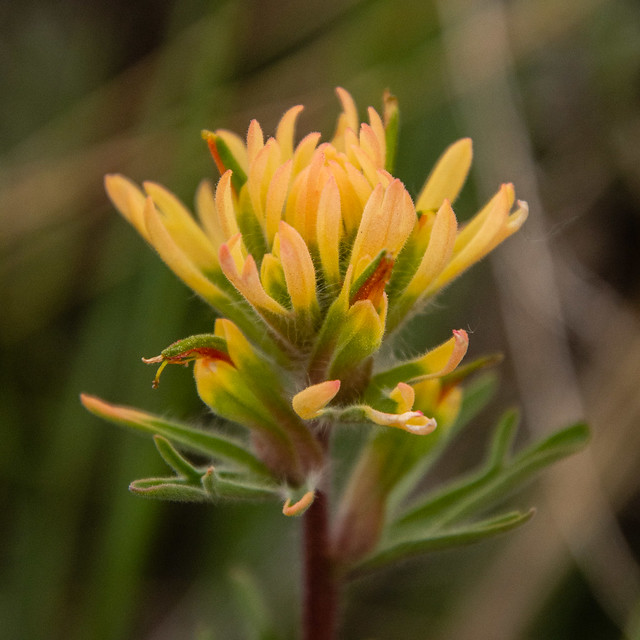
Indian Paintbrush

Upcoming Events
Avonlea Badlands Tour, Aug. 24 (Moose Jaw) 
Members and would-be members of the Moose Jaw Nature Society will be hiking the Avonlea badlands on Aug. 24.

Low Emissions Community, Aug. 26 (Saskatoon) 
Join Climate Justice Saskatoon for a discussion about the City’s low emissions plan from 12-1 pm, Aug. 26, in front of City Hall.

Saving Wildflower Seeds, Aug. 28 (Saskatoon)
Renny Grilz, Blazing Star Wildflowers, will share how to find and harvest wildflower seeds from 5:30-7 pm, Aug. 28.

Looking Ahead
Curbside Swap, Sept. 7 (Saskatoon) 
Put out swappable items as part of the city-wide Curbside Swap on Sept. 7.

Damsels in Wilderness, Sept. 12-Dec. 12 (Saskatoon) 
Young women ages 10-12 who crave more time exploring outdoors and connecting with nature are invited to participate in Damsels in Wilderness, on Thursdays from 4-5:45 pm from Sept. 12 to Dec. 12.

Nature Saskatchewan Fall Meet, Sept. 13-15 (Greenwater) 
Nature Saskatchewan is holding its Fall Meet from Sept. 13-15 in Greenwater Lake Provincial Park.

Swap in the Park, Sept. 22 (Saskatoon) 
Bring what you want, take what you want at a reduce-reuse-recycle event from 9 am-4 pm, Sept. 22.

Indian Paintbrush

Saskatoon Nature Society Field Trips
Golden Eagles 
Aug. 29, 8 am – Lakewood & Heritage Parks
Retirees and partners who are interested in birds and the natural world are invited to participate.

Other Saskatoon Nature Society Field Trips 
Aug. 24, 8-11 am – Warbler Walk at Forestry Farm
Aug. 31, 8-11 am – Warbler Walk to Green Ash Forest
Everyone is welcome. Check the Saskatoon Nature Society’s website for full details and updated information.

A full list of upcoming events can be found on the EcoFriendly Sask Calendar 

In the News
A recent survey shows that Canadians care about climate change, many view it as an urgent emergency, and the majority believe legally-binding emissions targets must play a role in addressing this crisis.

Current global warming can be directly linked to the Industrial Revolution, clearing of forests, population growth, and use of fossil fuels.

The federal government is proposing building conduits from Lake Diefenbaker to Pasqua Lake and the Qu’Appelle Valley to irrigate as much as 100,000 new acres of land.

The Saskatchewan Waste Reduction Council is planning to host a repair café in each Saskatchewan city on Oct. 26. Volunteers are needed who are handy at fixing things.

“There’s a critical need for long-term—years to decades—monitoring for potential contamination of drinking water resources not only from fracking, but also from conventional oil and gas production.”

The “Swiss Army Knife” of New York: A rooftop garden is providing food to residents, shelter for migratory birds, absorbing storm water and air pollution, and lessening noise pollution.

Green chemistry labs teach university students a sustainable and innovative mindset.

A handy guide to some of the most popular Canadian butterflies.

Denmark’s waste-to-energy plant: a global model of sustainable design.

EcoSask News is a weekly round-up of local news and events. Email us if you have items you would like us to include. 

You can follow EcoFriendly Sask by liking us on Facebook, following us on Twitter, or by email (top right corner).

Tuesday, 30 July 2019

EcoSask News, July 30, 2019

Purple prairie clover

Upcoming Events
Planet in Peril, Aug. 1, 8, 15 (Regina)
The Regina International Film Festival is showing 3 films by Edward Burtynsky on the human influence on the earth: Manufactured Landscapes at 7 pm, Aug. 1; Watermark at 7 pm, Aug. 8; and Anthropocene at 7 pm, Aug. 15. There will be a panel discussion following the film on Aug. 15.

Get Wild, Aug. 7 (Saskatoon)
Meet and learn about animals that have ended up at Living Sky Wildlife Rehabilitation from 2:30-3:30 pm, Aug. 7, at the Round Prairie Branch Library.

What’s in your Water, Aug 9 (Osler)
Join the South Saskatchewan Watershed Stewards from 2-3 pm, Aug. 9, at Osler Library to sample water and find out why it’s important to keep our watersheds healthy.

Looking Ahead
Bats then Beers, Aug. 16-17 (Last Mountain Lake)
Join the Saskatchewan chapter of The Wildlife Society at Last Mountain Lake Regional Park Aug. 16-17 as they go looking for bats and enjoy local beer.

Fish Id, Aug. 18 (Echo Lake)
Nature Regina is offering a fish identification workshop from 9 am-3:30 pm, Aug. 18.

Outdoor Adventures for Kids 
Nature Baby, Sept. 10-Oct. 29 (Saskatoon)
Wildernook Fresh Air Learning invites 6-18 month olds and their mobilizers to participate in Nature Baby from 11:15 am-12:45 pm, Tuesdays, Sept. 10 to Oct. 29.

Nature Grandparenting, Sept. 12-Oct. 17 (Saskatoon) 
Grandparents and their 3-5 year olds are invited to participate in Nature Grandparenting from 9:30-10:40 am, Thursdays, Sept. 12 to Oct. 17.

Early Fall Tiny Ones, Sept. 13-Oct. 25 (Saskatoon) 
Timbernook Saskatoon invites caregivers with 1½-4 year olds to enjoy outdoor adventures on Fridays from 9:30-11:30 am, Sept. 13-Oct. 25.

Early Fall Little Wild Ones, Sept. 13-Oct. 25 (Saskatoon) 
Timbernook Saskatoon invites 4-7 year olds who aren’t in school or are home schooling to participate in their forest program on Fridays from 1-4 pm, Sept. 13-Oct. 25.

Purple prairie clover

Saskatoon Nature Society
Golden Eagles 
Aug. 8, 8 am – Nature Walk at Schmeiser’s Acreage
Aug. 15, 8 am – Shorebirds
Retirees and partners who are interested in birds and the natural world are invited to participate.

Other Saskatoon Nature Society Field Trips 
Aug. 7, 6:45-8:15 pm – Prairie Wildflower & Tree Hike
Everyone is welcome. Check the Saskatoon Nature Society’s website for full details and updated information.

A full list of upcoming events can be found on the EcoFriendly Sask Calendar 

In the News
Meewasin Valley Authority is looking for volunteers to put up marker tags to make it easier for wildlife to see fences at Saskatoon’s Northeast Swale. Contact Renny Grilz if you’re interested.

Saskatoon residents are invited to complete a short survey on green infrastructure priorities. The deadline is Aug. 6.

The City of Regina plans to install brighter lighting in Victoria Park to help people feel safer. Are they also taking into consideration the effect of light pollution on plants, animals, and the night sky?

Thousands of people, minimal waste at Saskatoon’s Food Truck Wars.

Women are dominating the deconstruction industry: “Instead of focusing on trendy plastic straw bans, they are recycling whole houses.”

“ ‘Conserving the diversity in our soils may be the most effective health intervention we can ever make.’ . . . by getting your hands dirty planting trees or building soil erosion control structures — you are not only conserving biodiversity, you are also inoculating yourself with microbes that you yourself may need.”

Ikea’s new store in Greenwich, UK, combines solar, geothermal, orchards, rainwater harvesting, and much more.

Could large-scale biogas systems be the next big thing in green energy?

These photographs of urban trees are heartbreaking, “but in almost every photo, there is hope in the sense that the trees and topiary are still emerging through the cracks, taking back the land, or not necessarily playing by man’s rules due to their inherent qualities of being wild.”

EcoSask News is a weekly round-up of local news and events. Email us if you have items you would like us to include. 

You can follow EcoFriendly Sask by liking us on Facebook, following us on Twitter, or by email (top right corner).
Tuesday, 2 July 2019

EcoSask News, July 2, 2019

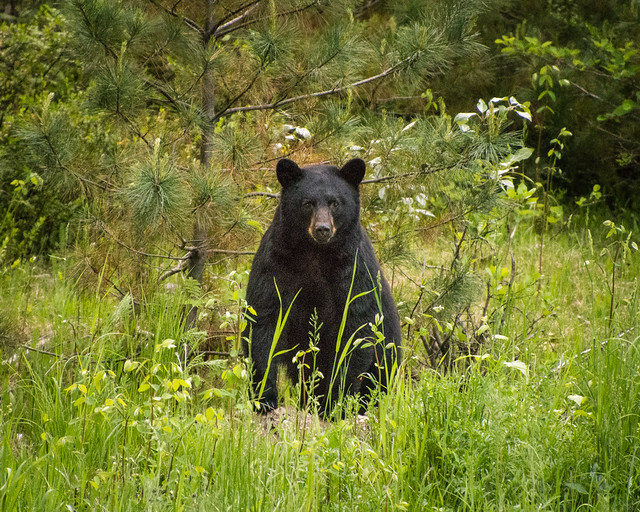
black bear

E. O. Wilson’s most fervent dream: “That somehow we have as a value, a human value, that we not destroy but we protect and study and understand and love the environment that was our birthplace.”

Upcoming Events
Seeds & Plants, July 3 (Churchbridge) 
Learn how to plant seeds plus reading and activities from 2-3 pm, July 3, at Churchbridge Public Library.

Pasqua Nature Conservancy Hike, July 4 (Fort Qu’Appelle) 
The Fort Qu’Appelle Nature Society is planning a nature hike in the Nature Conservancy Pasqua land on July 4. Meet at the train station at 7:30 am to car pool. The hike will last from 8-11 am.

The Natural World, July 6 (Prince Albert) 
Join the Saskatchewan Science Centre for a nature/science program for kids from 9 am-12 pm, July 6.

Hidden Valley Wildflowers, July 6 (Regina) 
Join Nature Regina in looking for wildflowers from 8 am-12 pm, July 6, as they hike their Hidden Valley sanctuary.

Household Hazardous Waste, July 7 (Saskatoon) 
You can dispose of household hazardous waste at City of Saskatoon’s Civic Operations Centre from 9 am–3:30 pm, July 7.

AB Greater Sage-grouse Recovery Program, July 9 (webinar) 
Joel Nicholson, Senior Wildlife Biologist with AB Environment and Parks, will discuss Alberta’s greater sage-grouse recovery program in a noon-hour webinar on July 9.

Composting Workshop, July 11 (Saskatoon) 
Join Saskatoon’s compost coaches for a workshop on composting and low-waste strategies from 7-9 pm, July 11.

black bear eating weeds

Looking Ahead
Wanted – Volunteers, Aug. 25 (Regina) 
Friends of Wascana Marsh are looking for volunteers with a nature/biology background to help them set up a booth, host activities such as pond dipping, and offer guided tours at Harbour Landing’s Summer Bash on Aug. 25. Email friendsofwascanamarsh@gmail.com if you’re interested.

Putting Beavers to Work, Oct. 23 & 24 (Calgary) 
A two-day seminar in Calgary on Oct. 23 & 24 will look at beavers’ role in watershed resiliency and restoration through both talks and a coexistence tools demonstration.

A full list of upcoming events can be found on the EcoFriendly Sask Calendar 

In the News
The Endangered Grasslands Alliance has made it easy to express your concerns about the perimeter highway running through the Northeast Swale by emailing your letter to local and provincial politicians directly from their website.

The Saskatchewan Association of Rural Municipalities will be working with First Nations Power Authority and the U of S School of Environment and Sustainability to develop better wind and solar power systems for rural communities.

Federal and provincial government funding will support transition away from coal in Saskatchewan’s mining communities.

Local theatre group tries to promote hope and change in all-ages play about climate change.

Take your car to a self-service car wash – you’ll save water and avoid runoff pollution.

Raymond, AB plans to go solar for all its municipal energy needs – from heating buildings to streetlights.

Growth is pointless in a mature economy. We should be looking for “qualitative improvement rather than economic enlargement.”

A female Arctic fox travelled more than 3500 km from Norway to Canada in just 76 days.

EcoSask News is a weekly round-up of local news and events. Email us if you have items you would like us to include. 

You can follow EcoFriendly Sask by liking us on Facebook, following us on Twitter, or by email (top right corner).

Tuesday, 28 May 2019

EcoSask News, May 28, 2019

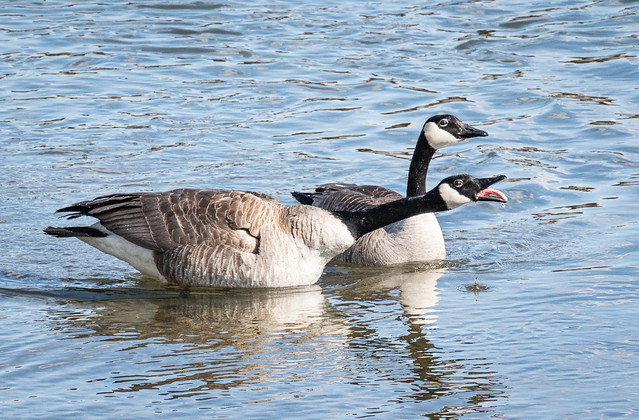
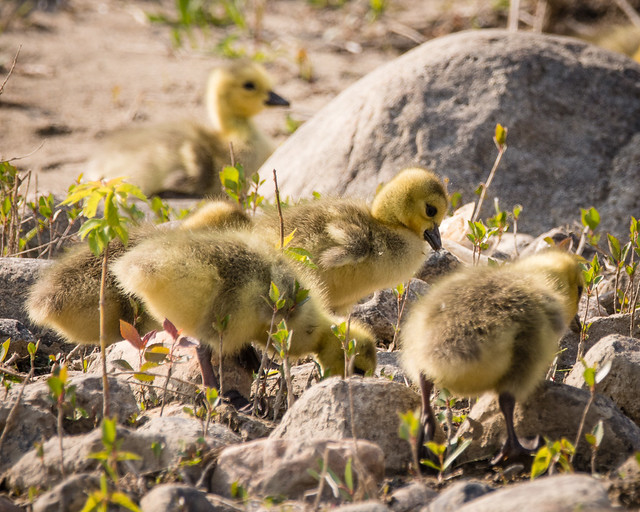
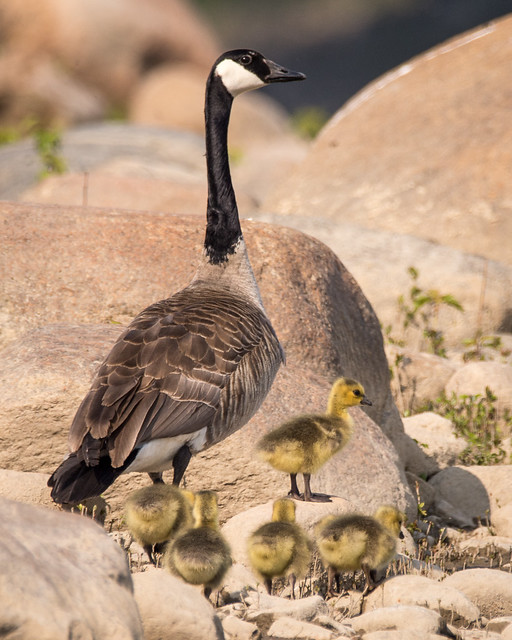
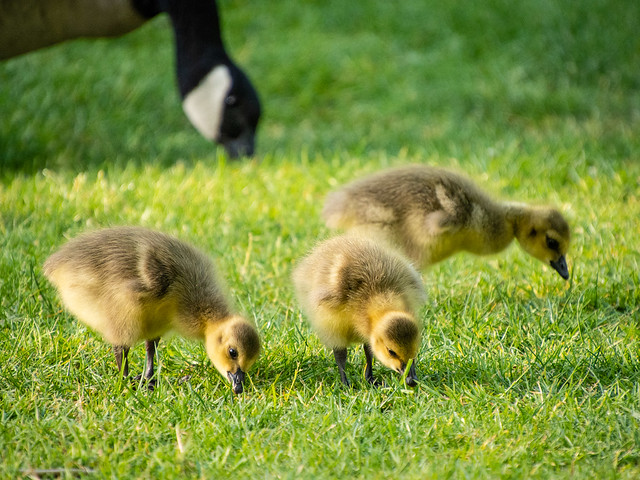
Canada geese goslings

Upcoming Events
Seed Exchange, May 31 (Jansen) 
Jansen Public Library is hosting a seed exchange from 4-8 pm, May 31.

Animal Sanctuary Tour, June 2 (Moose Jaw) 
Join Moose Jaw Nature Society for a tour of the Free to be Me Sanctuary from 1-2 pm, June 2.

Household Hazardous Waste, June 2 (Saskatoon) 
You can dispose of household hazardous waste in Saskatoon from 9 am-3:30 pm, June 2.

Water Conservation, June 4 (Regina) 
Learn about irrigation and water conservation in the garden at 12 noon, June 4, at Innovation Place Regina.

SK Communities and the Coal Phase-out, June 5 (Saskatoon) 
Hayley Carlson and Justin Fisher will discuss communities and the coal phase-out in Saskatchewan at the June 5 breakfast meeting of the Saskatoon Energy Management Task Force.

La Terre Vue du Coeur/ Earth: Scene from the Heart, June 6 (Saskatoon) 
La Terre Vue du Coeur, a documentary about threats to biodiversity, will be shown at the Frances Morrison Library at 6:30 pm, June 6.

Narrative Approaches to Engaging with the Climate Crisis, June 7 (Saskatoon) 
Rachel Malena-Chan will discuss narrative approaches to engaging with the climate crisis at 12:30 pm, June 7, at SERI, College of Education, U of S.

Learn to Camp, June 8 (Saskatoon) 
Learn basic camping and outdoor living skills from 2-4 pm, June 8, at the Round Prairie Branch Library.

Canada geese and goslings

Looking Ahead
Beginner Bird Id, June 13 (Rosthern) 
The Saskatchewan Breeding Bird Atlas is offering a 2-hour beginner bird identification workshop in Rosthern from 7-9 pm, June 13.

Native Prairie Pasture Tour, June 22 (Regina) 
Join PCAP-SK for a guided tour of Caledonia-Elmsthorpe Community Pasture from 4-9 pm, June 22, with buses from Regina. Register by June 14.

Botanizing the Badlands, July 6 (Avonlea) 
Join the Native Plant Society of Saskatchewan in spotting wildflowers in the Avonlea Badlands on July 6.

Saskatoon Nature Society Field Trips
Golden Eagles 
June 6, 8 am – Chappell Marsh & St. Barbe Baker Afforestation Area
June 13, 8 am – Turtles at Pike Lake
Retirees and partners who are interested in birds and the natural world are invited to participate.

Other Saskatoon Nature Society Field Trips 
June 12 & 19 – Invasive Plants Identification Workshop
Everyone is welcome. Check the Saskatoon Nature Society’s website for full details and updated information.

Canada geese goslings

Birdwatching with Stan (Saskatoon)
Birdwatch with Stan Shadick at Wanuskewin Heritage Park from 7-8:30 am on June 26, July 28, Aug. 18, and Aug. 28. Birdwatch from 7-8:30 pm on June 5, July 14, and Aug. 7 ($20/person). Stan is also offering guided birding tours at Blackstrap and Beaver Creek as a fundraiser for Living Sky Wildlife Rehabilitation.

A full list of upcoming events can be found on the EcoFriendly Sask Calendar 

In the News
Saskatoon is the second Canadian city to join the Urban Wildlife Information Network. The goal is to learn how urbanization affects wildlife in order to preserve urban biodiversity and minimize human-wildlife conflict.

8-80 Cities conducted an active transportation survey in Saskatoon. They learned: people want to cycle but aren’t sure it’s reasonable; sharing the road with drivers and pedestrians is tricky; and fear of bike theft is a barrier for low-income residents.

Slovenia’s capital, Ljubjlana, has a comprehensive waste management program incorporating household repair workshops, zero-waste stores, and recycled toilet paper in municipal facilities.

They may not be cute, but earthworms provide us with fertile soil that retains rainwater. Unfortunately, their numbers are dropping rapidly.

We assume that streetlights make cities safer, but there is no research to back that up.

Textile waste consumes nearly 5% of all landfill space, and 20% of all freshwater pollution is a result of textile treatment and dyeing. Researchers are inventing new ways to turn old clothes into everything from new cotton to fake knees.

70-80 otters live in Singapore. 30,000 people follow their activities on Facebook [video].

If you're in the area, check out the trails at Cannington Lake Resort Hamlet, an EcoFriendlySask Action Grant recipient.


EcoSask News is a weekly round-up of local news and events. Email us if you have items you would like us to include. 

You can follow EcoFriendly Sask by liking us on Facebook, following us on Twitter, or by email (top right corner).

Thursday, 19 July 2018

Prairie Beauty: NCC's Dundurn Property

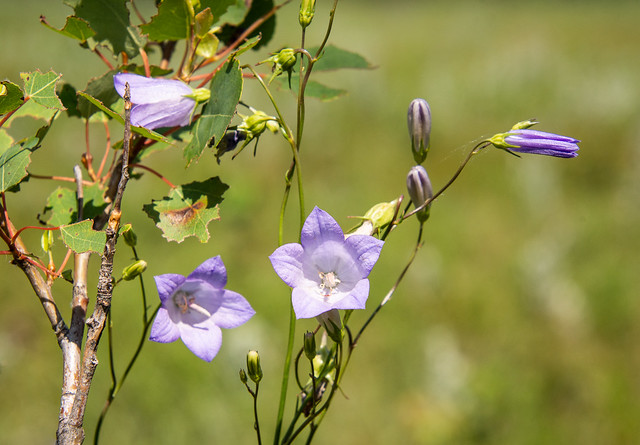
Harebell

As we bump our way down a leafy lane, a white-tailed deer pokes its head out to see who’s come to visit. Verity Moore-Wright, Acting Director of Development, and Ryan Dudragne, Conservation Science Co-ordinator – LIS, have invited us (Andrew and Penny McKinlay) to join them on a hike around one of the Nature Conservancy of Canada’s newest properties near Dundurn.
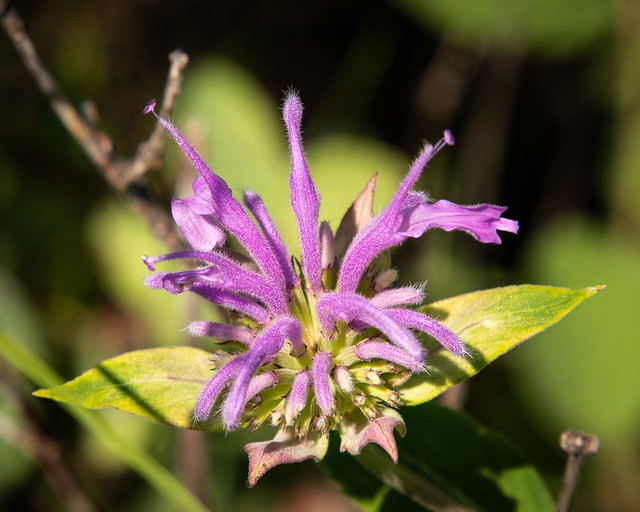
Rolling hills – stabilized sand dunes – stretch out to a clear blue sky. A red-tailed hawk soars overhead and there are treasures to be found at our feet. A patch of wild bergamot is flowering near the entrance to the property attracting long-tongued bees, bee flies, butterflies, and moths. Wasps may steal the nectar by drilling a hole in the nectar tubes.

Bergamot

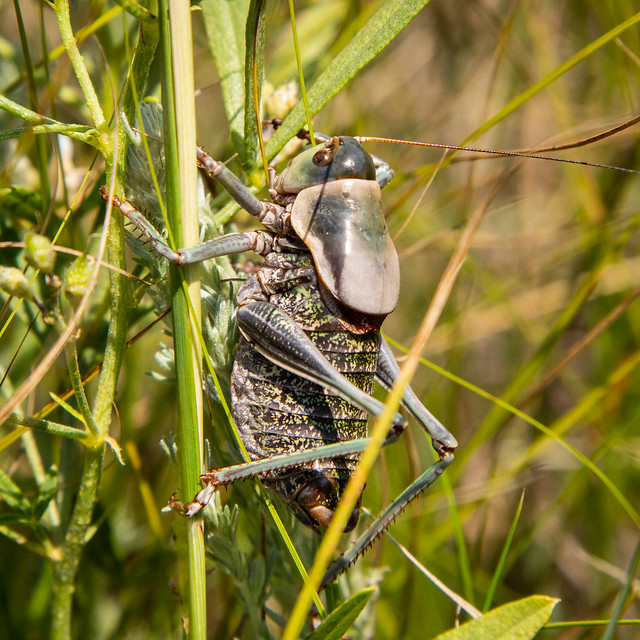
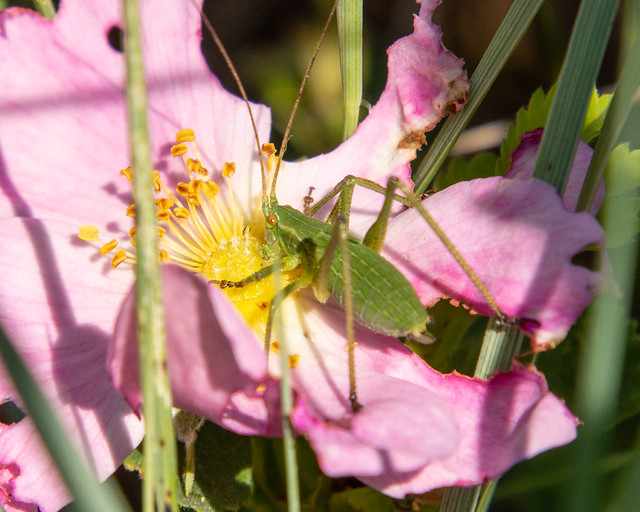
We’re delighted to spot a hunch-backed Mormon cricket. It’s not a cricket at all but a shield-backed katydid. Although they have no wings, they can travel up to 2 km a day when they’re swarming, heading out in the thousands to find food.

Mormon cricket

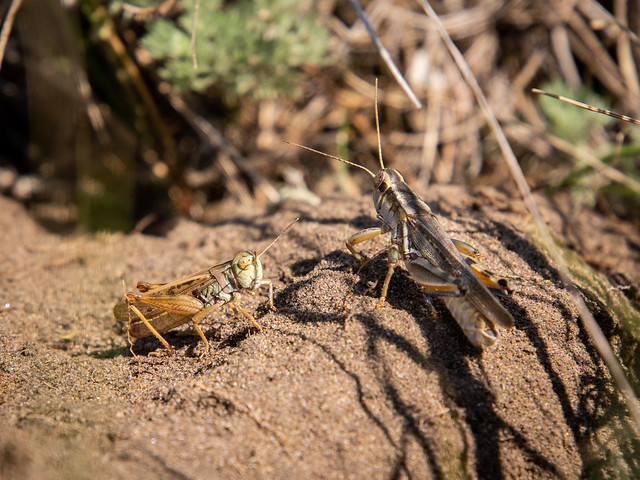
There are plenty of other grasshoppers and katydids. We tend to think of grasshoppers as pests, but only a few of them destroy crops. There is such variety in their sizes, colors, and patterns.

grasshoppers

We weren't initially able to identify the following insect, but, with help from iNaturalist, we now know it's a Broad-winged Bush Katydid (scudderia pistillata) late instar nymph.

insect on wild rose

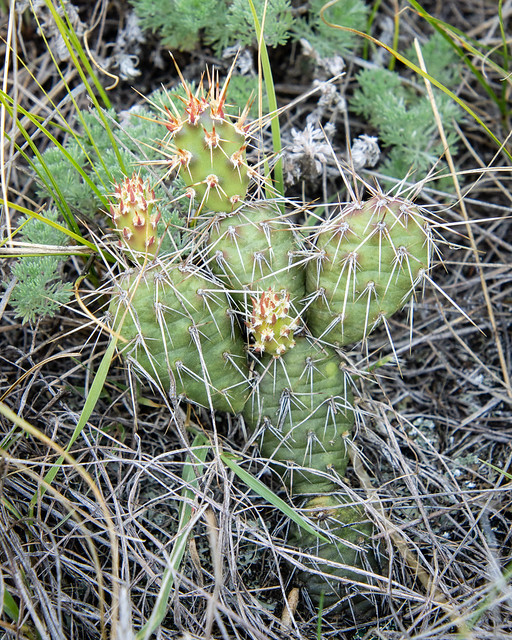
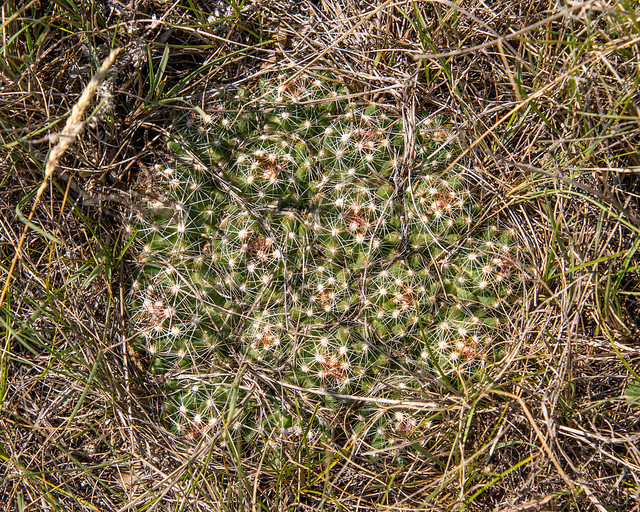
We need to watch where we step as there are plenty of cactus – both pincushion and prickly pear.

Prickly-pear cactus

pincushion cactus

The rush skeleton plant, with next to no leaves, is another plant that can tolerate dry conditions.

Rush skeleton plant

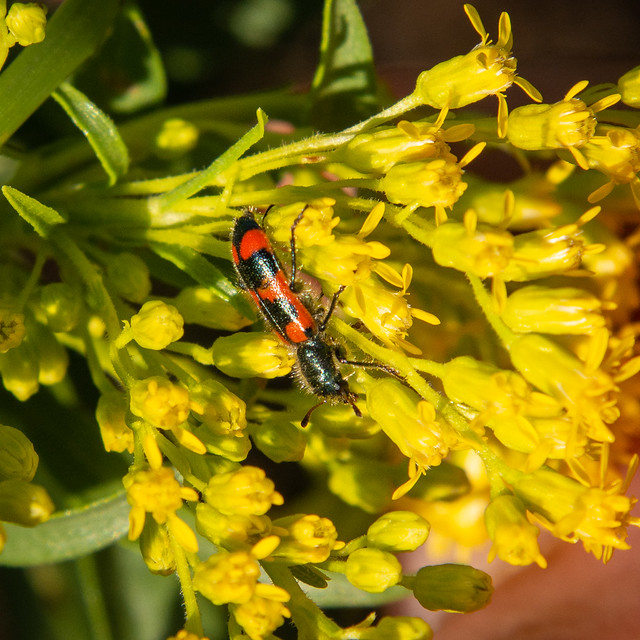
The red-blue checkered beetle stands out against the goldenrod’s bright yellow flowers. Pollen will stick to the long hairs on its body and legs and be passed along to other plants.

Red-blue checkered beetle on low goldenrod

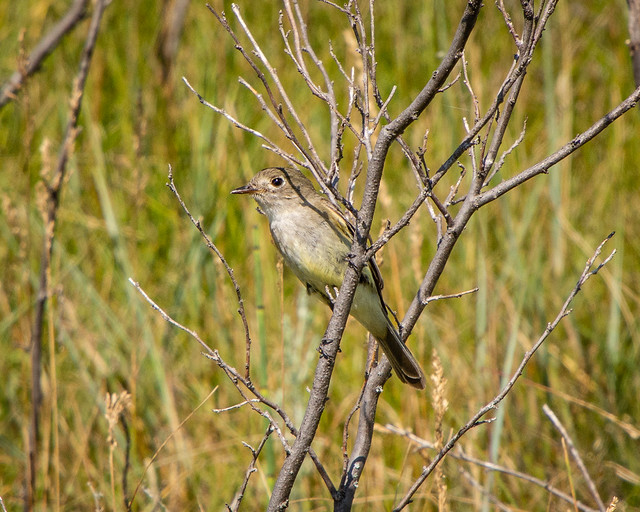
A flycatcher keeps a close eye on us as we pass by, but many of the site’s inhabitants are harder to spot. They do, however, leave us clues – moose poop (these guys are part of Ryan Brook’s Saskatchewan Farmland Moose Project), a freshly dug badger hole, heaps of loose dirt left behind by pocket gophers. If you look really closely at the loose dirt, you’ll spot small round holes indicating the homes of tiger beetles. Ryan describes them as predatory bullies, dragging other insects into their hole or chasing them down.

Alder Flycatcher (?)

We’re hot and hungry after a long walk around the property but very grateful to Nature Conservancy of Canada for inviting us out to see the site and for the important work they do in protecting natural areas and maintaining biodiversity. And a special thank you to Ryan who was so helpful in identifying all the fascinating species we were fortunate enough to spot.

For more information about the Dundurn site and the work of the Nature Conservancy, take a look at the article we posted in May.

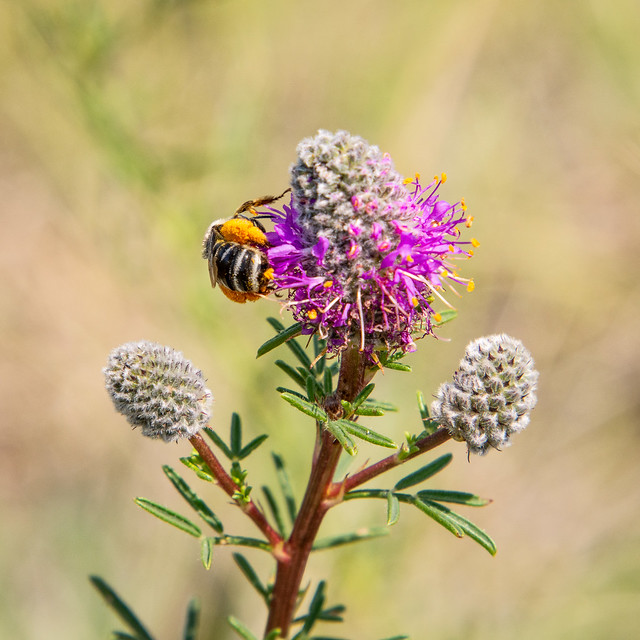
bee on purple prairie clover

Tuesday, 17 July 2018

EcoSask News, July 17, 2018

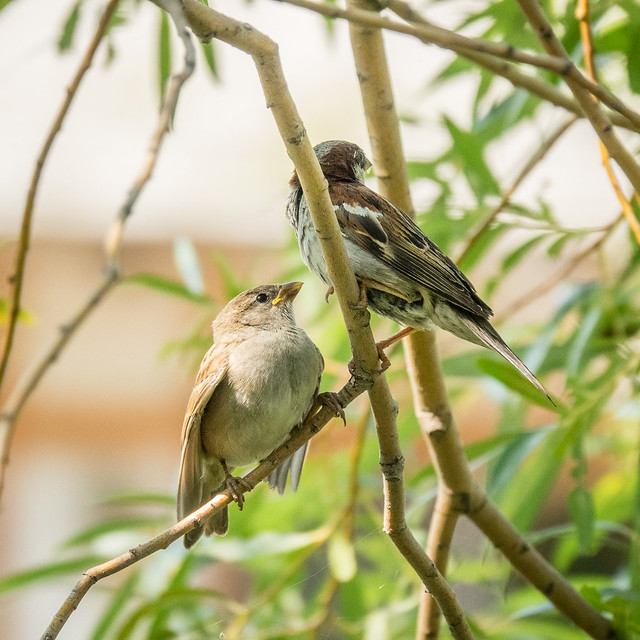
adult and young sparrow

Upcoming Events
Native Species Plant Garden, Thursdays (Regina)
A group of Nature Regina members are renewing the Native Species Plant Garden at the Royal Saskatchewan Museum and would appreciate help any Thursday morning between 8:30 am and noon until the end of September.

Metamorphosis, July 13-19 (Regina/Saskatoon) 
Metamorphosis, a film about how humanity is being transformed in new ways by the environmental crises we have created, is showing in Regina and Saskatoon from July 13-19.

SK Parks Virtual Bioblitz, July 15-21 
If you’re visiting a Saskatchewan park between July 15 and 21, be sure to take part in the virtual bioblitz.

The Amazing World of Falconry, July 22 (Saskatoon) 
Meet Lynn Oliphant’s peregrine falcons on July 22. Meet at Wild Birds Unlimited at 6:30 pm.

Amazing Facts about Animals, July 25 (Saskatoon) 
Sally Meadows will launch her new book, When Sleeping Birds Fly: 365 Amazing Facts about the Animal Kingdom at a come-and-go event at Wild Birds Unlimited from 6-8 pm, July 25. There will be hands-on activities for kids.

Looking Ahead
Boreal Forest Eco Kids Camp, Aug. 6-10 (Ness Creek) 
Camp at Ness Creek from Aug. 6-10 and your kids can take part in a boreal forest eco camp.

Summer Star Party, Aug. 8-13 (Cypress Hills Inter-Provincial Park) 
The Regina and Saskatoon Centres of the Royal Astronomical Society of Canada present their annual Summer Star Party in Cypress Hills Inter-Provincial Park, Aug. 8-13.

A full list of upcoming events can be found on the EcoFriendly Sask Calendar 

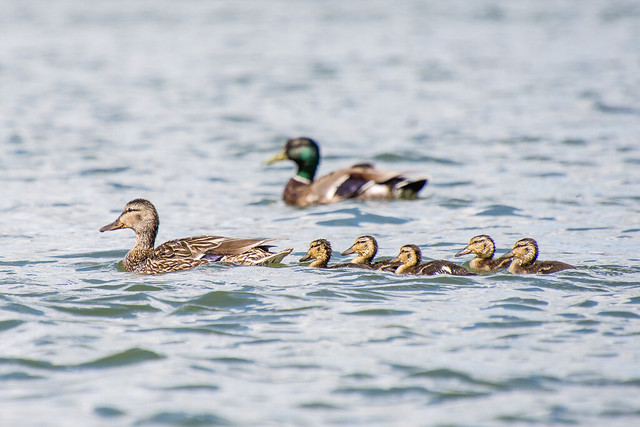
mallards and ducklings

In the News
The Last Mountain Lake Stewardship Group and SAWS have prepared a series of information sheets regarding the Quill Lakes drainage issue

A University of Saskatchewan professor has received a grant to test green roofs designed for cold regions

Help shape the future of Canada’s forests by responding to the Canadian Council of Forest Ministers’ survey. CPAWS is urging the ministers to adopt a bolder vision that recognizes the health of the ecosystem as a priority above all else

Nature Canada is offering to help nature/conservation groups with their public engagement

Research shows that predator removal is an ineffective and costly approach to conflict prevention and resolution [podcast]

The Norwegian government places an environmental tax on all producers of plastic bottles. The more they recycle, the more that tax is reduced

A single cigarette filter can contaminate hundreds of litres of water because of the chemical substances it contains and can take more than a decade to decompose

People are so annoying that animals are becoming more nocturnal

Bird diversity has already doubled as Madrid launches a strategic plan for biodiversity

Recycling plastic is to saving the Earth what hammering a nail is to halting a falling skyscraper

EcoSask News is a weekly round-up of local news and events. Email us if you have items you would like us to include. 

You can follow EcoFriendly Sask by liking us on Facebook, following us on Twitter, or by email (top right corner).