Showing posts with label Air. Show all posts

Tuesday, 21 May 2019

EcoSask News, May 21, 2019

flowering trees

Upcoming Events
Beginner Bird Id Workshop, May 21 (Prince Albert)
Nature Prince Albert is hosting a 2-hour basic bird identification workshop at 7 pm, May 21.

Moose Jaw Nature Society AGM, May 24 (Moose Jaw)
The Moose Jaw Nature Society will be holding its annual general meeting at 6:30 pm, May 24.

Global Strike for Future, May 24 (Regina)
Meet at 10 am at the Royal Saskatchewan Museum for a march to the rally at the Legislative Buildings at 11 am, May 24.

Trash Tag Challenge, May 25 (Regina)
WUQWATR is hosting a trash tag challenge at the Wascana Rowing Club from 1-3 pm, May 25.

Learn to Camp, May 25 (Saskatoon)
Learn basic camping and outdoor living skills from 2-4 pm, May 25, at the Alice Turner Branch Library.

Green New Deal Town Hall, May 28 (Regina)
Help shape a Green New Deal for Canada at 6:30 pm, May 28, Regina.

Fixing SK’s Climate Change Plan, May 28 (Saskatoon)
Ann Coxworth and Peter Prebble will present the SK Environmental Society’s response to the Saskatchewan government’s climate plan at 7 pm, May 28, as part of the Sustainable Speaker Series.

Green New Deal Town Hall, May 29 (Saskatoon)
Help shape a Green New Deal for Canada at 7 pm, May 29, Saskatoon.

International Trails Day, June 1 (Saskatoon)
Meewasin Valley Authority is celebrating International Trails Day on June 1 with activities from 1-4 pm at Friendship Park.

flowering trees

Looking Ahead
Detour, July 22-25 (Saskatoon)
Youth ages 13-14 are invited to flex their creative problem-solving muscles on an urban sustainable design project from July 22-25 at Detour: Spark Ideas, Shift Gears, Activate Change.

ForestART, Aug. 6-9 (Ness Creek)
Unleash your creativity in Ness Creek’s boreal forest setting by participating in ForestART, Aug. 6-9. Workshops include willow basketry, painting, silversmithing, blacksmithing, and printmaking.

A full list of upcoming events can be found on the EcoFriendly Sask Calendar 

In the News
Medicine Hat is pulling the plug on a $13 million concentrated solar power project saying its small, unreliable contribution to the city’s power grid didn’t justify the cost of maintenance during snowy winters and dusty summers.

The Great Plains Air Zone website lists the current air quality at their Belle Plaine, East Regina, and Yorkton stations.

Lawson Heights Mall in Saskatoon has installed bee hotels and flowers on its roof and has a bee-friendly mural in the corridor between the mall and Safeway.

Rare Trees of Saskatoon has a Facebook group.

Vintage clothes and natural fabrics – green fashion in Saskatchewan.

Harbour Air, based in Vancouver, hopes to zero out its emissions with electric airplanes – and save money.

Ensuring healthy ecosystems and biodiversity can force us to make tough choices. It’s caribou vs. jobs and recreation in British Columbia.

Barn swallows eat up to 600 bugs a day so don’t disturb their nests.

A BC inter-city bus service will be fuelled by vegetable oil.

EcoSask News is a weekly round-up of local news and events. Email us if you have items you would like us to include. 

You can follow EcoFriendly Sask by liking us on Facebook, following us on Twitter, or by email (top right corner).

Tuesday, 23 October 2018

EcoSask News, October 23, 2018

backlit grass

Upcoming Events
Take Me Outside Day, Oct. 24
Teachers are encouraged to take their students outside for at least an hour on Oct. 24, Take Me Outside Day.

Art & Science in Wildlife Management, Oct. 26 (Saskatoon)
The WildEcol seminar series is held at 3:30 pm, every other Friday, on the U of S campus:
Oct. 26 – Bridging the gap between art and science in wildlife management

Anthropocene, Oct. 26 (Saskatoon)
Anthropocene, a cinematic overview of humanity’s reengineering of the planet, is being screened at the Roxy Theatre on Oct. 26. Check for the book, with photographs by Edward Burtynsky, in your local library or bookstore.

Travels South of the Equator, Oct. 27 (Fort Qu’Appelle)
Jean and Peter Ascroft will share their travels south of the equator on two continents at the 7 pm, Oct. 27, meeting of the Fort Qu’Appelle Nature Society (at the Fort Qu’Appelle Train Station).

NE Swale: More than an Urban Park, Oct. 30 (Saskatoon)
Join the Northeast Swale Watchers from 7-9 pm, Oct. 30, to learn about the Northeast Swale, progress to date, and ongoing challenges.

There will be 5 short presentations: Renny Grilz, Meewasin, What's in the Swale: The Unique Wildlife and Plants of the Northeast Swale; Dr. Ryan Brook, University of Saskatchewan, Monitoring and Mitigating the Impacts of Roads on Wildlife; Rick Huziak, Sask Light Pollution Abatement Group, Reducing Night Lighting for a Healthy Swale; Brenda Wallace, City of Saskatoon, Protecting What Matters - Policy Perspectives; Candace Savage, The Last Refuge: Why Protecting the Swale Matters.


Household Hazardous Waste Day, Oct. 28 (Saskatoon)
You can dispose of household hazardous waste in Saskatoon from 8 am-2:30 pm, Oct. 28.

Lakeridge Park Field Trip, Nov. 3 (Regina)
Join Nature Regina from 10 am to noon, Nov. 3, on a birding field trip at Lakeridge Park.

Library of Things Volunteer Orientation, Nov. 3 (Saskatoon)
Saskatoon’s Library of Things is hosting a volunteer orientation from 12-1 pm, Nov. 3.

A full list of upcoming events can be found on the EcoFriendly Sask Calendar 

In the News
Two articles raise serious concerns for Saskatchewan residents:
     Air quality readings are off the chart in southeast Saskatchewan
     The government needs to allow regulators to enforce the regulations

Turtles survived the asteroid that wiped out the dinosaurs, but will they survive the Anthropocene? Where have all the turtles gone and why does it matter?

Coyotes can help build back biodiversity in rural and urban areas

5 ways cities could dramatically cut carbon emissions

EcoSask News is a weekly round-up of local news and events. Email us if you have items you would like us to include. 

You can follow EcoFriendly Sask by liking us on Facebook, following us on Twitter, or by email (top right corner).

Tuesday, 28 August 2018

EcoSask News, August 28, 2018

mushrooms

Upcoming Events
Wascana Junior Naturalist, Sept.-Dec. (Regina)
Sign up kids ages 9-13 for the Wascana Junior Naturalist program on Tuesdays 6-8 pm: Sept. 18; Oct. 2, 16, 30; Nov. 13, 27; and Dec. 4.

Guided Nature Immersion Walks, Sept. 3/5/8 (Saskatoon)
Participate in a nature immersion walk with Dolores Burkhart from 8:30-10 am, Sept. 3, 5, or 8.

Climate Change Update, Sept. 5 (Saskatoon)
Peter Prebble will offer a climate change update at the Sept. 5 breakfast meeting of SK Energy Management Task Force.

Rise for Climate, Sept. 8 (Saskatoon)
The Saskatoon chapter of Council of Canadians and Climate Justice Saskatoon are holding a rally from 12-2 pm, Sept. 8, in honour of Rise for Climate day of action.

Household Hazardous Waste Day, Sept. 8 (Saskatoon)
You can dispose of household hazardous waste in Saskatoon from 8 am-2:30 pm, Sept. 8.

Looking Ahead
Green Economics, Sept. 20-21 (Calgary)
The Sustainability Network is offering an intensive training in green economics for non-economists Sept. 20-21 in Calgary.

Nature Grandparenting Autumn Meetups, Sept. 26, Oct. 10, Oct. 24 (Saskatoon)
Grandpairs are invited to attend the following autumn meetups:
Sept. 26, 10 am & 1:30 pm – the Northeast Swale (Evergreen)
Oct. 10, 10 am & 1:30 pm – Meewasin Park (Lawson Heights)
Oct. 24, 10 am & 1:30 pm – Gabriel Dumont Park (Buena Vista)

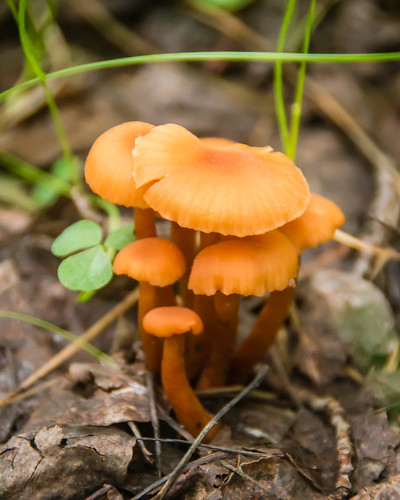
Mushrooms

Saskatoon Nature Society Field Trips
Golden Eagles 
Sept. 13, 9 am – MVA Trail Walk
Sept. 27, 9 am – Cranberry Flats Trails
Retirees and partners who are interested in birds and the natural world are invited to participate.

Other Saskatoon Nature Society Field Trips 
Sept. 22, 1-9 pm – Goose & Crane Trip and Picnic
Sept. 29, 9 am-noon – Gabriel Dumont Park Bird Walk
Everyone is welcome. Check the Saskatoon Nature Society’s website for full details and updated information.

A full list of upcoming events can be found on the EcoFriendly Sask Calendar 

In the News
Alberta is hosting a 2-day workshop to promote citizen science in the province. Wouldn't it be interesting to hold a similar event in Saskatchewan?

Why isn’t Canada taking Volkswagen to court? We could be using billions of dollars to improve air quality.

There are huge business opportunities in e-waste recycling - if we do it right. And if we’re smart, we’ll plan ahead and avoid toxic chemical contamination from solar panels.

Western University is now a designated bee city. 

In Case You Missed It
Traffic calming measures to protect wildlife in the Swale 

Let’s watch a movie: nature & environmental films

EcoSask News is a weekly round-up of local news and events. Email us if you have items you would like us to include. 

You can follow EcoFriendly Sask by liking us on Facebook, following us on Twitter, or by email (top right corner).
Thursday, 1 February 2018

Municipal Climate Action

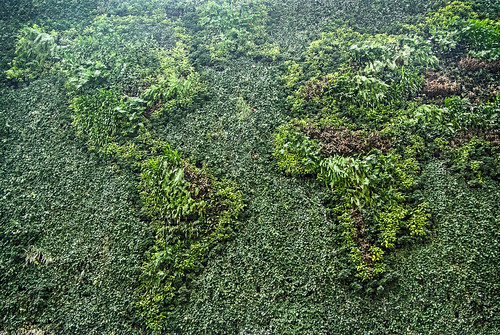
green wall map

Communities around the world have realized that cities can play a significant role in establishing a more environmentally sustainable way of life. Here is a sampling of steps municipalities are taking to address climate change.

Waste Management
Europe has established the Zero Waste Municipalities Network, encompassing “people-led programs for waste reduction, reuse and repair programs, composting, recycling, changes in consumption habits, redesign and toxic-free production.”

Ljubljana, Slovenia, has 8 collection centres and mobile units for waste which isn’t picked up at the door, including “hazardous waste, metals, plastic, waste electronic and electric equipment, garden waste, construction waste, car tires, wood and wooden products, bulky waste, clothes and textiles.” Households can also request the collection of bulky items.

In Besançon, France, 70% of residents “compost their food scraps at home or have a community composter in their building or a small-scale composting site next to their house. The diversion of the organic waste from the incinerator has saved €800,000.” 

Renewable Energy Production
Oxford County, Ontario, and Vancouver, BC, plan to achieve 100% renewable energy by 2050. 

Oxford County has set up solar thermal installations at their social housing complexes as well as at a retirement home where solar energy heats the pool, supplies hot water, and powers the air conditioning. Cow manure from Greenholm Farms Biogas Plants powers 200 homes.

Vancouver’s plans include energy-efficiency building upgrades, neighbourhood energy utilities, a new fire hall built to passive house standards, and a network of electric vehicle charging points.

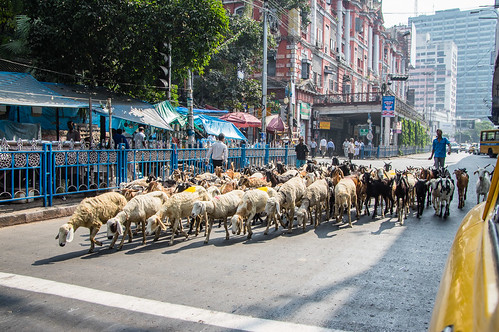
yet another traffic problem!

Improved Active & Public Transportation
Public Transit: Economist Irwin Kellner argues that public transit isn’t a business that should be expected to recover its costs from income. Instead, it should be viewed as “a service that feeds the entire economy and enables a society to thrive, because it provides that essential urban good: mobility.” Erik Olin Wright states that free public transit should not be seen as a subsidy but as the “optimal allocation of resources,” reflecting the true cost of transportation alternatives. A study in the UK showed that free bus passes enabled “older and disabled people to have fuller and more efficient access to the key public services they need and to take part in activities that would not be affordable without the free pass.”

Walking: In the words of Jan Gehl: “Life happens on foot. Man was created to walk, and all of life’s events large and small develop when we walk among other people. There is so much more to walking than walking. There is direct contact between people and the surrounding community, fresh air, time outdoors …” But, to ensure that walking is enjoyable, Jeff Speck says "a journey on foot should satisfy four main conditions: be useful, safe, comfortable and interesting.”

Improved Land Management Practices
 UK’s Wildlife Trusts have published a pamphlet entitled Homes for People and Wildlife: How to Build Housing in a Nature-Friendly Way. The pamphlet states, “A good nature-friendly development retains existing meadows, wetlands, hedgerows, trees and woods, and joins them up with wildlife-rich gardens, verges, amenity green space, cycle paths and walkways.” Tools include permeable driveways to reduce flood risk, lighting designed to avoid disturbing wildlife, wildlife corridors, wildlife-permeable boundaries between gardens and open space, and native, wildlife-friendly plants in gardens and landscaping.

An apartment development on the Thames established floating barges for bird roosts, intertidal terraces as habitat for smelt, and landscaping that included shallow pools favoured by certain native plants and invertebrates.

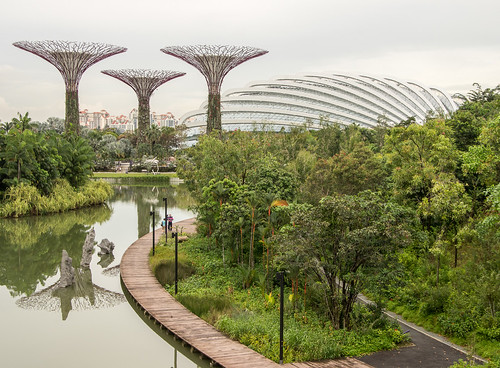
supertrees and flower dome

Energy-Efficient Buildings
Most Canadian building codes fail to address energy efficiency. Vancouver has updated its building bylaw to make buildings more energy efficient. The bylaw covers new homes and renovations with special provisions for passive house builds.

Enhanced Water Management 
Calgary’s stormwater management plan includes rain gardens, man-made wetlands with natural vegetation, bioswales, and low impact development.

Toronto was the first City in North America to have a bylaw requiring green roofs on new development. Green roofs improve stormwater drainage, moderate the temperature, create wildlife habitat, and promote biodiversity.

Since 2001, the population of Okotoks, Alberta, has more than doubled, necessitating a focus on water conservation and retention. Water meters have reduced system leakage and given residents real-time feedback on their consumption habits. The City also emphasizes maximizing water productivity. For example, new residential properties “must have at least 12 inches of topsoil to maximize water retention, help manage stormwater and reduce the need for lawn watering.”

Snake River

Improved Air Quality
Idle-free bylaws are a straightforward way to reduce greenhouse gas emissions. Cities across Canada and around the world have established anti-idling bylaws. Here are a few examples from British Columbia.

Saskatoon Takes Action
The City of Saskatoon is developing a climate action plan and is requesting input from residents, businesses, and non-profit organizations. Fill out a survey or tell your story (until February 15).