Thursday, 11 March 2021

Community Highlight: Wascana Solar Co-operative


Wascana Solar Co-operative’s aim is to lead their community to cost-effective renewable energy solutions. 

1. How and when did you form your group? 
Wascana Solar Co-operative (WSC) began with two grassroots community meetings in Regina in 2017. It was at these meetings that our two foundational programs were born – Solar Investment Opportunity and Group Buy. 

2. What are your principal activities and why do you believe they’re important? 
With our Solar Investment Opportunity (SIO) program, co-op members purchase preferred shares ($1,000 each). We then reach out to potential partners who offer us space to install our systems. We help our partners “go green” while they pay us the cost of their power usage. 

In our Group Buy (GB) program, we organize a group of our members interested in purchasing panels, gather the technical requirements for solar projects, then tender it out in a request for proposal. In our first group buy we estimate that our group of 13 members collectively saved $67,000 off of the market rate on our panel purchases and installation (that’s an average of $5,000 each). To date, we have installed 353 solar panels through our three GB programs. 

3. What have been your successes and challenges? 
We have installed 468 panels in southern Saskatchewan through our SIO and GB programs. This is an estimated reduction of 150 tons of CO2 per year. We partnered with Conexus Credit Union and MiEnergy for our first SIO, installing 115 solar panels on the roof of the North Albert Conexus branch. 

In only our first year of incorporation as a co-operative (2018-2019), WSC installed a total of 398 panels through our SIO and GB programs. While some of this success was due to government subsidies at both the provincial and federal level, a very significant contributing factor was SaskPower's 1:1 net-metering program. The restructuring of this program into a net-billing program (more like 0.5:1) has devastated the solar energy industry in our province. 

In spite of this change, we remain confident in our ability to achieve our vision of "acting as a catalyst for growth in solar power." Both our SIO and GB programs still offer some of the most economical ways that Saskatchewanians can decrease their carbon footprints. 

4. What would you like to achieve in 2021? 
The Co-op enters 2021 with new board members and a revised business plan. We plan to introduce an energy monitoring program that would work in a similar way to our GB program. This program would enable those who were interested to assess their energy use throughout one calendar year so that the site-specific project economics could be evaluated and guide the property owner to better understand their project economics. 

We are also considering an industrial-size solar investment project such as the Saskatchewan Environmental Society Solar Co-op’s partnership with CNH Industrial and are considering several possible partnerships. 

The government has promised a home renovation incentive of up to $20,000 that applies to solar power installations, and this is being monitored by WSC. 

In addition to residential use, the GB program could also include one or more commercial projects. Please email info@wascanasolarcoop.com for more information. 

Under the direction of Andrew Tait, our second SIO installation is coming up soon. If you would like more information about this upcoming opportunity, please visit our website

If you live in Saskatoon, be sure to check out the SES Solar Co-operative

We’re planning to highlight the work of volunteer organizations in our communities on a regular basis. Do email us if you would like your organization to be profiled on EcoFriendly Sask

EcoFriendly Sask supports Saskatchewan environmental initiatives through an online publication, an events calendar, small grants, and the Nature Companion website/app. 

You can follow EcoFriendly Sask by liking us on Facebook, following us on Twitter, or by email (top right corner).

updated May 14, 2022 to remove personal phone numbers

Tuesday, 9 March 2021

EcoSask News, March 9, 2021

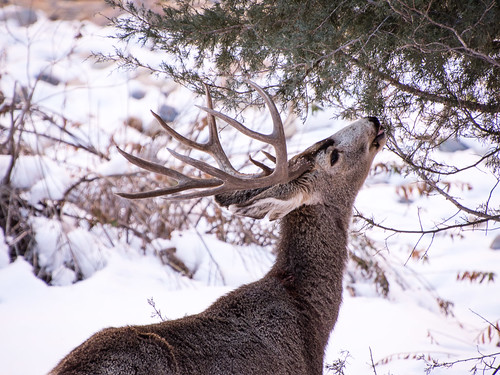
deer

This Week’s Highlights 
Let’s Talk About Water is offering a free virtual filmmaking workshop from noon-2 pm, Mar. 11, for scientists who are interested in sharing their scientific work through film. 


Upcoming Events 
Regina Public Library is hosting an online talk on the benefits of including prairie grasses in your garden at 7 pm, Mar. 10. 

The Johnson-Shoyama Graduate School of Public Policy is offering a noon-hour online presentation regarding water policy and the contention which arises between individual goals and social group pressures for water management on Mar. 11. 

All ages are welcome on an outing to explore the Wascana Waterfowl Display Ponds area with Nature Regina on Mar. 12 (various time slots). Register in advance. 

Meewasin Valley Authority is hosting self-directed eco-scavenger hunts to help track wildlife at Beaver Creek Conservation Area on Mar. 13 and 27. 

Saskatoon Public Library is offering an online workshop on basic camping skills from 7-8 pm, Mar. 15. 

Join Nature Regina online at 7 pm, Mar. 15, for a discussion on the mandate of the Wildlife Rehabilitation Society of Saskatchewan

Enjoy noon-hour presentations on wetlands, grasslands, and prairie biodiversity as well as a 3 pm, Mar. 16, presentation of an Indigenous perspective of the goods and services provided by the prairie ecosystem and wetlands during the virtual Prairie’s Got the Goods Week organized by SK-PCAP. 

Create a poem or spoken word piece to honour World Water Day during this online workshop from 7-9 pm, Mar. 18. 

The Johnson-Shoyama Graduate School of Public Policy is offering an online presentation on decarbonizing agriculture from 10:30 am-noon, Mar. 18. 

Nature Saskatchewan is offering a multi-species management and conservation awareness online workshop at 7 pm, Mar. 18. 

Saskatoon Public Library is hosting an online discussion for teens about making our community more sustainable from 6-7 pm, Mar. 18. 

Global Water Futures is offering an online lecture series on women and water with a 12:30 pm, Mar. 18, talk on valuing water

Saskatoon Nature Society members are invited to share their photographs at the online annual general meeting of the Society at 7:30 pm, Mar. 18. 

Regina’s EnviroCollective will be meeting online from 7-10 pm, Mar. 18. 

Local News 
The Government of Saskatchewan is reviewing the Multi-Material Recycling Program. You’re invited to read a discussion paper and complete a survey

Research at the Canadian Light Source has demonstrated that key proteins protect wildlife when temperatures drop below freezing. 

You can borrow a birding backpack from the Saskatoon Public Library. Are any other Saskatchewan libraries doing this? 

From Information to Action 
The David Suzuki Foundation has released a guide to help you work with your local government on addressing climate change


EcoFriendly Sask supports Saskatchewan environmental initiatives through an online publication, an events calendar, small grants, and the Nature Companion website/app. 

You can follow EcoFriendly Sask by liking us on Facebook, following us on Twitter, or by email (top right corner). 


Check out EcoFriendly Sask’s Nature Companion, a free nature app for Canada’s four western provinces

Sunday, 7 March 2021

Managing & Exploiting Nature

Kingsmere Lake sunset

We’ve come across some thought-provoking articles that we wanted to share with you. 

Against the Duck Factory 
Many members of the Opaskwayak Cree Nation (OCN) in Manitoba and Cumberland House Cree Nation in Saskatchewan have an uneasy relationship with Ducks Unlimited. They are wary of the dams and other water control measures that have been established in the Saskatchewan River delta that they believe have ruined lakes, rivers, and creeks. It’s unclear what their purpose has been, but it’s worth noting that Ducks Unlimited “controls more land and water in Canada than all First Nations combined.” 

The Last Frontier 
Canada has a long history of natural resource exploitation. Is northern Canada the last frontier? 

Saskatchewan residents, many of whom live in northern Saskatchewan, are speaking out against a proposed peat mine south of La Ronge. “Although peatlands, also called bogs and muskegs, cover only 3 per cent of the Earth’s surface, they store twice the carbon of all the world’s forests combined. Peatlands also regulate water flows, mitigating the risk of flooding and preventing drought. In addition, they act as natural water cleansers and support a rich assortment of flora and fauna, which is why they are sometimes called ‘nature’s nurseries.’ . . . Over the course of a millennium, the peatland will grow by only one metre, which hardly makes it a renewable resource.” 

“A coalition of Indigenous and environmental organizations is calling on the Canadian and Ontario governments to impose an ‘immediate moratorium’ on all mineral exploration or impact assessment work related to the Ring of Fire region.” The Ontario government has acknowledged that industrial activity could have a negative impact on the wetlands and peatlands in the region. 

“Two Yukon First Nations are renewing calls for a regional land use plan to be completed before any new development on their traditional territories is considered . . . . Allowing industry to explore in a region where land use planning is underway could rule out protecting areas with high conservation values.” 

EcoFriendly Sask supports Saskatchewan environmental initiatives through an online publication, an events calendar, small grants, and the Nature Companion website/app. 

You can follow EcoFriendly Sask by liking us on Facebook, following us on Twitter, or by email (top right corner).

Thursday, 4 March 2021

Hawks of Western Canada

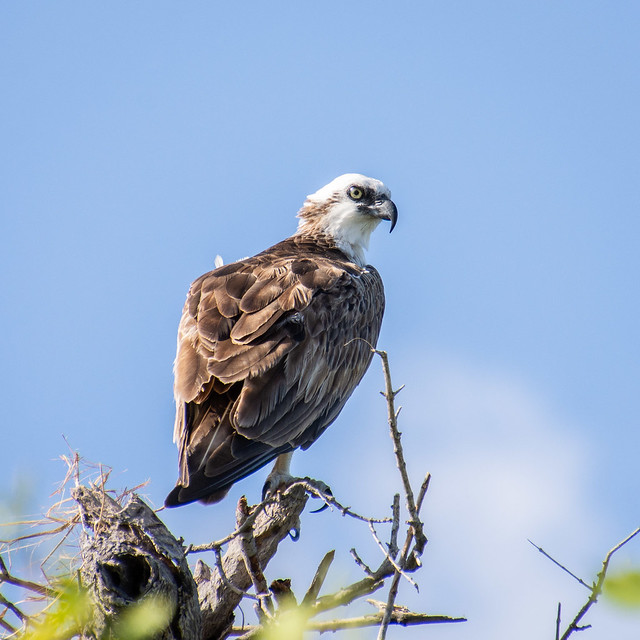
Osprey

It’s always a treat to see a bird of prey. We’re eager to introduce you to the ones you’re most likely to see in Western Canada. Let’s start with hawks. 

Hawks are medium-sized birds of prey with large eyes, hooked beaks, and sharp, curved claws. Despite being similar in appearance and behaviour, they don’t all belong to the same family. 

Osprey 
Osprey can be found near lakes, rivers, and coasts during the summer months. They’re large birds with a 5-6 ft wingspan, brown above and white below with a white head and a brown stripe across the eyes and cheeks. When they fly, there is a distinctive kink in their wings in the shape of an M. Bald eagles frequent similar habitats but they’re larger and don’t have the osprey’s white underparts. 

If you're lucky, you'll spot an osprey plunging feet first into a lake to catch a fish in its claws. They build large stick nests near water on poles or dead trees. 

Did you know? Osprey are the only North American hawk to catch and eat live fish. They have gripping pads on their feet to help them hold and carry the fish for long distances. 


Red-tailed Hawk 
Red-tailed hawks are common in southern Canada during the summer months. Look for them soaring in circles over open fields or perched on poles and fence posts. Red-tailed hawks have a 4-ft wingspan, a rusty-red tail, a pale face, and paler underparts. They have broad rounded wings and a short wide tail. A dark bar at the edge of their wings is visible in flight. 

Did you know? Red-tailed hawks are one of the largest North American birds, but they weigh at most 3 pounds. Dogs of a similar size would weigh 10 times as much. 


Sharp-shinned Hawk
 
Sharp-shinned hawks (Sharpies) are the smallest North American hawk (9-14 in) with a small head, short wings, long legs, and long tail. They can be hard to spot as they hide in bushes and wooded areas, ready to leap out and pounce on passing songbirds. Merlins are a similar size but have pointed wings, a shorter tail, and usually hunt in the open. 

Sharp-shinned hawks have a dark grey back and head and a white breast with reddish-orange streaks. Juveniles have a brown back and head. There are broad dark bands across their tail. 

Sharp-shinned hawks spend their summers in the dense, coniferous forests of Alaska, Canada and the northern plains of the United States, heading south to spend their winters in the United States. 

Did you know? Small birds make up 90% of the sharp-shinned hawks' diet and are plucked before being eaten. 


Swainson’s Hawk 
Swainson's hawks are a common sight in summer, soaring over the prairies and open grasslands of western North America. They prefer wide open spaces where they can easily spot ground squirrels and other small rodents, their preferred food when they are breeding. They also eat lots of grasshoppers – hence their alternate name of grasshopper hawk. 

Swainson's hawks vary in colour, but they usually have a dark breast, a light-coloured belly, and brown or grey upper parts. Most males have grey heads, while most females have brown heads. The large white patches edged with black flight feathers on their underwings help to identify them when they are in flight. Swainson's hawks are slimmer and longer-winged than other hawks. 

Did you know? Swainson's Hawks' long migration to Argentina can take up to two months. Their large migratory flocks number in the tens of thousands and they may travel for several days without feeding. 

Nature Companion 
You’ll find lots more information about birds on EcoFriendly Sask’s Nature Companion, an entry-level nature app for Canada’s four western provinces. 


See Also 

You can follow EcoFriendly Sask by liking us on Facebook, following us on Twitter, or by email (top right corner).

Tuesday, 2 March 2021

EcoSask News, March 2, 2021

raven

Upcoming Events 
Let’s Talk About Water is showcasing two online films about food, water, migrant workers and farmers from now until Mar. 22. 

Join Wascana Solar Co-op’s Group Buy Director for a virtual question and answer around net billing and the Co-op’s group buy process at 7:30 pm, Mar. 4. 

Join the McDowell Foundation for an online discussion of the value of outdoor learning from 7-8:30 pm, Mar. 4. 

There will be an online presentation on geographic song and plumage variation in Willow Flycatchers at 3:30 pm, Mar. 5, as part of the WildEcol Seminar Series. 

Songs 4 Nature will host a virtual winter showcase of original songs at 7 pm, Mar. 5. 

Saskatoon Nature Society members will be birding at Pike Lake from 1:30-4:30 pm, Mar. 7. Advance registration is required. 

SaskOutdoors is holding an online annual general meeting from 7-8 pm, Mar. 8. 

Pick up some tips and tricks for reducing your waste in a virtual presentation in Regina from 7-8 pm, Mar. 9. 

For Peat’s Sake – Protecting Northern Saskatchewan Muskegs will be screening and discussing For Our Peat’s Sake documenting the fight to protect the Winnipeg watershed region wetlands at 7 pm, Mar. 10. 

Nature Regina’s Get Outside! Kids’ Club will meet from 10 am-12 pm, Mar. 10. Be sure to register in advance. 

Find out about the managing for bird species at risk and incentives guide with Nature Saskatchewan at 7 pm, Mar. 11. 

A full list of upcoming events (online and in person) can be found on the EcoFriendly Sask Calendar 

Waste Reduction 
If Regina’s organic waste pilot project went city-wide, it could divert 18,000 tonnes or 31% of waste annually

The Saskatchewan Waste Reduction Council has set up a Facebook group for people to connect about anything regarding repairing


France is tackling throwaway culture with a repairability index to be displayed at the point of sale. “If you’re in the market for a new device, the score out of ten will tell you how easy it will be to get it fixed.” 

The Circular Economy Global Sector Best Practices series engages Canadian firms and innovators in the journey towards a circular economy. This month’s episode looks at construction.

crow

Local – Naturally 
The YXEWildlife project is now posting on Facebook to show us what is happening around us and when we’re asleep at night. [You Don’t Have to Leave the City to Connect with Wildlife] Dr. Ryan Fisher, Royal Saskatchewan Museum, has plans for Regina to join the Urban Wildlife Information Network by setting up an urban wildlife monitoring system similar to the one in Saskatoon.

Help Doug Clark, University of Saskatchewan, process photographs of Arctic bears

The Canadian government will invest $402,000 over 3 years to conserve and restore native prairie and shoreline habitat around Redberry Lake Biosphere Reserve

Book Time 
In Under a White Sky: The Nature of the Future Elizabeth Kolbert explores the unintended consequences of human initiatives to tame and control nature

Kathleen Dean Moore, author of Earth’s Wild Music: Celebrating and Defending the Songs of the Natural World, says, “The sounds of the natural world are beautiful and they make us happy.” If we lose them, “we lose joy.” 

Bird Play 
Bird jokes so bad they should be “ill-eagle” 

Play Crow Bingo - beginner & intermediate levels – on your next walk. 


Check out EcoFriendly Sask’s Nature Companion, a free nature app for Canada’s four western provinces 

EcoSask News is a weekly round-up of local news and events. Email us if you have items you would like us to include. 

You can follow EcoFriendly Sask by liking us on Facebook, following us on Twitter, or by email (top right corner).

Thursday, 25 February 2021

Community Highlight: Walking Saskatoon


1. How and when did you form your group? 
Walking Saskatoon formed during the consultation process for the Active Transportation Plan in 2016 after realizing the significant gaps in the city's sidewalk network. 

2. What are your principal activities and why do you believe they’re important? 
Our principal activities include creating public awareness of pedestrian-related issues, advocating for the improvement of the city's pedestrian network to various levels of government, and supporting initiatives that benefit pedestrians as well as city building practices that create a better environment for walking. In our activities, we recognize that at times marginalized communities disproportionately experience negative effects from our current transportation system, and we work to shed light on these inequities while at the same time working to ensure that the system will benefit all citizens. 

3. What were your successes in 2020? 
The major achievement on behalf of walking in 2020 was the allocation of a significant portion of the province’s MEEP funding to sidewalk improvements (for example, infill in areas where no sidewalks exist and repair of deteriorating sidewalks). Some money was also allocated to creating safer active transportation crossings in a couple of locations in our city. Thanks to Councillors Block and Donauer for pushing forward these initiatives. 

4. What would you like to achieve in 2021? 
During the budget deliberations later this year, our group would love to see further commitment to filling the gaps in the city’s sidewalk network. We'd also like to see the city make a bigger commitment to improving traffic safety, focusing especially on intersections that are dangerous to vulnerable road users. As an organization, we have plans to formalize as a not-for-profit this year as well. 

5. If you could have 3 wishes for improving your community, what would they be? 
Our three wishes for improving Saskatoon would be: 1) a 15-minute city where everyone has access to everything they need within walking distance, 2) a commitment to vision zero that matches the goal of eliminating traffic fatalities with meaningful actions, and 3) full funding for the city's active transportation plan. 

6. Are there volunteer opportunities with your organization? If so, please describe them and indicate how people can contact you. 
We're a small group of volunteers who do what we can, individually and collectively, to advocate for the greater good. If anyone has ideas about ways to make the city a better place for walking and wants to take action, we're here to support you. Connect with us on Facebook (Walking Saskatoon), Twitter (@walkingyxe), Instagram (@walkingsaskatoon) or reach out at contact@walkingsaskatoon.org

If you live in Regina, be sure to check out Sidewalks of Regina, which advocates for better walkways on a year-round basis. 


We’re planning to highlight the work of volunteer organizations in our communities on a regular basis. Do email us if you would like your organization to be profiled on EcoFriendly Sask

You can follow EcoFriendly Sask by liking us on Facebook, following us on Twitter, or by email (top right corner).

Tuesday, 23 February 2021

EcoSask News, February 23, 2021

frost on grass

This Week’s Highlights 
Participants in a virtual roundtable on unleashing Regina’s energy-efficient economy agreed that the renewable energy, energy efficiency, and net-zero building sectors represent significant opportunities in terms of local job creation, economic diversification and growth, and are critical in building a thriving, more inclusive and sustainable economy. 

Kairos Regina is hosting an online discussion on creation, climate, and you at 7 pm, Feb. 23. 

Upcoming Events 
Renny Grilz, Blazing Star Wildflower Seed Company, will discuss how to grow native plants successfully in an online workshop at 1 pm, Feb. 27. 

Permaculture Regina will hold a brief online AGM followed by a discussion on starting seedlings and getting ready for spring planting at 2 pm, Feb. 28. 

Nathan Tedford will discuss the future of small modular reactors in Saskatchewan and Canada at the virtual breakfast meeting of the SK Energy Management Task Force. 

Swift Current Creek Watershed Stewards are holding a virtual annual general meeting at 1 pm, Mar. 4. 

Nature Saskatchewan is hosting an online nature trivia event at 7 pm, Mar. 4. 

Outdoor Education 
SaskOutdoors will be hosting 3 virtual workshops in March offering a host of outdoor education resource materials: 

Overview of the Natural Curiosity pedagogical framework for environmental inquiry and associated Indigenous lenses – 6:30-8:30 pm, Mar. 15 


Online training to introduce educators to Project Wild – 7-9 pm, Mar. 17, 24, and 31 

A full list of upcoming events (online and in person) can be found on the EcoFriendly Sask Calendar

Any guesses as to what made the indentations in the sand pile?

Local News 
Listen to a one-hour conversation with Passive House pioneer Harold Orr

Indigenous communities and environmental activists are speaking out against peat moss mining near La Ronge. 

Congratulations to Paul Loewen whose photograph of a peary caribou can be found on a new series of Canadian stamps

Rethinking Transportation 
Freight emissions are expected to surpass passenger vehicle emissions by 2030. Pembina Institute sets out 10 actions to ramp up adoption of a zero-emission freight sector

“As we envision a society that is less reliant on driving, who better to learn from than people who already don’t drive?” 

Major automakers are increasingly betting that the future of their business lies with electric cars, but consumers, who prefer large trucks and SUVs, aren’t there yet


A growing number of studies say that roads containing waste plastic have the potential to perform as well or better than traditional roads – and yes, they can tolerate wide temperature swings. Other options – make waste plastic into tiles or bricks.

EcoSask News is a weekly round-up of local news and events. Email us if you have items you would like us to include. 

You can follow EcoFriendly Sask by liking us on Facebook, following us on Twitter, or by email (top right corner). 

If you enjoyed this newsletter, please share it. Thank you! 


Did you know? Tiger salamanders don't need to drink. They absorb water by sitting in puddles or on dew-covered rocks. Follow the Saskatchewan Prairie Conservation Plan on Facebook or Twitter for more interesting information about tiger salamanders. 

Nature Companion is a free nature app for Canada’s four western provinces