Tuesday, 9 November 2021

EcoSask News, November 9, 2021

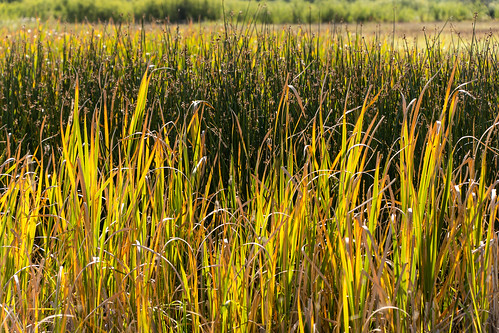
backlit grass

Upcoming Events 
There will be a climate rally in Saskatoon in support of COP26 from 11:30 am-1 pm, Nov.12. 

Nature Regina is holding an online presentation on the Prussian Carp from 7:30-9 pm, Nov. 15. 

Saskatchewan Environmental Society/Saskatoon Public Library are hosting an online presentation from 7-8:30 pm, Nov. 16, on the future of climate action in Saskatchewan following the Supreme Court of Canada’s carbon pricing decision. 

Learn about stewardship initiatives in the North and South Saskatchewan River Watersheds online at 11 am, Nov. 17. 

Kai Chan, UBC, will be presenting an online lecture on confronting the climate and ecological crisis with intention: what path to genuine policy solutions? from 7-8:30 pm, Nov. 17. 

SK-PCAP is hosting a noon-hour webinar on a prairie grasslands initiative on Nov. 17. 

Dale Eisler will be presenting an online talk on addressing climate change and economic growth: are they compatible? from 12-12:55 pm, Nov. 18. 

Saskatoon Nature Society is hosting an online presentation on fungi, how and where they grow, what they offer mankind at 7:30 pm, Nov. 18. 

Partners FOR the Saskatchewan River Basin is hosting a webinar from 12-1 pm, Nov. 18, on the Bow River reservoir options. 

SaskOutdoors is offering a virtual Below Zero workshop from Nov. 22-29. 

Details about all upcoming events are available on the EcoSask Calendar
 
Untitled

Local News 
The Citizens Environmental Alliance is a volunteer group addressing water drainage issues in Saskatchewan. Their current newsletter contains important information on the ongoing problems in the Quill Lakes Watershed, which could lead to problems in Last Mountain Lake. It also contains links to articles about the cumulative effects of farmland drainage, a First Nation study on toxicity levels in Pasqua Lake, and much more. [Citizens Environmental Alliance

A recent article assembles current Western scientific knowledge on what is known and not known about wetland drainage on the Prairies. [Canadian Water Resources Journal

Friends of Wascana Marsh are looking for volunteers for their board of directors. 

A 2-megawatt solar farm project in Saskatoon “would power roughly 330 homes and reduce greenhouse gases by an average of 450 tons of carbon dioxide equivalent each year.” [CBC]

 
Untitled

Spotlight on Manitoba 
Winnipeg-based Bison, one of Canada’s largest trucking companies, is making an effort to go green. It’s currently testing two of only 40 pre-production battery electric Freightliner tractors in North America. "For a trucking company to jump on to a new technology that has different performance capacity, like shorter range and maybe the ability to hold less freight… the economies of the entire industry need to be adjusted. And the economics is not dependant on the individual corporate budget. It is dependant on the expectations of the entire supply chain." [Winnipeg Free Press


Local climate activists say change is too slow in Winnipeg – “We do need political champions at city hall.” [CBC

In Other News
The Netherlands has had a near-total dependence on natural gas heating. Natural gas-free districts are piloting alternative low-carbon technologies. Heat pumps, bio gas, solar-powered hydrogen electrolysers, and geothermal are some of the ideas municipalities are investigating. [BBC

“Making democracy work better for the climate doesn’t just mean hearing more from people. It means hearing less from those economic interests, such as oil majors and airlines, that have a stake in the high-carbon status quo … What is necessary, then, is not to dispense with democracy, but to double down on it. Seeing climate change not as something that can be solved by experts, nor through individual sacrifices – but by the negotiation of a new sort of social contract between people and the state.” [The Guardian

EcoFriendly Sask supports Saskatchewan environmental initiatives through an online publication, an events calendar, small grants, and the Nature Companion website/app. You can follow EcoFriendly Sask by liking us on Facebook, following us on Twitter, or subscribing by email (top right corner).


Tuesday, 2 November 2021

EcoSask News, November 2, 2021

mule deer

Upcoming Events 
City of Saskatoon residents can dispose of household hazardous waste from 9 am to 3:30 pm, Nov. 7. 

Looking Ahead 
SaskOutdoors is offering Projet Wet (en français) online from 4-6 pm, Nov. 30. 

SK-PCAP will be holding a virtual Native Prairie Restoration/Reclamation Workshop from Feb. 8-10. 

Full details for all upcoming events can be found on the EcoFriendly Sask Calendar 

Local News 
Regina residents are invited to complete a survey regarding the City’s approach to becoming a 100% renewable energy city by 2050. [City of Regina]
 
sun on trees and ferns

Forests 
Canada’s “logging industry continues to clearcut more than 400,000 hectares of the boreal each year — about five NHL hockey rinks every minute — much of this in irreplaceable primary forests, which have not been previously impacted by human disturbance.” [The Narwhal

Conservation organizations, with assistance from the Earth Law Center, are challenging the state of Washington for managing forests for revenue generation. “These lands are a gift that should not have to be squeezed for every dollar when they already benefit us in so many ways, from storing carbon to providing clean water, wildlife habitat, and healthy recreation access.” [OPB

Aiming for Zero Waste 
While BC is a continental leader in composting and recycling, it continues to generate large amounts of unnecessary waste. A report from the Canadian Centre for Policy Alternatives outlines upstream solutions to reduce the flow of material, looking at plastics, demolition and construction waste, and repair and maintenance. [CCPA]
 
crab spider

Small but Mighty 
There’s more going on in spider brains than they normally get credit for. Jumping spiders have developed devious hunting tactics and are skilled at getting out of dangerous situations. [Knowable Magazine

Moths have finessed an extensive repertoire of tactics to avoid being caught and eaten by bats. They issue warning cries, jam bat signals, create false targets, and use sound-absorbing cloaking devices. [Knowable Magazine

EcoFriendly Sask supports Saskatchewan environmental initiatives through an online publication, an events calendar, small grants, and the Nature Companion website/app. You can follow EcoFriendly Sask by liking us on Facebook, following us on Twitter, or subscribing by email (top right corner).


Take a look at EcoFriendly Sask's Nature Companion, a kid-friendly nature app for Canada's 4 western provinces

Thursday, 28 October 2021

Berries: Wildlife's Winter Pantry

berries

Nature provides year-round food for many birds and animals. While insects may be plentiful in spring, it’s persistent berries that are an important food source in winter. Unlike raspberries or blueberries, persistent berries ripen later in the year and remain on the bushes and trees even after the leaves have fallen. The berries on native trees and plants such as buffaloberry and red osier dogwood are high in fat and carbohydrates, offering birds plentiful energy for their migratory journey or to weather the cold. 

Bunchberry 
Bunchberry is a low-lying plant found in the cool coniferous forests of Canada’s northern and mountainous regions. The red berries, which ripen in late summer, are a tasty snack for bears, hares, and songbirds. They contain two hard, crunchy seeds, hence the plant’s name of kawiscowimin in Cree, which can be translated as “gravel inside.” It’s also known as dwarf dogwood with similar leaves and flowers to the Pacific dogwood tree.


Common Juniper 
Common juniper is a spreading shrub that often forms a low-lying mat but can grow to 3-4 ft tall. What appear to be blue berries are actually cones with very tightly packed miniature scales. The fleshy covering on the cones is popular with robins, black-capped chickadees, cedar and Bohemian waxwings. American robins often devour large quantities in spring and fall.
 
Bohemian Waxwing eating juniper berries

Mountain Ash 
A highlight of a Prairie winter’s day is when a flock of cedar waxwings swoops in to feast on mountain ash berries. Despite its name, mountain ash belongs to the rose family and its closest relatives are apples and hawthorns. Humans find the berries bitter and unpleasant, but they are very high in vitamin C and birds love them. 

Wild apple and crabapple trees are also popular with wildlife – from deer and bears to birds and squirrels.


Oregon Grape 
Oregon grape can be found in mountainous areas of the Pacific Northwest from British Columbia and eastern Alberta to northern California. The dark blue berries grow in clusters and bear some resemblance to grapes. Wildlife benefit from Oregon grape in all seasons of the year as the bright yellow flowers attract pollinators, the fruit is enjoyed by robins and waxwings as well as some mammals, and some butterfly and moth species rely on Oregon grape plants to host their larvae.


Red Osier Dogwood 
Red osier dogwood is a many-branched shrub about 6 ft tall. Its red stems and branches are particularly noticeable in winter. The white, waxy berries are high in fat and popular with migrating birds, bears, and grouse. The stems and winter buds provide valuable forage for deer, moose, and snowshoe hare, and the plants often suffer from overbrowsing. 


Silver Buffaloberry 
Silver buffaloberry (shepherdia argentea) is a thorny shrub often found growing along rivers and streams, especially on the northern Great Plains. It's slow to lose its leaves in autumn. The clusters of red berries ripen in late summer and are a favorite food of many songbirds and sharp-tailed grouse. 


Snowberry 
Snowberry, a native shrub found across western Canada, has white, waxy berries that persist into winter. The berries are toxic to humans as they contain saponin, a foaming compound used to make soap. They are, however, appreciated by over-wintering birds such as robins and thrushes, as well as chipmunks.

Springtime Follies 
As the weather warms up in the spring, overwintered berries can ferment and birds, particularly cedar waxwings and robins, that eat a lot of fruit can become intoxicated.
 
Bohemian Waxwings

See Also 

Check out EcoFriendly Sask’s Nature Companion, a free nature app for Canada’s four western provinces 

EcoFriendly Sask supports Saskatchewan environmental initiatives through an online publication, an events calendar, small grants, and the Nature Companion website/app. You can follow EcoFriendly Sask by liking us on Facebook, following us on Twitter, or subscribing by email (top right corner).

Tuesday, 26 October 2021

EcoSask News, Oct. 26, 2021

fall leaves

Upcoming Events 
SK-PCAP is hosting a noon-hour webinar on weather, climate, and living things on grassland on Oct. 28. 

Wild Ecol Seminar Series is hosting an online talk about tracking cougars across southern British Columbia’s fire-prone landscape at 3:30 pm, Oct. 29. 

EMTF-SK is hosting an online update on DEEP at 7:30 am, Nov. 3. 

Watch the film, The Legacy of Saskatoon’s Secret Forest, with stories from people who knew Richard St. Barbe Baker from 1-3 pm, Nov. 6. 

Families are invited to enjoy guided and self-guided nature activities in Finlayson Park, North Battleford, the afternoon of Nov. 7. Sign up for a time slot. 

Looking Ahead 
Energy-efficient passive house standards aren’t just for new buildings. Sign up for an online course in Achieving the Passive House Standard for Existing Buildings starting Dec. 6. 

Full details on all upcoming events are available on the EcoFriendly Sask Calendar
 
fresh snow on the mountains

In the Spotlight – British Columbia 
Planned amendments to BC’s Forest and Range Practices Act mark a move away from 'industry-driven' policy that doesn't plan for the health and makeup of forest ecosystems in the long term. [CBC]

The Cool 'Hoods Champs program, a neighbourhood-based climate change workshop, was created to bridge the knowledge gap between climate science and everyday people — by bringing solutions to where they live. [CBC]

In a precedent-setting case, the BC Supreme Court ruled that “by allowing industrial development in Blueberry River's territory at an extensive scale — without assessing cumulative impacts and ensuring Blueberry River's ability to continue meaningfully exercising its treaty rights — the province breached the treaty.” [CBC]

North Vancouver businesses are offering customers the option of reusable containers to be returned within 14 days. [CBC]

Vancouver is calling for a city-wide ban on outdoor gas-powered tools such as leaf blowers due to noise and GHG emissions. [CBC]
 
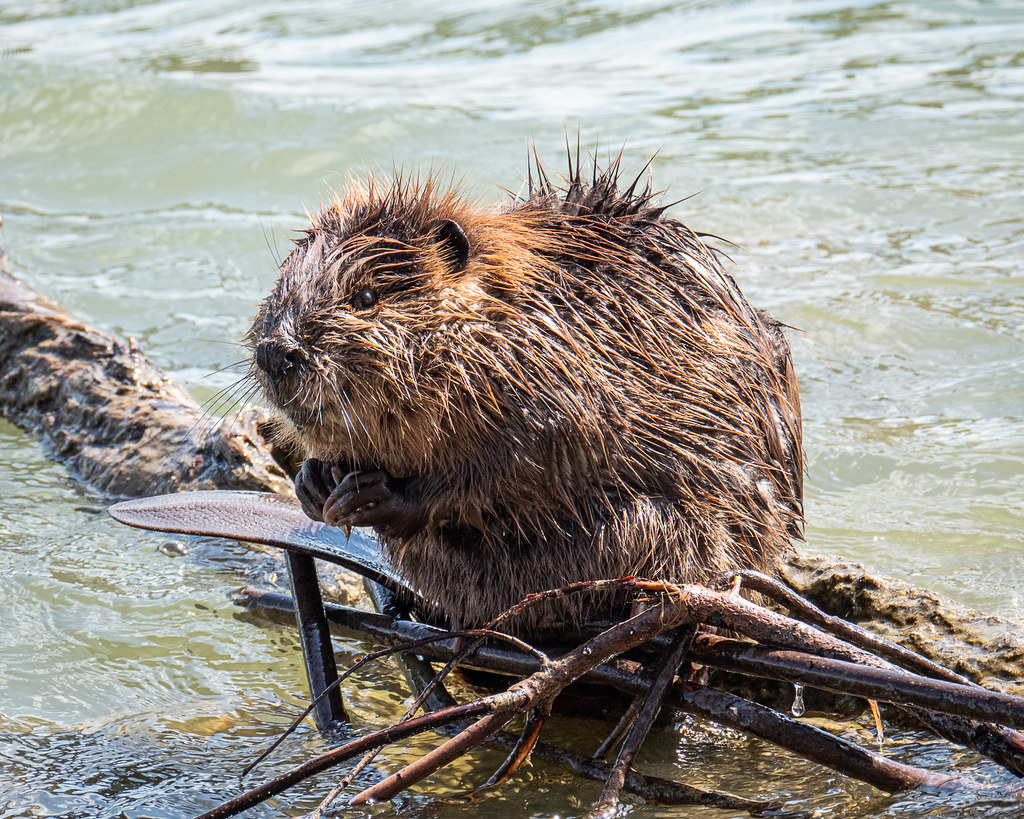
juvenile beaver

Wetlands 
Wetland drainage on the prairies has a significant impact: 
  • It reduces the land’s ability to store water and increases the risk of flooding; 
  • Groundwater reserves aren’t replenished; 
  • Increased rate of nutrient export downstream affects water quality, fish habitat, and recreational opportunities; 
  • There is a loss of pollinator habitat and biodiversity; and 
  • Reduced landscape diversity results in decreased ability to adapt during times of stress. [The Conversation
A wetland in the midst of Colorado’s largest wildfire was spared – thanks to the beavers who created an abnormally wet patch in the middle of an otherwise dry area. The beaver meadow stores the water, releasing it slowly and delaying water shortages in a drought. [KUNC Public Radio]
 
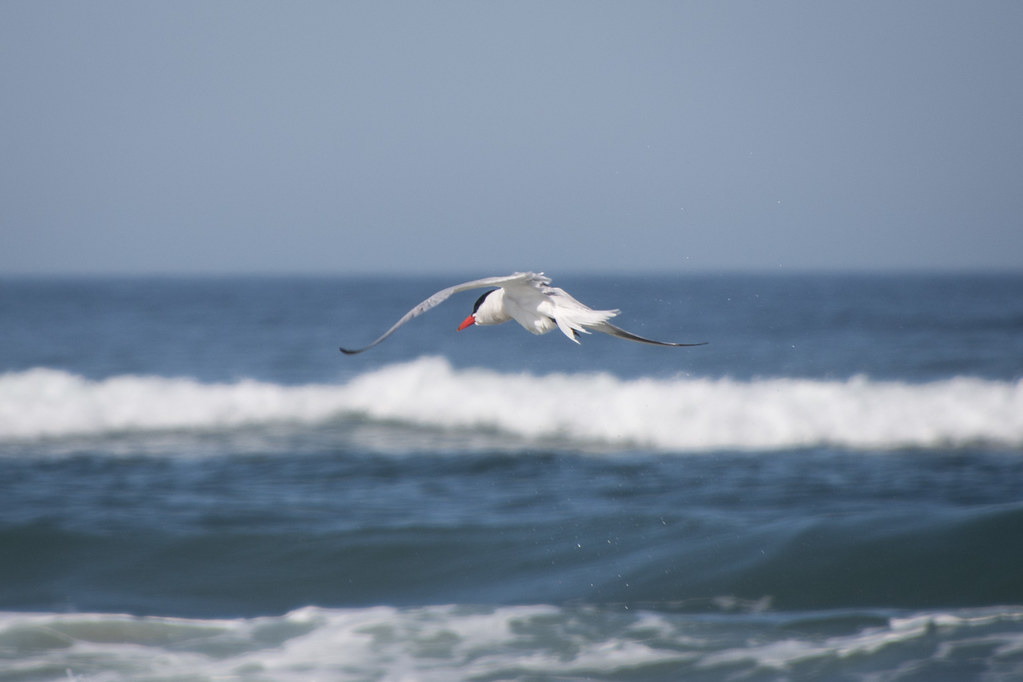
windblown tern

Probing the Future 
A policy paper by Dale Eisler, expresses doubt as to whether Canada and the world can achieve its climate goals while maintaining economic growth. He notes that Canada’s economic success since its early days has been dependent on its natural resources, including oil and gas production, whereas we have no comparative advantage in terms of renewable energy. “To date government and others engaged in the climate debate have failed to prepare the public for the real and measurable impacts on their lives if we are to meet our climate targets. The reason is simple: they know the political risk that comes with being honest about what it’s going to take. But all that avoiding the truth does is ensure we continue down the path of the last four decades where we set impressive targets, and then never meet them. The day of reckoning is fast approaching.” [Johnson Shoyama Graduate School of Public Policy]

Ecological Citizen has published 3 articles on the topic of overpopulation and its impact on the environment and on our wellbeing as a species. The first article explores how discussion is silenced by raising past experiences with eugenics and ultra-nationalism as population control. The second article propose what just population policies would look like, while the third examines the anthropocentric and non-anthropocentric moral reasons to reduce population.

EcoFriendly Sask supports Saskatchewan environmental initiatives through an online publication, an events calendar, small grants, and the Nature Companion website/app. You can follow EcoFriendly Sask by liking us on Facebook, following us on Twitter, or subscribing by email (top right corner).
Thursday, 21 October 2021

Wildlife Protection on Urban Roads and Highways

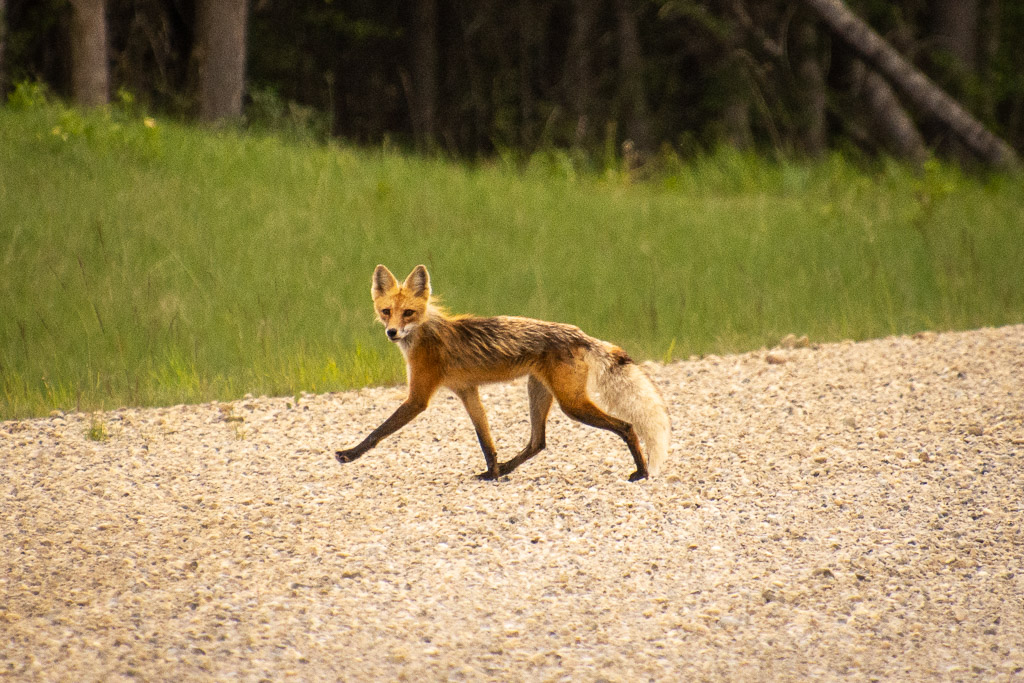
Red fox

Roads are inherently dangerous places for wildlife, whether it’s a female turtle heading to its nesting ground, a fox out hunting, or a mule deer trying to reach the river for a drink of water. 

Threats to Wildlife from Transportation Networks 
Transportation networks create 4 main risks for wildlife
1. Loss of life 

2. Loss of habitat, including habitat degradation and fragmentation 

3. Loss of access to critical resources (e.g. nesting sites, water, migratory routes) 

4. Loss of population integrity as herds are sub-divided into smaller groups, increasing the risk of local extinction 

In addition, roads create a new and dangerous habitat where snakes choose to bask in the sun, predators feed on roadkill, and turtles nest in the gravel roadsides. Roads also increase human access to wildlife habitat, raising the risk of poaching, dumping, and other illegal activities. 

Determining Risk and the Need for Wildlife Road Mitigation 
There are a number of factors that need to be considered when planning a road or seeking to mitigate roadkill in a specific area. First and foremost, is the road necessary? Extra roads do not reduce traffic congestion. To effectively address climate change, the focus must be on moving away from a reliance on cars. If the road is absolutely essential, it should be carefully planned, keeping in mind the needs of non-human and human animals. 

1. What is the conservation value of the surrounding habitat? Is the area of particular natural importance (e.g. patch of remnant prairie, wetlands)? 

2. Does the surrounding area shelter threatened or endangered species (e.g. badgers or a sharp-tailed grouse lek)? 

3. How many wildlife live in the surrounding area? Is it home to large herds of deer, a significant breeding ground for frogs, or a rest spot for migrating birds? 

4. Will the road impact wildlife corridors and habitat connectivity? For example, will the road inhibit animals heading to a river for water? Will it cut across traditional migratory routes? 

5. What is the current or potential mortality rate? For existing roads, this can be estimated from roadkill and accident reports. For proposed roads, studies of current wildlife population sizes and movement patterns will provide valuable information. 

6. What are the costs entailed in providing or not providing wildlife road mitigation? An underpass or wildlife bridge may appear prohibitively expensive until it is compared to the expenses and human deaths incurred due to wildlife road collisions.
 
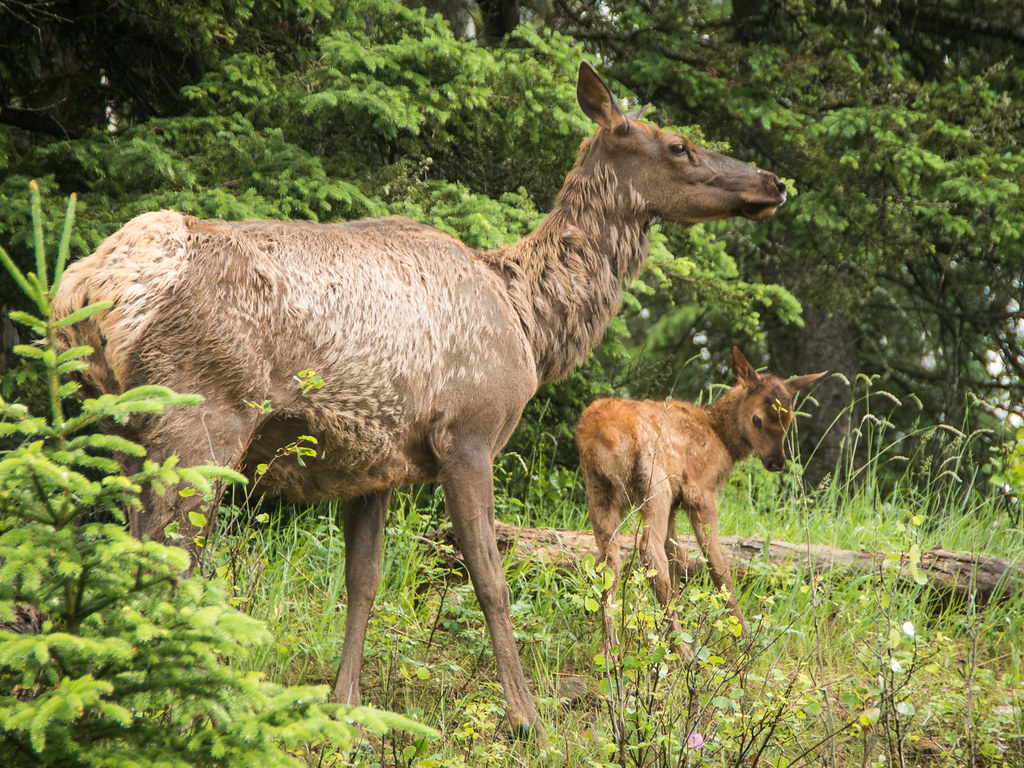
elk

Urban Road Considerations 
Roads through or in the vicinity of urban areas involve high traffic volumes and require special consideration even if they do not appear to be ecologically important areas. A study of highway mortalities in southern Alberta showed that road sections close to urban centres were at greatest risk of animal vehicle collisions due to “high traffic volume and abundant deer populations.” 

The risk of collisions can vary significantly for different species. One British study of roadkill along an urban-rural spectrum speculated that “the variation in road kill risk might be attributed to animals developing avoidance behaviours.” However, in urban settings, these adaptations may be offset by “other behavioural changes that are common in urban populations, for example, increased boldness and habituation, including longer response times to threats, such as oncoming vehicles, which could increase roadkill risk.” 

The British study also looked at the significance of urban green spaces but found it difficult to determine their impact. On the one hand, parks may increase the urban wildlife population and encourage species that wouldn’t normally be found in an urban setting. On the other hand, they may provide urban wildlife which have limited home ranges with a low-risk habitat where they can move around without needing to navigate roads. 

Minimizing the Risk of Collisions 
The Wildlife Roadsharing Resource Centre provides an overview of steps that can be taken to avoid animal-vehicle collisions and assesses their effectiveness. 

1. Physically separate animals from the roadway 
Wildlife crossings, combined with exclusion fencing, are the most effective means of reducing wildlife collisions. Fencing in isolation is a barrier to wildlife movement and, unless the fencing is extensive, can lead to clusters of collisions at either end of the fencing. 

2. Influence Driver Behaviour 
Public education can be useful to remind drivers of peak collision times and the optimal way to respond to a potential collision, but it must be accurate and evidence-based. Setting lower speed limits has not proven to be effective, but road designs that encourage a reduction in speed appear to work, although there are mixed results depending on the type of traffic calming measures used. It’s not yet clear whether different animals are attracted to or withdraw from roadway lighting. 

3. Reduce wildlife population size 
To be effective, more than 50% of a population needs to be culled. The public looks more favourably on relocation, but there is a low survival rate for animals that have been relocated and, if not relocated far enough away, the animals will return to their original home. Sterilization is not always effective and can be expensive. It is not permitted along Canadian highways. 

4. Influence animal behaviour 
None of these methods appeared to be effective.
 
Western painted turtle

Improving Road Design 
Studies of existing roadway mitigation initiatives provide helpful advice for future projects. 

1.Build roads near the edges of habitat as opposed to directly through them to reduce fragmentation and the need for crossings 

2. Modify infrastructure and roadside borders to avoid trapping animals or hindering movement 

3. Map light-sensitive areas (e.g. wetlands with breeding amphibians) to inform the installation (or non-installation) of lighting 

4.Install noise barriers to minimize disturbance of neighbouring natural areas 

5. Improve the surface of underpasses and shorten the length of culverts to make it easier for animals to use them 

6. Plan ahead for the long-term maintenance of fencing and eco-passages and ensure that they will not interfere with snow clearing and other road maintenance activities 

7. Consult experts with prior experience 

Importance of Wildlife Advocates 
Public education plays an important role in mitigating wildlife fatalities. Miistakis Institute held workshops with members of the public about wildlife-vehicle collisions and found that participants emphasized human safety over wildlife connectivity. “However, roads may have a significant impact on wildlife via direct mortality or avoidance behavior by species sensitive to road disturbance. Thus, ensuring safe passage of wildlife across roads is an important strategy for maintaining biodiversity and protecting species at risk. Public education and science-policy translation regarding the need for investments in mitigation in support of biodiversity and species-at-risk recovery planning is urgently needed.” 

Collaboration and information sharing across specialties can prove valuable. “Improving the way wildlife/road interactions are managed in Ontario has been championed by the Ontario Road Ecology Group (OREG), a not-for-profit organization that protects biodiversity from the threats of roads by facilitating partnerships among government and non-government agencies dedicated to resolving road ecology issues through research, policy, and stewardship.”
 
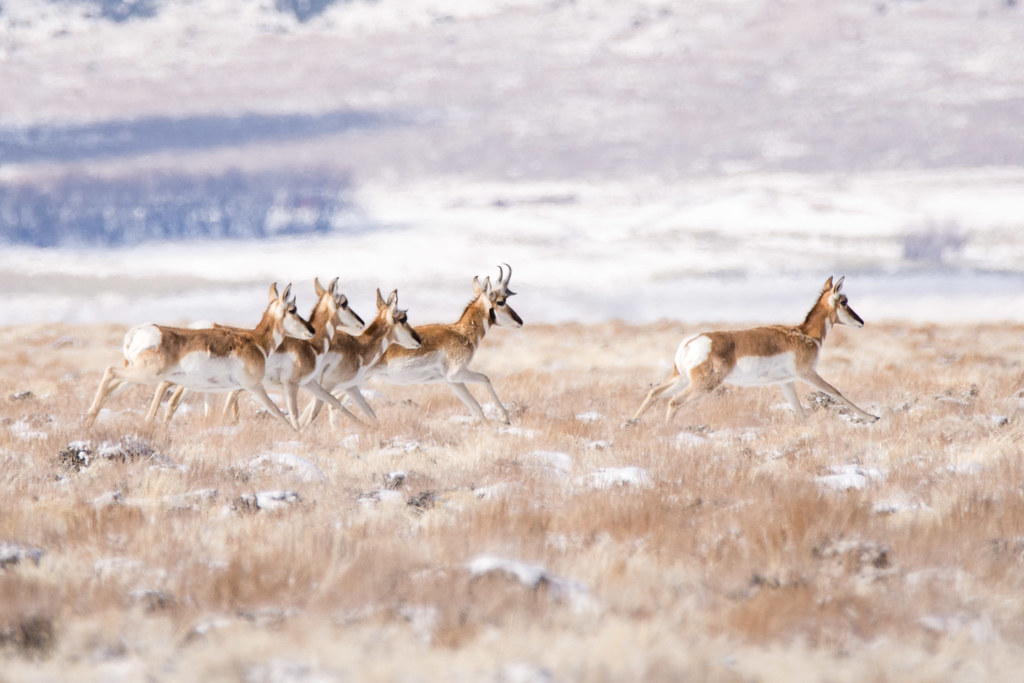
Pronghorn

If you are concerned about road construction in Saskatoon, be sure to join forces with the Northeast Swale Watchers.

EcoFriendly Sask supports Saskatchewan environmental initiatives through an online publication, an events calendar, small grants, and the Nature Companion website/app. You can follow EcoFriendly Sask by liking us on Facebook, following us on Twitter, or subscribing by email (top right corner).

Tuesday, 19 October 2021

EcoSask News, October 19, 2021

Turkey vulture

Upcoming Events 
City of Regina residents can dispose of household hazardous waste from 9 am-4 pm, Saturday, Oct. 23. 

Meewasin is looking for volunteers to wrap trees to protect them from beavers from 1-3 pm, Oct. 23, and from 4-6 pm, Oct. 25. 

Families are invited to enjoy guided and self-guided nature activities in Little Red River Park, Prince Albert, the afternoon of Oct. 24. Sign up for a time slot. 

Cinema Politica will be showing Surplus: Terrorized Into Being Consumers at 7 pm, Oct. 27, in Regina. 

SK-PCAP is hosting a presentation on the biology and ecology of snakes in southwest Saskatchewan at 7 pm, Oct. 28, in Val Marie. 

Full details on all upcoming events can be found on the EcoFriendly Sask Calendar 

Local News 
Peatlands play a significant role in managing floods and wildfires, in storing water and carbon, and in supporting insects, plants, and animals. But they’re still under attack in Canada. [The Conversation

Youth in Fort Belknap, Montana, are collecting and planting seeds to help restore degraded grasslands. The program offers the youth self-empowerment, cultural knowledge, and a new appreciation for the land around them. [High Country News

Photographers from BC, Manitoba, and Quebec are among the award winners in this year's Wildlife Photographer of the Year Awards. [CBC]
 
Turkey vulture

Energy Choices 
“When people hold on to their vehicles for longer, the reduced emissions from manufacturing more than cancel out the increased emissions from driving a slightly less fuel efficient older car.” [Anthropocene

In an electrical grid based on renewables, consumers will have an active role to play in balancing supply and demand by shifting heating and cooling usage to times of day when there is peak availability (e.g., based on the availability of solar energy during the day but not at night). [Undark

Women currently face significant challenges in obtaining employment in the energy field. A recent report “documents the biggest barriers to women’s participation and opportunities for change to ensure the clean energy economy is more equitable and inclusive.” [Pembina Institute

Sharing the Earth 
“The loss of wildlife connectivity is the result of fragmentation by a thousand cuts. In a world that is rapidly changing through habitat loss and climate change, we need to develop and implement a vision of wildlife connectivity across our country.” [Wildlife Conservation Society Canada via Nature Conservancy of Canada

“Only humans own their homes. What if other species could own theirs as well?” In Wildlife as Property Owners, Karen Bradshaw argues that “wild animals should be integrated into our system of property law to prevent further habitat destruction — the leading cause of species extinction.” In Bradshaw’s view “an interspecies property system would be more flexible and pluralistic than the anthropocentric concept of property. Not only would it need to take account of how multiple nonhuman species use a space, but also how those uses intersect with human ones.” [The Revelator

Have you ever spotted a large flock of vultures and wondered what had died? Maybe nothing. Vultures swoop and circle even when migrating from southern Canada to their wintering area in Central or South America. [Cool Green Science

For more information about vultures, take a look at EcoFriendly Sask’s Nature Companion


EcoFriendly Sask supports Saskatchewan environmental initiatives through an online publication, an events calendar, small grants, and the Nature Companion website/app. You can follow EcoFriendly Sask by liking us on Facebook, following us on Twitter, or subscribing by email (top right corner).

Thursday, 14 October 2021

Exploring Your Neighbourhood: Tips for Curious Urban Naturalists

the path to Innovation Place

“I would never dream of walking a woodland pathway or a riverbank or a sweep of Puget Sound shoreline without my binoculars. Now I had declared the sidewalk my path. That meant I had to carry my binoculars everywhere.” (Lynda Lynn Haupt, Crow Planet: Essential Wisdom from the Urban Wilderness) 
We don’t always have the time to visit a wilderness area, but that doesn’t stop us from exploring the nature which is all around us – even in the city. Here are just a few ideas to help you jumpstart explorations of your neighbourhood. 

Macro Explorations 
Invest in a magnifying glass or use the magnifier app on your phone to take a close look at the veins in a leaf, a snowflake, or an insect. 

Explore the cracks in the sidewalk. What plants can you identify? 

Lift up a rock. What do you find underneath? (Be sure to replace the rock once you’ve had a good look.) 

Seasonal Celebrations 
Go for an evening/night walk every month when the moon is full. 

See if you can guess when the first pelicans or other migratory birds will arrive back in your community. Saskatoon residents can participate in the annual Pelican Watch Contest

Mark on your calendar the first time you spot a robin, a prairie crocus, or other flowers in the spring. What is the last day you see a robin or prairie flower in the fall?
 
American Robin

Walk Differently 
Take a walk around your neighbourhood looking for natural objects that are somehow alike (the same colour, the same shape). 

Slow down and listen - what can you hear? 

Take a walk at a different time of day – early in the morning or late at night. Look for bats swooping over a river or lake at dusk as they search for insects. 

Take a close look at one or two trees. What kind of tree are they? What lives in the tree (bird nests, moth cocoons, insects, spider webs)? Feel the texture of the bark. 

What birds do you see the most frequently? Choose one and see what you can learn by watching the way it moves. 

Choose a small plot of land (in your garden or a nearby area) and visit it regularly. How many different plants, insects, and other animals can you observe in your small area? How does it change from month to month? What is the soil like? What kind of rocks can you see? Take photographs or record your findings in a journal. 

Draw a map of your neighbourhood and include your favorite natural features – the puddles where the pigeons take a shower, the rowan tree with its bright red berries.
 
berries

Winter Explorations 
Don’t let snow and cold keep you indoors. There are so many ways to enjoy nature in winter – from snowshoeing and winter camping to pishing for chickadees and identifying animal tracks. 

Look for insects in the snow. 

Decorate a Christmas tree for the birds. What birds does it attract? Which treats are the most popular? 

Further Reading 
The Urban Bestiary, Lyanda Lynn Haupt 


Be sure to download Nature Companion, EcoFriendly Sask’s free nature app, to your phone for easy access to information about the plants, trees, or animals you spot on your walks (downloadable directly from the Nature Companion website). 

EcoFriendly Sask supports Saskatchewan environmental initiatives through an online publication, an events calendar, small grants, and the Nature Companion website/app. You can follow EcoFriendly Sask by liking us on Facebook, following us on Twitter, or subscribing by email (top right corner).