Thursday, 5 March 2015

South Saskatchewan River Watershed Stewards

Renny Grilz, South Saskatchewan River Watershed Stewards

The South Saskatchewan River flows east into Saskatchewan and Lake Diefenbaker, stretching for 716 kilometres before converging with the North Saskatchewan River east of Prince Albert. Over half of Saskatchewan’s population relies on the South Saskatchewan for drinking water and a large part of our farming community uses river water to irrigate their fields.

In 2007, the provincial government established a Source Water Protection Plan for the South Saskatchewan River watershed. Local advisory boards were established in three areas of the watershed to oversee implementation of the plan.

The South Saskatchewan River Watershed Stewards Inc. is a community-based, non-profit organization. Their goal is to ensure safe, sustainable water supplies for the economic, social, and environmental wellbeing of the watershed and its users. The board members represent the cities, towns, villages, rural municipalities, and special interest groups of the region, including the Meewasin Valley Authority, Beardy’s and Okemasis First Nation, and the Pike Lake Cottage and Watershed Association.

The organization is part of the Saskatchewan Association of Watersheds, an umbrella group for the 11 watershed associations in the province.

Watershed Protection 
The overall objective of the South Saskatchewan River Watershed Stewards is to protect the quality and quantity of surface and ground water within the watershed. As Renny Grilz, Watershed Coordinator, explains, this is an ambitious mandate that encompasses many different issues. With only limited human and financial resources, their goal is to collaborate with other organizations in order to address issues such as invasive species, flooding, and drainage.

“A big part of my job is to make those partnerships and connections,” Renny explains. “As a small organization, we can’t do it all ourselves.” Renny is well suited for this position as he has previously worked with a number of other environmental organizations, including Ducks Unlimited Canada, Nature Conservancy of Canada, and Environment Canada.

SSRWSI-MLA reception at the SK Legislature: Vice-Chair Rob Oldhaver, Coordinator Renny Grilz, Chair Ben Buhler

Aquatic Invasive Species
Aquatic invasive species, such as zebra and quagga mussels, have the potential to do a tremendous amount of damage to the watershed. “The mussels could have a major impact on the City of Saskatoon’s water intake,” Renny says. “They’re really small mussels, but they coat the intake pipe until its full.” They could also damage SaskPower’s equipment at Gardiner Dam, coat and compete for resources with the province’s native clams, and potentially change the water chemistry.

Zebra mussels were found in Manitoba in 2013, so Saskatchewan is at very high risk. “The costs to taxpayers would be horrendous,” Renny says. “Alberta estimates that it will cost taxpayers $75 million per year to manage their infrastructure if zebra mussels become established. The numbers haven’t been calculated in Saskatchewan but will be anywhere from $15-30 million a year.”

The Watershed Stewards will be working with the Ministry of the Environment to offer awareness and monitoring programs and presentations in 2015. Posters, pamphlets and signage for boat launches are being developed. Substrate samples from Lake Diefenbaker, Blackstrap, Pike Lake, and Saskatoon will be collected on a monthly basis to check for the presence of adult zebra mussels.

Contact SSRWSI if you are interested in helping them with their work to prevent the spread of zebra and quagga mussels.

Flooding 
Communities north of Saskatoon have been dealing with severe flooding and water contamination issues for the past few years. Beardy’s and Okemasis First Nation has had to shut down 50 wells and cisterns due to contamination. The Watershed Stewards are working with the First Nation and the Rural Municipality of Duck Lake to develop a community-based source water protection plan. 

Drainage 
“Agricultural drainage is a balancing act,” Renny says. “We’re only one rain or snowfall away from a flood or a drought.” The Saskatchewan Water Security Agency recently conducted an agricultural drainage survey and this will be a key topic of discussion at the 2015 Saskatchewan Association of Watersheds Conference.

Irrigation 
One of the primary reasons for the creation of Lake Diefenbaker was to develop irrigation capacity in south-central Saskatchewan. There is an increasing demand for irrigation to meet global food needs. However, as the demands for water from Lake Diefenbaker and the South Saskatchewan River increase, water allocation strategies may be required.

Technology is now available that would allow farmers to minimize water usage by programming irrigation equipment to manage local conditions – individual sprinklers can be turned off over roads and wet spots, while increased volume can be provided on drier hilltops. “The cost is still prohibitive,” Renny says, “but it could revolutionize irrigation. California farmers are adopting it because water is at a premium. It won’t be long before it reaches here.”

variable rate irrigation system at Outlook

Fisheries 
The Watershed Stewards are planning to ramp up their fisheries work. They’ve already done an initial assessment of some creeks that flow into the South Saskatchewan. They’d like to expand this work to look at threats and to start offering programs to mitigate risks. For example, they could work with a municipality to lower a culvert so that fish can get through.

Lake Diefenbaker 
We’re fortunate that the water quality in Saskatoon is really good considering the population upstream. “Lake Diefenbaker acts as a large settling pond,” Renny explains. “The water quality is greatly improved when it leaves the lake.” This does, however, lead to accumulation of organic contaminants behind the dam and slows down water flow.

There have been concerns about the lake level going up and down. When the level drops, it causes erosion. When it goes up, there is flooding and fences are washed out. There are also recreational concerns, and changes in the level can alter the amount of water available for irrigation. The Water Security Agency has been working on a management plan, but it is not yet complete.

Pike Lake community-based watershed planning meeting

Pike Lake 
The South Saskatchewan Watershed Stewards are working with the Pike Lake Cottage and Watershed Association and other stakeholders in the area, including Pike Lake Provincial Park, the Rural Municipality of Asquith, local landowners and farmers, to develop their own community-based watershed management plan.

Public Awareness 
An ongoing task for the Watershed Stewards is to create public awareness of the importance of watersheds for healthy communities and livelihoods. By being proactive, they can reduce risks of contamination and fix past issues.

The organization is currently working with the Native Plant Society of Saskatchewan to develop a Master Naturalist Program. Similar programs exist in other areas (Alberta, Texas) and trained volunteers could play an important role in monitoring storm water (not currently monitored), river water, and zebra mussels.

Tuesday, 3 March 2015

EcoSask News, March 3, 2015

Untitled

Down to Earth, Mar. 4
Jasmin Fookes and Brit MacDonald are the new hosts of CFCR Radio’s environment and sustainability program that they’ve renamed Down to Earth. They’ve asked me (Penny McKinlay) to be their first guest! I’ll be on the radio this coming Wednesday, March 4, at 6:30 pm, to talk about EcoFriendly Sask - how Andrew and I started it and how to apply for a grant.

Predators and Prey, Mar. 8
Adam Crane, a Ph.D. student at the University of Saskatchewan, will discuss how animals behave when threatened by prey at 2 pm, Mar. 8, at Wild Birds Unlimited. He’ll probably be accompanied by some live reptiles.

Young Naturalists
Mar. 14, 1 pm – Great Horned Owl Ecology
Mar. 21, 1 pm – Bat Ecology
Apr. 11, 1 pm – Birdhouse Workshop
Space is limited; register early to avoid disappointment.

Saskatoon Nature Society Field Trips
Mar. 14, 1-3 pm – Weir and City Park Birding
Check the Saskatoon Nature Society’s website for full details (e.g. some trips require rubber boots, others will be cancelled if the weather is bad).

Wildlife Rehab Volunteer Orientation, Mar. 15
Wildlife Rehabilitation Society of Saskatchewan is holding a volunteer orientation session from 1-3 pm, Mar. 15, in Cabela’s Conference Room.

Green Products
If you’re looking for green living products, check out these events in Regina and Saskatoon.

PV Waste Solutions will be selling tiered vermicompost bins at the Regina Spring Home Show, March 26-29.

The Saskatchewan Green Living Expo is coming to Saskatoon May 1-2. Exhibitors include the Canadian Passive House Institute, Rock Paper Sun, and Vereco Homes.

via Leave No Trace Center for Outdoor Ethics

2015 NatureCity Festival, May 23-29
A special highlight of this year’s NatureCity Festival, Wild about Saskatoon is a gala evening on Monday, May 25, with author Dr. Shimi Kang of Vancouver and Cam Collyer of the Evergreen Foundation, Toronto, speaking on the theme of Healthy by Nature.

These two speakers are experts on the increasingly well documented connection between human health and access to quality natural surroundings.

Local organizations are invited to sponsor an activity during the Festival. Current participants include Escape Sports, Slow Food Saskatoon, and SaskOutdoors.

In the News
Edmonton has a plan to become a world-class winter city

Guelph is turning a decommissioned landfill into a pollinator park

EcoSask News is a weekly round-up of local news and events. Email us if you have items you would like us to include. Additional upcoming events can be found on our Calendar.

You can follow EcoFriendly Sask by liking us on Facebook, following us on Twitter, or by email (top right corner).

Tuesday, 24 February 2015

EcoSask News, February 24, 2015

sunrise ducks

South SK Watershed Open Houses
The South Saskatchewan River Watershed Stewards will be hosting annual meetings and open houses in the following communities. Presentations will look at invasive plants, zebra mussels, water well decommissioning, and farm stewardship funding.

Feb. 25, Osler – North Watershed Advisory Committee

Feb. 26, Abbey – West Watershed Advisory Committee

Mar. 5, Beechy – Lake Diefenbaker Watershed Advisory Committee

Urban Ag Films, Feb. 27
The Saskatoon Food Council will be showing the 10 finalist films in this year’s Real Food Media Project at 7 pm, Feb. 27, at Station 20 West. The films showcase individuals who are building a sustainable food system.


Green Drinks Regina, Mar. 4
Join Green Drinks Regina from 6-8 pm, Mar. 4, at Abstractions Café for a screening of the movie Adventures in Permaculture.

Environmental Education, Mar. 6
Dr. Paul Hart, University of Regina, will speak on Overall Trajectories of the Environmental Education Field from 2:30-4 pm, Mar. 6, in Room 1235, College of Education, U of S.

Wanted: Master Composters (Regina)
PV Waste Solutions will be partnering with the Saskatchewan Waste Reduction Council to bring the Master Composter Program to Regina. The course on June 6-7 will offer a combination of in-depth instruction and hands-on training.


Urban Wind Power
A City of Saskatoon report concludes that wind power is not a viable municipal energy option. SaskWind disagrees and believes that a community-owned wind turbine project located outside Saskatoon Light & Power’s franchise area is an economically attractive way for the City to meet its green energy goals.

Craik Eco Village
Craik reversed its population decline by inviting people to build green homes on $1 unserviced lots.

Waste Industry Shake-Up
Five disruptive measures that could shake up the waste industry - waste reprocessing, retailer responsibility, clever recycling technology, and more.

Green Infrastructure
Singapore can teach us all about using green urban infrastructure to mitigate droughts.


EcoSask News is a weekly round-up of local news and events. Email us if you have items you would like us to include. Additional upcoming events can be found on our Calendar. 

You can follow EcoFriendly Sask by liking us on Facebook, following us on Twitter, or by email (top right corner).

Tuesday, 17 February 2015

EcoSask News, February 17, 2015

Untitled

Meet a Burrowing Owl, Feb. 21
Greg Fenty will introduce Sage, a Burrowing Owl, at 1 pm, Feb. 21, at Wild Birds Unlimited.

Permablitzes, Mar. 7 
Curious about permaculture? Then attend Seedy Saturday at St. Mary’s Wellness and Education Centre from 10 am – 4 pm, Mar. 7. Permaculture Saskatchewan will have a booth and will be making a presentation on permablitzes.

South Sask River Watershed Stewards AGM, Mar. 31
The South Saskatchewan River Watershed Stewards will be holding their AGM and Open House on March 31 in Outlook. Presentations will cover zebra mussels, Pike Lake’s watershed initiative, the Lake Diefenbaker management plan, and more.

Paddling Symposium, Apr. 25
The 2015 Saskatchewan Paddling Symposium will be on April 25 in Saskatoon. The keynote speaker is Karsten Heuer who completed a cross-Canada canoe and sailing trip to meet Farley Mowat.

Grants for Urban Agriculture, Environment, Recreation
The Co-op will contribute up to $1 million annually in grants to support urban agriculture, environmental conservation, and recreation spaces in western Canada. Applications must be submitted online between April 1 and May 15.

Earth Dumplings?
Permaculture Saskatchewan is considering offering a workshop on making seed balls/seed bombs at this year’s NatureCity Festival. Contact Joanne Blythe if you’d like to help.

EcoFriendly Action Grants
In the past month, we’ve supported the following groups with an EcoFriendly Action Grant:

Crystal’s Home, North Battleford - $500 for a small space community container garden where youth will learn about recycling, composting, rain harvesting, nutrition, and teamwork

Ecoquest, Saskatoon Public Schools - $500 to support bicycle-generated power and solar power in the classroom as part of their Student Action for a Sustainable Future project

Saskatchewan Eco Network - $500 to support the 2015 Saskatoon Environmental Film Festival

Saskatoon Nature Society - $1,000 to support the publication and distribution of an updated edition of their Guide to Nature Viewing Sites in and around Saskatoon

Wild About Saskatoon - $5,000 to support the 2015 NatureCity Festival

EcoSask News is a weekly round-up of local news and events. Email us if you have items you would like us to include. Additional upcoming events can be found on our Calendar. 

You can follow EcoFriendly Sask by liking us on Facebook, following us on Twitter, or by email (top right corner).

Thursday, 12 February 2015

The Beaver Manifesto

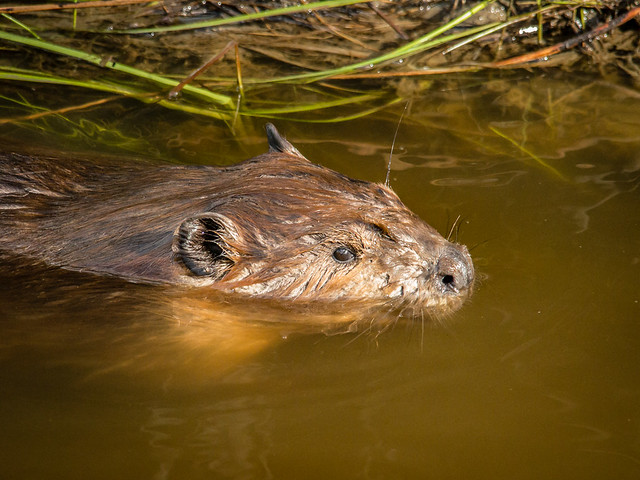
beaver

“The fact that beavers still exist in North America, and in Europe for that matter, is nothing short of a miracle. Their tenacious nature and ability to survive major geologic and climatic shifts is amazing in its own right, but their ability to survive a level of overexploitation that would have crippled many other species is a testament to their ecological adaptability.” (The Beaver Manifesto)

Gophers are cute – until they leave holes in the soccer field. Elk and moose are beautiful until you collide with one on the highway. Beavers are a Canadian icon until they chop down newly-planted trees in riverside parks or flood a roadway.

Glynnis Hood says, “We want to co-exist with wildlife, but we want it to be well-behaved wildlife, much like our lawn ornaments.” Her book, The Beaver Manifesto, provides a fascinating glimpse of the complex relationship between humans and beavers over the centuries.

Adaptation and Survival
Ancestors of the modern beaver first appeared on the scene between 54 and 38 million years ago. “By the time early hominid ancestors appeared, just short of 5 million years ago, early beavers had already learned to cut wood and build homes.”*

Early North American beavers varied in size from small ones weighing less than 1.5 kilograms to a giant beaver that was 3 metres long and the size of a female black bear.

Beavers’ adaptability has helped them to succeed against all odds and in North America they can be found from the Gulf of Mexico to the Arctic Ocean. They control their environment by building dams and creating deep ponds that don’t freeze in winter.

As semi-aquatic animals, they can use the water to transport their food. An underwater pantry means the food is accessible throughout the year. Their lodges, surrounded by a watery moat, provide a safe place to raise their young.

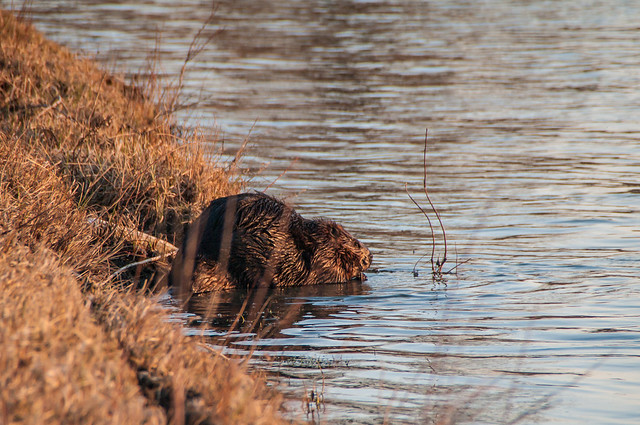
Untitled

Felt Hats and Beaver Pelts
The beavers’ greatest adversary has been and remains human beings. When Europeans first arrived in North America, there were an estimated 60-400 million beavers across the continent. The explorers were delighted to spot this economic opportunity as they had already almost wiped out the European beaver population in their quest for fur, food, and medicine. Tall felt hats had recently become popular and there was a ready market for beaver pelts.

Hunters and trappers followed the beavers up the Canadian waterways, moving further inland as beavers became scarce and opening up the country to immigration and settlement. It was the start of Canada’s economic reliance on natural resources.

The Hudson Bay Company’s records show that over 4.7 million beaver pelts reached British auction houses between 1769 and 1868. And these figures don’t include the pelts that were judged sub-standard and discarded.

The beavers survived 300 years of commercial exploitation, but only just. By 1870, very few remained. Their numbers continued to decline as wetlands were drained, towns established, and farmland extended. But beavers are resilient, and they’ve made an impressive comeback. 

Environmental Engineers
The return of the beaver brings benefits for nature and humans. As beavers move into new territory, they dam a stream creating a pond for their lodge. Willows, aspens and other trees begin to grow around the edge of the pond. The slow-moving water is an ideal habitat for fish, while birds and wildlife benefit from the new growth of grass and shrubs.

Beavers also restore land that has been damaged. Glynnis Hood tells the story of Eric Collier and his family who moved to an area near Williams Lake in the 1930s. “When they first moved to the area, streams were dry, wildlife was depleted and forest fires were a constant threat.” Honouring his grandmother’s request to bring beavers back to the land, Collier started rebuilding the beaver dams and a conservation officer dropped off two pairs of beavers. By 1950, “the entire valley was vibrant with wildlife and wetlands.”

Beavers mitigate the effects of extended drought. Hood observed beavers on the Prairies and found that the animals dug channels in the bottoms of ponds to direct what water there was to where it was needed. “By the time the drought of 2002 was in full swing, the ponds that still contained water were most often those occupied by beavers.”

Beaver ponds help regulate storm water drainage, mitigating the risk of flash floods. Their engineering efforts help replenish the water table and restore streams to a more natural state.


Conflict Management
Municipal officials and riverside residents are quick to blame beavers for damaging trees, flooding roads, and creating ponds where people don’t want them. However, removing a beaver dam or trapping and killing the beavers is an ineffective, short-term solution. Beavers will quickly rebuild the dam and other beavers will repopulate the area.

Banding trees with metal and installing beaver bafflers on culverts to maintain a water level in the pond that is adequate for the beavers without causing flooding and problems for other species is far more effective.**

Glynnis Hood provides a balanced perspective: “It is frustrating to have expensive facilities, trees and equipment damaged, but it is also important to appreciate all the ecological benefits that are part of a beaver’s world. In many situations, it is also time to stop seeing the beaver as a pest and more as a pilot to navigate us through a warming climate and the complex ecological challenges it brings. . . . 

“We are still consumers of natural resources, and by our nature as human beings we always will be, in order to survive. But how we manage those resources is critical. Loving nature to death while denying its needs is not a viable approach. To manage the conflicts between wildlife and humans requires an experiential understanding of our wild neighbours and the creativity, time and adaptability to do the right thing while we still have a chance.”

* Unless specified otherwise, quotes are from The Beaver Manifesto

**“In many areas, specialized flow-control devices have been installed to allow water to be drained from beaver ponds quietly so that beavers don’t hear the sound of running water that drives them to action. They remain none the wiser and are not inspired to plug the culvert and raise the level of their pond to new heights. The ponds stay at stable and ecologically valuable levels, happy beavers remain on the landscape and infrastructure such as roads and trails remains intact.”

Additional Information
Glynnis Hood, The Beaver Manifesto, Rocky Mountain Books, 2011, is available from the Saskatoon Public Library and McNally Robinson Booksellers

“beavers are getting new respect these days. Across the West, they are being welcomed into the landscape as a defense against the withering effects of a warmer and drier climate.” (New York Times, 2014)

“Using their skills as natural builders and brilliant hydro-engineers, beavers are being recruited to accomplish everything from finding water in a bone-dry desert to recharging water tables and coaxing life back into damaged lands.”(PBS videos and infographics)

Urban beavers are part of a storm water management policy in this Oregon neighbourhood (7:40 minute video)

Grey Owl’s cabin in Prince Albert National Park is accessible on foot or by boat. There is also a film about Grey Owl.

Tuesday, 10 February 2015

EcoSask News, Feb. 10, 2015

Untitled

Green Drinks Saskatoon, Feb. 13
Green Drinks Saskatoon will be meeting at 5:30 pm, Feb. 13, at Nino's on Broadway.

Friday, Feb. 13, is also International Winter Bike to Work Day, so why not ride your bike to Nino's?

Great Backyard Bird Count, Feb. 13-16
Help create a real-time snapshot of where birds are by participating in the Great Backyard Bird Count. Everyone is welcome to participate.

Landscape Photography Workshop, Feb. 14 (Regina)
Branimir Gjetvaj will be offering a workshop on the art of landscape photography from noon to 3 pm, Feb. 14, in Regina.

Nature Photography, Feb. 15
Glen Grambo will be sharing his nature photographs and answering questions at Wild Birds Unlimited at 1 pm, Feb. 15. Glen is an award-winning natural history photographer and manages Don's Photo in Saskatoon.

Nature Regina, Feb. 16 (Regina)
Kim Mann will speak on Observations at the NW Stormwater Retention Pond at the Nature Regina meeting at 7:30 pm, Feb. 16.

Agriculture and Wild Nature, Feb. 19
Branimir Gjetvaj, environmental photographer and biologist, will discuss the effects of increased agricultural production on land cover and biodiversity at 7:30 pm, Feb. 19, as part of the Saskatoon Nature Society’s monthly program.

Forestry Farm Birding, Feb. 22
Join the Saskatoon Nature Society on a birding field trip at the Forestry Farm from 1:30-3:30 pm, Feb. 22.

Sage Grouse Conservation in the US, Feb. 24
As part of SK-PCAP’s Native Prairie Speaker Series, there will be a webinar on greater sage-grouse conservation efforts in the US and the Sage Grouse Initiative at 3 pm, Feb. 24.

Untitled

Conservation Awareness Day, Feb. 26 (Val Marie)
Nature Saskatchewan is holding a Conservation Awareness Day with supper and presentations in Val Marie at 5:30 pm, Feb. 26. 2015

Waste ReForum, Apr. 22-24
The Saskatchewan Waste Reduction Council’s conference on Apr. 22-24 in Saskatoon includes three-hour workshops on Creating Green Events and Bridging Connections for Construction/Demolition Materials.

No-Fuss Water Treatment
The town of Vonda treats its waste water with two cells and an artificial wetland. The wetland was constructed in 1983 in collaboration with Ducks Unlimited and has been trouble-free, requiring no changes or modifications.

U of S GHG Inventory
The University of Saskatchewan’s 2014 GHG Inventory is now available online and indicates a 2% decrease in total emissions.

Volunteer at the Zoo
The Saskatoon Zoo Society is looking for volunteers to assist at special events and as educational interpreters. Register online now. There will be an information session at 6 pm, May 27.

EcoSask News is a weekly round-up of local news and events. Email us if you have items you would like us to include. Additional upcoming events can be found on our Calendar. 

You can follow EcoFriendly Sask by liking us on Facebook, following us on Twitter, or by email (top right corner).

Tuesday, 3 February 2015

EcoSask News, February 3, 2015

grass and snow

Transition Town Workshop, Feb. 5 (Regina)
Regina Green Drinks and Regina EcoLiving are co-hosting a transition town workshop from 5:30-7:30 pm, February 5, in Abstractions Café.

Journal Launch & Awards Presentation, Feb. 25 (Regina)
Join SaskOutdoors from 4:30-6:30 pm, Feb. 25, as they launch the third issue of their publication, Of Land & Living Skies, and make an awards presentation.

Flying WILD, Mar. 7 (Regina)
Educators are invited to attend a Flying WILD workshop in Regina on March 7. Flying WILD focuses on migratory birds and includes 43 lesson plans and student service learning projects.

NatureCity Festival
Sign up now to participate in Saskatoon's 3rd annual NatureCity Festival. Host an event or volunteer to assist with festival organization.

Wanted: Wildlife Rehabilitation Interns
Living Sky Wildlife Rehabilitation is offering students the opportunity to observe and participate in rehabilitating wildlife as an intern during June, July, and August.

Richard St. Barbe Baker Afforestation Area
Julia Adamson wants to clean up and save the Richard St. Barbe Baker Afforestation Area near the Southwest Off-Leash Dog Park.

Many off-grid houses in Nepal have a solar panel for lighting and to recharge cell phones.

Cowessess Wind Energy Storage Project
Cowessess First Nation’s wind energy storage project is providing invaluable information about smoothing out the ebbs and flows of wind energy. It could also have useful off-grid applications.

Fracking & Earthquakes
A significant earthquake in northern Alberta was likely caused by fracking.

Mending our Ways
The clothing industry is one of the filthiest on the planet. The current edition of the National Resources Defense Council’s magazine takes a look at the industry’s potential sustainability.

Wind Power in Denmark
39.1% of the electricity used in Denmark came from wind power in 2014. They hope to increase that figure to 50% by 2020.

EcoSask News is a weekly round-up of local news and events. Email us if you have items you would like us to include. Additional upcoming events can be found on our Calendar. 

You can follow EcoFriendly Sask by liking us on Facebook, following us on Twitter, or by email (top right corner).