Thursday, 16 October 2014

Steep Hill Food Co-op, Saskatoon: Minimizing Waste


Green Businesses: The following is part of an occasional series of articles talking to local business owners about their efforts to run a sustainable business. 

As consumers, we have choices regarding where we shop and what we buy.

In 1973, a group of Saskatoon residents decided to establish the city’s first cooperative food store. Initially a buying group, Magpie Food Co-op opened in Caswell Hill in 1976-77. A second, Steep Hill Food Co-op, opened on Broadway Avenue in 1978 and has been in its current location since 1980.

Purchasing Principles 
The Co-op’s goal is to offer high quality food and household items at a fair price. As much as possible, their products are local and organic. They buy fair trade products when they are available (coffee, bananas, cocoa, sugar) and they offer local farmers fair prices. As much as possible, they buy from ethical companies, but they recognize that the store would be half empty if they eliminated products owned by large corporations.

Packaging 
The Co-op has always made bulk purchases. When they started out, they simply opened a box, put a scoop in it, and let people help themselves. Later they moved to bulk bins but found that there was a fair amount of spillage and customers found it more convenient when most goods were packaged by member-workers.

“Bulk bins were messy and time consuming and took up too much space,” says Gerry Yakimoski, store manager. However, in-store packaging continues to be as simple as possible.

Steep Hill doesn’t provide new or used plastic shopping bags. Customers are expected to bring their own and, if they forget, there are a few grocery boxes – or you can stuff it in your pocket.

Minimizing Waste 
Bulk purchases from local and environmentally conscious companies means that there is minimal packaging waste. “Most companies are really good,” Gerry says. “They use crumpled paper.” One company uses cellulose packing peanuts; the Co-op passes them on to a local distributor for reuse. 

Cardboard is flattened and members take it away for recycling. Overripe fruit and vegetables go in compost pails and members pick it up and add it to their own compost piles.

“We average one small garbage bag a day, and it’s primarily the tape off the cardboard boxes,” Gerry says.

Outguessing the Buyers 
Steep Hill works hard to minimize waste by tailoring their orders to match their customers. “We would rather be out of something for a couple of days than have to throw things out that are out-dated,” Gerry explains.

It’s not easy so they may run out of something one week and have too much the next. But a 2% average loss is low compared to the industry average.

It probably helps that they have long-serving staff with plenty of experience. Gerry has worked for Steep Hill Co-op since it started, and Andrée Schmiedge, the assistant store manager, has worked at the Co-op for a number of years.

Limits to Growth 
Steep Hill has about 900 member families; the number has remained steady for a number of years. They do absolutely no advertising and have no intention of expanding. “This is as big as we want it to be, both physically and financially,” Gerry says. “It’s easier to give personal service if we remain this size.”

In a culture that values continuous growth, it’s refreshing to see a business that is content to stay small.

Memberships
Memberships cost $20 a year (plus GST). Working members spend two hours a month packaging bulk foods, shelving groceries and cleaning. They pay the shelf price for their groceries. Non-working members pay shelf price plus 13%, while non-members pay shelf price plus 25%.

The vast majority of purchases are made by working members. Non-member purchases are only 7-8% of the store’s total revenue. “We have 50 to 60 people who use the Co-op as their principal food supplier,” Gerry says.

Steep Hill Food Co-op is not designed to make a profit. They determine their shelf price by adding 10-25% to the cost price rather than using the suggested retail price.

Resource Materials 
Wasted: How America Is Losing Up to 40 Percent of Its Food from Farm to Fork to Landfill, Natural Resources Defense Council

The Supermarket of the Future Has No Packaging, The Atlantic

Good Product, Bad Package: Top Sustainable Packaging Mistakes, The Guardian

Saskatoon’s Sustainable Businesses 
Confederation Inn, Saskatoon: Going Green and Saving Money

Tuesday, 14 October 2014

EcoSask News, October 14, 2014

Untitled

Events
SaskOutdoors Meet and Greet, Oct. 15
SaskOutdoors will be holding a Meet and Greet in Saskatoon at 7:30 pm, October 15 at the Broadway Roastery on 8th Street. Location TBA - we'll post the information on our Calendar once it's available.

Peregrine Falcon in Flight, Oct. 18
Wild Birds Unlimited is organizing carpooling to see Lynn Oliphant’s peregrine falcon in flight. Meet at the store at 7:30 am, October 18.

Protected Bike Lane Demo Project, Oct. 21
The City of Saskatoon is holding a Presentation and Open House from 2-4 pm for businesses and 5-8 pm for the public on October 21 to outline the 18-month downtown protected bike lane project scheduled to begin May 2015. Look at the plans and give your feedback.

The Open House will be held at Le Relais Community Centre, 103-308 4th Avenue North.

Vandana Shiva, Oct. 28 (Regina)
Vandana Shiva will speak at the 40th anniversary celebration of the Saskatchewan Council for International Cooperation at 7:30 pm, October 28, Education Auditorium, University of Regina.

SK Grasslands, Oct. 31 (Regina)
Branimir Gjetvaj will be presenting an illustrated talk about the Saskatchewan Grasslands at 1:30 pm, October 31, at the University of Regina.

Thumbs Up 
Turn your home into a mean, green efficiency machine with these energy-saving tips [infograph].

Vancouver’s district energy utility can heat whole neighbourhoods. Could Saskatoon follow their example in North Downtown?

There’s a campaign afoot on US university campuses to promote reusable mugs. The We Hate to Waste campaign is aimed at having fun and taking selfies rather than stern moralistic messages.


Thumbs Down 
There are feminized fish in Wascana Creek (and other Canadian waterways) because the water treatment system isn’t removing the estrogen from birth control pills.

EcoSask News is a weekly round-up of local news and events. Email us if you have items you would like us to include. Additional upcoming events can be found on our Calendar

You can follow EcoFriendly Sask by liking us on Facebook, following us on Twitter, or by email (top right corner).

Tuesday, 7 October 2014

EcoSask News, October 7, 2014


Events 
PCAP Native Speaker Series, Oct. 20 
Dr. Chantal Hamel will speak on land use and soil biological quality in the Canadian prairie at 3 pm, October 20, in Swift Current. A video will be available online following the presentation.

Reduce Your Food Waste, Oct. 21 
In Canada, an estimated $27 billion of food is wasted every year, half of it at the household level.

The SK Waste Reduction Council will share information about composting and other ways of reducing food waste at 7 pm, Oct. 21, at the Frances Morrison Library.

The Sustainable Speaker Series is sponsored by the Saskatchewan Environmental Society and the Saskatoon Public Library.

NE Swale Master Plan, Oct. 22 
Meewasin Valley Authority is holding an open house at the Forestry Farm House from 4-8 pm on October 22. Here’s your chance to look at and comment on the Master Plan for the Northeast Swale.

Gone Wild for Wildlife, Oct. 25 
Gone Wild for Wildlife, the Wildlife Rehabilitation Society of Saskatchewan’s annual educational fundraiser, will be held on October 25 from 10 am to 5 pm at Prairieland Park. There will be live wildlife exhibits, lectures, and lots of children’s activities.

Outdoor Education Training 
SaskOutdoors has three upcoming events that will be of particular interest to teachers and outdoor leaders:
Nov. 22-23Below Zero & Project WILD Facilitator Training (Saskatoon) – tentative, email if interested

Nov. 28-30Standard Wilderness First Aid (Regina)

Dec. 6-7Winter Camp (St. Michael’s Retreat, Lumsden)


Books
The Prairie That Nature Built 
There is a common misconception that the Prairies are flat and boring. The Prairie That Nature Built, a children’s book by Marybeth Lorbiecki, paints an entirely different picture. There are birds in the sky and burrowing owls underground, a plethora of flowering wild flowers, bison, antelope, prairie dogs, and more.

The book is delightfully illustrated by Cathy Morrison and can be found at the Saskatoon Public Library or on Kindle.


Thought Provoking 
Wildlife is Useless
"Wildlife is and should be useless in the same way art, music, poetry and even sports are useless. They are useless in the sense that they do nothing more than raise our spirits, make us laugh or cry, frighten, disturb and delight us. They connect us not just to what’s weird, different, other, but to a world where we humans do not matter nearly as much as we like to think."

Sask Wind’s Cash-Flow Analysis for Boundary Dam 
"What is really striking about [Murray] Mandryk's analysis is that it reveals that, while SaskPower/Saskatchewan ratepayers are carrying a loss on this project of more than $1-billion, Alberta-based Cenovus Energy will make a gross profit of more than $3-billion: that profit will arise from the sale of increased amounts of crude oil obtained from enhanced oil recovery."

The Shift from Lobbying to Building Grassroots Support 
 “being an environmentalist these days is about knocking on every door you can find

EcoSask News is a weekly round-up of local news and events. Email us if you have items you would like us to include. Additional upcoming events can be found on our Calendar

You can follow EcoFriendly Sask by liking us on Facebook, following us on Twitter, or by email (top right corner).

Thursday, 2 October 2014

Redberry Lake Discovery Trail


In 2013 the Redberry Lake Biosphere Reserve received a $5,000 EcoFriendly Action Grant to establish the Redberry Lake Discovery Trail.

Thanks to this grant, many volunteers, our summer students, land owners who see the value in outdoor education and recreation, and other contributors, we were able to cut the ribbon and officially open this new attraction to Saskatchewan and the Redberry Lake area on September 2.

“We have a similar trail near our administration building where we invite guests to explore and watch nature and show them how little it sometimes takes to protect it,” says Karl-Friedrich Abe, Head of Administration of the Rhoen Biosphere Reserve/Thuringia.

“To bring this educational trail to our area is a project which supports the idea of a global network and of Biosphere Reserves as model regions that promote answers on how people and nature can co-exist,” explains Peter Kingsmill, Chair of the Board of Governors at the Redberry Lake Biosphere Reserve.

Bird and Bat House Display

What makes the Discovery Trail unique? 
The currently 2.2 km long trail starts at Pelletier Point Developments, about 3 km south of Highway 40. It takes hikers along the shore of Redberry Lake through aspen trees and groves, shrubs full with buffaloberries, chokecherries and saskatoon berries. The trail provides beautiful views onto the saline lake and it invites explorers to discover and playfully learn about nature and her secrets.

Different stations along the trail make this self-guided hike unique. Visitors can see and learn about which birds and bats choose to make their home in certain nest boxes, which bugs will move into an Insect Hotel, and which creatures call a Rock Garden home.

A QR Code to scan with a smart phone and leaflets are waiting for hikers who feel ambitious enough to build one of the nest boxes for their own backyard or to construct a miniature insect hotel to create a home for bees, ladybugs and other insects that will eat garden pests.

Insect Hotel

All the leaflets and more information about the trail can also be found on Redberry Lake Biosphere Reserve’s website.

The Biosphere Reserve  in the process of forming a group that will look after the trail. Interested volunteers and contributors can contact the Reserve by email.

Report prepared by Susanne Abe 
Communications Coordinator 
Redberry Lake Biosphere Reserve

Tuesday, 30 September 2014

EcoSask News, September 30, 2014


Saskatchewan can be a Climate Friendly Zone
The Saskatchewan Environmental Society is encouraging local residents to sign a pledge to reduce personal greenhouse gas emissions and support collective and societal climate-friendly actions and policies.

Personal initiatives include turning off your electronic equipment when you’re not using it, installing water-saving showerheads, adding extra home insulation, and not idling your car.

Field Trips 
Golden Eagles
Oct. 9, 9 am – Whooping Cranes (tentative)
Oct. 16, 9 am – Northeast Swale and Forestry Farm Park

Other Nature Society Field Trips
Oct. 11, 8 am – 5 pm – Whooping Crane Trip
Oct. 13, 9:30-11:30 am – Woodlawn Cemetery and Weir

Check the Saskatoon Nature Society’s website for full details (e.g. some trips require rubber boots, others will be cancelled if the weather is bad).

News 
University of Saskatchewan professor Christy Morrissey is studying the effect of neonicotinoids on Prairie birds. Is this why they're disappearing?

People and pollinators will be happier if we stop mowing public parks – and we’d save money too.

Waste food in Seattle and you risk a fine. When will Saskatoon start providing compost bins as well as recycling bins?


Sustainable Gourmet Dinner
Every year, the Saskatchewan Environmental Society hosts a gourmet dinner with locally-sourced foods. It’s a great way to enjoy local food prepared extremely well. Judy Montgomery has organized the dinner for the past 9 years. The first dinner – for 50 people – was in her own home! Judy sources all the ingredients, lines up the chefs and even contributes some of her own garden produce. Congratulations!

EcoSask News is a weekly round-up of local news and events. Email us if you have items you would like us to include. Additional upcoming events can be found on our Calendar

You can follow EcoFriendly Sask by liking us on Facebook, following us on Twitter, or by email (top right corner).

Tuesday, 23 September 2014

EcoSask News, September 23, 2014

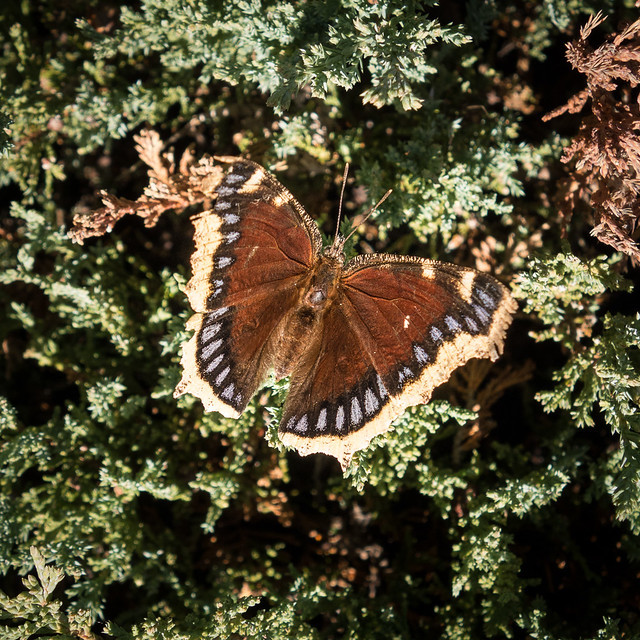
butterfly

Events
Bat Chat, Sept. 28
Melanie Elliott will bring her educational bats to Wild Birds Unlimited at 2 pm, Sept. 28, to lead a discussion on bats and dispel some myths.

Winter Composting, Oct. 1
The SK Waste Reduction Council’s presentation at 7 pm, Oct. 1, at the Frances Morrison Library will cover composting through the winter months, including bokashi fermentation and vermicomposting.

Green Drinks Regina, Oct. 2
Green Drinks Regina will meet from 5:30-7:30 pm, October 2, at Abstractions Café (2161 Rose Street).

Saskatchewan's Oil Boom, Oct. 18
A workshop, From the Belly of the Boom: Understanding and Resisting Saskatchewan's Oil Boom, will be offered at St. Peter’s College, Muenster, on October 18 from 1:30-4:30 pm. The workshop will look at how Saskatchewan's oil boom is reshaping rural life and exacerbating environmental degradation and will explore opportunities for building relevant movements across rural and urban communities.

Thumbs Up
Grasses of Saskatchewan
Congratulations to the Flora of Saskatchewan Association which has just published Grasses of Saskatchewan, the fourth in its series of publications documenting provincial plants. It’s available from Nature Saskatchewan’s website store.

YXE Share-a-Ride
Kudos to Doug Ramage for setting up YXE Share-a-Ride to connect people who can offer a ride with those who need one during the transit lockout.

Cargo Bike Cooperative 
A local individual is interested in establishing a cargo bike cooperative, similar to the one they have in Vienna (see below). Let us know if you’re interested in participating and we’ll put you in touch with each other.

“In the beginning, the LRK bike pool was composed of just a few cargo bikes. After three years, it has grown to a total of 20 cargo bikes and trailers. Any kind of transport can be handled in a variety of ways. Two-wheeled and three-wheeled bikes as well as different types of trailers for all types of transport are available. The locations of the bikes and trailers are distributed as evenly as possible across the entire municipal territory. Some vehicles of the pool were built very creatively at the Vienna Bikekitchen and WUK by transforming old bicycles into new cargo bikes. In this way, the LRK vehicle pool also embodies do-it-yourself (DIY) and bicycle-recycling strategies.”

News
Canada Missing Out on Clean Energy
A newly published report says that Canada is missing out on trade and growth opportunities by devoting so few resources to renewable energy.

Protecting SK Wolves - Update
The Association for the Protection of Fur-Bearing Animals has started a letter-writing campaign to protest the provincial government’s decision to issue 100 additional licenses for killing wolves. A rancher and a wolf expert talk about other options for protecting livestock in a related podcast.

Saskatoon Recycles
Curbside recycling has helped divert two-thirds more waste from the landfill this past year. However, Saskatoon households are still more wasteful than average (22 kg compared to the national average of 13 kg).

EcoSask News is a weekly round-up of local news and events. Email us if you have items you would like us to include. Additional upcoming events can be found on our Calendar

You can follow EcoFriendly Sask by liking us on Facebook, following us on Twitter, or by email (top right corner).

Thursday, 18 September 2014

Saskatchewan Nature Books

pelicans on the river

Birds
Atlas of Saskatchewan Birds, Alan R. Smith
Birds of the Elbow, Frank J. Roy
Birds of the Saskatoon Area, Anna L. Leighton, Him Hay, C. Stuart Houston, J. Frank Roy, Stan Shadick, eds.
Grass, Sky, Song: The Endangered Beauty of Saskatchewan’s Grassland Birds, Trevor Herriot
Saskatchewan Birds in Pictures, Nick Saunders
The Bald Eagle: Haunts and Habits of a Wilderness Monarch, Jon M. Gerrard & Gary R. Bortolotti

Landscape
Forest Prairie Edge: Place History in Saskatchewan, Merle Massie
North Saskatchewan River Guide: Mountain to Prairie, a Living Landscape, North Saskatchewan Watershed Alliance
Prairie: A Natural History, Candace Savage
Saskatchewan’s Endangered Spaces: An Introduction, Peter Jonker, ed.
Saskatchewan’s Prairie Places, Candace Neufeld
Thanks to the Sun: A Scrapbook of Nature Notes about the Northern Prairies, Peter Jonker
The Ecoregions of Saskatchewan, D. Acton, G. Padbury, C. Stushnoff

Untitled

Outdoor Activities
Canada's Best Canoe Routes, edited by Alister Thomas (with chapters by a number of Saskatchewan paddlers)
Canoeing the Churchill: A Practical Guide to the Historic Voyageur Highway, Gregory P. Marchildon & Sid Robinson
Canoe Trip: North to Athabasca, David Curran
Noah's Last Canoe, The Lost Art of Cree Birch Bark Canoe Building, Dog Evans
Northern Saskatchewan Canoe Trips, Laurel Archer
Northern Saskatchewan, Canoe Country, Robin and Arlene Karpan
Paddling Routes of North Central Saskatchewan, Gregory P. Marchildon & Carl Anderson
Saskatchewan’s Best Hikes and Nature Walks, Robin & Arlene Karpan
The Lonely Land, Sigurd F. Olson

Plants
Cultivating Our Roots: Growing Authentic Prairie Wildflowers and Grasses, Nora Stewart
Ferns & Fern Allies of Saskatchewan, Vernon L. Harms & Anna L. Leighton
Getting to Know Saskatchewan Lichens, Bernard De Vries
Grasses of Saskatchewan, Anna L. Leighton & Vernon L. Harms
Lilies, Irises & Orchids of Saskatchewan, Vernon L. Harms & Anna L. Leighton
Plants of the Western Boreal Forest & Aspen Parkland, Andy MacKinnon, Derek Johnson & Linda J. Kershaw
Prairie Phoenix: The Red Lily in Saskatchewan, Anna Leighton & Bonnie Lawrence
Sedges, Anna L. Leighton
Water and Wetland Plants of the Prairie Provinces, Heinjo Lahring
Wildflowers Across the Prairies, F. R. Vance, J.R. Jowsey, J.S. McLean & F.C. Switzer

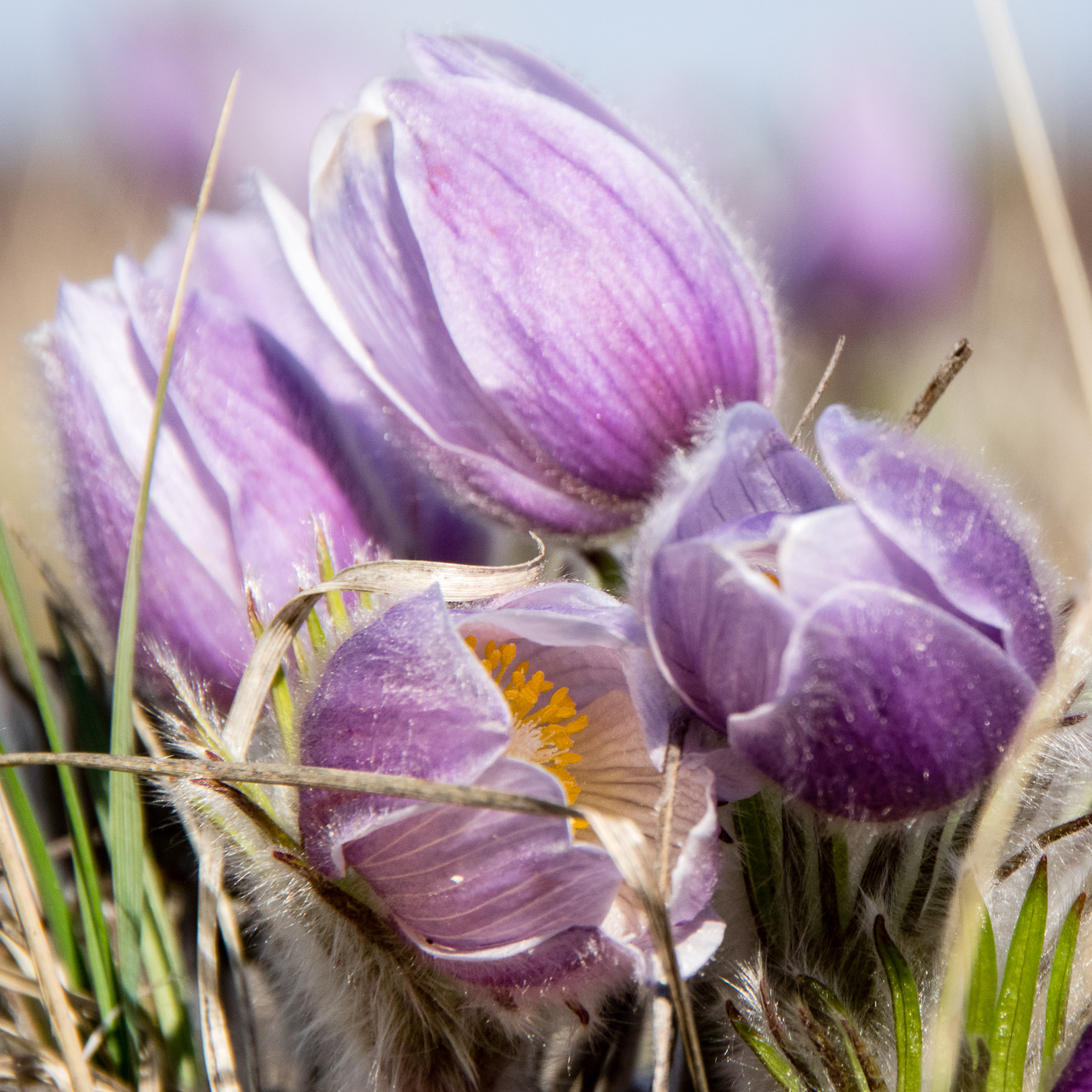
prairie crocus

Places
A Geography of Blood: Unearthing Memory from a Prairie Landscape, Candace Savage
A Guide to Nature Viewing Sites In & Around Saskatoon, Peter Jonker & Bernie Gollop, eds.
Badlands: A Geography of Metaphors, Ken Dalgarno
Northern Sandscapes: Exploring Saskatchewan’s Athabasca Sand Dunes, Robin & Arlene Karpan
Old Man on his Back: Portrait of a Prairie Landscape, Sharon Butala
Reading the River: A Traveller's Companion to the North Saskatchewan River, Myrna Kostash
Saskatoon Forestry Farm Park & Zoo: A Photographic History, Sara Williams
The Great Sandhills: A Prairie Oasis, Rebecca Grambo & Branimir Gjetvaj
The Great Saskatchewan Bucket List: 50 Unforgettable Natural Wonders, Robin & Arlene Karpan
The Sand Dunes of Lake Athabasca, Peter Jonker & Stan Rowe
Turning Aside: Observing the Kerrobert Reservoir, Lois Siemens
Wood Mountain Uplands: From the Big Muddy to the Frenchman River, Thelma Poirier, ed.
81 Interesting Places in Saskatchewan, Frank W. Anderson

Wildlife
At Home on the Range: Living with Saskatchewan's Species at Risk, Sue Michalsky, Liz Saunders, Richard Quinlan, Paul Jones, Barry Adams & Kimberly Pearson
Devil in Deerskins: My Life with Grey Owl, Anahareo
Dragonflies & Damselflies in the Hand, G. Hutchings & D. Halstead
Pilgrim of the Wild, Grey Owl
Portraits of the Bison: An Illustrated Guide to Bison Society, Wes Olson
Red Fox: The Catlike Canine, J. David Henry
Saskatchewan Cougar - Elusive Cat, T. White
Watching Wildlife in Prince Albert National Park, J. David Henry

Miscellaneous
Saskatchewan Citizens’ Hearings on Climate Change

Note: For the most current version of this list, please refer to the Books page

Note: We've tried to provide a source for each of the books; however, some of them are out of print or have been self-published and may be expensive or difficult to find. Do check the Saskatoon Public Library and McNally Robinson Booksellers, both of whom stock a wide variety of Saskatchewan books.

Thank You: This list was compiled with assistance from Joan Feather, Branimir Gjetvaj, Leah Japp, Chet Neufeld, Bryan Sarauer, Candace Savage, Lynette Suchar, and Megan Van Buskirk

Email us if you would like to suggest additional books.

Additional Reading: The Ground Beneath Our Feet: Prairie Writers