Sunday, 23 December 2012

Cold Beauty


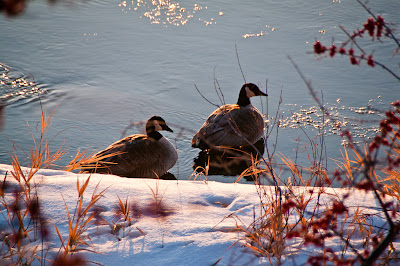
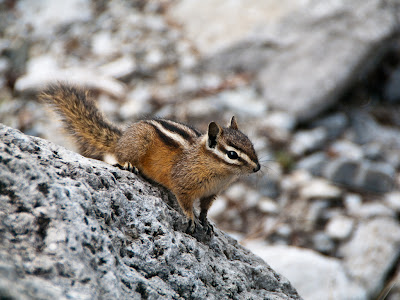
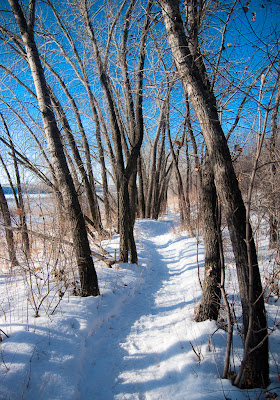
Despite the winter weather, there's still beauty out there. We hope you enjoy this wallpaper, designed to give your computer screen a fresh new look - and to remind you to head outside and enjoy the beauty of the world around us.

Windows Instructions
  1. Click on one of the links below (NOT the small image above)
  2. Right click on the displayed image
  3. Choose "Set as Wallpaper" or "Set as Background"
Mac Instructions
  1. Right click on one of the links below ( NOT the small image above)
  2. Choose "Download Linked File" or "Save Link As"
  3. Right click on the download and choose "Show in Finder"
  4. Right click on the file in the Finder and choose "Set Desktop Picture"

Tuesday, 18 December 2012

EcoSask News, December 18, 2012


To Make a Farm, Regina, Dec. 19
SOEEA is showing To Make a Farm at The Artful Dodger in Regina at 8 pm on December 19. Admission is free.

Bird Count for Kids, Dec. 26 
The Saskatoon Young Naturalists are organizing a Christmas Bird Count for Kids to coincide with the Saskatoon Christmas Bird Count on Wednesday, December 26. Join the group anytime between 12 and 4 pm at the Affinity Learning Centre in Saskatoon's Forestry Farm Park. Marika Olywynk from Bird Studies Canada will help identify the birds. Everyone is welcome. There is no fee, and cookies and hot chocolate are available in the Affinity Learning Centre.

Zoo Visits, Dec. 27 & 28
Wondering what to do during the Christmas holidays? Why not visit the Saskatoon Forestry Farm Park and Zoo?

The Saskatoon Zoo Society is running a drop-in program from 10-12 and 1-3 on December 27 and 28. Visit with the socialized animals, check out the animal displays, and enjoy hot chocolate and cookies before or after you visit the zoo.

Access to the park and zoo is free in December.

Redberry Lake Watershed AEGP Winter Workshop, Jan. 15
The Redberry Lake Biosphere Reserve’s Agri-Environmental Group will be holding a workshop on January 15. Topics will include operating systems, nutrition in winter feeds, and highlights from Beneficial Management Practices. Register with Rachel by January 8 (549-4060 or 715-7651 or rturnquist@redberrylake.ca)

Smarter Science, Better Buildings, Jan. 29-Feb. 15 
Science teachers: the Saskatoon Western Development Museum is offering a two-hour, hands-on workshop that allows students to explore the concepts of heat and temperature by looking at ways to make our homes more energy efficient. Contact the Western Development Museum to book one of 24 available time slots between Jan. 29 and Feb. 15.

Holiday Reading 
Do environmentalists feed the fire of climate change denial? – the risks of overheated rhetoric and/or focusing on trivia
Parking downtown – The Regina Downtown Business Improvement District’s winter guide is subtitled “Your guide to parking, shopping and dining in Downtown Regina.” Regina Urban Ecology questions their priorities.
Perfect Solar Alignment in Saskatchewan – five reasons to install solar electric in 2013
This microalgae lamp absorbs 150 times more CO2 than a tree!
My beef with beef – Why aren’t environmental groups more vocal about asking their supporters to eat less beef? Are environmental groups afraid to tackle the issue of overconsumption – whether it’s big cars, big houses, or too much stuff?
A worthy goal for humanity? Beauty – What is our goal as a species? Is it perpetual population growth, technological progress, self-preservation – or something more?

Merry Christmas 
EcoFriendly Sask is taking a break over the holidays. The next issue of EcoSask News will be published on January 8, 2013.

EcoSask News is a weekly round-up of local news and events. Email us if you have items you would like us to include. Additional upcoming events can be found on our Calendar.

You can follow EcoFriendly Sask by liking us on Facebook, following us on Twitter, or by email (top right corner).

Thursday, 13 December 2012

Wild City: bringing the good life home

by Candace Savage


1 
We think we’re awfully smart, with our i-Things and fancy new stuff, as if Wi-fi kept us connected to everything that matters to us.

So it’s a blow when somebody tells us that we’re actually out of touch, fatally disconnected from our own vital interests.

It’s even worse when that “somebody” is six hundred scientists who have spent years pouring over the stats on the health of the planet.

Their findings, as reported in the United Nations Global Environmental Outlook for 2012, are cheerless: 

Fifteen years after Kyoto, emissions of greenhouse gases continue to increase, signaling dislocation, climate chaos and uncertainty.

Despite herculean efforts to save species, the rate of extinction remains calamitous, with one in five vertebrates on the Red List.

(The reality may be even worse. A recent U.S. government study reports that one-third of American birds are in trouble.)

Scientists at UNEP warn that we risk crossing critical limits and causing irreversible harm to the Earth’s “life-support functions.”

“Hope is the thing with feathers/That perches in the soul,” Emily Dickinson wrote. Hope is a plaintive song in the darkness. 


2 
Re-wilding the city may seem like the smallest possible answer to the cosmic mess we’re in. But cities truly are an urgent place to begin.

H. sapiens sapiens is now an urban species, with slightly more than half of us in cities and towns. That’s 3,998,906,053, and counting.

Cities are not apart from Nature. Urban dwellers drink water and breathe air. We draw on the Earth for food and other necessities.

Everything the city consumes has been extracted from the natural abundance of the Earth, often at a cost that is distant and unnoticed.

Our withdrawals diminish the living space of other species—wild birds, animals and plants—and contribute to the disenchantment of Nature.

City dwellers are half of humankind but consume more than three-quarters of the Earth’s goods and services every year.

Stuck in the traffic jam of modern life, we are less connected to Nature than our parents were. Our sense of wonder is clouded fear.

Even our kids prefer to stay indoors, where the electrical outlets are. No wonder we worry about childhood obesity and depression.

Making space for Nature in the city—for the furred and feathered things that coexist with us--offers solace for people and the planet.


3
An international movement to re-wild the city is already taking flight. Cities turn out to be hotspots for a diversity of life.

Humans are a keystone species, ecological engineers. As we destroy, we also unwittingly create opportunities for other creatures.

To non-human eyes, a high-rise tower is a cliff face. Boulevard plantings form gangly forests. Vacant lots become an eccentric wilderness. 

In cities around the world, people are noticing cracks in the pavement—openings for life—and taking urgent steps to protect them.

Back-yard gardeners are digging up monocultures of grass to make room for native plants and the buzz of “tame” and native bees.

Cities are encouraging the creation of rain gardens and swales to protect their watersheds from run-off and pollution.

Paris and New York have transformed old railways into high-line parks, and grim brownfields in Germany have been restored to vibrant life.

The City of Seoul has disinterred the Cheonggycheon River from a deep overlay of roads, boosting both fish and bird species six-fold.

The wild city is a space of possibility and promise, where hope can grow. It’s time to bring the good life home to the urban jungle.

Candace Savage is an award-winning Saskatchewan author of many bestselling natural history books. Her most recent book, A Geography of Blood: Unearthing Memory from a Prairie Landscape, recently won the Hilary Weston Writers' Trust Prize for Nonfiction. 

Candace is one of the leading voices behind Wild About Saskatoon: Connecting Nature and Culture in the City. Wild About Saskatoon is dedicated to the urgent task of reconnecting city dwellers with the wild lives and life-sustaining processes going on all around us. It is an informal group of citizens brought together by a shared love of nature and of our home town, a middle-sized city on the banks of a shining prairie river.

Photo Credit: Candace Savage

Tuesday, 11 December 2012

EcoSask News, December 11, 2012


Piping Plover Census, Dec. 12
The results of the 2011 International Piping Plover Census will be presented on Wednesday in Swift Current and broadcast online. Contact SK PCAP for more details.

Invasive Plant Species Webinar, Dec. 19
The Ministry of Agriculture is hosting an Invasive Plant Species Webinar on December 19 from 12-1 pm. Register online.

Christmas Bird Counts
Birders from over 90 Saskatchewan communities will be participating in the Christmas bird counts. In addition to the local bird counts, there are counts at Gardiner Dam (Dec. 17), Harris (Dec. 19), and Biggar (Dec. 27). Contact Guy Wapple (249-3280) to confirm dates and volunteer.

Susan Lamb Endowment Fund
The public is invited to contribute to the Susan Lamb Endowment Fund, established by the Meewasin Valley Authority, which will be dedicated to supporting education and conservation work in the northeast swale in perpetuity.

Adopt a Piece of Nature
The Nature Conservancy of Canada is looking for individuals or volunteers who will “adopt” one of their Saskatchewan properties and visit it as often as they wish to record wildlife, general condition of the land and perform some hands-on activities. Contact Kirsten at kirsten.jensen@natureconservancy.ca, 306.347.0447, if you are interested.

Prairie Grasslands
Three cheers! The federal government has rejected Cenovus’ gas project within CFB Suffield National Wildlife Area (NWA). Suffield NWA is an important remnant of Canadian native prairie. It is home to at least 15 species that are at risk of extinction or endangered.

The Protect the Prairie campaign is recruiting famous Canadians to join the campaign to prevent the sale of community pastures. Margaret Atwood, K.D. Lang, The Sheepdogs, and Chris Getzlaf have given their support to date.

Endangered Species
The Committee on the Status of Endangered Wildlife in Canada has released a report card on species at risk, adding a dozen species to the endangered list.

A report released in October by Ecojustice rates the provincial and federal governments’ efforts to protect at risk plants and animals. The federal government received a C- and some provinces failed.

The 2012 Federal Budget Implementation Bill (Bill C-38) incorporated changes to the federal Species at Risk Act (SARA) that include allowing issuance of long-term permits for potentially harmful activities and removing the requirement for regular review or renewal of these permits. The Minister of the Environment has signalled that the Act is under review and changes to the Act could be made as early as this fall. (via CPAWS)


Mobile Phone Replaces Butterfly Net
In the second half of the 19th century, natural history excursions attracted hundreds of participants and played an important role in documenting local plants and animals. Nowadays, membership in nature societies is dwindling and aging.

But technology provides new options. Mobile phone cameras make it easy to record sightings and publish them online to social networking sites, such as iSpot, and software apps assist with identification.

EcoSask News is a weekly round-up of local news and events. Email us if you have items you would like us to include. Additional upcoming events can be found on our Calendar.

You can follow EcoFriendly Sask by liking us on Facebook, following us on Twitter, or by email (top right corner).

Tuesday, 4 December 2012

EcoSask News, December 4, 2012


SEN Film Night, Dec. 10
The Saskatchewan Eco Network is hosting a monthly film night at The Root Down Cooperative Café. The first film, Garbage: The Revolution Starts at Home, will be shown on December 10 at 7 pm. There is no charge. Check out the preview of this documentary about a family that saves every scrap of garbage for 3 months and then explores where it goes and what it does to the earth.

Life, Legumes & Nitrogen, Dec. 13
Saskatchewan is the world’s largest exporter of lentils, and commercial lentil varieties bred at the U of S account for a third of global production. Best of all, lentils and other legumes add nitrogen to the soil where it can be used by other plants. Bert Vandenberg, NSERC Industrial Research Chair in Lentil Genetic Improvement, U of S, will talk about the importance of legumes in the wider ecosystem and the ecological virtues of pulse crops at the Saskatoon Nature Society's monthly meeting: 7:30 pm, December 13, Room 106, Biology Building, U of S.

Christmas Bird Counts
Christmas bird counts have been a holiday tradi­tion for over 100 years. Set aside some time this holiday season to count our wintering birds. The Saskatoon Nature Society welcomes everyone to take part, especially begin­ners.
Saturday, December 15: Clark’s Crossing 
Sunday, December 16: Qu’Appelle Valley Dam 
Wednesday, December 26: Saskatoon 
Saturday, January 5: Pike Lake 
New for this year: no fees! Audubon and BSC will no longer be charging a $5 fee. Other regional counts are planned. For more information, check the SNS website.

We’re Wild About Saskatoon
We share our city streets with coyotes; birds nest in our gardens; and we harvest saskatoon berries along the riverbank. Join with other nature lovers to celebrate the nature that surrounds us. Wild About Saskatoon, a brand-new collective, will be hosting a festival to celebrate Nature in the City in May 2013. Why not plan an activity and join the celebration?

Heritage Rivers
Partners FOR the Saskatchewan River Basin is overseeing the research required prior to the Saskatchewan sections of the South Saskatchewan and the Saskatchewan Rivers being designated as Heritage Rivers. The goal of the research is to identify the values to be conserved, protected and promoted, and how this might be accomplished through existing and future management plans. You can comment online.

Environmental Code Review
The public review of the draft Saskatchewan Environmental Code has concluded and a complete summary of all comments received, along with the ministry's responses, is now available on the Ministry of Environment's website.

Greener to the End
Saskatchewan is the first province in Canada to approve alkaline hydrolysis, a highly accelerated version of natural decomposition, for the disposal of human remains. It has a much smaller carbon footprint than cremation.

Green Roofs in Winter
Green roofs aren’t just for temperate climates. They’ve tested it in Ottawa and found that green roofs increase conservation of heat by reducing wind speeds and modifying the microclimate above the roof.

Winter at Old Man on His Back
There’s a familiar routine as The Nature Conservancy of Canada prepares for winter at Old Man on His Back Prairie and Conservation Area: calling the cows, rounding up the bison, and preparing the winter supply of water.

EcoSask News is a weekly round-up of local news and events. Email us if you have items you would like us to include. Additional upcoming events can be found on our Calendar.

You can follow EcoFriendly Sask by liking us on Facebook, following us on Twitter, or by email (top right corner).

Tuesday, 27 November 2012

EcoSask News, November 27, 2012


Snowshoeing at Redberry Lake, Dec. 1 & 8
Bring your family out to the Redberry Lake Biosphere Reserve from 11 to 1 on December 1 and 8. Put on your snowshoes (also available at Redberry) and take a winter hike followed by hot chocolate and smokies. RSVP to communications@redberrylake.ca, 549-9311.

We Are Many AGM, Dec. 6 
We Are Many is holding their annual general meeting at 7 pm on December 6 in the Victoria School library.

Saskatoon Nature Society 
Membership in the Saskatoon Nature Society is a really good deal. For $20/person or $30/family, you get a newsletter, a chance to participate in a wide variety of field trips as well as monthly meetings with speakers. Plus, Nature Society members receive a discount at Don's Photo Shop, 1902 8th St. E., on photo-finishing and certain other items in the store as well as a 10% discount at Early's Farm and Garden Centre on all regularly priced wild bird feeding products, bird houses, books, etc. Memberships run from January to December, so now is the perfect time to take out or renew a membership.

Eden Flowers is Green
The owner of Eden Flowers Ltd. in University Heights says her flower shop is 98% green. All of the flowers are fair trade and most of them are sourced out of British Columbia. All the waste is recycled.

Trail Maintenance
If you notice a section of Saskatoon’s trail network that needs to be cleared or to report a problem, call the City of Saskatoon’s trail maintenance hotline at 975-2476.

Plastic Paving
Vancouver will be the first city to include recycled plastics in the asphalt used to pave and repair roads. The plastic, which is 1% of the asphalt mix, is more expensive but uses less fuel, so it will save money in the long run.

Vitamin G (Green)
Why We Need Cities in Tune with Nature lists the benefits and best practices concerning urban green spaces. A recent study found that a 20% increase in nearby green space was equivalent to another 5 years of life. A new hospital in Singapore may be the greenest in the world with window boxes and 140 fruit trees in the lobby and on the roof. The hospital is monitoring the number of birds and butterfly species as an indicator of success.

Edmonton’s Energy-Efficient Community
Oxford, a new community in northwest Edmonton, will require all homebuilders to meet energy conservation standards. All homes must achieve a minimum EnerGuide rating of 78 or be certified to Built Green Silver standards or equivalents. Grants will be available for homeowners who want to move beyond those standards. Funding is also available for secondary suites.

Fracking Gains Momentum 
Fracking is gaining momentum in the United States as a source of local and state tax revenue. Pennsylvania is considering drilling at 6 universities that are eager for new revenue sources. Money outweighs environmental concerns – will they regret it in the future?

EcoSask News is a weekly round-up of local news and events. Email us if you have items you would like us to include. Additional upcoming events can be found on our Calendar.

You can follow EcoFriendly Sask by liking us on Facebook, following us on Twitter, or by email (top right corner).

Friday, 23 November 2012

Eco Chic: Shopping for Clothes that are Green and Local


As Kermit said, “It’s not easy being green.” I (Penny) went clothes shopping the other day, and I focussed entirely on style and price. I forgot to consider the environment, and my purchases didn’t benefit local businesses. Next time I’ll do better. Here are some ideas.

Clothes
Did you know that growing cotton uses almost 25% of all the insecticides in the world and over 10% of all pesticides? It takes approximately one pound of cotton to make a t-shirt, and it will have been sprayed with one third of a pound of pesticides. Sheep that are being raised for wool in the US are treated with 14,000 pounds of pesticides a year.

Better Options: Look for organic cotton or linen, hemp, and bamboo. Linen is made from flax that grows well without pesticides or insecticides. An acre of land planted with hemp yields two to three times more fibre than cotton – without the chemicals. Bamboo is one of the fastest-growing plants; it can sprout from 1 to 4 feet per day and it naturally resists pests and many bacteria.

Shop Local: Luna + Hill sells clothing that is Canadian-made, organic, and sustainable. Ten Tree, a Regina-based company, wants to ensure that all their clothing is manufactured responsibly. They plant 10 trees for every piece of their clothing that is purchased.

Shoes & Accessories 
Leather may be a renewable resource, but tanning the hides uses a tremendous amount of water and toxic chemicals, creating dangerous effluent discharge. Some manufacturers in Italy and Mexico are using less toxic processes, but it will take a while before this practice becomes widespread.

Better Options: Look for shoes made from synthetic or recycled materials. Give your shoes a second life through programs such as Brainsport’s Free Shoe Day.

Shop Local: Escape Sports carries fair-trade certified SoleRebels footwear that is made in Ethiopia from recycled and organic materials. Pedestrian now sells shoes from Oliberté, an African company that is working hard to reduce its environmental impact.

The Better Good carries a wide variety of sustainable goods. The Ressac bag is durable and waterproof – like leather – but it’s made from punctured inner tubes.


Swap and Share
How many outfits do you have in your closet that you’ve worn once and may never wear again?

Better options: Buying less clothing is one of the most ecofriendly options. But it can be boring. Why not organize a clothing swap or shop at secondhand clothing stores?

Shop Local: Better Off Duds specializes in secondhand clothing, with a focus on retro attire and quality classics. The Princess Shop loans graduation dresses and accessories to female students in need.

Laundry
Traditional dry cleaning involves submerging clothes in petroleum-based liquid chemicals. The most common chemical is perchloroethylene (PERC), a possible carcinogen and a hazardous pollutant.

Clothes dryers use a lot of energy, emitting almost 1500 pounds of CO2 annually.

Better Options: Look for a “wet” cleaner. This method uses water and non-toxic, biodegradable detergents. Or you may be able to find a dry cleaner that is using liquid CO2 or liquid silicone.

Wash clothes less frequently. Buy a clothing rack and air dry your laundry. Buy energy-efficient appliances.

Shop Local: We’re not aware of any environmentally-friendly dry cleaners in Saskatoon. If you know of one, please let us know.

Resources 
The following books are available from the Saskatoon Public Library:
Green Chic: Saving the Earth in Style
Big Green Purse: Use your Spending Power to Create a Cleaner, Greener World
The Rough Guide to Shopping with a Conscience
Ethical Chic: The Inside Story of the Companies We Think We Love

David Suzuki’s Queen of Green blog offers green living tips and recipes.