Showing posts with label Biodiversity. Show all posts

Tuesday, 11 January 2022

EcoSask News, January 11, 2021

pool surrounded by greenery

Upcoming Events 
EMTF-SK is hosting an online presentation on developing Saskatchewan’s sustainable energy economy at 7:30 am, Jan. 12. 

The Johnson-Shoyama Graduate School of Public Policy is hosting a video conference on building an equitable Canadian science system from 12-1 pm, Jan. 13. 

Nature Regina is hosting an online presentation on Indigenous peoples’ rights and environmental protection at 7 pm, Jan. 17. 

Saskatoon Nature Society is hosting an online presentation on invertebrate diversity, distribution, and ecology at 7:30 pm, Jan. 20. 

Nature Saskatchewan is hosting an online nature trivia night at 7 pm, Feb. 9. 

Full details on all upcoming events are listed on the EcoFriendly Sask Calendar 

Consumer Choices 
“The most important thing consumers can do is to educate themselves about their purchases.” Vegan leather is a petroleum byproduct. Plant-based leather is a better option. [Inhabitat] 

The Alberta EcoTrust Foundation, with support from the Alberta Real Estate Foundation, is undertaking a pilot project to provide digital home energy labels for houses in Calgary and Edmonton. The label will show how much energy the home uses and compare it to other similar homes. [Alberta EcoTrust] This is in line with France’s plan to notify potential home owners of a property’s energy rating. [Cities in the Next Decade] 

“In the past decade alone, $40 trillion has been divested from fossil fuels ... Divestment is showing in real time that everyday people can take part in the fight against climate change, and it’s demonstrating to financial firms that climate change is no longer a worthy investment.” [Yes Magazine] 

French car ads will be required to discourage driving and promote alternate forms of transportation. [Yale Environment 360]
 
Downy (or Hairy) woodpecker

Industry & Mining 
A survey of participants in the Alberta Oilsands Monitoring Program finds monitoring to be ineffective with crucial questions being left unanswered. [La Ronge Now] 

Half of global passenger-vehicle sales are expected to be electric by 2035, indicating a shift from a fuel-intensive to a material-intensive system. This will entail two big challenges. “One is how to cut down on the metals in batteries that are scarce, expensive, or problematic because their mining carries harsh environmental and social costs. Another is to improve battery recycling, so that the valuable metals in spent car batteries can be efficiently reused.” [Nature] 

Pembina Institute has published a report on the Status of Boreal Woodland Caribou Conservation in Canada. It finds that “to help the species recover conservation efforts to protect the last remaining tracts of critical habitat must be prioritized. The habitats that caribou inhabit – boreal forests and peatlands – are among the most carbon-rich in the world. When caribou habitat is lost to activities such as oil and gas development and logging, significant amounts of greenhouse gases (GHGs) are released. On the other hand, when caribou habitat is conserved carbon remains in the ground.” [Pembina] 

The Province of Saskatchewan’s “weak response to the climate emergency amounts to an implicit denial … The provincial government is clinging to the wrong side of history by failing to meaningfully collaborate with people in Saskatchewan — both Indigenous and non-Indigenous — and take corrective action.” [The Narwhal] 

Protecting Biodiversity 
Fungal networks support much of life on earth. SPUN aims to accelerate efforts to protect underground ecosystems largely absent from conservation and climate agendas. [SPUN] 

Protecting roadless areas could go a long way in helping to reach conservation goals and slow extinctions – a point worth considering in Canada where we continue to add new roads. [The Revelator] 

Starting in 2023, farmers in England will be paid for nature restoration and creation on their land (creation of hedgerows and wildflower meadows, wetland restoration). [Edie] 

EcoFriendly Sask supports Saskatchewan environmental initiatives through an online publication, an events calendar, small grants, and the Nature Companion website/app. You can follow EcoFriendly Sask by liking us on Facebook, following us on Twitter, or subscribing by email (top right corner).

Tuesday, 4 January 2022

EcoSask News, January 4, 2022

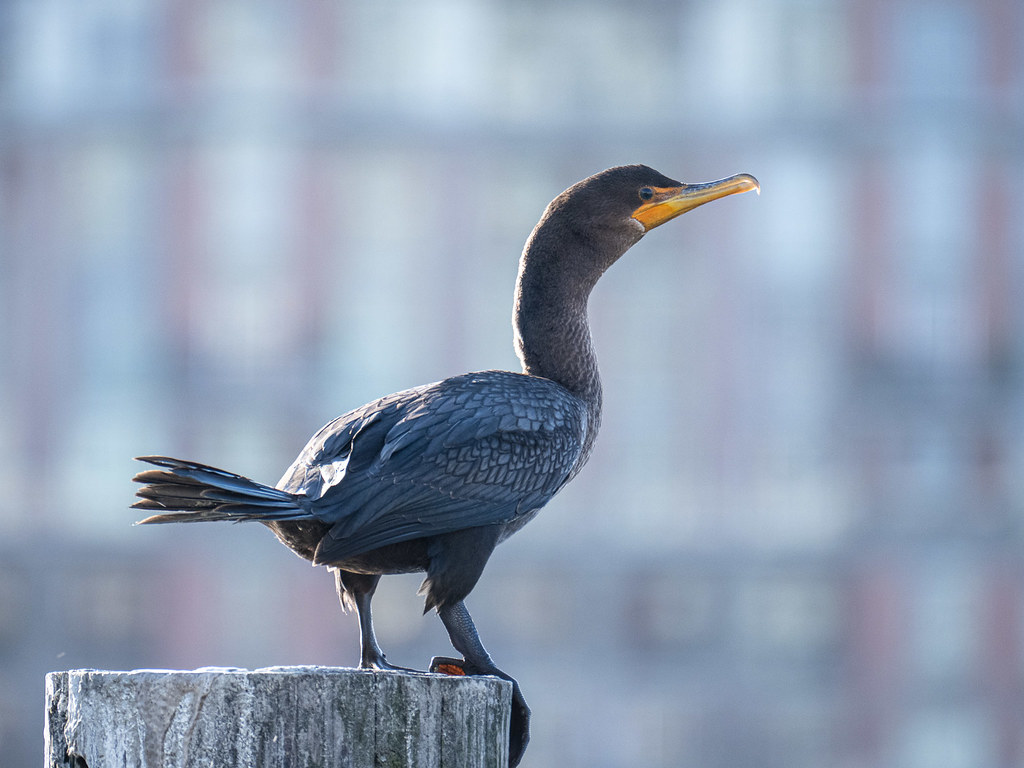
Double-crested cormorant

Upcoming Events 
SaskOutdoors will be hosting the following virtual workshops: 
Below Zero - 7-9 pm, Jan. 11 & 18 
Get Outside & Play - 7 pm, Jan. 17 
Project WILD - 7-9 pm, Jan. 24, 31, and Feb. 7 

Friends of Wascana Marsh will be holding a virtual annual general meeting at 7 pm, Jan. 20. 

Full details on all upcoming events can be found on the EcoFriendly Sask Calendar 

Energy 
Countries “will never agree to ‘phase down’ or ‘phase out’ fossil fuel energy without a reasonable substitute source of energy.” Is nuclear power the answer? [Johnson-Shoyama Graduate School of Public Policy] 

“The federal government should cap oilsands production to stop the rapid growth of toxic tailings. Then, industry should recycle the toxic waste instead of immediately dumping it.” Releasing tailings into the Athabasca River endangers the river and the people and wildlife that depend upon it. [The Narwhal] 

The largest solar project in Kentucky is being built on top of an abandoned mountain-top strip mine. [Yale Environment 360]
 
Anna's hummingbird

Conservation
Pittsburgh plans to become dark-sky compliant, switching to lower wattage LED bulbs and adding shade along bridges, roads, and other public areas. It will also be the first city to follow the International Dark Sky Association’s new values-centered outdoor lighting [IDA], comprehensive suggestions surrounding wattage and colour temperature as well as when and how to keep lights on. [Bloomberg CityLab] 

“Expanding the area and number of protected areas is not the solution to maintaining or restoring ecological connectivity. Instead, management for conservation should address unprotected areas, especially ones near existing protected areas to minimize the loss of connectivity.” [Conservation Corridor]
 
autumn colors

Celebration 
“The yellow birch is not ‘just a tree,’ but a life filled with generosity, and is a life that will be around 150 years beyond my own.” [Nature Canada] 

Marvel at the intricate detail and colourful complexity of Singapore’s microfauna. [Nicky Bay’s Macro Photography] 

“For many scientists, the resonant mystery is no longer which animals are conscious, but which are not.” How birds, fishes, bees, and other sentient beings experience the world. [The Atlantic] 

“By land or by sea, early whales moved between continents and were a larger part of Earth’s ancient ecology than paleontologists previously expected.” [Smithsonian Magazine] 

EcoFriendly Sask supports Saskatchewan environmental initiatives through an online publication, an events calendar, small grants, and the Nature Companion website/app. You can follow EcoFriendly Sask by liking us on Facebook, following us on Twitter, or subscribing by email (top right corner).

Tuesday, 20 July 2021

EcoSask News, July 20, 2021

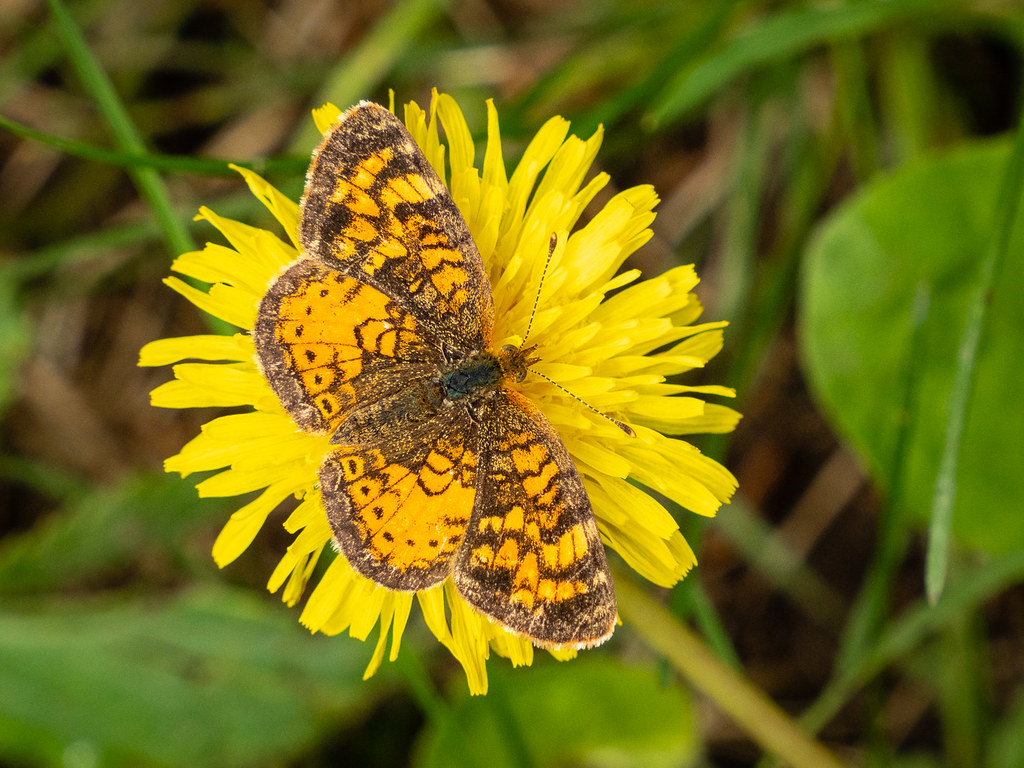
Northern Crescent ?

This Week’s Highlights 
One quarter of methane emissions on oil and gas sites come from tanks, which are designed to allow the methane to off-gas: that’s not a leak, that’s a design problem. [CBC]

Beavers are being reintroduced to Utah’s desert landscape. If they become established, “their impacts can be wide-reaching. Just one beaver dam can improve water quality, as well as acting as a firebreaker for the surrounding land.” [BBC] 

Upcoming Events 
Efficiency Canada is hosting a virtual energy efficiency networking event from 1-1:45 pm, July 22. 

Join a nation-wide backyard bioblitz coordinated by the Nature Conservancy of Canada, July 29-Aug. 2. 

City of Saskatoon residents can dispose of household hazardous waste from 9 am-3:30 pm, Aug. 8. 

All events are listed on the EcoFriendly Sask Calendar

Local News 
SOS Trees is urging Saskatoon residents to ask City Council to eliminate landfill fees for the safe disposal of elm as a contribution to protecting the city’s urban forest. [SOS Trees] 

Global warming, urban growth, and spring run-off from farm fertilizers are degrading surface waters in southern Saskatchewan and creating poisonous toxins. [Regina Leader Post] 

The Wildlife Rescue Society of Saskatchewan and The Fur-Bearers address issues surrounding human-wildlife coexistence through local efforts to protect a family of foxes and to respond to the trapping and killing of coyotes in Vancouver’s Stanley Park. [WRSOS, The Fur-Bearers] 

Prince Albert's plastic bag ban will go into effect Oct. 12 after being delayed due to the pandemic. Saskatchewan produces the second-most waste per capita in Canada. [CBC]
 
Leconte's Haploa Moth ?

Reuse & Repair
Some reusable kitchenware products have a greater environmental impact than single-use products. Silicone sandwich bags and beeswax wraps use too much water and energy to be beneficial. [Anthropocene] 

More and more products aren’t easily repairable – from laptop computers to farm machinery. Here's why we need the right to repair and what it should entail – information, parts and tools, legal unlocking, and accommodating repair in design. [New York Times Wirecutter] 

Retrofitting Our Homes & Cities 
“Pavement — comprising roads and parking lots — takes up roughly 30% of the city surface. . . Removing urban pavement would reduce stormwater run-off and treatment, rebuild natural climate buffers in cities, release soil from confinement, make space to plant trees, sequester carbon, and allow people to breathe fresh air, not asphalt.” [Next City] 

Home energy renovations (insulation, heat pumps, better windows) could create jobs and save on healthcare costs. [Pembina Institute report] 

EcoFriendly Sask supports Saskatchewan environmental initiatives through an online publication, an events calendar, small grants, and the Nature Companion website/app. You can follow EcoFriendly Sask by liking us on Facebook, following us on Twitter, or subscribe by email (top right corner).

Did you know? Hawk Moth fly and move like hummingbirds and can be seen hovering in front of a flower while they unfurl their long tongue and insert it in the flower to sip the nectar.

Tuesday, 1 December 2020

EcoSask News, December 1, 2020

frost

Upcoming Events 
TRC, Climate Action & Indigenous Ways of Knowing, Dec. 2 (online) 
The University of Regina is hosting an online town hall regarding TRC, climate action, and Indigenous ways of knowing from 10:30-11:30 am, Dec. 2. 

Lake Winnipeg Data Stream, Dec. 10 (online) 
Find out about Lake Winnipeg’s open access platform for sharing water data at noon, Dec. 10. This is an online webinar organized by Partners FOR the Saskatchewan River Basin. 

Sustainable YXE, Dec. 3 (online) 
Find out what teens can do to make Saskatoon more sustainable at the Saskatoon Public Library event from 6-7 pm, Dec. 3. 

Farmland Drainage & the Environment, Dec. 7-11 & Jan. 11-15 (online) 
The Citizens Environmental Alliance is hosting an online conference on farmland drainage and the environment from Dec. 7-11 and Jan. 11-15. Registration is by individual daily session. 

Saskatoon Nature Society Field Trips 
Saskatoon Young Naturalists 
Dec. 29 (tentative) – Christmas Bird Count for Kids
 
Saskatoon Nature Society Field Trips 
Dec. 5, 9 am-5 pm – Gardiner Dam Birding 
Dec. 19, 9 am-5 pm – Clark’s Crossing/Warman/Osler/Martensville Christmas Bird Count 
Field trips are currently for members only, so sign up now. 

A full list of upcoming events (online and in person) can be found on the EcoFriendly Sask Calendar 

Local News 
Privilege and climate justice – a new post from the YXE Youth Climate Committee.
 
frost and ice

From Information to Action 
Done right, online shopping can have a lower carbon footprint than brick-and-mortar stores. This benefit can be eroded when consumers opt for fast delivery options, especially same-day or next-day options. 

By dragging its feet on specific measures to curb greenhouse gas emissions, the Trudeau government is shoehorning Canadians into expensive, unproven and unreliable technologies. 


Bottom-up biodiversity restoration projects are making a difference. 

Now That’s Interesting 

A wooden cargo ship powered by sail and electric battery is already accepting shipment bookings. 

EcoSask News is a weekly round-up of local news and events. Email us if you have items you would like us to include. 

You can follow EcoFriendly Sask by liking us on Facebook, following us on Twitter, or by email (top right corner). 

Balsam Fir's thick branches provide winter cover for wildlife. The seeds, twigs, and bark provide food for mice and squirrels as well as bears and moose. Find out more in Nature Companion, a free nature app for Canada’s 4 western provinces.

Tuesday, 30 June 2020

EcoSask News, June 30, 2020

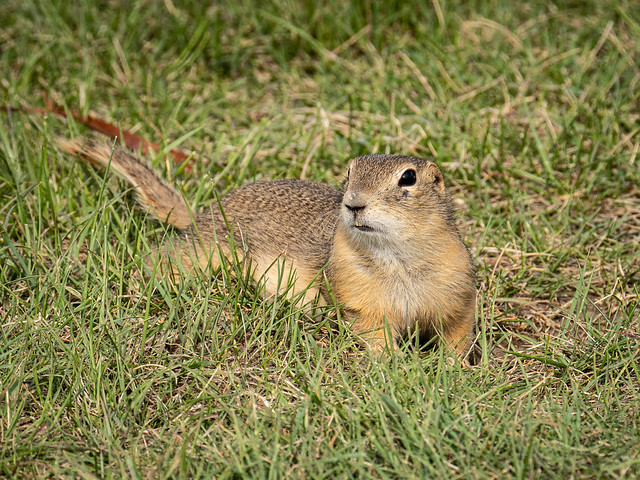
gopher

Upcoming Events
Youth Activities, Fridays - July & August (Yorkton & area - online) 
The Yellowhead Flyway Birding Trail Association’s summer student is posting activity sheets for ages 4-12 every Friday over the summer months on YFBTA’s Facebook page and blog.

Nature Exploration Activities, July 3, 10, 17, 24, 31 (Yorkton & area - online) 
Talia from Yellowhead Flyway Birding Trail Association will be sharing her favorite activities for ages 3-10 to get outside and explore nature every Friday in July. Sessions are pre-recorded and sent by email so you can participate at your leisure.

Household Hazardous Waste, July 5 (Saskatoon)
You can dispose of household hazardous waste at City of Saskatoon’s Civic Operations Centre from 9 am-3:30 pm, July 5.

Identifying the Big Weeds, July 7 (webinar)
Melanie Toppi will discuss some of the main species of weeds that can be found in Saskatchewan in a noon-hour webinar sponsored by PCAP-SK on July 7.

Pause with Nature, July 9 (online) 
Find out how you can reduce stress and increase well-being with a dose of nature in a Nature Conservancy of Canada webinar at 11:30 am (SK time), July 9.

Hidden Valley Picnic & Wildflowers, July 12 (Regina) 
Join Nature Regina for a picnic and wildflower field trip at Hidden Valley from 4-8 pm, July 12.

gopher

Looking Ahead
Nature Exploration Camp, Aug. 4-7 (Yorkton - online) 
Yorkton Family Resource Centre is hosting a virtual nature exploration camp for ages 3-12 at 3 pm, Aug. 4-7, with Talia from Yellowhead Flyway Birding Trail Association.

Generating Momentum, Aug. 6-7 (online) 
Registration is now open for Generating Momentum, an activist leadership training camp, to be held online on Aug. 6-7.

Bird Count, Sept. 12 (Saskatoon) 
The Saskatoon Nature Society is looking for volunteers to help with the Sept. 12 Fall Bird Count. If you would like to help, phone Stan Shadick at 306 652-5975 or email trips@saskatoonnature.org and provide your contact information and times that you are available to count birds.

A full list of upcoming events (online and in person) can be found on the EcoFriendly Sask Calendar

Local News
A new technology being piloted in Saskatchewan aims to extract hydrogen from beneath the earth and has the potential to repurpose abandoned oil wells

Saskatchewan uranium mine tailings could become a source of rare earth minerals

Global warming, urban growth and spring run-off from farm fertilizers have increased pollution levels in southern Saskatchewan lakes, leading to a build-up of blue-green algae that produce a cancer-causing toxin

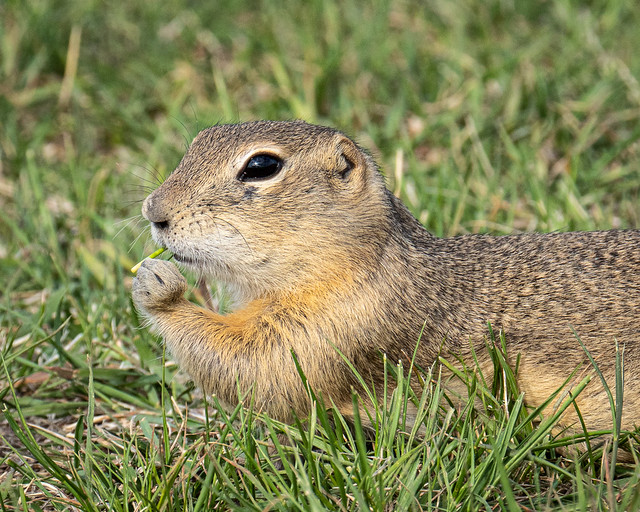
gophers (Richardsons ground squirrels)

From Information to Action
Tackling inequality could be a primary tactic for effectively fighting climate change

In 2015, Wales passed the Future Generations Act, making it the first country in the world to write responsibility for future generations into law [book review]

“Simply protecting more land will not necessarily preserve more biodiversity in the future—but protecting currently underrepresented types of land might”

Indigenous land guardian programs are an “expression of Indigenous governance over land”

10 storage options for renewable energy

EcoSask News is a weekly round-up of local news and events. Email us if you have items you would like us to include. 

You can follow EcoFriendly Sask by liking us on Facebook, following us on Twitter, or by email (top right corner).

Tuesday, 9 July 2019

EcoSask News, July 9, 2019

Bald eagle

Upcoming Events
Grassroots Voices, July 8-11 (Saskatoon)
Join Saskatoon’s climate justice community in Kiwanis Park from Monday to Thursday evening, July 8-11, to let the premiers know that you’re concerned about the climate crisis, the Trans Mountain pipeline, the transition to fossil fuels, and the response to the MMIWG Commission report.

The Natural World, July 11-Aug. 8(Eastend)
Kids can enjoy activities involving the natural world from 10 am-12 pm, every Thursday morning, from July 11 to Aug. 8 at the Eastend Public Library.

The Natural World, July 12-Aug. 16 (Maple Creek)
Kids can enjoy activities involving the natural world from 2-4 pm, every Friday afternoon, from July 11 to Aug. 16 at the Maple Creek Public Library.

Falconry, July 14 (Saskatoon)
Join Wild Birds Unlimited for a visit to Drs. Lynn and Rhonda Oliphant’s 2019 brood of falcons at 6:30 pm, July 14. Carpooling is available.

All About Water, July 17 (Gravelbourg)
Kids can learn about water conservation and watersheds from 3-4 pm, July 17, at Gravelbourg Public Library.

Garden Patch Bioblitz, July 17 (Saskatoon)
Learn about biodiversity and identify plants and insects with members of the Saskatoon Nature Society at the Saskatoon Food Bank & Learning Centre’s Garden Patch from 5:30-7:30 pm, July 17.

Butcher Birds, July 18 (Val Marie)
There will be a presentation on butcher birds and the Stewards of Saskatchewan at 7 pm, July 18, in Val Marie.

Going Zero Waste, July 18 (Regina)
Find out how to go zero-waste and minimize your impact on the environment from 7-8 pm, July 18, at the Regent Place Branch Library.

Bald eagle (juvenile)

Saskatoon Nature Society Field Trips
Saskatoon Young Naturalists
July 17, 11 am-1 pm – Butterfly Field Trip
Sept. 28 – Sandhill Crane field trip
Space is limited; register early to avoid disappointment.

Golden Eagles
July 18, 8 am – Stuglin Acreage & Gardens
Retirees and partners who are interested in birds and the natural world are invited to participate.

Other Saskatoon Nature Society Field Trips 
July 13, 8 am-8 pm – Ponass Lake IBA
July 27 – Shorebird Trip
Everyone is welcome. Check the Saskatoon Nature Society’s website for full details and updated information.

A full list of upcoming events can be found on the EcoFriendly Sask Calendar

In the News
Public Pastures Public Interest has made a video showing the impact of a solution potash mine on the environment. “The well sites cover 14 acres, stripping off the soil and plant cover, leveling the land into a sterile gravel and sand-scape. The pipelines or “flow lines” cut a 100 metre swath of disturbed land connecting well sites to the plant. New roads are built much wider than one would think necessary, introducing noxious weeds. Dust and noise from heavy equipment and trucks fills the air; municipal roads degrade and in spring duck cannons fire off every few minutes to keep waterfowl from lighting on toxic wastewater ponds. The land becomes for all purposes an industrial zone. Is this what the people of Sedley and Vibank want for their land when the Province gives its blessing to Rio Tinto for Project Albany? Will the surface lease income justify the loss of beauty and quiet in the landscape?” 

SaskEnergy has announced a $650 rebate for the purchase and installation of a new high-efficiency furnace between Aug. 1 and November.

Natural gas production is a failing business model and can’t compete with renewables.

Wetlands packed with soaking wet layers of peat can act as a fire break to stop wildfires from spreading.

We walk less, but we die more. Pedestrian deaths increased by 51% in the United States from 2009-2018. In Europe, they declined by 36%.

Take Bugs 101, a free online entomology course, and take away a new appreciation for the diversity and importance of insects to human society.

We've all benefited from China's rare earth minerals in our high-tech products. Should we help pay for clean-up?

Sustainable transport options – stop, share, switch.

The new leftwing economics wants to see the redistribution of economic power so that it is held by everyone – how a network of thinkers is transforming capitalism.

EcoSask News is a weekly round-up of local news and events. Email us if you have items you would like us to include. 

You can follow EcoFriendly Sask by liking us on Facebook, following us on Twitter, or by email (top right corner).

Tuesday, 14 May 2019

EcoSask News, May 14, 2019

new leaves

Upcoming Events
School Climate Strike, May 17 (Regina)
Regina School climate strikes are ongoing on Fridays from 10-11 am at the Legislative Buildings.

Explorer Camp, May 17 (Saskatoon)
Kids ages 6-10 are invited to discover the fauna and flora of the river valley on a guided bike tour with Wild Sky Adventure Learning from 9 am-5 pm, May 17.

Spring Bird Survey, May 18 (Fort Qu’Appelle)
The Fort Qu’Appelle Nature Society is holding a spring bird survey on May 18. Contact Alan at 306-432-5262 or 331-9181 or by email at alanmlazgar@hotmail.com if you plan to participate.

SOS Elms Coalition AGM, May 19 (Saskatoon)
SOS Elms Coalition is holding its annual general meeting (with a surprise guest speaker) at 2 pm, May 19.

Migratory Bats, May 20 (Regina)
Erin Swerdfeger will report on her work with migratory bats from 7:30-9:30 pm, at the May 20 annual general meeting of Nature Regina.

Blue Gold, May 20 (Saskatoon)
Pint of Science is all about water on the prairies from 7-9 pm, May 20, in Saskatoon.

Snakes & Bat-ers, May 21 (Regina)
Enjoy a Pint of Science about snakes and bats from 6-8:30 pm, May 21, in Regina.

From Himalaya to Space, May 22 (Saskatoon)
From mountains in Saskatchewan to badass women astronomers – find out more at Pint of Science, 7 pm, May 22.

Zero Waste: Where to Start, May 23 (Saskatoon)
Find out how to arrive at zero waste from 7-8 pm, May 23, at J.S. Wood Library.

new leaves

Looking Ahead
Star-Gazing, June 1/July 27(Grasslands National Park)
Join astronomers in exploring the skies in Grasslands National Park, one of Saskatchewan’s Dark Sky Preserves, on June 1 or July 27.

Traditional Plant Walk, June 16 (Saskatoon or Regina)
The Saskatchewan Archaeological Society is hosting a traditional plant walk led by Sandra Walker from 10:30 am-12 pm, June 16, in the Regina or Saskatoon area. Pre-registration is required.

Saskatoon Nature Society Field Trips
Saskatoon Young Naturalists
May 29 – July 3 – Bluebird Trail
Space is limited; register early to avoid disappointment.
Saskatoon Nature Society Field Trips 
May 20, 1:30-4:30 pm – Hyde Park Birding
May 28, 7-8 pm – Lakewood Pop-up Naturalist Event
Everyone is welcome. Check the Saskatoon Nature Society’s website for full details and updated information.

A full list of upcoming events can be found on the EcoFriendly Sask Calendar

In the News
In response to the UN Biodiversity Report, the Saskatchewan Environmental Society urges the government to give top priority to expansion of protected areas, wetlands preservation, and reducing greenhouse gas pollution.

Green your wardrobe – buy less and buy non-conventional fabrics from environmentally responsible companies.

1 square metre of prairie = 113 plant + animal species [video].

Fires, pests, disease and increased mortality – Canada’s forests have not captured more carbon than they’ve emitted since 2001.

Wildlife corridors and bridges are key to protecting biodiversity.

A local company is offering a furniture rental service.

EcoSask News is a weekly round-up of local news and events. Email us if you have items you would like us to include. 

You can follow EcoFriendly Sask by liking us on Facebook, following us on Twitter, or by email (top right corner).

Thursday, 14 March 2019

Insects - Valuable, Unloved

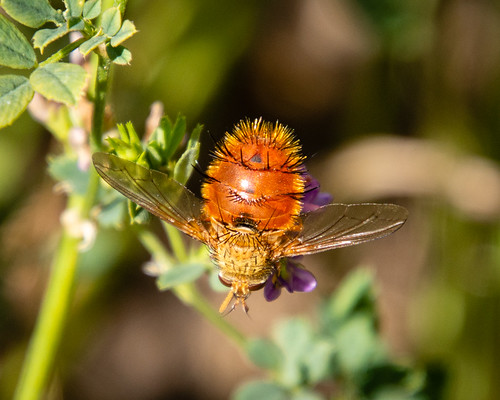
Tachinid fly - Adejeania vexatrix ?

Insectaggedon – the media has been full of stories about the rapid decline in the world’s insect population. And yet, is it any wonder? Pronghorn are graceful, owls are mysterious, pandas are adorable, but we don’t show insects much love. In fact, our first reaction when we spot a spider in the house or an ant hill in the garden is to destroy it. We spray our gardens and crops with pesticides, paying little attention to the impact this will have on other wildlife or the environment as a whole.

That’s Amazing 
“Well, let me tell you, ants are the dominant insects. They make up as much as a quarter of the biomass of all insects in the world. They are the principal predators. They're the cemetery workers.” (E. O. Wilson) 

There are 30 million different species of insects (as opposed to 5000 species of the furry animals we find easy to love). That’s 60% of all animal species. Put them all together and they would “outweigh all the fish in the oceans and all the livestock munching grass on land.” They play a vital role in our ecosystem – from pollinating crops to recycling dead trees and controlling pests.

Insects are also amazingly beautiful. Fireflies light up the night. Jewel beetles have iridescent, brilliantly coloured bodies. The wings of butterflies and moths offer a diversity of rich colours and patterns. The Flight of the Bumblebee by Nikolai Rimsky-Korsakov pays homage to a common insect.

Insects have influenced both religion and culture. The Buddhists viewed cicadas as a symbol of resurrection because of their cyclical reappearances. The humble dung beetle played a role in ancient Egyptian art and religion. “People saw how the scarab beetle (Scarabaeus sacer) rolled a ball of manure along the ground and concluded that a giant celestial dung beetle must roll the sun across the sky each day.” Silkworms – and the silk they produced – were a driving force in opening up trade between Europe and China and led Christopher Columbus to the Americas in his search for the quickest sea route to the Orient.

Engineers designing shock absorbers for a fighter jet studied grasshopper legs. The venom from deathstalker scorpions is being used in clinical trials to fight cancer. Cockroaches thrive in filthy environments thanks to the super antibiotics in their brains – antibiotics that may someday help humans to fight off bacteria that no longer respond to current medical options.

Many insects display superpowers that cannot be matched by humans. Dragonflies have very small brains, but they successfully capture their prey 97% of the time by focusing on one particular insect and ignoring all the rest. When threatened, bombardier beetles spray their attacker with a “boiling hot mixture of caustic chemicals. . . . The beetle itself is not harmed by the fiery chemical reaction. Using two special chambers inside the abdomen, the bombardier beetle mixes potent chemicals and uses an enzymatic trigger to heat and release them.”

Insects are often caring parents: “Giant water bug fathers carry their eggs on their backs, keeping them oxygenated and hydrated. . . . Bess beetles form family units, with both parents working together to rear their young. Their relationship is so sophisticated they've developed their own vocabulary and communicate with each other by squeaking.”

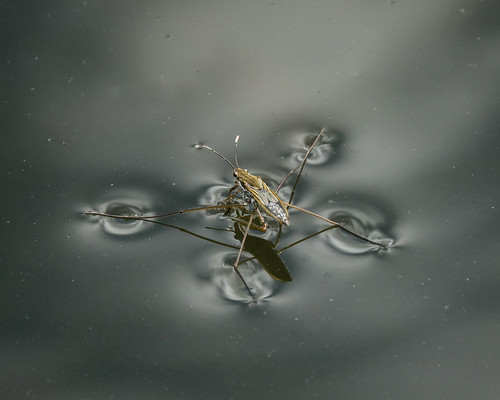
water strider

All I’m Asking is for a Little Respect
“If all mankind were to disappear, the world would regenerate back to the rich state of equilibrium that existed ten thousand years ago. If insects were to vanish, the environment would collapse into chaos.” (E. O. Wilson) 

Reports of declining insect numbers have dominated the media over the past few years. Although there have been flaws or gaps in some of the research,* there is no doubting that the populations of many insect species are declining rapidly.

Despite recognition that shrinking insect populations will have harmful consequences to the ecosystem as a whole, there has been a limited concrete response. Researchers deplore the lack of funding, noting that only a few species are being monitored on a consistent basis – honey bees, monarch butterflies, some species of mosquitoes. What funding is available is often focused on protecting agricultural crops and doesn’t acknowledge the broader relevance of insects to our ecosystem.

The lack of awareness of insects’ importance is demonstrated by their absence from educational curriculum and textbooks. A study of 88 introductory biology textbooks published since 2000 showed that they “contain 75% less insect-related material than those published before 1960; the average modern text now allots just 5.67 pages to insects, accounting for a mere 0.59% of book content.” The study’s authors “place these trends within a larger underrepresentation of insects in science, and also a decline in appreciation for both biodiversity and natural history. Pages once devoted to animals and plants are now reserved for genetics and cell biology. The effect is one of detachment from nature in general and insects in particular.”

Conservation organizations fail to counter society’s lack of respect for insects. The cuddly panda is the icon of the World Wildlife Fund. The Canadian Wildlife Federation invites donors to adopt “a beautiful bear . . . a whimsical wolf . . . a magnificent moose” – there’s not even a cute little ladybug. 

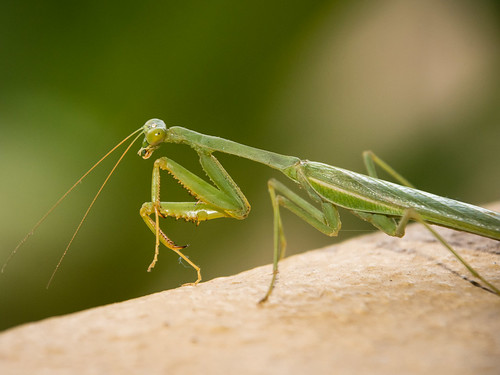
praying mantis

Unsung Heroes
“I'm obsessed with insects, particularly insect flight. I think the evolution of insect flight is perhaps one of the most important events in the history of life. Without insects, there'd be no flowering plants. Without flowering plants, there would be no clever, fruit-eating primates giving TED Talks.” (Michael Dickinson) 

Paul Manning, a doctoral student in zoology at the University of Oxford, describes insects as “the unsung heroes, the little things that run the world” but urges people to move beyond their functional importance to a broader appreciation of insects: “When we experience the fascinating world of insects firsthand, the dominant dialogue of ‘insects as ecosystem service providers’ begins to shift. Instead, we start to recognise the beauty, mystery and wonder of the insect world for what it is: beautiful, mysterious and wonderful. Through building a stronger appreciation of the important inherent value of insect biodiversity, hopefully ‘what do they do for us?’ will share more space with ‘what can we do for them?’ ”

* The recent analysis of declining insect populations published in Biological Conservation was a review of recent literature, but its choice of search terms meant it only included articles that reported a decline in insect populations and reported primarily on the northern hemisphere.

Sunday, 6 January 2019

Zoos in the 21st Century

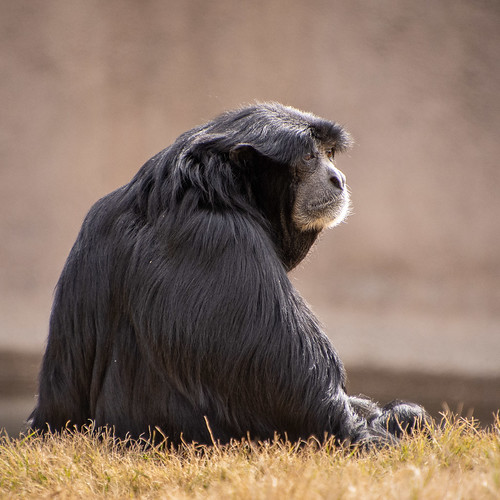
Siamang

Zoos tend to generate opposing points of view. Some people wholeheartedly endorse them as a means of promoting interaction between humans and other animals, educating the public about wild animals, and assisting with species conservation. Other people oppose keeping animals in captivity indefinitely in order to entertain humans.

The City of Saskatoon has developed a Master Plan outlining their ideas for the future of the Saskatoon Forestry Farm Park and Zoo. The Plan pays a lot of attention to services (i.e. parking) and a shared vision (botanical, zoological, heritage, and recreation), but there is little information about how they intend to develop a world-class zoo in the 21st century.

Zoos are very popular and they generate a lot of money so they are unlikely to cease to exist any time soon. But there are ways in which zoos could be improved to promote animal welfare, environmental education, and human/animal interaction. 

lionesses

Animal Welfare
“Zoos that support efforts to improve sub-standard zoos, zoos that take on non-breeding or old animals (often because no one else will), zoos that join forces with animal welfare groups to rescue animals, zoos that refuse to hold certain species and zoos that speak out against unethical and immoral welfare practices – these compassionate zoos should be the future.”

Zoos need to focus on individual animal welfare. Don’t break up friends and families by moving them from zoo to zoo. Don’t treat wildlife as breeding machines, expected to breed on demand. Stop unnecessary killing of animals simply because they are surplus to requirements.

Some animals do not do well in captivity (the most intelligent animals or large ones that need space to roam) and don’t belong in a zoo.

By working hand in hand with wildlife rehabilitation organizations, zoos can serve as a refuge for rehabilitated wildlife. Whether it’s an eagle that can no longer fly or an orphaned bear cub that cannot be returned to the wild, these animals can be a wonderful introduction to the amazing diversity of local wildlife.

More and more, zoo visitors can observe wildlife in large, naturalistic enclosures. But, “as night falls and the facilities need to be cleaned, the animals are commonly led into small concrete holding areas.” This can lead to negative changes in behaviour and should be stopped.

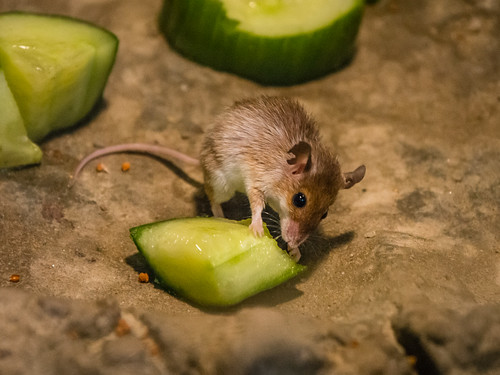
pygmy mouse

Pro-Environmental Behaviour
“The world-class zoo or aquarium of the 21st century will not consider itself to have an effective education programme simply because it displays graphics for visitors. . . . In order to be outstanding, conservation education programmes must inspire people to change their attitudes and behaviour to benefit wildlife and their habitats.” 

Zoos tend to house charismatic animals with big eyes, cuddly fur, and high profiles. Less attractive animals are under-represented. Instead, zoos could shift to smaller animals, such as reptiles and amphibians. “Exotic insects like the Madagascar hissing cockroach could teach visitors how dynamic ecologies work and still let young people encounter animal life up close. An emphasis on endangered amphibians like the Panamanian golden frog would allow for a wide-ranging set of exhibits on the vulnerability of delicate ecosystems around the world.”

Graphic displays should move beyond informing visitors of biological facts or the loss of biodiversity to actively promoting pro-environmental behaviour. This could include linking problems with human actions and providing comparisons between human and non-human behaviour.

Zoos could skip the Noah’s Ark approach by housing a larger population of a smaller number of species from a specific geographical area. Grouping animals from a specific environment to show how they interact would emphasize the importance of conserving habitats rather than individual species.

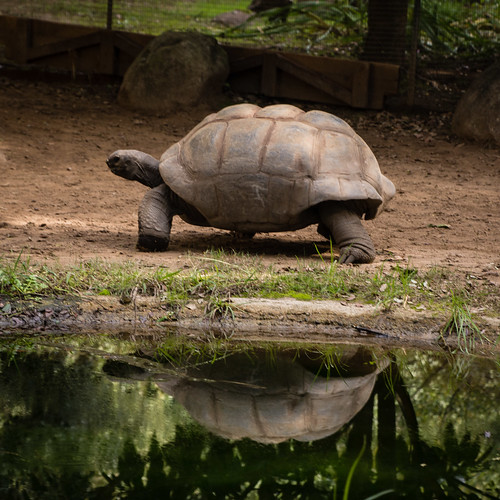
Galapagos turtle
Turtle Sanctuary, Ajaccio, Corsica

Enhanced Human/Animal Interaction
“Zoos should move forward in developing a social movement for conservation. They can effectively drive social innovation in the relationship between humans and animals by bringing new voices to conservation and connecting humans to the ultimate responsibility we have to care for our planet.” 

Zoos are often the only place where urban children encounter living animals. As such, it’s important to demonstrate healthy animal behaviours and avoid the mixed messages conveyed by petting zoos and horse-drawn carriages.

Visitor behaviour can have an effect on the wildlife. “Noisy visitors and larger groups will have a larger impact than solitary quiet visitors. Visitors that offer food, eat and smoke around enclosures will also have a negative impact on animal behaviour.” Visual barriers and sound-absorbing materials are two of the ways that enclosures can be designed to protect the animals.

Further Information:
Can a More Compassionate Zoo Improve Animal Welfare
Characteristics of a World-Class Zoo or Aquarium in the 21st Century
Different Views on How to Make Zoos More Resident-Friendly
Expert Offers Suggestions on Improving Zoos and Aquariums
Fostering a New Relationship Between Humans and Nature
How to Make Zoos Happier Places 
How to Save Zoos? Focus on Education, Conservation
Zoos Aren’t Victorian-era Throwbacks: They’re Important in Saving Species

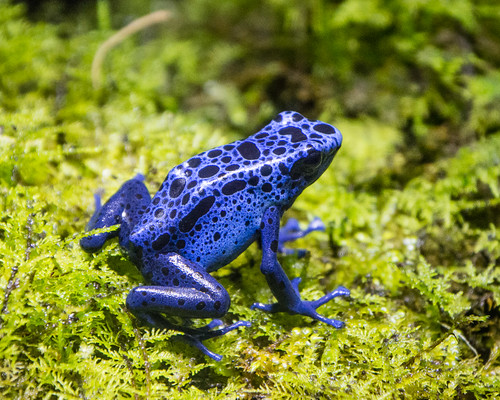
poison dart frog

Tuesday, 6 November 2018

EcoSask News, November 6, 2018

seeds and bridge

Upcoming Events 
Wildlife Disease Ecology, Nov. 9 (Saskatoon) 
The WildEcol seminar series is held at 3:30 pm, every other Friday, on the U of S campus:
Nov. 9 – Wildlife disease ecology

Decorate a Tree, Nov. 14 (Moose Jaw) 
Decorate a tree for birds and wildlife at the 6:30 pm, Nov. 14, meeting of the Moose Jaw Nature Society.

Regina Beach Enviro Collective, Nov. 14 (Regina Beach) 
The Regina Beach Enviro Collective will be holding their first meeting at 7:30 pm, Nov. 14, at Regina Beach.

Bat Migration, Nov. 15 (webinar) 
Erin Swerdfeger will discuss bat landscape use during migration in Saskatchewan in a noon-hour webinar hosted by SK PCAP on Nov. 15.

SK Breeding Bird Atlas, Nov. 15 (Saskatoon) 
Kiel Drake will update the Saskatoon Nature Society on the SK Breeding Bird Atlas at 7:30 pm, Nov. 15.

Sustainability on Campus, Nov. 16 (Saskatoon) 
Join the U of S Office of Sustainability from 12-1 pm or over a pint at 5 pm, every third Friday of the month.

Repair Café Prince Albert, Nov. 17 (Prince Albert) 
Share and learn skills to repair things at Repair Café Prince Albert from 1-4 pm, Nov. 17.

Household Hazardous Waste Day (Saskatoon) 
You can dispose of household hazardous waste in Saskatoon from 8 am – 2:30 pm, Nov. 17.

bare branches by the river

Saskatoon Nature Society Field Trips 
Nov. 11, 1-5 pm, Pike Lake Birding
Nov. 25, 2-3 pm, Pre-Grey Cup Birding, President Murray Park
Everyone is welcome. Check the Saskatoon Nature Society’s website for full details and updated information.

A full list of upcoming events can be found on the EcoFriendly Sask Calendar 

In the News
The Saskatoon Nature Society is accepting applications by December 31, 2018, for the Kids in Nature grant. Additional information is available online.

Join an Enviro Collective group in Saskatchewan. “It’s a group of people who meet. Like a 'book' club, we’ll eat, drink and socialize but while we are hanging out, we’ll also be engaging in meaningful discussions about how we can take individual and collective steps to live more environmentally friendly lives. What’s potentially different about this environmental initiative is that we’re going to make it fun. And by getting together as a collective, we might feel more inspired than by simply acting on our own.”

The Canadian Network for Environmental Education and Communication is inviting proposals for presentations, workshops, or posters on Action on Climate Change through Education for the May 10-12 conference in Saskatoon. The deadline is January 15.

The Richard St. Barbe Baker Afforestation Area advises drivers to slow down and look out for deer on Valley Road and Cedar Villa Road.

Churchill Community High School hosted the 2nd Northern Saskatchewan Eco Conference Oct. 26-27.

“The loss of biodiversity is a silent killer” - stop biodiversity loss or we could face our own extinction.

11 wildly coloured moths to brighten your day.

EcoSask News is a weekly round-up of local news and events. Email us if you have items you would like us to include. 

You can follow EcoFriendly Sask by liking us on Facebook, following us on Twitter, or by email (top right corner).

Thursday, 19 July 2018

Prairie Beauty: NCC's Dundurn Property

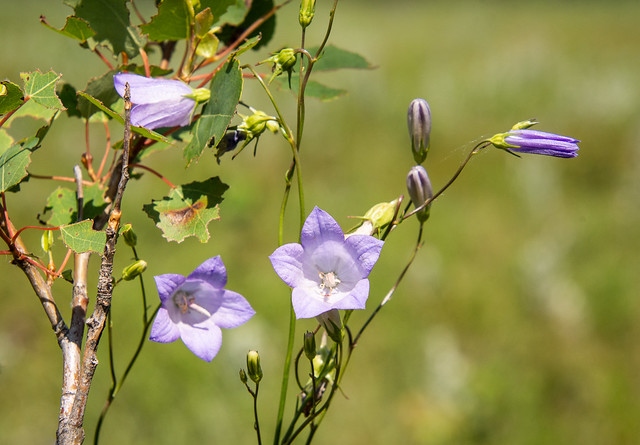
Harebell

As we bump our way down a leafy lane, a white-tailed deer pokes its head out to see who’s come to visit. Verity Moore-Wright, Acting Director of Development, and Ryan Dudragne, Conservation Science Co-ordinator – LIS, have invited us (Andrew and Penny McKinlay) to join them on a hike around one of the Nature Conservancy of Canada’s newest properties near Dundurn.

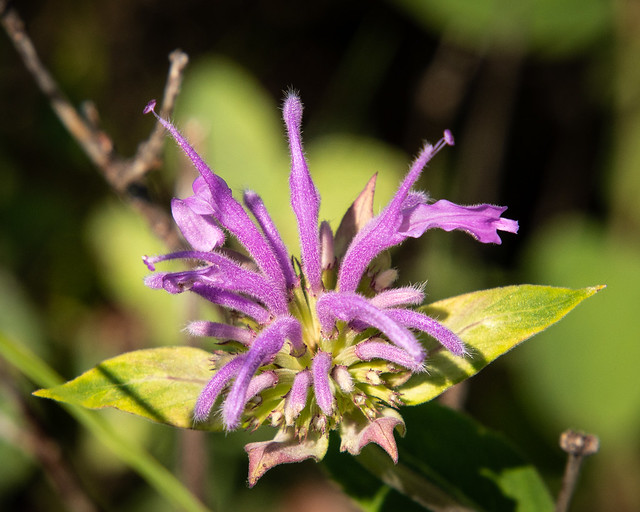
Rolling hills – stabilized sand dunes – stretch out to a clear blue sky. A red-tailed hawk soars overhead and there are treasures to be found at our feet. A patch of wild bergamot is flowering near the entrance to the property attracting long-tongued bees, bee flies, butterflies, and moths. Wasps may steal the nectar by drilling a hole in the nectar tubes.

Bergamot

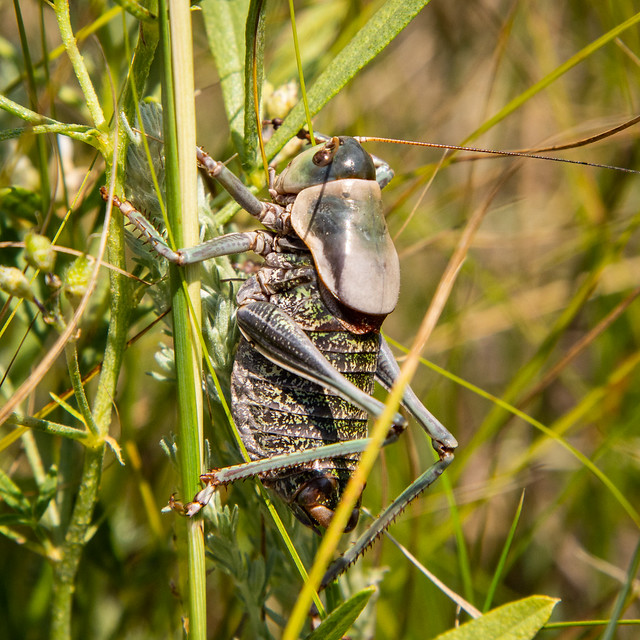
We’re delighted to spot a hunch-backed Mormon cricket. It’s not a cricket at all but a shield-backed katydid. Although they have no wings, they can travel up to 2 km a day when they’re swarming, heading out in the thousands to find food.

Mormon cricket

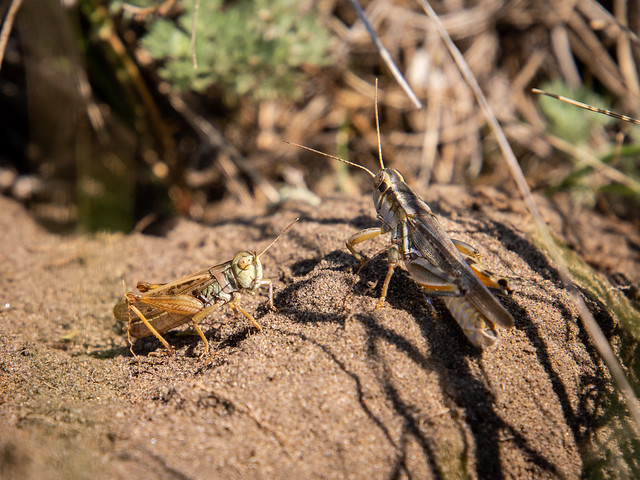
There are plenty of other grasshoppers and katydids. We tend to think of grasshoppers as pests, but only a few of them destroy crops. There is such variety in their sizes, colors, and patterns.

grasshoppers

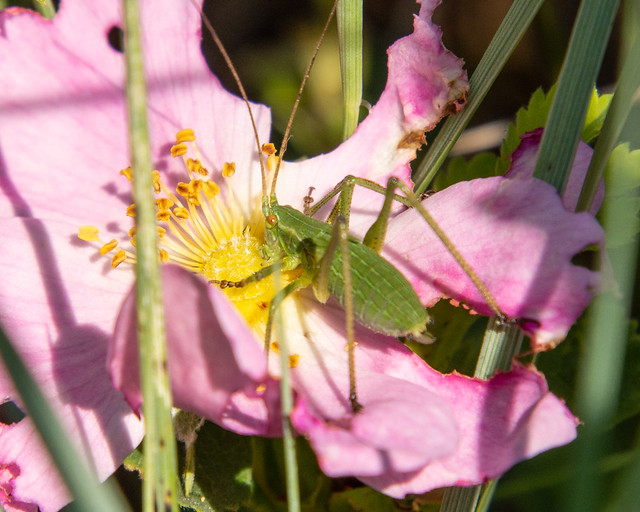
We weren't initially able to identify the following insect, but, with help from iNaturalist, we now know it's a Broad-winged Bush Katydid (scudderia pistillata) late instar nymph.

insect on wild rose

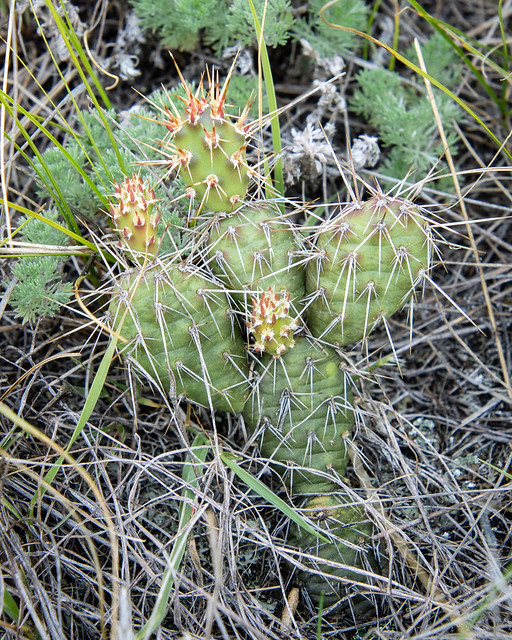
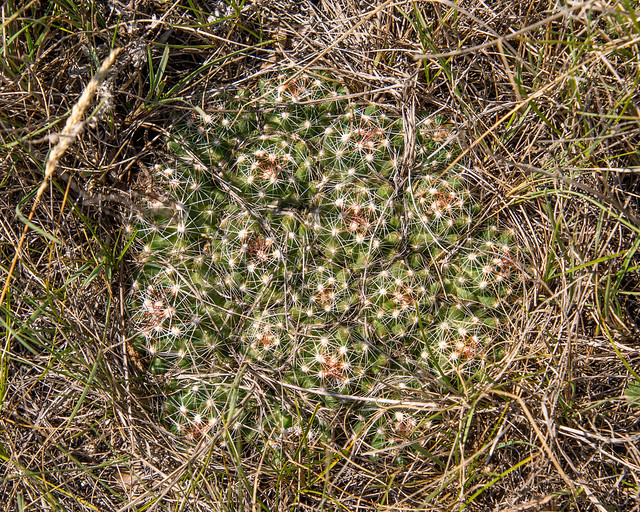
We need to watch where we step as there are plenty of cactus – both pincushion and prickly pear.

Prickly-pear cactus

pincushion cactus

The rush skeleton plant, with next to no leaves, is another plant that can tolerate dry conditions.

Rush skeleton plant

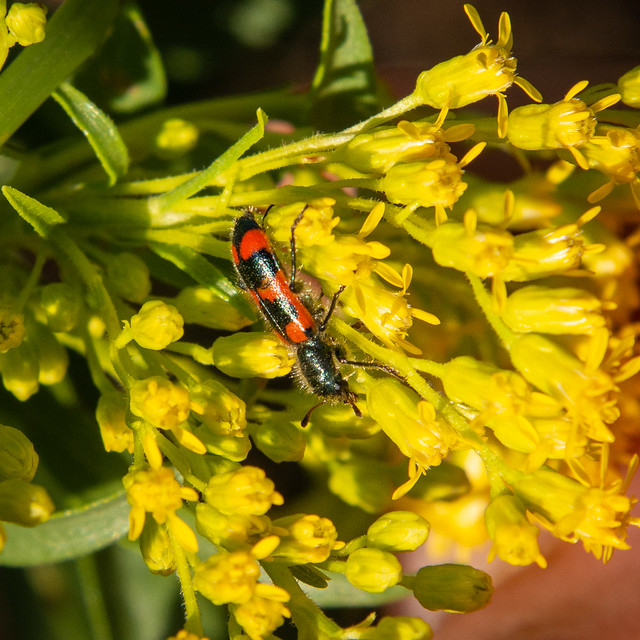
The red-blue checkered beetle stands out against the goldenrod’s bright yellow flowers. Pollen will stick to the long hairs on its body and legs and be passed along to other plants.

Red-blue checkered beetle on low goldenrod

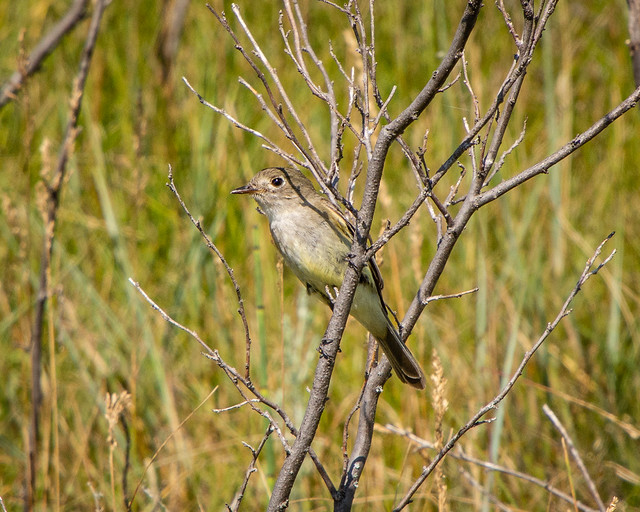
A flycatcher keeps a close eye on us as we pass by, but many of the site’s inhabitants are harder to spot. They do, however, leave us clues – moose poop (these guys are part of Ryan Brook’s Saskatchewan Farmland Moose Project), a freshly dug badger hole, heaps of loose dirt left behind by pocket gophers. If you look really closely at the loose dirt, you’ll spot small round holes indicating the homes of tiger beetles. Ryan describes them as predatory bullies, dragging other insects into their hole or chasing them down.

Alder Flycatcher (?)

We’re hot and hungry after a long walk around the property but very grateful to Nature Conservancy of Canada for inviting us out to see the site and for the important work they do in protecting natural areas and maintaining biodiversity. And a special thank you to Ryan who was so helpful in identifying all the fascinating species we were fortunate enough to spot.

For more information about the Dundurn site and the work of the Nature Conservancy, take a look at the article we posted in May.

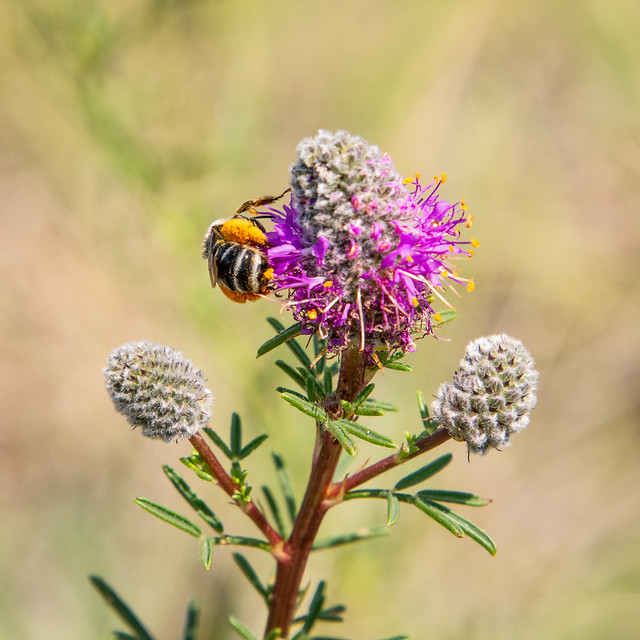
bee on purple prairie clover

Tuesday, 29 May 2018

EcoSask News, May 29, 2018

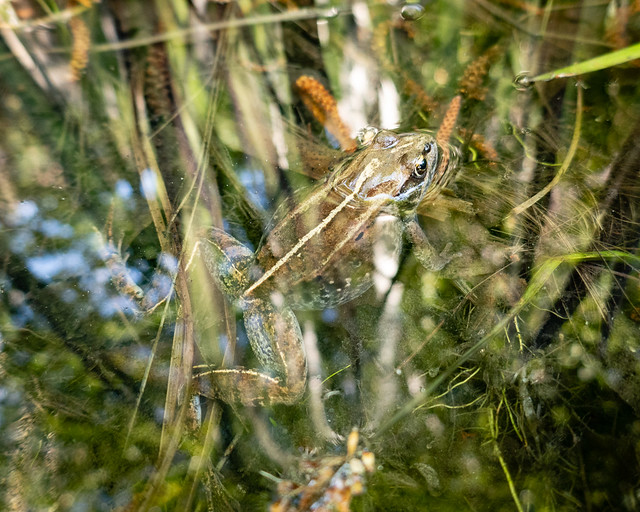
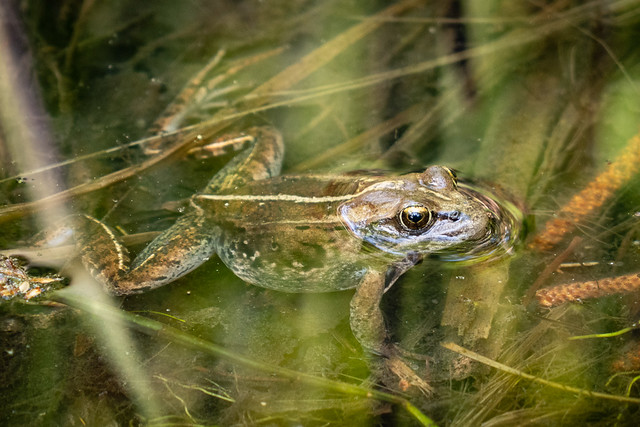
Wood frog

Upcoming Events
Repair Café, June 2 (Prince Albert) 
Work together to repair household items and on bicycle maintenance at Repair Café Prince Albert from 1-4 pm, June 2.

Low-Water Gardening Workshop, June 2 (Saskatoon) 
Saskatoon Food Bank & Learning Centre’s Garden Patch is hosting over 30 workshops this summer. They’ll be discussing low-water gardening from 1-2:30 pm, June 2.

SaskOil Revisited, June 3 (Saskatoon)
Join Briarpatch Magazine and Climate Justice Saskatoon from 3-5 pm, June 3, to discuss whether Saskatchewan could resurrect the idea of a Crown-owned oil company to combat climate change and colonialism.

SES Fun Run, June 3 (Saskatoon) 
Support the Saskatchewan Environmental Society by participating in a trail fun run from 9 am-12 pm, June 3.

Birding Blitz, June 5 (Yorkton) 
Yellowhead Flyway Birding Trail is hosting a birding blitz on June 5 to contribute to the SK Breeding Bird Atlas. All birders of all expertise welcome. Contact Paula (306 782-7287) or phmaier@imagewireless.ca or Akusib (SKatlasRegion12@gmail.com)

Wood Products & Building Systems, June 6 (Saskatoon) 
Adam Robertson, Canadian Wood Council, will discuss Wood Products and Building Systems: Climate Change Benefits at the June 6 meeting of the Saskatchewan Energy Management Task Force.

Wascana Solar Co-operative, June 7 (Regina) 
Wascana Solar Co-operative is meeting from 8-9:30 pm, June 7, to gauge members’ interest in purchasing shares in a large-scale solar installation. Contact the Co-op if you are interested in becoming a member and attending the meeting.

Blue, June 7 (Saskatoon) 
Celebrate World Oceans Day at a screening of Blue at 7 pm, June 7, in Saskatoon.

Birds of a Feather, June 7 (Saskatoon) 
Meewasin Valley Authority is hosting a grassland bird survey at Cranberry Flats from 4-8 am, June 12.

Project Wet, June 9 (Regina) 
Project Wet, to be offered in Regina on June 9, offers K-12 classroom teachers resources and activities about water.

Wood frog

Looking Ahead
Prairie Dog Ecosystem Research, June/July/Sept (Grasslands National Park) 
Help Calgary Zoo with their Prairie Dog ecosystem research project on one of the following dates: June 10-15, June 24-29, July 15-20, or Sept. 2-7.

Photography Workshop, June 15-16 (Grasslands National Park) 
Practise taking night-sky photographs at a workshop in Grasslands National Park, June 15-16.

A full list of upcoming events can be found on the EcoFriendly Sask Calendar 

In the News
The human impact on the natural world is immense. 96% of mammals are livestock and humans. Poultry make up 70% of all birds. We've destroyed 83% of wild mammals.

Should we fight for public lands because they provide us with recreation opportunities or because they support biodiversity? Should we only protect those plants and animals that directly benefit us or that we find beautiful — or should we fight for the entire community of life?

The City of Vaughan’s urban design guidelines are worth imitating. They cover dark sky lighting, bird-friendly design, wildlife corridors, pedestrian amenities, urban forest, green stormwater management, and climate change mitigation.

The City of Prince Albert is offering free public transit on National Clean Air Day, June 6. Are any other cities doing this?

For many municipalities in SK oil-producing regions, the costs of servicing the oil boom can outweigh the benefits and they’re relying on oil industry philanthropy for essential services.

EcoSask News is a weekly round-up of local news and events. Email us if you have items you would like us to include. 

You can follow EcoFriendly Sask by liking us on Facebook, following us on Twitter, or by email (top right corner).

Tuesday, 1 May 2018

EcoSask News, May 1, 2018

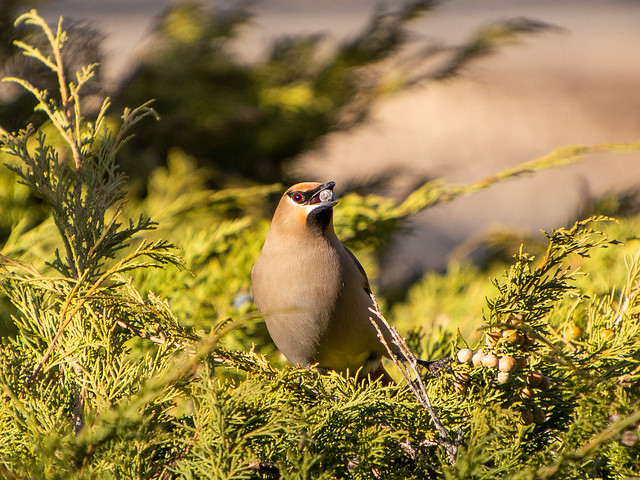
Bohemian Waxwing eating juniper berries

The sun is shining and we’re heading outdoors - with bikes, Jane’s Walks, and summer camps for kids.
 
Upcoming Events
Household Hazardous Waste Day, May 4 (Regina)
City of Regina is holding household hazardous waste days on May 4 (4-7 pm) & May 5 (9 am-3:45 pm).
Jane’s Walk, May 4-6 (Regina, Saskatoon)
Take a look at the Jane’s Walks being offered in Saskatoon and Regina May 4-6. In Saskatoon, you can visit trees in Buena Vista, share your experiences as a pedestrian with the City, or join a walk at the Northeast Swale. Nature Conservancy of Canada is leading a nature walk in Regina’s Wascana Marsh.
Repair Café, May 5 (Prince Albert)
Work together to repair household items and bicycles at Repair Café Prince Albert from 1-4 pm, May 5.

Spiders & the Prairie Gardener, May 5 (Saskatoon)
Learn to identify the spiders in your garden and appreciate their contributions to a healthy garden ecosystem at 1 pm, May 5, at the University of Saskatchewan.

Predatory Birds in your Yard, May 7 (Saskatoon)
Lyndon Penner will discuss some of Saskatchewan’s most interesting birds of prey at 7 pm, May 7, at Wild Birds Unlimited.

Bats, May 12 (Regina)
Learn interesting facts about bats from University of Regina researchers from 1-2 pm, May 12, Prince of Wales Branch Library.

Making Bat Houses, May 12 (Regina)
Learn how to build a home for bats from 2-4 pm, May 12, Prince of Wales Branch Library.

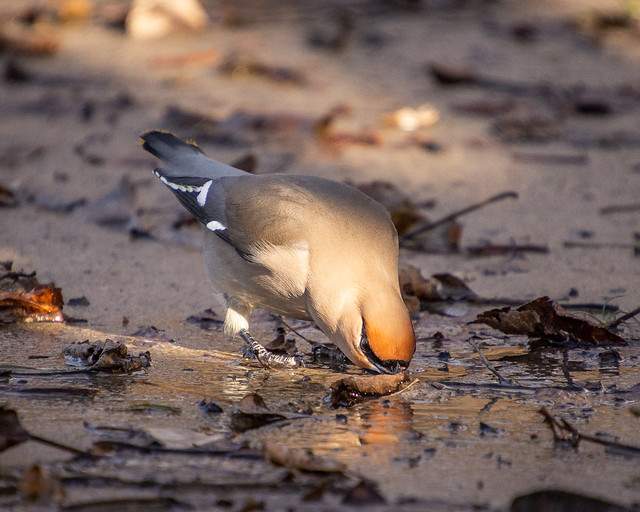
Bohemian Waxwing drinking from puddle

Great Canadian Birdathon, May 12 (Regina)
Nature Saskatchewan will be hosting the Great Canadian Birdathon on May 12 starting with early morning birding around Wascana Lake followed by an afternoon birding at Last Mountain Lake.

Sprucin’ Up Meeting Lake, May 12 (Meeting Lake)
Join Nature Conservancy of Canada in planting spruce, birch, and dogwood at Meeting Lake 3 from 9 am-3 pm, May 12.

Ecological Literacy, May 12 (Saskatoon)
Lichen Nature will be offering monthly ecological literacy sessions for the remainder of 2018. The first session is from 12:30-4:30 pm, May 12.

Looking Ahead
Camp Wild Roots, July 8-14 & Aug. 26-31
Camp Wild Roots is offering two summer camps for kids to learn about growing and foraging food, permaculture, and wilderness skills. The July 8-14 camp is in Dunblane. The Aug. 26-31 camp is at Aloha Farm east of Regina and will be followed by a 3-day food and music festival.

Science Centre Day Camp, Aug. 21-24 (Prince Albert)
The Saskatchewan Science Centre is hosting a day camp in Prince Albert for 8-13 year olds from Aug. 21-24.

A full list of upcoming events can be found on the EcoFriendly Sask Calendar

In the News
The global energy transition is happening. Why are Canadians distracted by pipelines?

Montana First Nation has established a solar energy company providing training and work opportunities for the community.

Urban climate adaptation needs to include biodiversity. For example, Amsterdam is "enlarging protected areas to enhance extreme-weather resilience and allow for animal migration" while London's Walthamstow Wetlands are enjoyed by birds and humans.

Canada's new methane regulations will be able to cut methane pollution by up to 45% in the next 8 years.

From flat-pack coffins to water cremation: how to have an environmentally friendly death.

EcoSask News is a weekly round-up of local news and events. Email us if you have items you would like us to include. 

You can follow EcoFriendly Sask by liking us on Facebook, following us on Twitter, or by email (top right corner).