Showing posts with label Consumerism. Show all posts

Tuesday, 11 January 2022

EcoSask News, January 11, 2021

pool surrounded by greenery

Upcoming Events 
EMTF-SK is hosting an online presentation on developing Saskatchewan’s sustainable energy economy at 7:30 am, Jan. 12. 

The Johnson-Shoyama Graduate School of Public Policy is hosting a video conference on building an equitable Canadian science system from 12-1 pm, Jan. 13. 

Nature Regina is hosting an online presentation on Indigenous peoples’ rights and environmental protection at 7 pm, Jan. 17. 

Saskatoon Nature Society is hosting an online presentation on invertebrate diversity, distribution, and ecology at 7:30 pm, Jan. 20. 

Nature Saskatchewan is hosting an online nature trivia night at 7 pm, Feb. 9. 

Full details on all upcoming events are listed on the EcoFriendly Sask Calendar 

Consumer Choices 
“The most important thing consumers can do is to educate themselves about their purchases.” Vegan leather is a petroleum byproduct. Plant-based leather is a better option. [Inhabitat] 

The Alberta EcoTrust Foundation, with support from the Alberta Real Estate Foundation, is undertaking a pilot project to provide digital home energy labels for houses in Calgary and Edmonton. The label will show how much energy the home uses and compare it to other similar homes. [Alberta EcoTrust] This is in line with France’s plan to notify potential home owners of a property’s energy rating. [Cities in the Next Decade] 

“In the past decade alone, $40 trillion has been divested from fossil fuels ... Divestment is showing in real time that everyday people can take part in the fight against climate change, and it’s demonstrating to financial firms that climate change is no longer a worthy investment.” [Yes Magazine] 

French car ads will be required to discourage driving and promote alternate forms of transportation. [Yale Environment 360]
 
Downy (or Hairy) woodpecker

Industry & Mining 
A survey of participants in the Alberta Oilsands Monitoring Program finds monitoring to be ineffective with crucial questions being left unanswered. [La Ronge Now] 

Half of global passenger-vehicle sales are expected to be electric by 2035, indicating a shift from a fuel-intensive to a material-intensive system. This will entail two big challenges. “One is how to cut down on the metals in batteries that are scarce, expensive, or problematic because their mining carries harsh environmental and social costs. Another is to improve battery recycling, so that the valuable metals in spent car batteries can be efficiently reused.” [Nature] 

Pembina Institute has published a report on the Status of Boreal Woodland Caribou Conservation in Canada. It finds that “to help the species recover conservation efforts to protect the last remaining tracts of critical habitat must be prioritized. The habitats that caribou inhabit – boreal forests and peatlands – are among the most carbon-rich in the world. When caribou habitat is lost to activities such as oil and gas development and logging, significant amounts of greenhouse gases (GHGs) are released. On the other hand, when caribou habitat is conserved carbon remains in the ground.” [Pembina] 

The Province of Saskatchewan’s “weak response to the climate emergency amounts to an implicit denial … The provincial government is clinging to the wrong side of history by failing to meaningfully collaborate with people in Saskatchewan — both Indigenous and non-Indigenous — and take corrective action.” [The Narwhal] 

Protecting Biodiversity 
Fungal networks support much of life on earth. SPUN aims to accelerate efforts to protect underground ecosystems largely absent from conservation and climate agendas. [SPUN] 

Protecting roadless areas could go a long way in helping to reach conservation goals and slow extinctions – a point worth considering in Canada where we continue to add new roads. [The Revelator] 

Starting in 2023, farmers in England will be paid for nature restoration and creation on their land (creation of hedgerows and wildflower meadows, wetland restoration). [Edie] 

EcoFriendly Sask supports Saskatchewan environmental initiatives through an online publication, an events calendar, small grants, and the Nature Companion website/app. You can follow EcoFriendly Sask by liking us on Facebook, following us on Twitter, or subscribing by email (top right corner).

Tuesday, 9 April 2019

EcoSask News, April 9, 2019

Untitled

Upcoming Events
Climate Reality in SK, Apr. 12 (Swift Current)
Margaret Asmuss will discuss how climate change is affecting Saskatchewan from 6:30-9:30 pm, Apr. 12, at First United Church.

Survey Study Designs, Apr. 12 (Saskatoon)
Jean-Michel DeVink is tentatively scheduled to talk about survey study designs: why details matter to the question being asked at 3:30 pm, Apr. 12, as part of the WildEcol seminar series at the U of S.

Hidden Valley, Crocuses & Bluebirds, Apr. 13 (Regina)
Join Nature Regina on their field trip along the Qu’Appelle Valley as they look for bluebirds and other signs of spring from 9:30 am-1 pm, Apr. 13.

Wildlife Rescue Info Session, Apr. 13 (Saskatoon)
A wildlife rescue orientation session is being held at 1 pm, Apr. 13, in Saskatoon. There will be rescue training after the orientation from 2-3 pm. Email volunteer@wrsos.org to save your spot.

Native Plants, Apr. 14 (Regina)
Join Chet Neufeld, NPSS, to find out how to bring biodiversity into your yard with native plants from 2:30-3:30 pm, Apr. 14, at the Prince of Wales branch of the Regina Public Library.

Ferruginous Hawk Ecology, Apr. 15 (Regina)
Janet Ng will summarize her research on ferruginous hawk ecology from 7:30-9:30 pm, at the Apr. 15 meeting of Nature Regina.

90th Birthday Celebrations, Apr. 15 (Saskatoon)
A public event is being held at 7:30 pm, Apr. 15, to celebrate the 90th anniversary of the University of Saskatchewan Observatory. Speakers will discuss The Observatory’s history and the history of astronomy. A walk to The Observatory and cake will follow.

Beginner Bird Id Workshop, Apr. 16 (Yorkton) 
The Breeding Bird Atlas project is offering a free workshop on beginner bird identification from 7-9 pm, Apr. 16, in Yorkton.

Post-Industrial Consumerism, Apr. 16 (Saskatoon)
Darrin Qualman will explore sustainability and make a case for restructuring the core processes of industrial civilization from 7-8:30 pm, Apr. 16.

Breeding Bird Atlas, Apr. 17 (Preeceville)
Find out more about the Breeding Bird Atlas project at the 7 pm, Apr. 17, meeting of the Kelsey Ecological Society.

Outdoor/Environmental Ed Conversation, Apr. 17 (Swift Current)
SaskOutdoors is hosting an outdoor and environmental education community conversation from 7-8:30 pm, Apr. 17, in Swift Current.

Climate Crisis & its Solutions, Apr. 17 (Regina)
Join Jared Clarke to discuss the climate crisis and its solutions from 7-8:30 pm, Apr. 17, at the Sunrise branch of the Regina Public Library.

SK Environmental Society AGM, Apr. 17 (Saskatoon)
Dr. Irena Creed, Executive Director, School of Environment & Sustainability, U of S, will be the guest speaker at the Saskatchewan Environmental Society’s annual general meeting starting at 6 pm, Apr. 17.

Composting 101, Apr. 18 (Moose Jaw)
Find out how to choose, set up, and maintain a compost bin at 2:30 pm, Apr. 18, at the Moose Jaw Public Library.

Nature-based Solutions for Climate Change, Apr. 18 (Saskatoon)
Branimir Gjetvaj will discuss nature-based solutions for climate change mitigation and adaptation at the 7:30 pm, Apr. 18, meeting of the Saskatoon Nature Society.

Life off Grid, Apr. 18 (Saskatoon)
Watch a film about people who have built their lives around renewable energy from 2-3 pm, Apr. 18, at the Mayfair branch of the Saskatoon Public Library.

crow

Saskatoon Nature Society - Golden Eagles
Apr. 11, 9 am-1 pm – Crocuses & bluebirds at Beaver Creek
Apr. 18, 8 am – Bluebirds in the Pike Lake area
Apr. 25, 8 am – Brightwater Marsh and area
Retirees and partners who are interested in birds and the natural world are invited to participate.

A full list of upcoming events can be found on the EcoFriendly Sask Calendar 

In the News
Gravelbourg Green/Vert Initiatives is brand new! Let’s wish them well in their goal to inspire, facilitate, and promote sustainability in Gravelbourg and surrounding areas.

Prince Albert National Park’s healthy wolf population is a good indicator of a healthy ecological area. Wolves are typically scared of humans so there’s no reason to fear them.

The City of Swift Current is killing crows because they’re too noisy.

The U of S Arts Building is now using 50% less water following replacement of 75% of its toilets and urinals and the addition of aerators on 85% of the faucets.

Saskatchewan needs to change how it designs and builds communities and infrastructure in response to climate change, says John Pomeroy, Canada Research Chair in Water Resources and Climate Change. “We already had an extreme climate and to make it more extreme really pushes the viability of our agriculture, our cities, communities and our transportation networks.”

Moving freight or moving people – trains are far more energy efficient and less polluting than cars or airplanes.

EcoSask News is a weekly round-up of local news and events. Email us if you have items you would like us to include. 

You can follow EcoFriendly Sask by liking us on Facebook, following us on Twitter, or by email (top right corner).

Thursday, 18 January 2018

Have You Got an Environmental Project We Can Help You with in 2018?

White pelicans

What environmental issue is of greatest concern to you? Is it light pollution, protecting native grassland, food waste, urban wildlife, renewable energy? Have you got an idea that you think could make a difference but need some financial assistance? Maybe we can help.

EcoFriendly Action Grants (usually $500) are designed to assist individuals and organizations in Saskatchewan with projects that will protect, preserve, or repair the natural environment. This can be direct (habitat restoration, energy conservation) or indirect (environmental education, promotion of local natural habitats).

Have you got a project we can help you with in 2018? Here are some ideas to stimulate your imagination.

Co-existing with Wildlife
Living Skies Wildlife Rehabilitation and Saskatoon Nature Society sponsored a speaker at last year’s NatureCity Festival on safeguarding birds in the urban environment. What else can we do to promote harmonious co-existence with wildlife?

Beavers – We don’t have to slaughter beavers to stop them from harming our urban infrastructure. The Fur-Bearers offers technical workshops for municipal staff and community members regarding flow devices and other management options.

Coyotes – Common sense and education can help minimize human and wildlife encounters and conflict. Coyote Watch Canada assists communities with school and public education campaigns.

Untitled

Fashion
Water & Rivers – We wear jeans every day, giving little thought to their impact on the environment. Yet, each pair takes 920 gallons of water to make and their production releases toxic chemicals into some of the world’s most vital rivers. RiverBlue, a Canadian film exploring the problem and the solutions, is now available for screening in your community.

Excess Consumption
Share – Saskatoon’s Library of Things shares tools, camping gear, and kitchen gadgets that we only use occasionally. Would you like to start something similar in your community?

Reuse – Repair Cafés bring people together to fix what is broken. People with experience help those without. Clothes and electrical appliances are mended rather than thrown out. Would you like to host a repair café in your community?

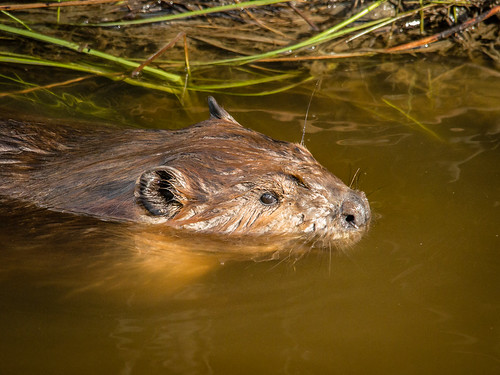
beaver

Urban Nature
Our towns and cities are biodiversity hotspots. What can we do to protect and support urban nature?

Pollinator Highways – The David Suzuki Foundation established its Butterflyway Project in 2017. Volunteers in five cities planted at least a dozen pollinator patches filled with native wildflowers to support butterflies, bees, and other pollinators as they travelled from one location to another.

Clean-Up Grants - Every spring, EcoFriendly Sask offers a limited number of $500 grants to clubs and voluntary organizations for cleaning up a natural area in or around their community.

For additional ideas, take a look at the accomplishments of the 2017 EcoFriendly Action Grant recipients.

Tuesday, 19 September 2017

EcoSask News, September 19, 2017

chipmunk

Upcoming Events
Ground Zero: A Delicate Balance, Sept. 21 (Saskatoon)
20 years after production, Thomega Entertainment is broadcasting its Sask-made documentary, Ground Zero: A Delicate Balance, followed by a discussion at 7 pm, Sept. 21, at Broadway Theatre.

Energy Dialogues, Sept. 23 (Regina)
Young adults (18-35) are invited to share what they want for the Canadian energy system by 2050 at Energy Dialogues, 1-3 pm, Sept. 23, in Regina.

Fall Photo Trip, Sept. 23 (Saskatoon)
Join the Saskatoon Camera Club on their Sept. 19 fall field trip to Gardiner Dam.

Breakthroughs in Water Security Research (Saskatoon & live stream video)
The Global Institute for Water Security and the School of Environment and Sustainability, U of S, are presenting a weekly seminar series featuring top water experts. Lectures are free and the public is welcome. All lectures will be available by live stream video. They are normally held on Wednesdays at 3:30 pm.
Sept. 27, 3:30 – The Soil is Not Enough

Adventures of a Wildlife Veterinarian, Sept. 24 (Saskatoon)
Jerry Haigh will present his book Porcupines to Polar Bears at 11 am, Sept. 24, at Saskatoon’s Word on the Street.

Greater Sage-Grouse Recovery Efforts in Montana, Sept. 27 (webinar)
Heather Nenninger, Sage Grouse Initiative, will speak about Greater Sage-Grouse Recovery Efforts in Montana at noon, Sept. 27, as part of SK PCAP’s Native Prairie Speaker Series.

Solar Eclipse Explanation, Sept. 27 (North Battleford)
Eclipse enthusiast Don MacKinnon will describe his recent trip to watch the August 2017 solar eclipse at 7 pm, Sept. 27, at the North Battleford Public Library.

Boreal Mushrooms, Sept. 27 & 29 (Prince Albert)
David Stevenson will give a presentation on boreal mushrooms at the John M. Cuelenaere Public Library at 7 pm, Sept. 27, to be followed up with a mushroom foray at Little Red Park at 10 am, Sept. 29.

Carbonless Concert X, Sept. 30 (Saskatoon)
Solar-powered Carbonless Concert X will be held from 6:30-9 pm, Sept. 30, at the Graduate Student Commons, U of S. Admission is free as the concert series celebrates its first-year anniversary.

The Lorax, Sept. 30 (Prince Albert)
Celebrate National Forest Week at a screening of The Lorax at 2:30 pm, Sept. 30, at the John M. Cuelenaere Public Library, Prince Albert.

An Evening with Jane Goodall, Sept. 30 (Saskatoon)
Dr. Jane Goodall will be speaking in Saskatoon at 7 pm, Sept. 30.

Nature Journaling Workshop, Oct. 1 (Saskatoon)
SaskOutdoors is offering a nature journaling workshop from 1-4 pm, Oct. 1, in Saskatoon.

Rob Dumont Energy Management Awards Dinner, Oct. 4 (Saskatoon)
Attend the Rob Dumont Energy Management Awards Dinner on Oct. 4 in Saskatoon honouring the lifetime achievement award winner Harold Orr.

A full list of upcoming events can be found on the EcoFriendly Sask Calendar


Wanted: Wildlife Rehab Volunteers 
The Wildlife Rehabilitation Society of Saskatchewan is eager for more volunteers in southern Saskatchewan. If you are interested in answering the phone or transporting injured animals, email either jamilleheer@hotmail.com or miss.pippin@hotmail.com. They’ll send you details about an upcoming volunteer orientation in Regina.

In the News 
Take your weird bug questions to Saskatoon zoologist's Prairie Whatsits

Electric light has fundamentally altered our lives, our bodies, and the very nature of our sleep [video]

"Discontentment is the motivation for our restless desire to spend. Consumer products must promise paradise. But they must systematically deliver much, much less. . . . The success of consumer society lies not in meeting our needs but in its spectacular ability to repeatedly disappoint us."

Meet Canada’s bats in the Toronto Zoo’s publication, Bats: A Conservation Guide

During Hurricane Irma’s power outages, some houses kept the lights on with solar and batteries

EcoSask News is a weekly round-up of local news and events. Email us if you have items you would like us to include. 

You can follow EcoFriendly Sask by liking us on Facebook, following us on Twitter, or by email (top right corner).


An EcoFriendly Action Grant to Fruit for Thought Regina helps to ensure that unwanted fruit is picked, shared and preserved, and waste is composted

Thursday, 25 February 2016

Teaching Sustainable Consumption

“A lot of people know that we are consuming more than the planet can sustain, at least at a basic level, but they don’t know what to do about it. If we want to see changes in behaviour, then that has to begin in the classroom.” 


Kristen Hargis is a Master’s student in the Educational Foundations program at the University of Saskatchewan. Two books she read as an undergraduate influenced her thinking about consumption. The Irresistible Revolution: Living as an Ordinary Radical encouraged critical thinking, while another, Serve God, Save the Planet, demonstrated that material downscaling could lead to healthier lives.

“I really started noticing the massive amount of overconsumption all around me,” Kristen says. “I went into my Master’s wanting to figure out how we can get to the point where we don't need to add “sustainable” to consumption because all consumption, or at least most of it, is sustainable.”


Teaching Sustainable Consumption 
Kristen’s research is nestled within a much larger project called the Sustainability and Education Policy Network (SEPN), which is based at the University of Saskatchewan. SEPN is a network of researchers and organizations advancing sustainability in education policy and practice across Canada. It is the first large-scale, national-level research collaboration to collect and analyze comparable data at all levels of education with the goal of enabling educational change for a more sustainable future.

Kristen’s thesis will assess how faculty conceptualize sustainable consumption themselves and within their classroom, how sustainable consumption is taught and how those methods developed, and whether sustainability policies are influencing actual teaching practices.

“The chief aim of this study is not to prove a hypothesis but to provide a deeper understanding of how sustainable consumption has been defined and taught within the classroom,” Kristen says. 

Reasons for Consumption 
“Consumption is more convoluted than individual acts of consumption or production,” Kristen says, “and I believe that consumer education should reflect these complexities.” Her educational research literature review produced four different reasons for consumption.

Functional: Functional consumption fulfills innate human needs for things like food, water, and shelter. “This category also addresses healthy food consumption,” Kristen says. “A wholesome diet, that includes local produce and plant-based rather than animal-based products and that doesn’t include processed foods or eating more than one’s daily energy requirements, has environmental and human benefits in reducing greenhouse gas emissions, relieving pressure on biodiversity, and improving the overall health of the individual.”

Sociological: The sociological role of consumption focuses on the purpose that consumption has in our lives as individuals and as members of social groups. This includes institutional considerations (e.g., race, gender, and class) as well as how people talk about consumption and any power struggles that might be involved. “For example, when white people move to the suburbs to avoid living beside people of a different race, they must drive even further, using more fossil fuels in the form of gasoline, to get to work, go shopping, etc.,” Kristen says.

Psychological: There are psychological reasons why we as individuals consume, such as identity, emotions, status competition, and activism, and these affect our choices. “We buy certain clothes and accessories to fit into the identity that we want,” Kristen says. “For example, environmentalists are often associated with hiking clothes, backpacks, tents, etc. This can include a wide variety of identities and environmentalists aren’t exempt.”

Economic: The economic role of consumption considers the implications for consumers who are inevitably linked to a market system. “Buying greener products has been suggested as a way to battle over-consumption,” Kristen says. “But green consumerism, while not quintessentially harmful, sanctions environmentally conscious consumption without considering consumption levels.”


Consumption in the Classroom 
Kristen’s literature review found numerous studies on sustainability and sustainable development in general. Very few, however, focused on sustainable consumption and even fewer had a higher education focus.

There are two interesting accounts of how individual teachers have introduced the topic, one at the high school level and the other at the primary school level.

Bill Bigelow brought a soccer ball into the classroom and asked his students to observe it closely and write about it. “Made in Pakistan was stenciled in small print on the ball, but very few students thought that fact significant enough to include in their descriptions. However, these three tiny words offered the most important clue to the human lives hidden in ‘just a soccer ball’ – a clue to the invisible Pakistanis whose hands had crafted the ball sitting in the middle of the classroom.”

Helen Carida looked at primary pupils’ habits and behaviours in Greece. “Sustainable consumption is one of the most recent challenges in the field of education,” Carida says. “Specifically, the aim of this article is to identify the pupils' sustainable and unsustainable practices, considering their personal dimensions of everyday living, and giving a particular meaning to consumer education in Greece.” 

Teaching Methods 
Kristen points out that it’s not enough to understand how faculty conceptualize consumption. You also have to examine their teaching methods. “For example, if sustainable consumption is only taught by referring to facts, the subjective message may be that learning facts is all that is required to address and understand sustainable consumption,” Kristen says. “If active components are infused throughout teaching about sustainable consumption (e.g. experiential learning, problem-based learning), the subjective meaning could be that we must act, not just listen and learn.”

It Starts in the Classroom 
Kristen believes that a lot of people know that we are consuming more than the planet can sustain but don’t know what to do about it. “If we want to see changes in behaviour, then that has to begin in the classroom,” Kristen says.

“It should also be noted that when I talk about changes in behaviour, I don’t just mean individual behaviour changes because those are not enough. I mean having an informed citizenry that knows how to apply appropriate political pressure to see real systemic and structural changes happening within society.”


Additional Resources 
Articles & Websites 
The Story of Stuff
Why I’m Buying Nothing for a Year
Yes, You Recycle. But Until You Start Reducing, You’re Still Killing the Planet
REI Closing on Black Friday for First Time
Don’t Buy This Jacket - Patagonia
Ikea Wants You to Stop Throwing Away Your Ikea Furniture
What is Degrowth? Envisioning a Prosperous Descent
New Business Aims to Change the Way We Thrift Shop

Books 
The Story of Stuff: The Impact of Overconsumption on the Planet, Our Communities and Our Health – And How We Can Make It Better, Annie Leonard
This Changes Everything: Capitalism vs. the Climate, Naomi Klein

Tuesday, 6 October 2015

EcoSask News, October 6, 2015

fall color

Upcoming Events
Energy Talks, Oct. 8 
Patrick Byrns will be talking about researching, designing, and building an electric truck that is now used in the mining industry from 6:30-7:30 pm, Oct. 8, in Engineering 2C01, U of S.

Campus Sustainability Week, Oct. 13-16
The University of Saskatchewan’s Campus Sustainability Week runs from Oct. 13-16 and includes a sustainability expo, campus tours, a fresh food market, and films.

The Declining Health of our Oceans, Oct. 15
Attila Chandy will discuss the decisive influence the oceans have on all life on our planet at the Saskatoon Nature Society meeting on Oct. 15.

Ice-Cycling on Campus Workshop, Oct. 15
The U of S Office of Sustainability is hosting a winter cycling workshop at 5 pm, Oct. 15.

Multi-Generational Green Home Open House, Oct. 17
Visit a multi-generational smart green home built by Vereco at an open house from 1-4 pm, Oct. 17.

Household Hazardous Waste Day, Oct. 17
The City of Saskatoon accepts household hazardous waste once a month at the SaskTel Centre from 9 am - 3:30 pm. The next Household Hazardous Waste Day is October 17.

Field Trips
Young Naturalists
Nov. 7, 1-2:30 pm – Bird Feeder Workshop
Dec. 5, 1- 3 pm – Paper Making Workshop
Space is limited; register early to avoid disappointment.

Golden Eagles
Oct. 22, 9 am – Gabriel Dumont Park
Retirees and partners who are interested in birds and the natural world are invited to participate in Golden Eagle field trips.

Other Saskatoon Nature Society Field Trips
Oct. 17, 9 am-4 pm – Broderick Reservoir Birding
Oct. 18, 1:30-6 pm – Radisson and Redberry Lakes Birding
Check the Saskatoon Nature Society’s website for full details (e.g. some trips require rubber boots, others will be cancelled if the weather is bad).

A full list of upcoming events can be found on the EcoFriendly Sask Calendar. 

backlit fall leaves

News
“Every year, over 90 million litres of diesel are shipped by truck, barge and air to remote communities in Canada to power their local energy systems. But the growing economic cost and environmental impact of importing such vast amounts of diesel to these communities are unsustainable.” Participants at the Renewables in Microgrids conference addressed the systemic barriers to introducing renewable community energy projects.

“Running two expensive major roadways across the swale close to each other seems not only unnecessary but wasteful. I urge decision makers to choose a path that minimizes the impact on our valuable natural areas such as the swale.”

A proposed diamond mine near Prince Albert would drain aquifers and destroy 9200 acres of forest.

"We also can't rest on our laurels if we just recycle our goods. Because most of the environmental pollution is caused by manufacturing, we need to ask ourselves if we really need that convenient, disposable product in the first place….Reducing is always for the best" 

EcoSask News is a weekly round-up of local news and events. Email us if you have items you would like us to include. 

You can follow EcoFriendly Sask by liking us on Facebook, following us on Twitter, or by email (top right corner).

Tuesday, 25 August 2015

EcoSask News, August 25, 2015

Franklin's Gull

Upcoming Events
Cycle4Recycle, Aug. 26
Yana & Slav are cycling from Alaska to Argentina. Join them during their stop in Saskatoon to hear tales from their journey exploring how people view the culture of consumerism in the Americas. Cycle4Recycle will start at 6 pm, Aug. 26, at Le Relais.

Tree ID Workshop, Aug. 27
Polish your tree identification skills with a one-hour tour of the trees in Nutana organized by SOS Elms Coalition. Meet at D’Lish by Trish at 7 pm, Aug. 27.

Line in the Sand, Sept. 10
Line in the Sand, a full-length documentary about the opposition to the proposed Northern Gateway pipeline, will be showing at 7 pm, Sept. 10, at Broadway Theatre.

Camera Club Field Trip, Sept. 25-27
The Saskatoon Camera Club is holding their fall field trip in Waskesiu from Sept. 25-27.

Community-Based Social Marketing, Oct. 29
The Saskatchewan Waste Reduction Council is offering a full-day workshop on Designing and Implementing Community-Based Social Marketing Campaigns. The interactive seminar will focus on practical design and implementation practices in order to develop campaigns that work.

A full list of upcoming events can be found on the EcoFriendly Sask Calendar.


Untitled

News
A new permaculture group has been established in the Parkland/Prince Albert area. You can follow Parkland Permaculture Guild on Facebook.

The City of Saskatoon has decided not to adopt energy efficiency standards that might clash with future provincial building rules. “Peter Prebble, the director of environmental policy for the Saskatchewan Environmental Society, said he would like to see Saskatoon have its own regulations, and make them stronger than what the province brings in. I would prefer to see a position where we took the lead," Prebble said.”

Oil development is having a negative impact on Saskatchewan’s songbird populations.

The Nature Conservancy of Canada is building an interpretive trail on its Fairy Hill property in the Qu’Appelle Valley. The 6.5 km trail will wind through the hillsides like a wide deer path.

14 reasons why cargo bikes are better than delivery trucks.

EcoSask News is a weekly round-up of local news and events. Email us if you have items you would like us to include. 

You can follow EcoFriendly Sask by liking us on Facebook, following us on Twitter, or by email (top right corner).