Showing posts with label Nature. Show all posts

Thursday, 14 October 2021

Exploring Your Neighbourhood: Tips for Curious Urban Naturalists

the path to Innovation Place

“I would never dream of walking a woodland pathway or a riverbank or a sweep of Puget Sound shoreline without my binoculars. Now I had declared the sidewalk my path. That meant I had to carry my binoculars everywhere.” (Lynda Lynn Haupt, Crow Planet: Essential Wisdom from the Urban Wilderness) 
We don’t always have the time to visit a wilderness area, but that doesn’t stop us from exploring the nature which is all around us – even in the city. Here are just a few ideas to help you jumpstart explorations of your neighbourhood. 

Macro Explorations 
Invest in a magnifying glass or use the magnifier app on your phone to take a close look at the veins in a leaf, a snowflake, or an insect. 

Explore the cracks in the sidewalk. What plants can you identify? 

Lift up a rock. What do you find underneath? (Be sure to replace the rock once you’ve had a good look.) 

Seasonal Celebrations 
Go for an evening/night walk every month when the moon is full. 

See if you can guess when the first pelicans or other migratory birds will arrive back in your community. Saskatoon residents can participate in the annual Pelican Watch Contest

Mark on your calendar the first time you spot a robin, a prairie crocus, or other flowers in the spring. What is the last day you see a robin or prairie flower in the fall?
 
American Robin

Walk Differently 
Take a walk around your neighbourhood looking for natural objects that are somehow alike (the same colour, the same shape). 

Slow down and listen - what can you hear? 

Take a walk at a different time of day – early in the morning or late at night. Look for bats swooping over a river or lake at dusk as they search for insects. 

Take a close look at one or two trees. What kind of tree are they? What lives in the tree (bird nests, moth cocoons, insects, spider webs)? Feel the texture of the bark. 

What birds do you see the most frequently? Choose one and see what you can learn by watching the way it moves. 

Choose a small plot of land (in your garden or a nearby area) and visit it regularly. How many different plants, insects, and other animals can you observe in your small area? How does it change from month to month? What is the soil like? What kind of rocks can you see? Take photographs or record your findings in a journal. 

Draw a map of your neighbourhood and include your favorite natural features – the puddles where the pigeons take a shower, the rowan tree with its bright red berries.

 
berries

Winter Explorations 
Don’t let snow and cold keep you indoors. There are so many ways to enjoy nature in winter – from snowshoeing and winter camping to pishing for chickadees and identifying animal tracks. 

Look for insects in the snow. 

Decorate a Christmas tree for the birds. What birds does it attract? Which treats are the most popular? 

Further Reading 
The Urban Bestiary, Lyanda Lynn Haupt 


Be sure to download Nature Companion, EcoFriendly Sask’s free nature app, to your phone for easy access to information about the plants, trees, or animals you spot on your walks (downloadable directly from the Nature Companion website). 

EcoFriendly Sask supports Saskatchewan environmental initiatives through an online publication, an events calendar, small grants, and the Nature Companion website/app. You can follow EcoFriendly Sask by liking us on Facebook, following us on Twitter, or subscribing by email (top right corner).

Thursday, 15 July 2021

Nature Activities for Kids, Summer 2021

Meewasin trail

We’ve come across some great nature activities for kids in Saskatchewan to enjoy this summer. You will find more possibilities in Nature and Environmental Programming for Children and Youth

Notice Nature 
EcoFriendlySask partnered with the North Saskatchewan River Basin Council on the Notice Nature project. If you’re in their area, you can win prizes, but even if you’re not, the bingo cards offer a wide variety of different outdoor activities and can be downloaded from the Notice Nature website


Woodland Art Adventures 
Prepare for adventure by borrowing a nature backpack from Woodland Art Adventures. The backpacks include indoor and outdoor activities, craft supplies, several scavenger hunts, and the materials to make a nature clipboard. There are backpacks on animal tracks, birding, botany, navigating by nature, and pond exploration. 

Themed art kits are also available covering topics such as snowflakes and exploring the night sky. 


Outdoor Science Kit
The Saskatchewan Science Centre is offering a kit packed with fun experiments and activities for kids to discover science in the outdoors. Kids will get to explore leaves, campfires, bugs, animal poop, tornadoes, microorganisms, sunshine, and stars. The kit is portable and all the instructions are included. 


Summer Camps - Regina 
Join the Wascana Junior Explorers on Saturday mornings from 9:00-10:30 am for fun nature programming. There will be different activities each week. 

The Saskatchewan Science Centre is offering week-long, science-themed day camps in August. Kids will build bridges, learn how to make soap, go on a virtual star tour, and much, much more. 


Summer Camps - Saskatoon 
Meewasin Valley Authority is offering eco adventure camps at Beaver Creek Conservation Area on Wednesdays and Thursdays throughout July and August. Topics include rodents, birds, aquatic invertebrates, and nature navigation. 

You may also enjoy: 


Check out EcoFriendly Sask’s Nature Companion, a free nature app for Canada’s four western provinces

Thursday, 13 May 2021

Community Highlight: WILD Outside


1. How and when did you form your group? 
WILD Outside is a national conservation-based leadership program for youth ages 15 to 18. WILD Outside programs started in Regina and Saskatoon in March 2020 with funding from the Canadian Service Corps initiative. The goal is to get youth outside, connected with nature and wildlife, and feeling inspired to protect it. 

2. What are your principal activities and why do you believe they’re important? 
We offer 3 different activities for youth: outdoor adventures (think hiking, canoeing, snowshoeing, and more), community service projects (planting gardens, cleaning up parks, or building bird houses, to name a few), and guest speakers/webinars on broad environmental topics. These experiences, which are free for all participants, allow youth to explore themselves in the natural world and create environmental stewardship habits for the future. 

3. What were your successes (big or small) in 2020? 
Despite piloting the program in Saskatchewan during a pandemic, the local WILD Outside groups had 45 youth register for the program in 2020. Clearly youth are still looking to get outside and make meaningful change in their communities – and that is a very powerful message! Three youth even earned their 40-hour certificates before the end of the year. 

4. What would you like to achieve in 2021? 
In addition to growing our WILD Outside cohorts, we hope to see our first youth complete 120 hours of service in the program. We also look forward to youth taking on more leadership roles. We are off to a good start so far this year with youth stepping up to lead environmental policy conversations, plan fossil tours, and more. We are also looking to strengthen partnerships with other organizations that have shared values and interests in order to build thriving eco-minded communities. 


5. If you could have 3 wishes for improving your community, what would they be?
 
As youth leaders in Saskatchewan, we’d love to see more wildlife-friendly areas in and around cities, more access to affordable outdoor recreation activities for youth, and more diverse leadership in the outdoors and in conservation. 

6. Are there volunteer opportunities with your organization? If so, please describe them and indicate how people can contact you. 
Absolutely! We accept new youth registrations year-round. If you are between the ages of 15-18 and are interested in nature and the outdoors, head to wildoutside.ca to find out more and apply! There is no cost to join or to participate in any activities – we cover it all. 

Other opportunities include adult volunteers to help supervise our events and community organizations to partner with for our service projects. For these opportunities, contact us below. 

Regina: Erin Pippin (erinp@cwf-fcf.org) and Jory Cadman (joryc@cwf-fcf.org

Saskatoon: Raea Gooding (raeag@cwf-fcf.org) and Alayna Chan (alaynac@cwf-fcf.org

You can also follow our national program’s account on Instagram @wildoutside.ca 

Photo One: Katrina gives her paddleboarding adventure the thumbs up in Saskatoon

Photo Two: Participants Tyan (left) and Shannon inspect their finds during a pond-dipping event at McKell Wascana Conservation Area, Regina

We’re planning to highlight the work of volunteer organizations in our communities on a regular basis over the next year. Email us if you would like your organization to be profiled on EcoFriendly Sask

EcoFriendly Sask supports Saskatchewan environmental initiatives through an online publication, an events calendar, small grants, and the Nature Companion website/app. You can follow EcoFriendly Sask by liking us on Facebook, following us on Twitter, or by email (top right corner).
Thursday, 6 May 2021

Nature Apps for Kids

birds

We did some digging on the internet and came up with some nature apps that we think look great for families with kids. This is by no means a comprehensive list but will hopefully serve as a good starting point. 

Nature Identification Apps 
iNaturalist is a great place to share your observations of nature. If you can’t work out what something is, there’s sure to be someone on iNaturalist who will be able to help you. You can also participate in various projects, pooling your observations with those of others (e.g. City Nature Challenge). (free, android and iOS) 

Seek was developed by iNaturalist and uses image recognition software to help you identify plants and animals. Point your camera at a living thing and Seek will tell you what it is. (free, android and iOS) 

Three other apps that use image recognition software are Leafsnap (free, android and iOS), Plantsnap ($ and free, android and iOS), and Picture Insect (free, android and iOS). 

Many animals are shy and hard to spot, but with iTrack Wildlife you may be able to identify them by their tracks. iTrack Basic includes the tracks of 40 common mammals, while iTrack Pro includes over 800 track photographs. ($, android and iOS) 

Audubon Owls Guide, an interactive guide to North America’s 19 owl species, offers descriptions, range maps, and audio vocalizations to help you identify the owls in your neighbourhood. (free, iOS) 

Audubon offers a wide variety of other nature apps, including Mammals, Birds, Wildflowers, Mushrooms, and Reptiles

With Sky Guide/Sky Map, you can point your phone at the sky and identify stars, constellations, and satellites. Sky Guide is highly recommended for iOS ($), while Sky Map may be a better android option (free).
 
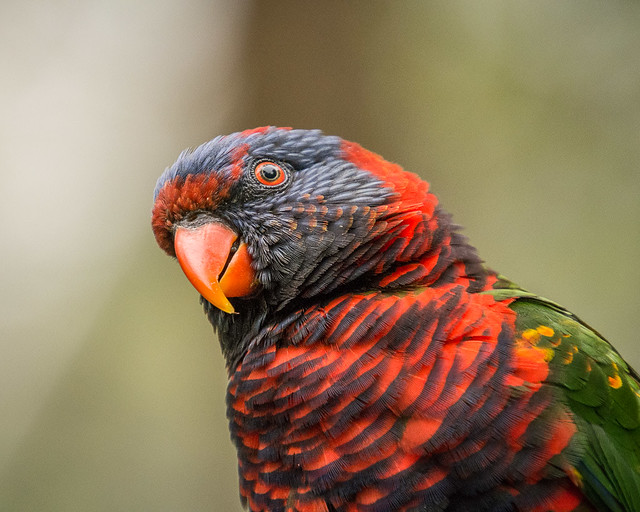
lorikeet

Nature Stories & Games 
Find the Birds brings bird watching to the screen. Visit Arizona to discover its birds. Complete conservation quests to improve the birds’ habitats, and collect information cards with photos, videos, and sounds. The next geographic region to be added to the game will be British Columbia. (free, iOS and android) 

Animals for Kids is a fun way for 1-4 year olds to learn the names and sounds of different animals. Bonus - you can learn the animals’ names in 7 different languages. ($, android and iOS) 

Care for our World, an animated story book, incorporates an animal encyclopedia, colouring pages, and a game. You can also place animals in custom habitats. ($, iOS) 

WWF Together lets you interact with endangered animals to find out how they live. You can try out “tiger vision,” flap your wings like a butterfly, and chop the panda’s bamboo. (free, iOS) 

What is your family's favorite nature app? Have you found a good app for identifying Canadian trees? Let us know and we'll add them to the list.


Nature Companion 
Last, but definitely not least, we encourage everyone to download EcoFriendly Sask’s Nature Companion, which introduces over 300 of the trees, plants, insects, reptiles, animals, and birds found in Manitoba, Saskatchewan, Alberta, and British Columbia. Nature Companion provides short, easy-to-understand descriptions and colourful photographs along with a Did you know? section with interesting, unexpected details about each species. 

We think it’s an amazing resource for children, tourists, newcomers, and curious observers who are eager to learn more about the world around them. It’s free (and ad-free) and can be downloaded directly from the Nature Companion website Help page

Nature Companion has “been a great teaching tool for my inquisitive kid who always asks me 1000 questions including what kind of bird or tree he's looking at...it’s nice to have that info accessible and easy to find. K. gives this app a big thumbs-up as does his mom who now knows which yellow bird is always in our yard (yellow warbler!)” [Nicole] 

See Also 
Outdoor Explorations in Saskatchewan

EcoFriendly Sask supports Saskatchewan environmental initiatives through an online publication, an events calendar, small grants, and the Nature Companion website/app. You can follow EcoFriendly Sask by liking us on Facebook, following us on Twitter, or by email (top right corner).

Tuesday, 30 March 2021

EcoSask News, March 30, 2021

gopher (Richardsons ground squirrel)

This Week’s Highlights 
“The key to bringing the environmental impact of architecture in line with planetary limits is to dramatically improve the energy efficiency of existing buildings while radically reducing new construction. In other words: less demolition, more refurbishment.” 

Jeff Olson will discuss the effects of farmland drainage on our environment in a 1:30 pm, Mar. 30, webinar hosted by the School of the Environment and Sustainability Students’ Association. 

Upcoming Events 
Learn about research directions and a grassroots movement that led to a reduction in the amount of lead exposure in wildlife during the WildEcol Seminar at 3:30 pm, Apr. 2. 

Saskatoon Nature Society is planning a bluebird trip on April 3 and a crocus trip on Apr. 14. Field trips are currently for members only, so sign up now. Advance registration is required. 

Learn how to use a compass for orienteering in a free online webinar from 7-8 pm, Apr. 6. 

There will be an online discussion on plastic pollution and the efforts globally, nationally, and locally to identify solutions at 7 pm, Apr. 6, as part of the Sustainability Speaker Series. 

There will be a discussion on the Saturn power story and its Highfield solar project at the virtual breakfast meeting of the Energy Management Task Force on Apr. 7. 

Global Water Futures is offering an online lecture series on women and water with a presentation at 12:30 pm, Apr. 8, on women in the field

Saskatoon Nature Society’s Golden Eagles are planning a bluebird trip on Apr. 8 and a crocus trip on Apr. 15. Retirees and partners who are interested in birds and the natural world are invited to participate. 

Local News 
SOS Trees Coalition Saskatoon (trees@sostrees.ca) is looking for interesting true tree stories that will be shared in the organization’s newsletter right before Arbor Day

Join Stan Shadick, Saskatoon, for a socially distanced private birding tour or online/outdoor workshops (Signs of Spring, Sounds of the Night, Dancing Grouse). Proceeds will support Living Sky Wildlife Rehabilitation. 

 
Canada Geese visiting Innovation Place

Neighbours 
“Nature, declares Richard Mabey, makes us ill. . . . ‘Bacteria and viruses and man-eating tigers and predatory Asian hornets are also all part of nature.’ . . . The most respectful terms of engagement, he argues, are not ‘anthropomorphism or manufactured empathy’ but ‘a sense of neighbourliness’. This is not friendship but ‘based on sharing a place, on the common experience of home and habitat and season’. ‘It might provide a bridge across the great conceptual divide between us and other species.’” 

“We abuse land because we regard it as a commodity belonging to us. When we see land as a community to which we belong, we may begin to use it with love and respect.” 

From Information to Action 
Irrigation canals covered with solar panels are a powerful combination. 

“The quest for net zero health-care emissions involves re-imagining a society where health and wellbeing are prioritised, and incentives are aligned to promote fiscal and environmental stewardship. . . . Mitigating the health-care footprint requires interventions both to the health-care system and to the factors driving demand.” 

“In the last five years, while acceptance of climate change has gone more mainstream, the 60 largest commercial and private investment banks in the world financed the fossil fuel industry to a tune of nearly $4 trillion.” 

EcoFriendly Sask supports Saskatchewan environmental initiatives through an online publication, an events calendar, small grants, and the Nature Companion website/app. You can follow EcoFriendly Sask by liking us on Facebook, following us on Twitter, or by email (top right corner). 
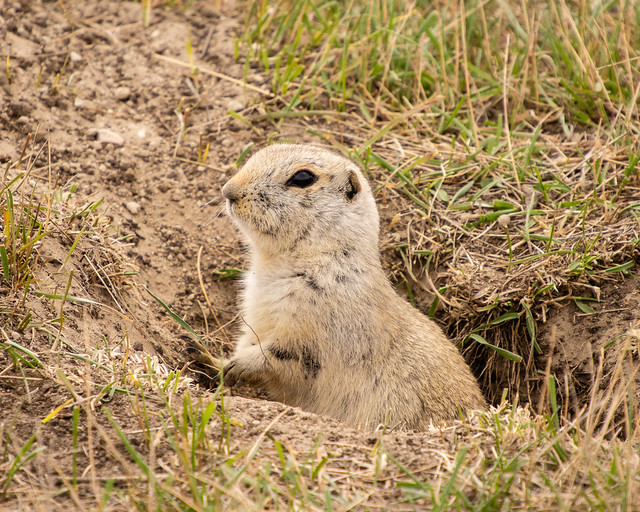

Did you know? Each adult female Richardson’s Ground Squirrel has her own tunnel where she raises her litter without help from the male.

Thursday, 21 January 2021

2020 EcoFriendly Action Grants

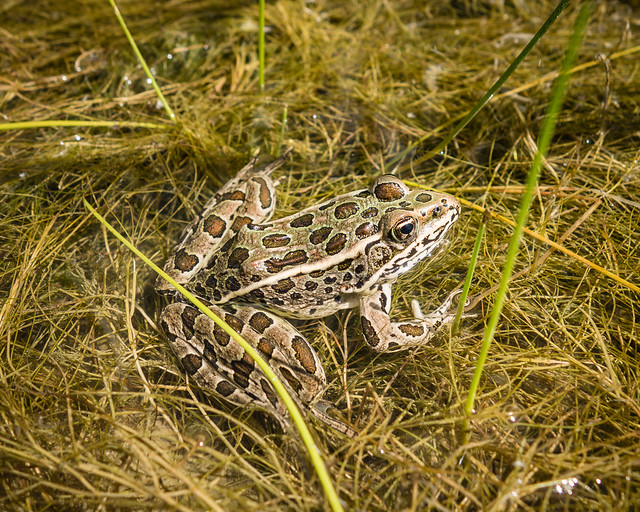
Northern Leopard frog

EcoFriendly Sask provided over $24,000 in EcoFriendly Sask Action Grants to 35 individuals and organizations in 2020. It was a difficult year and some organizations were unable to use their grant due to Covid-19, but many others were successful. 

Meeting the Challenge 
The Saskatoon Zoo Society met the Covid challenge by taking their school programming online. An EcoFriendly Action Grant ensured that 5 classes that could not otherwise have afforded the program were able to participate. 128 students took a virtual tour of the zoo and loved seeing the live animals in addition to an online presentation. 

Spring clean-ups were harder to organize this year as it was so important to maintain social distancing and proper hygiene. Wildernook Fresh Air Learning didn’t let that stop them from organizing two clean-up events. 132 people took part in the Rubbish Roundup, collecting 104 bags of garbage in 40 different areas. Students in 6 Saskatoon classes participated in an Earth Day Challenge to see who could collect the most garbage. 


Waste Reduction 
Three organizations were keen to reduce waste in 2020. UCan YQR received funding to help them get off the ground. Their goal is to use traditional preserving techniques to help keep food out of landfills and get it into the hands of those that need it most. 

Coronach EDY Community Development Co-operative and SK Eco Solutions asked for help in setting up plastic recycling and conversion projects. The Coronach group used open-source blueprints from Precious Plastic to build shredder, extrusion, and press machines. Sophia and Kai, two high school students in Saskatoon, are behind SK Eco Solutions. They purchased a PetBot to turn plastic bottles into filament and are looking forward to getting their project out of the testing phase in 2021. 


Nature 
Troutreach Saskatchewan is studying winter activity in Northern Leopard Frogs after noticing groups overwintering under the ice in the Qu’Appelle River. They want to discover if frog distribution under the ice is uniform or dependent on specific habitats (e.g. riffles or pools) and whether the frogs are foraging for food below the ice. This information will help manage instream flow and protect critical frog habitats. 

The Whitewood Recreation Association received a grant to help them establish a nature trail and clean up the current ecosystem. 


Youth 
Langenburg & District Daycare Co-operative continues to improve its outdoor space for children and wildlife. This year they added native plants as well as bird and bat boxes. St. Michael’s School, Weyburn, is developing a traditional medicine garden in the schoolyard, while the Boreal Rangers Outdoor Adventure 4-H Club families cleaned up rubbish and received a grant to purchase reusable camping equipment and are looking forward to the day when they can go camping together again. 


The Grade 10 English Language Arts teacher at Delisle Composite School believes her students are thirsty for knowledge and was eager to provide them with additional resources centring on the environment and our ecosystems. She used an EcoFriendly Action Grant to purchase novels, non-fiction, graphic novels, poetry, and anthologies for students to read and discuss. 

EcoFriendly Action Grants are small grants (usually $500) to support projects that protect, preserve, or repair the natural environment.

You can follow EcoFriendly Sask by liking us on Facebook, following us on Twitter, or by email (top right corner). 

Article updated: SK Eco Solutions are turning plastic bottles into filament

A full list of upcoming events (online and in person) can be found on the EcoFriendly Sask Calendar

Thursday, 8 October 2020

Educational Resources for Kids on Nature and the Environment

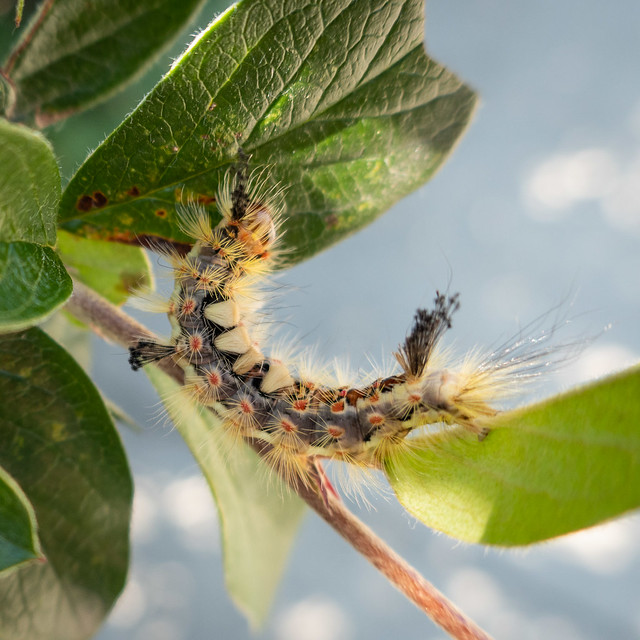
Banded Wooly Bear caterpillar

If your kids are homeschooling this year or if you’re a teacher eager to take your class outside, you may be searching for resources. We’re sure you’ve already checked out many of the local options, but here are some you may not have come across. 

Alberta Council for Environmental Education 
There are lots of teaching resources on the Alberta Council for Environmental Education’s website. Did you know you can sign up for a virtual field trip on Skype in the Classroom? Would you like to measure the heat loss from your home this winter? 

Climate Atlas of Canada 
The Climate Atlas of Canada website includes an interactive map as well as a large number of short videos on topics such as energy, emissions & agriculture, wind power on the prairies, and Indigenous climate action. 

Kids for the Bay, Earth Island Institute 
There’s a wealth of activity ideas on the Kids for the Bay website. If your kids are interested in nature, you can make a sound map, get active with play-yoga, or go on a seed hunt. If you’ve got some junior environmentalists, why not try making natural pesticides or logging how much water you use in a day? Or you can conduct an experiment to help your kids understand ocean currents or coastal erosion. There are accompanying videos and links that provide additional information. 
 
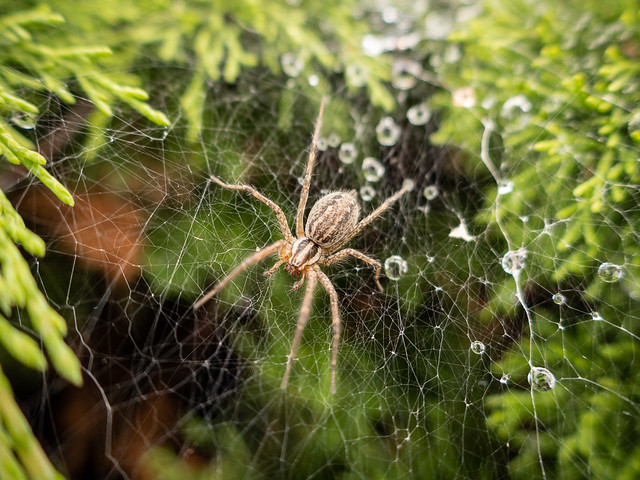
Grass Spider

Let’s Talk Science 
Let’s Talk Science offers a wealth of science projects. You can try your hand at cleaning up an oil spill, find out how walking on soil changes the way water soaks into the ground, or discover how dinosaur footprints turned into fossils

Nature’s Wild Neighbors 
Wild Neighbors, established by the Robert Bateman Foundation, has a creative arts contest for kids as well as educational resources. Activity sheets explain how to record a bird song playlist, grow fungus, or work out what is renewable and what isn’t

Resources for Rethinking 
Resources for Rethinking connects teachers to lesson plans, books, videos, and other materials that explore the environmental, social and economic dimensions of important issues and events unfolding in our world today. Activities include imagining the world kids want in 2030, redesigning plastic packaging, or role playing whether or not to destroy a salt marsh to build a highway. 

Science NetLinks 
Find out how passive solar design mitigates climate change, investigate sources of renewable energy, or find out how sedimentary rocks are formed using educational toolkits on Science Net Links, a project of the American Association for the Advancement of Science. 

Wild About Vancouver 
Wild About Vancouver is an outdoor nature festival similar to Saskatoon’s NatureCity Festival. Individuals and organizations are invited to submit lesson plans and there are lots to choose from. Discovering decomposers is a great fall activity – what actually happens to those leaves that fall to the ground? Is there a really tall tree in your neighbourhood? Why not measure it (with or without technology)?


Check out EcoFriendly Sask’s Nature Companion, a free nature app for Canada’s four western provinces.

You can follow EcoFriendly Sask by liking us on Facebook, following us on Twitter, or by email (top right corner).

Tuesday, 29 September 2020

EcoSask News, September 29, 2020

fall colors

Upcoming Events 
Orienteering for Kids, Sept.-Nov. (Saskatoon) 
SaskOutdoors is offering 6 weekly sessions of orienteering for kids ages 5-12 in Saskatoon. Sessions are on Sundays from Sept. 27 to Nov. 1 (2-3 pm) and on Wednesdays (5:30-6:30 pm) from Sept. 30 to Nov. 4. 

Climate Reality Campus Corps, Sept. 30 (online) 
Find out about Climate Reality Canada’s Campus Corps, a student-led climate action initiative at U of S, in an online presentation at 7 pm, Sept. 30. 

Reclaiming Our Relationship to Mother Earth, Oct. 1 (online) 
Part Four of Mother Earth Justice Advocates’ Declaration for a Better World explores sustainability and local empowerment as they are rooted in kinship relationships from 5:30-7:30 pm, Oct. 1. 

St. Barbe Baker Afforestation Clean-up, Oct. 3 (Saskatoon) 
The Fat Tire Brigade is hosting a clean-up at the Richard St. Barbe Baker Afforestation Area on Oct. 3. 

Household Hazardous Waste, Oct. 4 (Saskatoon) 
You can dispose of household hazardous waste at City of Saskatoon’s Civic Operations Centre from 9 am-3:30 pm, Oct. 4. 

Build Better Walls, Oct. 7 (online) 
The Energy Management Task Force is hosting an online presentation on building better wall assemblies from 7:30-9 am, Oct. 7. 

reflections

Protecting Canada’s Fresh Water, Oct. 8 (online) 
Partners FOR the Saskatchewan River Basin is offering a webinar from 12-1 pm, Oct. 8, on creating a Canada Water Agency

Would you like to replace cement with green shrubs and trees? 
Take a self-paced training program and become a certified Depave Paradise coordinator. For more information, contact Emily Amon at Green Communities Canada

A full list of upcoming events (online and in person) can be found on the EcoFriendly Sask Calendar 

In the News 
A steady diet of fertilizer has turned crops into couch potatoes – “big fat high-yielding crops that look good on the outside but are poor in minerals on the inside

Grass – “It’s a symbol of nature . . . . but a form of nature that’s perfect: uniform, smooth, and hardy” and it entails greenhouse gases, noise pollution, large amounts of water, and loss of biodiversity. 

A tidal wave of climate lawsuits looms over the fossil fuel industry. 

Energy giant BP predicts a “fundamental restructuring” of the global energy system, offering 3 possible scenarios

Natural forest regrowth - “Sometimes, we just need to give nature room to grow back naturally.” 

Canada needs zero-emission vehicle standards – here’s why. 

“A Dutch startup has created a biodegradable living coffin made of a fungus instead of wood that it says can convert a decomposing human body into key nutrients for plants.” 

Canadian and North American research shows that beaver coexistence tools (pond levelers, culvert protectors) are a cost-effective way to manage chronically flooded beaver conflict sites

What type of cloud is that? A basic guide to cloudspotting

EcoSask News is a weekly round-up of local news and events. Email us if you have items you would like us to include. 

You can follow EcoFriendly Sask by liking us on Facebook, following us on Twitter, or by email (top right corner). 

Check out EcoFriendly Sask’s Nature Companion, a free nature app for Canada’s four western provinces

Thursday, 24 September 2020

Nature Regina: Watch Them Grow, Part One


You can grow more than just plants in a garden. Just take a look at Nature Regina where volunteering for the organization’s Native Plant Garden has led to new members, new activities, and a whole lot of enthusiasm. 

Elaine Ehman is the current president of Nature Regina, but she got her start pulling weeds in the garden. “I can’t identify plants, but I wanted to help,” Elaine says. "I hung around people who knew what they were doing and learned from them. I’m surprised at the number of plants I can now identify.” She’s begun using native plants in her own garden and encourages other people to volunteer. “You’re welcome. There’s a space for everyone in the garden.” Elaine then took one of the bird identification classes offered by the Saskatchewan Breeding Bird Atlas project. “I’m really a novice birder, but in Nature Regina I’m surrounded by people who know them,” she says. 

Nature Regina first started holding meetings in 1933 as the Regina Natural History Society with their first public meeting in March of that year and their first nature hikes in May. Many things have changed over the years, but Nature Regina has never stopped fostering a greater appreciation for nature through field trips, education programs, and environmental advocacy. 


Nature Regina maintains the Native Plant Garden located at the southeast entrance of the Royal Saskatchewan Museum. What is in flower changes from week to week, but it is always busy with butterflies, bees, and insects. Volunteers provided the original seeds and cuttings, and the plants spent their first winter in Wascana Centre’s greenhouse before being planted out in the spring. It takes a lot of work to maintain a garden, and it had stagnated for a few years until Gail Fennell moved to Regina from Edmonton and began organizing volunteer activities in the garden. “She’s a changemaker,” Shannon Chernick says. “She has a five-year vision for the garden, and she keeps everybody informed by sending out a weekly email with photographs to let us know what’s flowering and what insects have been spotted. There’s a real sense of community.” 

Nature Regina produced a calendar with members’ photos to celebrate the garden’s 25th anniversary last year, and it proved so popular that they are producing another calendar this year with photos of outdoor favorites. 

Nature Regina owns a half section of land near Lumsden in the Qu’Appelle Valley. The Hidden Valley property was obtained for $1 from the CPR in 1945. It’s retained as a wildlife sanctuary and members maintain the trails and try to keep invasive species out. They also gather seeds here for the native plant garden. It’s open to the public and they encourage people to use it. 


As president, Elaine hoped that Nature Regina could expand its membership. “I joined when I retired, and I noticed that there were a lot of other older members,” Elaine said. A talk at one of Nature Saskatchewan’s annual meetings led Elaine to investigate the possibility of a grant from Nature Canada designed to create public engagement. It’s a small grant of $8,000, but Nature Regina has put it to good use. Nature Canada conducted an audit of Nature Regina’s activities and organized webinars to guide association members through the engagement process. Of the 8 recommendations, 2 stood out. The association needed to create core teams for main functions and it needed to define its constituency. 

Daralyn Sheffield, Ingrid Alesich, and Jim Elliott were responsible for the website, newsletter, and Facebook, but they were working independently. Their goal was to increase their impact by working together as a team. They started using Mail Chimp for the newsletter and redesigned the website. “It was incredible,” Elaine says. “Way above what I expected. The biggest excitement was the look of it, but we could also do so much more. We could track activity, know who would be coming to an event, and obtain email contacts.” The communications team’s efforts were really put to the test when Nature Regina started posting weekly family activities. They came through with flying colours. 

Fine-tuning how the association functioned led Nature Regina to add more online features. Donations are now accepted on Canada Helps and you can sign up for the weekly newsletter or become a member directly from their website

With a strong team structure in place, it was time for Nature Regina to consider its constituency. They’d been attending volunteer fairs to interest university students, but it wasn’t producing the desired results. “We got speakers for our meetings, but we didn’t get the engagement we were looking for,” Elaine says. They decided to try a new approach and hired Shannon Chernick, a Native Plant Garden volunteer who just happened to have a degree in education and work experience as a youth engagement coordinator. Success? Oh, yes! Stay tuned for Part Two of our article about Nature Regina. 


Tuesday, 18 August 2020

EcoSask News, August 18, 2020

Monarch butterfly

Upcoming Events
Bird Tours, Aug./Sept. (Saskatoon) 
Stan Shadick is offering physically distanced bird tours with proceeds to Living Sky Wildlife Rehabilitation:
Shorebird driving tour - Aug. 1-Sept. 15
Pelican driving tour - Aug. 15-Sept. 15
Warbler walking tour - Aug. 20-Sept. 15

Let’s Talk Outdoors, Aug. 20 (online)
SaskOutdoors is launching a podcast on Aug. 20 – Let’s Talk Outdoors: Environmental Enjoyment and Education – with new episodes every third Thursday.

Climate Strike, Aug. 21 & ongoing (online) 
The YXE Youth Climate Committee is hosting a digital Fridays for Future Climate Strike on Fridays from 12-1 pm starting Aug. 21.

Flight of the Monarch, Aug. 22 (online)
Join Nature Saskatchewan in celebrating Flight of the Monarch Day on Aug. 22.

Mini Outdoor School Conference, Aug. 24 (online) 
The Early Childhood Education Council is offering a virtual mini outdoor school conference for its members from 1-2 pm, Aug. 24. Register by emailing saskecec@gmail.com.

SOS Trees Coalition AGM, Aug. 27 (Saskatoon) 
SOS Trees Coalition will hold their annual general meeting outdoors in Victoria Park close to the pagoda at 6:30 pm, Aug. 27.

Backyard Bioblitz, Aug. 24-30 (Saskatchewan) 
Nature Conservancy of Canada is inviting the public to contribute to online community science by searching for plants, animals, and insects in your backyard or local green space and tracking your observations with iNaturalist.

Looking Ahead 
Project WILD, Sept. 16, 23, 30 (online) 
SaskOutdoors is hosting a Project WILD training online from 7-9 pm, Sept. 16, 23, and 30.

George Genereux Park Clean-Up, Sept. 19 (Saskatoon) 
Friends of the Saskatoon Afforestation Areas are inviting volunteers to join them in removing garbage in George Genereux Urban Regional Park from 9 am-5 pm, Sept. 19. Volunteers with trucks, wheelbarrows, etc. are encouraged to bring it with them. Disposal bins will be on site in August and September if you want to help out at a different time.

A full list of upcoming events (online and in person) can be found on the EcoFriendly Sask Calendar

Woodland Skipper ?

Local News
Friends of the Saskatoon Afforestation Areas will deliver your recyclables to SARCAN and provide you with a charitable receipt. Call 306-380-5368 to arrange a pick-up.

The Wildlife Rehabilitation Society of Saskatchewan has responded to over 3000 calls to their wildlife hotline this year. Your donations can help support the work of WRSOS and wildlife rehabilitators throughout Saskatchewan (Living Sky in Saskatoon, Salthaven West in Regina, Silverwood in southeast Saskatchewan to name just a few).

Meewasin Valley Authority’s functional study to help minimize the environmental impacts of the proposed Saskatoon Freeway recommends shifting the route by 200-300 metres to the north and a causeway to reduce impact on wetlands. Recent focus groups also expressed concerns and recommendations regarding environmental issues.

Parks Canada has installed EV charging stations in Prince Albert National Park, Batoche and Motherwell Homestead National Historic Sites. Grasslands National Park will have one soon.

Rusty Tussock Moth caterpillar

From Information to Action
The UK is testing the viability of noise cameras to cut down on noise pollution.

Lower speed limits – on the highway and in town – reduce greenhouse gas emissions and climate change.

Having an impact: how to practice science that influences environmental policy and management.

Volunteers are plugging abandoned oil wells in Montana and returning the land to its pre-drilling condition.

The environmental footprint of paper vs electronic books – it depends how much you read.

Efforts to protect the nests of Western Painted Turtles have resulted in almost 200 hatchlings at Elizabeth Lake near Cranbrook.

A 22,000 sq. m. green roof on a university campus in Thailand mimics local rice terrace landscapes, collects rainwater, and grows up to 135,000 rice meals and vegetables each year.

EcoSask News is a weekly round-up of local news and events. Email us if you have items you would like us to include. 

 You can follow EcoFriendly Sask by liking us on Facebook, following us on Twitter, or by email (top right corner).


Check out EcoFriendly Sask's Nature Companion, a free nature app for Canada's four western provinces.

Tuesday, 7 July 2020

EcoSask News, July 7, 2020

wild rose

Upcoming Events
Nature Trivia Night, July 15 (Regina, online) 
Nature Saskatchewan, in conjunction with Mystery Mansion Regina, is hosting an online nature trivia night at 7 pm, July 15. Registration is free but space is limited to 20 teams. Register early to avoid disappointment by emailing mysterymansionregina@gmail.com.

ReCreation Your Summer, July 20 (Yorkton, online)
Talia from Yellowhead Flyway Birding Trailing Association will provide a fun way for kids of all ages to get moving while enjoying the outdoors on July 20.

SK Plants & Animals, July 20 (Yorkton, online) 
4-12 year olds are invited to attend a nature presentation hosted by the Yorkton Flyway Birding Trail Association from 2-2:30 pm, July 20. Register by phoning the Yorkton Public Library at (306) 783-3523.

Saskatoon Freeway Focus Groups, July 20/21 (online) 
The Ministry of Highways is hosting virtual public focus groups (6-8 pm, July 20 & 21 for the general public; 2-4 pm, July 21 for environmental organizations) so residents, landowners, and stakeholders can share their thoughts on environmental considerations they would like to see reflected in the proposed 4-6 lane Saskatoon Freeway that will cross the Northeast and Small Swales. Register online for your choice of dates.

Youth Storytelling
Waterlution is offering youth storytelling workshops, camps, and contests. 19-29 year olds can apply by July 13 for a place on the youth advisory board.

A full list of upcoming events (online and in person) can be found on the EcoFriendly Sask Calendar

Local News 
Robert Halliday, chair of Partners FOR the Saskatchewan River Basin, and John Pomeroy, Global Water Futures, point out that the proposed irrigation project at Lake Diefenbaker will impact downstream water users, Indigenous communities, the Churchill River delta, hydro electricity, and must take into account a shifting climate.

New highway projects fail to take into account induced demand which, in the long-term, results in longer trips, traffic congestion, and reduced speeds #SaskatoonFreeway

Oil and gas, the industrial production of wheat and cattle, and commercial fishing have been sold to us as life-giving and necessary. . . . The truth is that these industries have existed for fewer than 500 years, were established to help eradicate Indigenous nations, and contribute to rapid loss of soil nutrients, tanking biodiversity, proliferation of dangerous diseases, and climate catastrophe

Wild rose
>
Anthropause
“Mounting evidence suggests that we’re in the midst of an unprecedented roadkill reprieve, a stay of execution for untold millions of wild creatures

Take advantage of the societal changes brought about by Covid-19 to increase urban green spaces and encourage walking for recreation

From Information to Action
What if we made producers responsible for the garbage they create? Extended Producer Responsibility: Designing the Regulatory Framework outlines the concept of EPR, its history, objectives, regulatory mechanisms, and stakeholder roles

Quiet Parks International is working to establish certification for quiet parks to raise awareness of and preserve quiet places

Do you use plastic row covers in your garden? Plants can absorb tiny pieces of plastic through their roots, affecting the food we eat and possibly changing the plants’ genetic makeup

Over the past 5 years, remote communities in Canada have reduced their diesel use by over 12 million litres

wild rose

That’s Amazing!
A cuckoo returned safely from a 26,000 km round trip involving 27 border crossings and 16 countries – that’s a long way to travel in search of some tasty caterpillars!

Three cheers for BC’s white-throated sparrows whose new tune has gone viral across Canada

EcoSask News is a weekly round-up of local news and events. Email us if you have items you would like us to include. 

You can follow EcoFriendly Sask by liking us on Facebook, following us on Twitter, or by email (top right corner).

Tuesday, 7 April 2020

EcoSask News, April 7, 2020

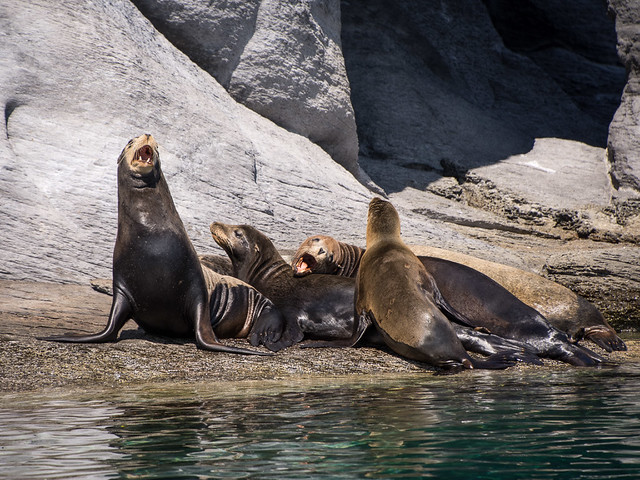
sea lions

Local News & Events
Changing the Climate, Apr. 11 (online)
Everyone is invited to join an online field trip from 1-3:30 pm, Apr. 11, in which U of R students share work from the multidisciplinary course, Engaging Climate Change: Creativity, Community, Intervention.

WILD Outside (Regina, Saskatoon)
WILD Outside, a national conservation-based youth leadership program designed for youth ages 15 to 18, is now recruiting for Saskatoon and Regina. Youth who join the program will explore the outdoors through a variety of activities (hiking, cross country skiing, and canoeing, to name a few) and plan and carry out community-based conservation action projects.

While COVID 19 currently prevents participants from gathering together in person, WILD Outside facilitators are adapting the programming to bring people together virtually across the country.

Go to http://wildoutside.ca/ for more information and to fill out the online inquiry form.


Buffalo Pound
The Nature Conservancy of Canada’s plan to protect shoreline and grasslands at Buffalo Pound is important for species at risk and water quality for surrounding communities.

Urban Wildlife
The Wildlife Rehabilitation Society of Saskatchewan is reminding the public that trapping and relocating wild animals is not a humane solution. “By relocating an animal, we are likely placing them in unfamiliar territory without any known food, water or shelter. Not only is this poor animal going to have to fight to find resources – it could be chased off, injured or killed by other animals whose territory they have been place upon! Don’t forget that there’s also the threat of diseases being spread when we relocate animals from one place to another. Bacteria, parasites and viruses can be easily spread and harm or kill a variety of wildlife. And what about babies? Often times, relocating an adult animal means that we are leaving behind helpless and orphaned baby animals who are unable to fend for themselves. Finally - relocating an animal just opens up the space for another animal to move right on in! We really aren’t solving any problems by forceably removing animals from their homes. We understand that wild animals can sometimes be a nuisance – especially if they are in your yard or house. However, we can help you find ways to make your area undesirable so the animal will naturally relocate itself! So please do not relocate any wild animals – give our hotline a call at 306-242-7177 and we’ll be happy to help!”

City birds: big-brained with few offspring or small-brained with a lot.

In the News
“What if concrete could be used to store climate-warming carbon?”

Lockdowns are changing the way the earth moves, making it easier to monitor for earthquake and volcano activity.

sea lion

Online Resources
From flying foxes to sea lions – nature cams bring nature to your screen.

Want to visit the world’s largest cave or head inside an active volcano – the 10 best natural wonders’ virtual tours.

That’s Amazing!
Squids communicate in the dark ocean by turning their bodies into animated message boards.

Peacock spiders are famous for their rainbow-hued buttocks, elaborate mating dances, and ninja-esque jumping skills.


EcoSask News is a weekly round-up of local news and events. Email us if you have items you would like us to include. 

You can follow EcoFriendly Sask by liking us on Facebook, following us on Twitter, or by email (top right corner).