Showing posts with label Consumption. Show all posts

Tuesday, 3 December 2019

EcoSask News, December 3, 2019


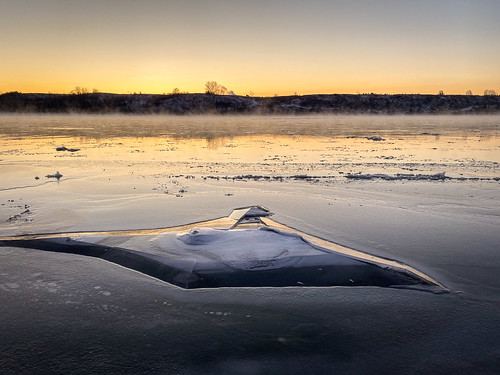
ice on the river

Upcoming Events
Woodland Caribou, Dec. 10 (Saskatoon)
Branden Neufeld will discuss his research into conserving Canada’s woodland caribou at 7 pm, Dec. 10, as part of the Sustainable Speaker series.

Great Plains Toad, Dec. 12 (Saskatoon)
Learn about the natural history, distribution, and habitat of the great plains toad at the 7:30 pm, Dec. 12, meeting of Saskatoon Nature Society.

Nachos & Nature, Dec. 14 (Saskatoon) 
Outdoor and environmental educators in the Saskatoon area are invited to a free nachos and nature social sponsored by SaskOutdoors from 2-4 pm, Dec. 14.

A full list of upcoming events can be found on the EcoFriendly Sask Calendar 

Around the Province 
Battlefords Climate Action is a group of volunteers in North Battleford and area promoting action on the climate crisis. You can follow them on Facebook and Twitter.

The City of Regina is hosting Reimagine Conference 2020: Roadmap to Sustainable Cities from May 20-21. The City of Regina has targeted fully renewable city operations within the next 30 years. “This conference recognizes the importance of strategic partnerships with our energy and business sectors, community leaders, and fellow municipalities. We hope to attract delegates from all areas to learn how we can work together with mutual goals of becoming more renewable and sustainable.”

In the News
A scientific article explains why small modular reactors may not be able to solve the problems confronting nuclear power. A second article agrees with Ann Coxworth, Saskatchewan Environmental Society, urging caution: “SMRs are not going to help in the next decade because they are just not available. By the time they turn up we can see if they are still cost effective or if renewable’s have gone beyond.”

Stop! Don’t send that email. If you do, you will add to your carbon footprint.

If we want to conserve little brown bats, we need to stop evicting them from buildings. “The long-term viability of vulnerable species requires recognition of critical habitats,” they write, “including those also occupied by humans.”

They’re still logging the Great Bear Rainforest, including very old, very large cedars.

ice on the river

‘Tis the Season
“The stuff we consume — from food to knick-knacks — is responsible for up to 60 percent of global greenhouse gas emissions and between 50 and 80 percent of total land, material, and water use.”

Share the love without the stuff – an alternate gifting site that helps you create certificates for gifts of time or baking or shared experiences.

CPAWS Saskatchewan offers some excellent advice for keeping Christmas green.

EcoSask News is a weekly round-up of local news and events. Email us if you have items you would like us to include. 

You can follow EcoFriendly Sask by liking us on Facebook, following us on Twitter, or by email (top right corner).

Tuesday, 23 May 2017

EcoSask News, May 23, 2017

turtle

Upcoming Events
Powering Up Canada Book Launch, May 23 (Saskatoon)
Attend the launch of Powering Up Canada: The history of power, fuel, and energy from 1600 edited by R.W. Sandwell from 4-6 pm, May 23, at the Hose and Hydrant Brewing Company.

Fix and Release, May 27 (Yorkton)
View Fix and Release, a short film about the turtles that are nursed back to health at the Ontario Turtle Conservation Centre at 11:45 am, May 27, at the Yorkton Film Festival.

Electric Cars, May 27 (Swift Current)
See a Tesla and learn all about electric cars at 1 pm, May 27, at Swift Current Branch Library.

Wildlife Rescue, May 28 (Saskatoon)
Volunteer with Wildlife Rehabilitation Society of Saskatchewan and join Saskatoon’s duck team. A training session will be held on May 28 from 1-4 pm.

Nature Saskatchewan Photo Exhibit, May 29-June 23 (Prince Albert) 
Nature Saskatchewan is hosting a photography display by Martin Phillips and Morley Maier at SUNTEP May 29-June 23. The images have been integrated into the post-secondary biology program to show young teachers how they can incorporate images of wildlife into their curricula to bring ecology, anatomy, and art alive.

Chaplin Lake Shorebird Festival, June 2-3 (Chaplin Lake) 
Book a tour or enjoy a fundraising dinner at the Chaplin Lake Shorebird Festival, June 2 and 3.


Nature Regina Field Trips 
June 3, 8:30 am – A.E. Wilson Park Early Summer Discoveries
June 17, 4:30/7:30 am – Breeding Bird Atlas Square Bash! Fairy Hills and Hwy 99
Check Nature Regina’s website for full details and updated information.

Looking Ahead 
BioBlitz, June 9-10 (Regina) 
To celebrate Canada's 150, Nature Saskatchewan has partnered with the Royal Saskatchewan Museum, Wascana Centre, and the Saskatchewan Science Centre to host a BioBlitz in Wascana Park on June 9 and 10. Volunteers and expert naturalists are needed to help with the event.

Rewild the Child Day Camp, July 4-7 (Saskatoon) 
Elizabeth Bekolay, LichenNature, is offering a Rewild the Child Day Camp from July 4-7. Mornings will be spent hiking the river valley with skill building, games, and nature observation in the afternoons.

A full list of upcoming events can be found on the EcoFriendly Sask Calendar 

Black bear

In the News
The human inhabitants of Alberta’s Bow Valley are working hard to co-habit peacefully with their wild neighbours by removing attractants, protecting and creating wildlife corridors, and by learning to be wild smart [video].

From fish to butterflies - roadsides are a huge opportunity for wildlife conservation.

The Province of Saskatchewan has picked a preferred route for the Saskatoon Freeway. Unfortunately, it still crosses the Meewasin Northeast Swale. Highways ministry spokesman Doug Wakabayashi says the Northeast Swale Watchers will be consulted as the project moves forward: “It’s an environmentally sensitive area and we have an obligation to protect environmentally sensitive land.” Let's hold them to that promise.

“So, what do we do to begin reversing the addictive cycle of over consumption? One place to start is with the next generation whom we are currently raising.”

EcoSask News is a weekly round-up of local news and events. Email us if you have items you would like us to include. 

You can follow EcoFriendly Sask by liking us on Facebook, following us on Twitter, or by email (top right corner).


Tuesday, 29 November 2016

EcoSask News, November 29, 2016

frost on grass

Upcoming Events
Environmental Justice & Sustainability, Dec. 2 (Saskatoon & online)
Dr. Randolph Haluza De-Lay, delegate to the climate negotiations in Marrakech, will be speaking on environmental justice and sustainability from 3-4 pm, Dec. 2, as part of SERI’s Talking Sustainability series. The presentation will also be available online.

Permaculture Christmas Party, Dec. 3 (Prince Albert)
The Prince Albert Parkland Permaculture guild is hosting a Potluck Christmas Party on Dec. 3.

River Access Study, Dec. 5 (Saskatoon)
The City of Saskatoon and Meewasin Valley Authority are conducting a study to identify river access requirements. The primary focus will be on facilities for launching and mooring motorized and non-motorized watercraft; however, it will address all forms of river access. There will be a public open house from 3:30-8 pm, Dec. 5. You can also complete an online survey.

Tracking Migratory Birds, Dec. 8 (Saskatoon)
Ann McKellar, a biologist with the Canadian Wildlife Service, will talk about the tools, from simple bands to GPS tags, that researchers use to track migratory birds in order to learn more about where they go and what threats they might face along the way. The Saskatoon Nature Society meetings are held monthly at 7:30 pm in Room 106, Biology Building, University of Saskatchewan.

The Eagle Huntress, Dec. 8-11 (Regina)
The Regina Public Library is showing the film The Eagle Huntress from Dec. 8-11. The film follows a 13-year-old girl as she trains to be an eagle hunter in Mongolia.

Grasslands Project, Dec. 8 (Moose Jaw)
Moose Jaw Public Library will be showing the Grasslands Project, a series of short documentary films about life on the southern prairies, at 2:30 pm, Dec. 8.

Saskatoon Young Naturalists
Jan. 7 – Snowshoeing
Jan. 21 – Tracks and Scats
Feb. 4 – Chickadee Pishing
Mar. 18 – Great Horned Owl Ecology
Space is limited; register early to avoid disappointment.

Black-capped chickadee

Christmas Bird Counts
Saskatoon & Area 
Dec. 14 - Harris
Dec. 16 – Radisson-Borden
Dec. 17 – Clark’s Crossing
Dec. 18 – Qu’Appelle Valley Dam
Dec. 19 – Gardiner Dam Dec. 22 - Floral
Dec. 26 – Saskatoon Dec. 27 – Biggar
Jan. 2 – Pike Lake
Contact the Saskatoon Nature Society for full details and updated information.
Regina 
Dec. 16 – Grasslands National Park
Dec. 18 – Craven 
Dec. 26 – Regina
Christmas Bird Counts for Kids
Dec. 29 – Saskatoon
Jan. 7 – Regina

A full list of upcoming events can be found on the EcoFriendly Sask Calendar 

2017 Bird Calendar
Nick Saunders’ 2017 Bird Calendar is now available for purchase.

In the News
We need to buy less and appreciate more - how to stop shopping mindlessly

Transition "is about communities stepping up to address the big challenges they face by starting local. . . . . In practice, they are reclaiming the economy, sparking entrepreneurship, reimagining work, reskilling themselves and weaving webs of connection and support."

EcoSask News is a weekly round-up of local news and events. Email us if you have items you would like us to include. 

You can follow EcoFriendly Sask by liking us on Facebook, following us on Twitter, or by email (top right corner).

Tuesday, 15 November 2016

EcoSask News, November 15, 2016

Swainson's hawk

Upcoming Events
Photography with a Purpose, Nov. 15 (Regina)
Branimir Gjetvaj will present at the Regina Photo Club on Nov. 15 on the topic, Photography with a Purpose – Reflections by a Conservation Photographer.

No Dakota Access Pipeline: Solidarity Teach-In, Nov. 15 (Saskatoon)
Event organizers will make sense of No Dakota Access Pipeline in the local context from 4-6 pm, Nov. 15, at the No Dakota Access Pipeline: Solidarity Teach-In.

Stormwater Management, Nov. 15 (Saskatoon)
Matt Wooten will discuss Qcritical, a stormwater management system, at Tox on Tap, 6-9 pm, Nov. 15.

Permaculture Regina AGM & Herbs, Nov. 18 (Regina)
Jenine Demyen will talk about 5 useful Saskatchewan herbs at the Nov. 18 annual general meeting of Permaculture Regina.


Toward a Prairie Atonement, Nov. 18 (Saskatoon)
Trevor Herriot will read from his latest book, Towards a Prairie Atonement, at 7 pm, Nov. 18, at McNally Robinsons Booksellers.

For more book suggestions, check our list of Saskatchewan nature and environment books.

Household Hazardous Waste Day, Nov. 19 (Saskatoon)
You can dispose of household hazardous waste (e.g. light bulbs, aerosols, fuels) at the SaskTel Centre from 9 am – 3:30 pm, Nov. 19.

Saskatoon Nature Society Field Trips (Saskatoon)
Nov. 20, 1:30-5 pm – Pike Lake Birding
Nov. 27, 2-3 pm – Pre-Grey Cup Birding at President Murray Park
Dec. 3, 9 am-5 pm – Gardiner Dam Birding
Check the Saskatoon Nature Society’s website for full details and updated information.

Greet an Owl, Nov. 20 (Saskatoon)
Meet Spirt, a Great Horned Owl, at 1 pm, Nov. 20, at Wild Birds Unlimited.

Birds of Prey, Nov. 21 (Regina)
Dr. Ryan Fisher will discuss his research on the Ferruginous Hawk at the Nov. 21 meeting of Nature Regina.

Aboriginal & Northern Engagement in Environmental Remediation, Nov. 23 (Regina/Saskatoon)
Successes and Challenges: Aboriginal and Northern Engagement in Environmental Remediation Projects, a Johnson-Shoyama Graduate School of Public Policy lecture presented by Dr. Joe Muldoon, Saskatchewan Research Council, and Vice-Chief Joseph Tsannie, Prince Albert Grand Council, will be broadcast from 1:30-3 pm, Nov. 23, in Saskatoon and Regina.

Indigenous Perspectives on Conservation, Nov. 24 (Lumsden)
Rodger Ross, a Métis/Nehiyaw (Cree) and independent film producer will speak on Indigenous Perspectives on Conservation at 7 pm, Nov. 24, at Lumsden High School.

Agriculture in a Changing Climate, Nov. 24-26 (Saskatoon)
The National Farmers’ Union will be discussing Agriculture in a Changing Climate at their annual convention Nov. 24-26 in Saskatoon. The public is invited to hear Kent Mullinix speak about revitalizing family-based agriculture and farming communities while advancing food and farming systems that embody environmental stewardship, social equity, justice, and economic viability at 7 pm, Nov. 24.


A full list of upcoming events can be found on the EcoFriendly Sask Calendar

Build a Fence for Wildlife
Help Living Sky Wildlife Rehabilitation build a perimeter fence to keep their rescued animals safe. Buy a board, a post, or some concrete.

In the News
Discover ways for you and others to connect with nature in Canadian Parks Council’s Nature Playbook

Shoppers must use their purchasing power to lead the green products revolution - "it’s the pull of consumers and the market that ultimately fuels the biggest changes"

The zero-waste pantry and freezer - no more unwanted, unused leftovers

EcoSask News is a weekly round-up of local news and events. Email us if you have items you would like us to include. 

You can follow EcoFriendly Sask by liking us on Facebook, following us on Twitter, or by email (top right corner).

Thursday, 25 February 2016

Teaching Sustainable Consumption

“A lot of people know that we are consuming more than the planet can sustain, at least at a basic level, but they don’t know what to do about it. If we want to see changes in behaviour, then that has to begin in the classroom.” 


Kristen Hargis is a Master’s student in the Educational Foundations program at the University of Saskatchewan. Two books she read as an undergraduate influenced her thinking about consumption. The Irresistible Revolution: Living as an Ordinary Radical encouraged critical thinking, while another, Serve God, Save the Planet, demonstrated that material downscaling could lead to healthier lives.

“I really started noticing the massive amount of overconsumption all around me,” Kristen says. “I went into my Master’s wanting to figure out how we can get to the point where we don't need to add “sustainable” to consumption because all consumption, or at least most of it, is sustainable.”


Teaching Sustainable Consumption 
Kristen’s research is nestled within a much larger project called the Sustainability and Education Policy Network (SEPN), which is based at the University of Saskatchewan. SEPN is a network of researchers and organizations advancing sustainability in education policy and practice across Canada. It is the first large-scale, national-level research collaboration to collect and analyze comparable data at all levels of education with the goal of enabling educational change for a more sustainable future.

Kristen’s thesis will assess how faculty conceptualize sustainable consumption themselves and within their classroom, how sustainable consumption is taught and how those methods developed, and whether sustainability policies are influencing actual teaching practices.

“The chief aim of this study is not to prove a hypothesis but to provide a deeper understanding of how sustainable consumption has been defined and taught within the classroom,” Kristen says. 

Reasons for Consumption 
“Consumption is more convoluted than individual acts of consumption or production,” Kristen says, “and I believe that consumer education should reflect these complexities.” Her educational research literature review produced four different reasons for consumption.

Functional: Functional consumption fulfills innate human needs for things like food, water, and shelter. “This category also addresses healthy food consumption,” Kristen says. “A wholesome diet, that includes local produce and plant-based rather than animal-based products and that doesn’t include processed foods or eating more than one’s daily energy requirements, has environmental and human benefits in reducing greenhouse gas emissions, relieving pressure on biodiversity, and improving the overall health of the individual.”

Sociological: The sociological role of consumption focuses on the purpose that consumption has in our lives as individuals and as members of social groups. This includes institutional considerations (e.g., race, gender, and class) as well as how people talk about consumption and any power struggles that might be involved. “For example, when white people move to the suburbs to avoid living beside people of a different race, they must drive even further, using more fossil fuels in the form of gasoline, to get to work, go shopping, etc.,” Kristen says.

Psychological: There are psychological reasons why we as individuals consume, such as identity, emotions, status competition, and activism, and these affect our choices. “We buy certain clothes and accessories to fit into the identity that we want,” Kristen says. “For example, environmentalists are often associated with hiking clothes, backpacks, tents, etc. This can include a wide variety of identities and environmentalists aren’t exempt.”

Economic: The economic role of consumption considers the implications for consumers who are inevitably linked to a market system. “Buying greener products has been suggested as a way to battle over-consumption,” Kristen says. “But green consumerism, while not quintessentially harmful, sanctions environmentally conscious consumption without considering consumption levels.”


Consumption in the Classroom 
Kristen’s literature review found numerous studies on sustainability and sustainable development in general. Very few, however, focused on sustainable consumption and even fewer had a higher education focus.

There are two interesting accounts of how individual teachers have introduced the topic, one at the high school level and the other at the primary school level.

Bill Bigelow brought a soccer ball into the classroom and asked his students to observe it closely and write about it. “Made in Pakistan was stenciled in small print on the ball, but very few students thought that fact significant enough to include in their descriptions. However, these three tiny words offered the most important clue to the human lives hidden in ‘just a soccer ball’ – a clue to the invisible Pakistanis whose hands had crafted the ball sitting in the middle of the classroom.”

Helen Carida looked at primary pupils’ habits and behaviours in Greece. “Sustainable consumption is one of the most recent challenges in the field of education,” Carida says. “Specifically, the aim of this article is to identify the pupils' sustainable and unsustainable practices, considering their personal dimensions of everyday living, and giving a particular meaning to consumer education in Greece.” 

Teaching Methods 
Kristen points out that it’s not enough to understand how faculty conceptualize consumption. You also have to examine their teaching methods. “For example, if sustainable consumption is only taught by referring to facts, the subjective message may be that learning facts is all that is required to address and understand sustainable consumption,” Kristen says. “If active components are infused throughout teaching about sustainable consumption (e.g. experiential learning, problem-based learning), the subjective meaning could be that we must act, not just listen and learn.”

It Starts in the Classroom 
Kristen believes that a lot of people know that we are consuming more than the planet can sustain but don’t know what to do about it. “If we want to see changes in behaviour, then that has to begin in the classroom,” Kristen says.

“It should also be noted that when I talk about changes in behaviour, I don’t just mean individual behaviour changes because those are not enough. I mean having an informed citizenry that knows how to apply appropriate political pressure to see real systemic and structural changes happening within society.”


Additional Resources 
Articles & Websites 
The Story of Stuff
Why I’m Buying Nothing for a Year
Yes, You Recycle. But Until You Start Reducing, You’re Still Killing the Planet
REI Closing on Black Friday for First Time
Don’t Buy This Jacket - Patagonia
Ikea Wants You to Stop Throwing Away Your Ikea Furniture
What is Degrowth? Envisioning a Prosperous Descent
New Business Aims to Change the Way We Thrift Shop

Books 
The Story of Stuff: The Impact of Overconsumption on the Planet, Our Communities and Our Health – And How We Can Make It Better, Annie Leonard
This Changes Everything: Capitalism vs. the Climate, Naomi Klein