Tuesday, 29 March 2016

EcoSask News, March 29, 2016

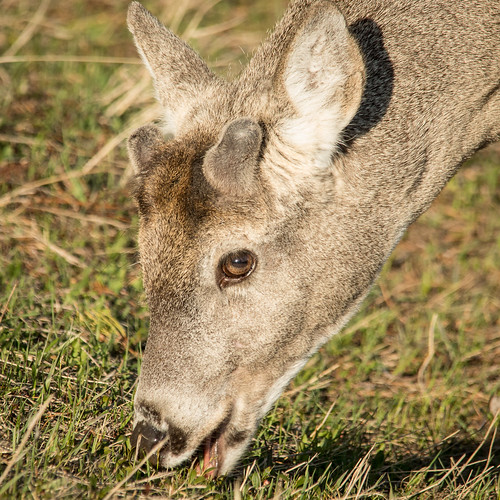
deer


Upcoming Events
Environmentally Conscious Decision-Making, Mar. 29
Dr. John Giesy, Professor of Environmental Psychology, will be leading a discussion on Life in a Toxic World: Environmentally Conscious Decision-Making at Tox on Tap at 7 pm, Mar. 29.

Protecting the Swale, Apr. 1
The Northeast Swale is on the agenda for the Apr. 1 Meewasin Valley Authority board meeting. There are plans to convert Central Avenue into a four-lane, divided arterial route across the Northeast Swale connecting with the four-lane North Commuter Parkway. The City of Saskatoon estimates that these two thoroughfares, together with Lowe Road, will carry between 26,000 and 67,000 vehicles (possibly more) across the Swale each day, bringing noise, disruption, and danger. The public is invited to make written or oral presentations.

Ecological Economics, Apr. 6
Dr. Brett Dolter, VP Research and Education, Canadian Society for Ecological Economics, will be speaking at the Apr. 6 breakfast meeting of the Saskatchewan Energy Management Task Force.

Saskatchewan River Delta, Apr. 7
Learn more about the Saskatchewan River Delta at a screening of a one-hour documentary by Ian Toews at 7 pm, Apr. 7.

Nature’s Calling You, Apr. 13
Nature’s Calling You is a free evening of speakers and entertainment honouring the Prince Albert National Park region at 6:30 pm, Apr. 13.

SK Environmental Society AGM, Apr. 14
Cathy Holtslander and Darrin Qualman, National Farmers’ Union, are the keynote speakers at the Saskatchewan Environmental Society’s AGM on Apr. 14. They’ll be speaking about Climate Change: The Challenges of Decarbonizing our Farms and Food Systems.

A full list of upcoming events can be found on the EcoFriendly Sask Calendar

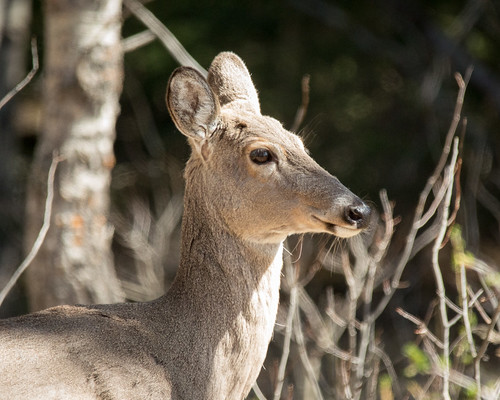
deer

News
Saskatoon Police Services’ headquarters has received LEED Silver certification. The Health Sciences E Wing, University of Saskatchewan, has received LEED Gold certification.

A provincial election primer – 10 reasons why Saskatchewan’s grasslands matter.

Prince Albert City Council is considering fines and a two-tiered billing system to help prevent non-recyclables being put in recycling bins.

The Craik Eco-Centre has been destroyed by fire - what a shame!

Agriculture, meat production in particular, is the largest source of environmentally damaging nitrogen.

Stop, say hello, and appreciate all the forms of life around you.

EcoSask News is a weekly round-up of local news and events. Email us if you have items you would like us to include. 

You can follow EcoFriendly Sask by liking us on Facebook, following us on Twitter, or by email (top right corner).

Tuesday, 22 March 2016

EcoSask News, March 22, 2016

hole in the ice

Upcoming Events
Baby Wildlife Rehab Webinar, Mar. 23 
The Wildlife Rescue Association of BC is offering a webinar on wildlife rehab, babies, and you on Mar. 23.

Green Health Care Webinar, Mar. 23 
The Canadian Coalition for Green Health Care is offering a webinar on water reduction and GHGs in the health care sector on March 23.

Friends of PA National Park Comedy Night, Apr. 16 (Prince Albert) 
Friends of Prince Albert National Park are hosting a comedy night fundraiser in Prince Albert with Don Burnstick.

Wings Over Wascana Fundraising Dinner, May 11 (Regina)
Friends of Wascana Marsh are holding a fundraising dinner on May 11 to support the Wings Over Wascana festival. Christy Morrissey is the keynote speaker.

Canoe Certification, May 21-23
SaskOutdoors is offering a Paddle Canada Lake Canoe Skills certification course in Saskatoon, May 21-23.

ice

Field Trips
Young Naturalists
Apr. 9, 1-2:30 pm – Birdhouse Workshop
Apr. 25, 6:30-8 pm – Crocus Hike
May 1, 12-3 pm – Pike Lake Field Trip
Space is limited; register early to avoid disappointment.

Golden Eagles 
Apr. 7, 8 am – Bluebirds
Apr. 14, 8 am – Spring Crocuses
Retirees and partners who are interested in birds and the natural world are invited to participate in Golden Eagles field trips.

Other Saskatoon Nature Society Field Trips 
Mar. 31, 7-10 pm – Saw-whet Owling near Pike Lake
Apr. 2, 9 am – 2 pm – Bluebird Trip to Pike Lake
Apr. 9 & 10 – Northern Owling Overnight Trip
Apr. 13, 6:30-8 pm – Gull Identification
Check the Saskatoon Nature Society’s website for full details and updated information.

A full list of upcoming events can be found on the EcoFriendly Sask Calendar

News
Regina residents were able to repair broken household items instead of throwing them out at the city’s first Repair Cafe.

“Problems with urban coyotes begin with humans who are not quite sure how to co-exist.” Here are 10 practical ways to help your neighbours be coyote aware.

The public is invited to comment on the federal government’s Sustainable Development Strategy.

To save the planet – and the economy – we need to break one sacred rule - GDP growth doesn’t equate with human progress.

EcoSask News is a weekly round-up of local news and events. Email us if you have items you would like us to include. 

You can follow EcoFriendly Sask by liking us on Facebook, following us on Twitter, or by email (top right corner).

Tuesday, 15 March 2016

EcoSask News, March 15, 2016

beaver

Upcoming Events
U of S Energy Talk, Mar. 16 
Marvin Romanow, Nexen’s former CEO, will talk about the current challenges faced by Canada’s energy industry and the opportunities they present for innovation at 6:30 pm, Mar. 16, at the University of Saskatchewan.

Saskatoon Zoo Society AGM, Mar. 20
The Saskatoon Zoo Society is looking for a volunteer accountant. Find out more at their AGM on Mar. 20.

Seedy Sunday, Mar. 20
Seedy Sunday is Mar. 20 at the Saskatoon Farmers’ Market. There will be workshops on seed saving, fermentation, permaculture, composting, urban agriculture, and ethical eats.

Wildlife Rehabilitation, Mar. 20
Jan Shadick, Living Sky Wildlife Rehabilitation, will be talking about injured and orphaned wild animals at 1:30 pm, Mar. 20, at Wild Birds Unlimited.

Habitat Conservation for Species at Risk, Mar. 21 (Regina)
Rebecca Magnus, Nature Saskatchewan, will speak about Stewards of Saskatchewan: Habitat Conservation for Species at Risk at the 7:30 pm, Mar. 2l meeting of Nature Regina.

Permaculture Regina Permablitzes
Join Permaculture Regina members for the following permablitzes:
May 1Spiral Herb Garden permablitz
June 4Monty Loree’s yard

A full list of upcoming events can be found on the EcoFriendly Sask Calendar 

News
A local coalition is working to ensure the environment is on Saskatchewan’s election agenda.

The City of Saskatoon has released its Recreation & Parks Master Plan. Under Infrastructure, it states, “The river valley is a valued resource, and continued support of the Meewasin Valley Authority is important. Preserving and protecting natural areas and trails within the city allows residents to connect to nature, while also providing opportunities for recreational and active transportation.”

Jumbo Wild is now out on Netflix, documenting the lengthy battle between developers and environmentalists in BC’s backcountry.

Fibreshed encourages the development of an international system of regional textile communities developing climate-beneficial clothing that takes full responsibility for the garment’s life cycle.

EcoSask News is a weekly round-up of local news and events. Email us if you have items you would like us to include. 

You can follow EcoFriendly Sask by liking us on Facebook, following us on Twitter, or by email (top right corner).

Monday, 14 March 2016

Take Action to Protect the Northeast Swale


Two local groups are urging Saskatoon residents to speak out and help protect the Northeast Swale, native prairie rich in wildlife and plants.

Act Regionally
A plan that will determine land use around Saskatoon for the next 60 years is going forward for approval this month. Candace Savage (Wild About Saskatoon, Northeast Swale Watchers) is urging everyone to complete the online survey set up by the Saskatoon North Partnership for Growth.

Candace suggests considering the following points: “The reserve along the river should be wider, with public access throughout. Similarly, the conservation/drainage areas need to be more generous, including the corridors that connect the networks. This will improve their function both for water management and biodiversity. The big park space around Wanuskewin, on both sides of the river, is an excellent idea and deserves support. The plan builds in the idea of ‘complete communities,’ with jobs close to where people live, another plus.”

Stay Wild YXE has prepared an infographic encouraging you to complete the survey by March 15.


Act Locally 
The City of Saskatoon can play an important role in protecting the Northeast Swale. Saskatoon’s Northeast Swale Watchers are recommending that the City take the following steps to protect the Swale. They recommend you share this information with your City Councillor.

"An integrated City-administered Swale Buffer Plan, parallel to the MVA NE Swale Master Plan, should be implemented since the surrounding City development creates disruptions and pollutants that will potentially affect and degrade the Swale. This Plan should include, as a minimum, all points below.

1. Include Petursson's Ravine and Central Avenue Crossing within the Swale as indicated in the MVA Northeast Swale Master Plan.

2. Insist that the Province relocate the Perimeter highway to Clark's Crossing to go around the Swale within the Greater Saskatoon area region.

3. Impose Dark-sky policy lighting standards in neighbourhoods adjacent to Swale though zoning bylaw changes that include neighbourhood roadways, residential and commercial properties, lit signage, and minimally-lit roadways through the Swale.

4. Eliminate bottlenecks for safe wildlife passage, modelling from Edmonton's Wildlife Passage Guidelines, and ensure that there is an ecological network in place to enable the wildlife to move unimpeded from the river through the Swale and back.

5. Ensure that wildlife crossings over roads and small animal crossings under roads are designed and installed for all roadways. The success of these crossings should be monitored.

6. Ensure that traffic-calming measures, including an enforced 50 kph speed limit, are implemented on all roads through the Swale.

7. Ensure that there is minimum damage to the Northeast Swale and Small Swale during road and neighbourhood construction. Follow the City’s Predevelopment Protocol and the MVA’s Construction Protocols (articulated under the revised Development Review process) in a proactive way that includes environmental monitors with stop work authority.

8. Ensure that the MVA has sufficient funding to finance the MVA Northeast Swale Master Plan and expand the Master Plan to include the Small Swale.

9. Enact long-term legal protection of the Northeast Swale and the Small Swale though a change to the Zoning bylaw though a special designation mandated by City Council.

10. Ensure that the UH3 area is either not developed, or that the current design is scrapped and redeveloped as a model sustainable community as suggested in Moriyama's 100-Year Plan. The current plan does not support designated environmental reserve lands that should be in excess of the minimal 10 per cent for parks, playing field etc. and does not allow for an efficient public transportation plan.

11. Ensure that the storm water handling systems do not allow contaminants to enter the adjacent wetlands. They are experimental so careful monitoring will be needed, especially since regulations for the Pesticide Use policy and the Wetlands policy are not in place.

12. Ensure that environmental protection policies are coordinated and adopted with the P4G group through the Saskatoon North Regional Study for the entire Swale region."


Get Involved 
To find out more or to get involved, be sure to attend a screening of Paving Paradise and the follow-up discussion on April 18. The Swale is about to be “sliced and diced” with roads – is that really what is best for Saskatoon’s future?

Photo Credit: Northeast Swale Watchers

Tuesday, 8 March 2016

EcoSask News, March 8, 2016

signs of spring

Upcoming Events
Night Skies Photo Exhibit, Mar. 3 – Apr. 30
Ian Preston’s photographs of aurora borealis will be on display at The Eye Gallery from Mar. 3 – Apr. 30.

Cities & Greenhouse Gas Emissions, Mar. 15
Ewan Coxworth will discuss what some of the world’s cities are doing to reduce greenhouse gas emissions both now and in the future at 7 pm, Mar. 15, at the Frances Morrison Library as part of the Sustainable Speaker Series.

PermaSask, Mar. 16
PermaSask's Mar. 16 gathering is a potluck followed by a letter writing session.

The Messenger, Mar. 16 
The Messenger, “an ode to the beauty and importance of imperilled songbirds,” will be shown at the Broadway Theatre on Mar. 16. U of S Professor Christy Morrissey is featured in the film and will be speaking at the screening.

“Akin to the disappearance of the honeybee or the melting of glaciers, the film argues that the global demise of songbirds signals an uncertain shift in an already fragile ecosystem and explores our deep-seated connection to birds, while warning that the uncertain fate of songbirds might mirror our own.”

Saskatoon Nature Society AGM, Mar. 17 
The Saskatoon Nature Society will be holding its annual general meeting and members’ images night at 7:30 pm, Mar. 17.

Passive House Exhibit, Mar. 17-20 (Regina) 
The Canadian Passive House Institute West will be at the Regina Spring Home Show, Mar. 17-20.

Public Pastures – Public Interest AGM, Mar. 19 (Regina) 
Public Pastures – Public Interest will be holding its AGM in Regina on Mar. 19.

EcoBash, Mar. 19
EcoBash, with music and speakers, is being held at 8 pm, Mar. 19. Proceeds will go to support the development of an interpretive trail system through NCC's Asquith North conservation area.

A full list of upcoming events can be found on the EcoFriendly Sask Calendar 

signs of spring

News
The U of S Energy Innovation Team wants to help make Western Canada a world leader in energy innovation

Beavers can protect farmland from drought

Experiencing total darkness is critical to our well-being

Preserving individual trees and small urban forests will benefit migrating birds, sequester carbon, and cool our homes

Five-year-olds bike to school on their own in Odense, Denmark. The city has 1000 km of roads and 545 km of dedicated bike paths. Street crossings are often through a tunnel or over a bridge

Chris Helzer, the Prairie Ecologist, provides tips for monarch butterfly conservation

EcoSask News is a weekly round-up of local news and events. Email us if you have items you would like us to include. 

You can follow EcoFriendly Sask by liking us on Facebook, following us on Twitter, or by email (top right corner).

Tuesday, 1 March 2016

EcoSask News, March 1, 2016

melting ice

Upcoming Events
Abundant Access – Public Transit as an Instrument of Freedom, Mar. 12
Great Places Saskatoon is hosting a talk and book signing by public transit planner, Dr. Jarret Walker, from 7-9:30 pm, Mar. 12. Walker is the author of Human Transit: How Clearer Thinking about Public Transit Can Enrich Our Communities and Our Lives and will share insights from his public transit network design and policy projects undertaken throughout North America, Australia, New Zealand, and other countries around the world.

Rooftop Gardens 101, Mar. 12, 26 & 27
Michael Molaro will be discussing the benefits and challenges of green roofs and the opportunities for edible green roof gardening at the Glen at Crossmount on Mar. 12, 26 & 27.

Growth Plan Summit, Mar. 14 
The City of Saskatoon will be presenting its key findings from its Growth Plan to Half a Million at the Governance and Priorities Committee meeting on Mar. 14. This will include a presentation by Jarrett Walker, author of Human Transit. You’re encouraged to put in a written request to comment on the plan.

Zoo Run, Apr. 24
Sign up for Zoo Run on April 24 and help the Saskatoon Zoo Society raise funds for their environmental education programs.

Saskatoon Nature Society Field Trips
Mar. 13, 1:30-3:30 pm – Forestry Farm Birding
Check the Saskatoon Nature Society’s website for full details and updated information.

A full list of upcoming events can be found on the EcoFriendly Sask Calendar 

ice

News
The Prairie Naturalist (Regina) 
Join Jared Clarke for a live, bi-weekly radio show, The Prairie Naturalist, on CJTR 91.3 FM, Regina, Thursdays from 6-6:30 pm. The show will also be available as a podcast.

Emerging Leaders for Solar Energy
Emerging Leaders for Solar Energy Saskatchewan Chapter (ELSE SK) is an organization for young professionals and students founded by the Canadian Solar Industries Association (CanSIA). Its purpose is to engage young Canadians from industry, government, non-profit, and academia in shaping a brighter energy future for Canada.

The ELSE SK chapter will focus on engaging Saskatchewan’s students and young professionals in public education, networking, training, and advocacy relevant to the solar industry in Saskatchewan. They'll be meeting at 5:30 pm, Mar. 1.

Commercial Kitchens 
Natural Resources Canada has prepared an Energy Star Guide for Commercial Kitchens.

Leading by Example - BC
BC’s Ministry of Environment has recently published Leading By Example: The First Five Years of Carbon Neutral Government in British Columbia – 2010-2014. There are interesting case studies from school divisions, health authorities, and government departments.

EcoSask News is a weekly round-up of local news and events. Email us if you have items you would like us to include. 

You can follow EcoFriendly Sask by liking us on Facebook, following us on Twitter, or by email (top right corner).

Thursday, 25 February 2016

Teaching Sustainable Consumption

“A lot of people know that we are consuming more than the planet can sustain, at least at a basic level, but they don’t know what to do about it. If we want to see changes in behaviour, then that has to begin in the classroom.” 


Kristen Hargis is a Master’s student in the Educational Foundations program at the University of Saskatchewan. Two books she read as an undergraduate influenced her thinking about consumption. The Irresistible Revolution: Living as an Ordinary Radical encouraged critical thinking, while another, Serve God, Save the Planet, demonstrated that material downscaling could lead to healthier lives.

“I really started noticing the massive amount of overconsumption all around me,” Kristen says. “I went into my Master’s wanting to figure out how we can get to the point where we don't need to add “sustainable” to consumption because all consumption, or at least most of it, is sustainable.”


Teaching Sustainable Consumption 
Kristen’s research is nestled within a much larger project called the Sustainability and Education Policy Network (SEPN), which is based at the University of Saskatchewan. SEPN is a network of researchers and organizations advancing sustainability in education policy and practice across Canada. It is the first large-scale, national-level research collaboration to collect and analyze comparable data at all levels of education with the goal of enabling educational change for a more sustainable future.

Kristen’s thesis will assess how faculty conceptualize sustainable consumption themselves and within their classroom, how sustainable consumption is taught and how those methods developed, and whether sustainability policies are influencing actual teaching practices.

“The chief aim of this study is not to prove a hypothesis but to provide a deeper understanding of how sustainable consumption has been defined and taught within the classroom,” Kristen says. 

Reasons for Consumption 
“Consumption is more convoluted than individual acts of consumption or production,” Kristen says, “and I believe that consumer education should reflect these complexities.” Her educational research literature review produced four different reasons for consumption.

Functional: Functional consumption fulfills innate human needs for things like food, water, and shelter. “This category also addresses healthy food consumption,” Kristen says. “A wholesome diet, that includes local produce and plant-based rather than animal-based products and that doesn’t include processed foods or eating more than one’s daily energy requirements, has environmental and human benefits in reducing greenhouse gas emissions, relieving pressure on biodiversity, and improving the overall health of the individual.”

Sociological: The sociological role of consumption focuses on the purpose that consumption has in our lives as individuals and as members of social groups. This includes institutional considerations (e.g., race, gender, and class) as well as how people talk about consumption and any power struggles that might be involved. “For example, when white people move to the suburbs to avoid living beside people of a different race, they must drive even further, using more fossil fuels in the form of gasoline, to get to work, go shopping, etc.,” Kristen says.

Psychological: There are psychological reasons why we as individuals consume, such as identity, emotions, status competition, and activism, and these affect our choices. “We buy certain clothes and accessories to fit into the identity that we want,” Kristen says. “For example, environmentalists are often associated with hiking clothes, backpacks, tents, etc. This can include a wide variety of identities and environmentalists aren’t exempt.”

Economic: The economic role of consumption considers the implications for consumers who are inevitably linked to a market system. “Buying greener products has been suggested as a way to battle over-consumption,” Kristen says. “But green consumerism, while not quintessentially harmful, sanctions environmentally conscious consumption without considering consumption levels.”


Consumption in the Classroom 
Kristen’s literature review found numerous studies on sustainability and sustainable development in general. Very few, however, focused on sustainable consumption and even fewer had a higher education focus.

There are two interesting accounts of how individual teachers have introduced the topic, one at the high school level and the other at the primary school level.

Bill Bigelow brought a soccer ball into the classroom and asked his students to observe it closely and write about it. “Made in Pakistan was stenciled in small print on the ball, but very few students thought that fact significant enough to include in their descriptions. However, these three tiny words offered the most important clue to the human lives hidden in ‘just a soccer ball’ – a clue to the invisible Pakistanis whose hands had crafted the ball sitting in the middle of the classroom.”

Helen Carida looked at primary pupils’ habits and behaviours in Greece. “Sustainable consumption is one of the most recent challenges in the field of education,” Carida says. “Specifically, the aim of this article is to identify the pupils' sustainable and unsustainable practices, considering their personal dimensions of everyday living, and giving a particular meaning to consumer education in Greece.” 

Teaching Methods 
Kristen points out that it’s not enough to understand how faculty conceptualize consumption. You also have to examine their teaching methods. “For example, if sustainable consumption is only taught by referring to facts, the subjective message may be that learning facts is all that is required to address and understand sustainable consumption,” Kristen says. “If active components are infused throughout teaching about sustainable consumption (e.g. experiential learning, problem-based learning), the subjective meaning could be that we must act, not just listen and learn.”

It Starts in the Classroom 
Kristen believes that a lot of people know that we are consuming more than the planet can sustain but don’t know what to do about it. “If we want to see changes in behaviour, then that has to begin in the classroom,” Kristen says.

“It should also be noted that when I talk about changes in behaviour, I don’t just mean individual behaviour changes because those are not enough. I mean having an informed citizenry that knows how to apply appropriate political pressure to see real systemic and structural changes happening within society.”


Additional Resources 
Articles & Websites 
The Story of Stuff
Why I’m Buying Nothing for a Year
Yes, You Recycle. But Until You Start Reducing, You’re Still Killing the Planet
REI Closing on Black Friday for First Time
Don’t Buy This Jacket - Patagonia
Ikea Wants You to Stop Throwing Away Your Ikea Furniture
What is Degrowth? Envisioning a Prosperous Descent
New Business Aims to Change the Way We Thrift Shop

Books 
The Story of Stuff: The Impact of Overconsumption on the Planet, Our Communities and Our Health – And How We Can Make It Better, Annie Leonard
This Changes Everything: Capitalism vs. the Climate, Naomi Klein