Showing posts with label Tourism. Show all posts

Tuesday, 5 October 2021

EcoSask News, October 5, 2021

fox

Upcoming Events 
Find out about all-season composting at an online Regina Public Library presentation at 7 pm, Oct. 7. 

Join Meewasin staff in removing invasive European buckthorn from Saskatoon Natural Grasslands on Oct. 12 or 15 (morning and afternoon sessions). 

The Saskatchewan Association for Environmental Law is holding its annual general meeting online at 7 pm, Oct. 14. 

Library of Things, Saskatoon, will be open for pick-ups by reservation from the back door in the alley from 1-4 pm, Oct. 15. 

Looking Ahead 
The Saskatchewan Environmental Society is offering online training on Nov. 5 & 19 to help non-profits and small businesses operate their buildings more efficiently. 

Full details on all upcoming events can be found on the EcoFriendly Sask Calendar
 
fox

Local News 
Iain Phillips, Saskatchewan’s senior ecologist for aquatic macroinvertebrates, says that climate change and environmental degradation are playing havoc with aquatic insects. “And what happens to the insects he studies can be a valuable early warning sign of environmental problems.” [CBC News] 

The City of Regina is exploring noise reduction options in response to residents’ complaints about noise on the Ring Road. [Global News] 

Making Smart Choices 
“Pumped hydro has an important role to play in the renewable energy transition, but only where projects cause minimal harm to people and nature” [The Conversation] 

In the last 3 years, 10% of Vancouver’s building permits were in areas prone to flooding. Warmer temperatures will strain electrical distribution systems and transportation systems throughout the country. We need to publicize the risks, build for resilience, and take climate change into account [Canadian Institute for Climate Choices] 

Bad for us and bad for the planet – traces of 122 different pesticides in the 12 most polluted fruit and vegetable products, many with links to cancer and groundwater contamination [The Guardian] 

Canadians who purchase cheap fast fashion from online retailers may be exposing themselves to potentially toxic chemicals. For example, a jacket for toddlers contained almost 20 times the amount of lead that Health Canada says is safe for children [CBC Marketplace] 

An international review of the cruise ship industry “finds that cruising is a major source of environmental pollution and degradation, with air, water, soil, fragile habitats and areas and wildlife affected” [Science Daily]
 
pigeon

Read, Watch, and Play 
A Pocket Guide to Pigeon Watching: Getting to Know the World’s Most Misunderstood Bird by Rosemary Mosco is “part field guide, part history, part ornithology primer, and altogether fun” [Saskatoon Public Library] 


11 new bird- and nature-themed books for kids – from hummingbird migration to dandelion seed travels and piping plover parents [Audubon] 

Orphaned, an hour-long documentary, examines Alberta’s ‘orphaned’ wells. “Thousands sit idle, ‘orphaned’ by companies that went bankrupt and left the pricey cleanup for taxpayers to take care of." A problem but also an opportunity for new purposes and new jobs [Calgary Herald]

In Season, a new video game, you’re invited to join a bicycle-riding woman as she travels around the world documenting plants, animals, and cultures before a mysterious cataclysm washes them away [Season]

Free! In honour of our 10th anniversary, we’re giving away individual or sets of our souvenir glasses. Email us if you’re interested. Supplies are limited, so act fast :-)


EcoFriendly Sask supports Saskatchewan environmental initiatives through an online publication, an events calendar, small grants, and the Nature Companion website/app. You can follow EcoFriendly Sask by liking us on Facebook, following us on Twitter, or subscribing by email (top right corner).

Tuesday, 26 March 2019

EcoSask News, March 26, 2019

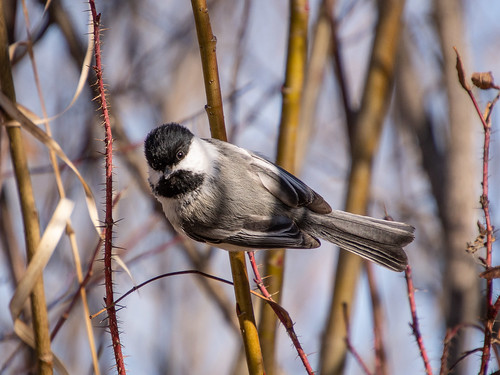
Chickadee

Upcoming Events
Wild Seeds (until Apr. 30) 
Natasha Yokoyama-Ramsay’s photography exhibit at Calories restaurant is intended to “show the beauty within the plants and how they are similar to human life."

Carbon Pricing in Canada & Australia, Mar. 28 (Saskatoon) 
Professor Jeremy Rayner will discuss the past and future of carbon pricing in Canada and Australia at 11:30 am, Mar. 28.

Flowers like Birds, Mar. 28 (Saskatoon) 
Discover over 12 plants with blooms resembling birds at Wild Birds Unlimited at 7 pm, Mar. 28.

School Climate Strike, Mar. 29 (Regina) 
Regina’s school climate strike will continue at 10 am, Mar. 29, at the Legislature (℅ EnviroCollective).

Amphibians, Mar. 29 (Saskatoon) 
The WildEcol seminar series is held at 3:30 pm, every other Friday, on the U of S campus:
Mar. 29 – Amphibian contaminants & disease, Melanie Gallant

What is WUQWATR, Mar. 30 (Regina) 
Join the WUQWATR team for a family-friendly information session from 2-3:30 pm, Mar. 30, at Sunrise Branch Library, Regina. Contact Courtney at courtney@wuqwatr.ca or 306-529-3210 to RSVP for your free spot!

Wildlife Rescue Info Session, Mar. 30 (Regina) 
A wildlife rescue orientation session is being held at 1 pm, Mar. 30, in Regina. There will be rescue training after the orientation from 2-3 pm. Email volunteer@wrsos.org to save your spot.

Earth Hour Carbonless Concert, Mar. 30 (Saskatoon) 
Join Jay Maillet and The Local Group for a solar-powered concert from 7-9:30 pm, Mar. 30, at Louis Loft.

Swift Current Creek Watershed Stewards AGM, Apr. 2 (Swift Current) 
Swift Current Creek Watershed Stewards have rescheduled their annual general meeting to 1 pm, Apr. 2.

Sustainable Tourism, Apr. 2 (Saskatoon)
Tourism Saskatoon will describe Green Stem, an online resource to help Tourism’s member organizations make sustainable choices, at 12 noon, Apr. 2, at Innovation Place Saskatoon.

Data Centre Cooling Systems, Apr. 3 (Saskatoon) 
Dr. Ahmed Abdel-Salam will discuss data centre cooling systems at the Apr. 3 breakfast meeting of the Saskatoon Energy Management Task Force.

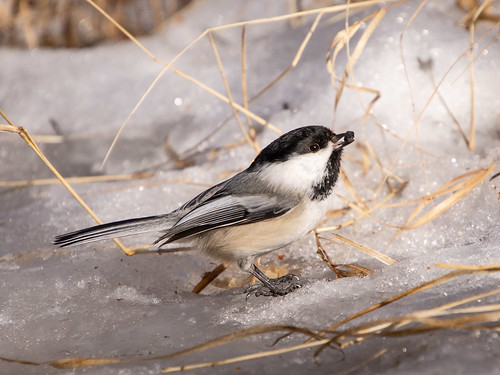
Chickadee

Looking Ahead
Project Albany, Apr. 15 
Public Pastures - Public Interest (PPPI) has raised concerns about the proposed Project Albany potash mine near Francis and Sedley. They note areas of native grassland that need to be protected as well as concerns about air and water quality and wildlife habitat. Comment on the Project Albany website before Apr. 15 or send your comments to PPPI for inclusion in their submission.

Action on Climate Change through Education, May 10-12 (Saskatoon) 
The EECOM 2019 conference, to be held in Saskatoon May 10-12 will explore action on climate change through education.

Saskatoon Nature Society 
Apr. 3, 6:30-8 pm – Gull identification
Apr. 10, 6:45-8 pm – Crocus evening hike
Everyone is welcome. Check the Saskatoon Nature Society’s website for full details and updated information.

A full list of upcoming events can be found on the EcoFriendly Sask Calendar 

In the News
The RM of Corman Park unanimously denied Fortune Mineral’s rezoning application.

“We shouldn’t be famous for being the biggest agrochemical user; we should be famous for doing the best agriculture,” says Christy Morrissey.

“Perhaps you are perfectly happy drinking out of a Saudi Arabian beer can, but you could also demand refillable glass like they use everywhere else in the world. We need to build a circular, closed-loop economy, and there's no room in it for one-way cans.”

Wolf and grizzly bear activity in important springtime habitat in Banff National Park doubles when the Bow Valley Parkway is off limits to people during the mandatory overnight closure.

A historic number of Painted Ladies are moving north at up to 25 mph.

Two Portuguese libraries are infested with bats - and they like it that way.

Urban forest management - there's room for improvement.

EcoSask News is a weekly round-up of local news and events. Email us if you have items you would like us to include. 

You can follow EcoFriendly Sask by liking us on Facebook, following us on Twitter, or by email (top right corner).

Tuesday, 21 November 2017

EcoSask News, November 21, 2017

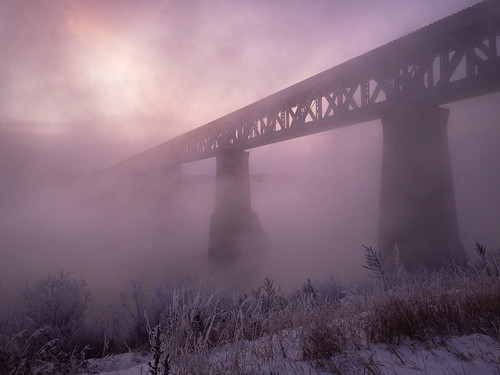
foggy winter sunrise

Upcoming Events
Fall Food Fair, Nov. 22 (Prince Albert) 
The Prince Albert Food Coalition is holding a Fall Food Fair from 5:30-7:30 pm, Nov. 22.

Bird Habitat & Biodiversity at the NE Swale, Nov. 22 (Saskatoon) 
Renny Grilz, Meewasin Valley Authority, will discuss Enhancing Grassland Bird Habitat & Biodiversity at the Northeast Swale as part of the WildEcol seminar series at the University of Saskatchewan at 3:30 pm, Nov. 22.

Not Just Flat: SK Geological Sites, Nov. 23 (Regina) 
The University of Regina’s Science Pub series is offering a talk, Not Just Flat: Top Geological Sites of Saskatchewan, from 5-7 pm, Nov. 23.

Why Grasslands Matter, Nov. 23 (Regina) 
Nature Conservancy of Canada is presenting a panel discussion on Why Grasslands Matter at 7 pm, Nov. 23, in Regina.

Walking Saskatoon, Nov. 26 (Saskatoon) 
Everyone is welcome at the upcoming meeting of Walking Saskatoon from 1-3 pm, Nov. 26.

Moose Jaw Nature Society, Nov. 27 (Moose Jaw)
Moose Jaw Nature Society will be meeting on Nov. 27 at 6:30 pm to make ornaments and decorate a tree for wildlife. Check out the recipes and ideas on their Facebook page.

From Global to Local, Nov. 28 (webinar)
Nature Canada is hosting a webinar panel to discuss interdependencies and the need for global governance systems to protect critical habitats and migratory paths from 10-11:30 am PST, Nov. 28.

The Battle for Dark Skies in Saskatchewan, Nov. 28 (Saskatoon)
Rick Huziak will discuss what stands in the way of eliminating light pollution at the 7:30 pm, Nov. 28, meeting of Café Scientific.

Want Local Food?, Nov. 29 (Regina) 
Permaculture Regina is screening the documentary, Cultivating Calgary’s Local Food Resiliency followed by a discussion about local food production at 7 pm, Nov. 29.

Sagebrush Restoration for Greater Sage-Grouse, Nov. 29 (webinar) 
Autumn Watkinson will present a webinar on Sagebrush Grasslands Restoration for Greater Sage-Grouse Recovery at noon, Nov. 29. (EcoFriendly Sask is pleased to be a sponsor of the PCAP-SK Native Prairie Speaker series.)

Wymark Wind Project Open House, Nov. 29 (Swift Current) 
ENGIE Canada Inc. is holding an open house from 4-8 pm, Nov. 29, in the Chinook Golf Course restaurant to solicit feedback on their plans for the Wymark Wind Project, 25 km southeast of Swift Current.

Benchlands Wind Project Open House, Nov. 30 (Gull Lake)
ENGIE Canada Inc. is holding an open house from 4-8 pm, Nov. 30, in the Gull Lake Community Hall to solicit feedback on their plans for the Benchlands Wind Project, 80 km southwest of Swift Current.

Co-existing with Coyotes (webinar) 
Join Lesley Sampson of Coyote Watch Canada for a webinar on co-existence programs, community buy-in, and what can lead to success or failure for co-flourishing with coyotes.

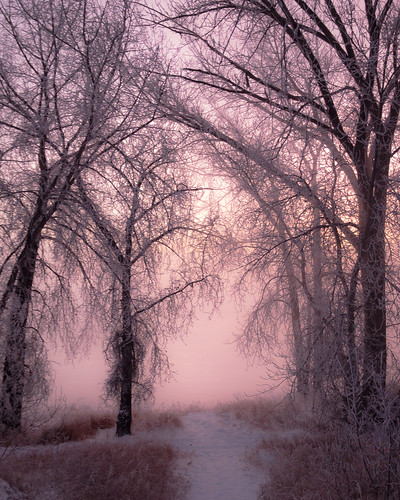
foggy winter sunrise

Saskatoon Nature Society Field Trips
Saskatoon Young Naturalists 
Jan. 13, 1-3 pm – Snowshoeing
Jan. 20, 1-3 pm – Tracks and Scats
Space is limited; register early to avoid disappointment.
Other Saskatoon Nature Society Field Trips 
Nov. 26, 2-3 pm – Pre-Grey Cup Birding at President Murray Park
Dec. 2, 9 am-5 pm – Gardiner Dam Birding
Check the Saskatoon Nature Society’s website for full details and updated information.

Looking Ahead 
Native Plant Society of Saskatchewan AGM & Conference, Jan. 27 & 28 (Regina)
The Native Plant Society of Saskatchewan will hold their annual general meeting and conference in Regina, Jan. 27 & 28. This year’s theme is A Prairie Patchwork: Selected Topics on Native Prairie and keynote speakers are Branimir Gjetvaj and Trevor Herriot.

The Prairie Ecosystems learning module of the Saskatchewan Master Naturalist program is scheduled for Jan. 28.

A full list of upcoming events can be found on the EcoFriendly Sask Calendar 

In the News
Let’s give this road to the birds.

“A coal phase-out is not only attainable but an imperative for better health and climate change mitigation, and the longer the province puts off planning for this inevitable transition the more difficult it is going to be.” (Climate Justice Saskatoon)

“H. sapiens depends utterly on a rich diversity of life-forms to provide various life-support functions essential to the existence and continued survival of human civilization.” Accelerating biodiversity loss poses as big a threat as climate change.

Armchair ecotourism: “For no reason that I can describe, I have a deep yearning to visit the desert south of Arizona. However, this would involve an 11-hour flight each way – bypassing so many other places en route – and then lots of driving, and I'd be exerting ecological pressure on an ecosystem from which it would be unfair to expect support for large numbers of non-desert humans. So I've opted, instead, for an armchair surrogate in the form of second-hand copy of the Time-Life natural history book Cactus Country.”

Solar power is expanding - but so is oil use. “It is far too early to write the obituary of oil as growth for trucks, aviation, petrochemicals, shipping, and aviation keep pushing demand higher.”

EcoSask News is a weekly round-up of local news and events. Email us if you have items you would like us to include. 

You can follow EcoFriendly Sask by liking us on Facebook, following us on Twitter, or by email (top right corner).

Thursday, 9 April 2015

Spring Adventures from the Great Saskatchewan Bucket List


It's spring and all of us are eager to be outdoors. So grab a copy of Robin and Arlene Karpan's latest book,
The Great Saskatchewan Bucket List: 50 Unforgettable Natural Wonders and head out the door.

Listed below are three places that the Karpans recommend visiting in the spring. For full details, see the book.

Keepers of the Shore: Shorebirds of Chaplin Lake – “It’s thought that up to half the world’s sanderlings refuel here on their way to the Arctic.” 

Springtime Orgy: Snakes of Fort Livingstone – “As they emerge from their hibernaculum and the weather warms, the red-sided reptiles are immediately ready to mate, and they’re not shy about it …. They form mating balls of snakes, sometimes slowly rolling down the slopes in a knotted coiled mass.” 

Letting Loose on the Lek: Dance of the Sharptails – [In spring] “The males head to the lek, or dancing grounds …. Here they strut their stuff while the gals come to check out the guys. The males puff themselves up, inflating bright purple sacs on their necks while yellow eye combs are fluffed up like bushy blonde eyebrows.” 

Copies  of The Great Saskatchewan Bucket List are available at McNally Robinson Booksellers or the Saskatoon Public Library.

See also: Saskatchewan Nature Books

Thursday, 19 June 2014

The High Cost of Lighting up the Night

“You can protect the Northeast Swale as much as you want, but if you can’t preserve the dark there will be a mass wildlife migration.” 

SaskMap (Cinzano)

We take light for granted – 24 hours a day. We chase away the dark with digital clocks beside our beds and security lights over our doors. And we are paying the price. We’re gobbling up electricity, endangering our wildlife, and losing the stars.

19% of electrical energy (1) produced in Saskatchewan is used to keep the lights on and yet so much of it is wasted by keeping offices, parking lots, and streets lit even when they are deserted. We spend $90 to $115 billion annually worldwide on wasted light, $45 to $100 million in Canada, and over $500,000 per year in Saskatoon (2).

We design more energy-efficient lights, but that just motivates us to use more of them. In the United Kingdom, from 1950 to 2000, lights became twice as efficient at producing light, but per capita electricity consumption for lighting increased fourfold. Saskatoon’s population is growing at approximately 3% per year, but our light pollution increases by 7% annually.

What is light pollution?
Rick Huziak is a member of the Saskatchewan Light Pollution Abatement Committee, a committee of the Royal Astronomical Society of Canada, Saskatoon & Regina Centres. He says that astronomers in Arizona were the first to notice the rapid increase in night-time lighting. The most advanced observatory in the United States was over 100 miles from Tucson, but it was threatened with closure because Tucson – and its light dome – was growing so rapidly.

The International Dark Sky Association was established in Tucson in 1988. They promote one very simple idea: light what you need, when you need it. Their website states, “We know some light at night is necessary for safety and recreation. We work with manufacturers, planners, legislators, and citizens to provide energy efficient options that direct the light where you want it to go, not uselessly up into the sky.”

Rick says light pollution is light that shines where it is not needed or wanted as well as light that is too bright. “All light pollution is conservable waste,” he says.

Light pollution from Royal University Hospital, Saskatoon (R. Huziak)

Why does it matter? 
As citizens, we don’t like excess noise. The City of Saskatoon has a noise bylaw and builds noise abatement walls beside major roadways. We seem oblivious to light pollution and yet it affects us all.

First and foremost, it affects our pocket books and our future. The more light we use, the more energy we consume, increasing our greenhouse gas emissions, and shortening the future for human life on earth.

Human beings have an internal clock that regulates their physical, mental, and behavioural patterns, responding to light and dark in our environment. For example, we sleep far better in a dark room. A fact sheet from the National Institute of General Medical Sciences states that “Abnormal circadian rhythms have also been associated with obesity, diabetes, depression, bipolar disorder and seasonal affective disorder.” 

The day/night cycle is even more important for wildlife. “There’s a reason why wolves howl at the moon,” Rick says. “They’re hungry.” Rodents and small animals, such as black-footed ferrets, an endangered species in Grasslands National Park, require completely dark skies to hunt. Even moonlight would make them easy prey for eagles, coyotes, and other large animals.

Night is when many animals are most active. “Most animals are nocturnal,” Rick says. “During the day, animals in Grasslands National Park are few and far between. At night, it’s hard to walk 10 feet without tripping over an animal. Night is also when many animals mate. A change of 1% in light intensity will stop amphibians from mating.”

Saskatoon’s Northeast Swale is one of the largest pieces of native grassland and wetlands. It is home to a diverse assortment of wildlife, from white-tailed deer to burrowing owls and northern leopard frogs. But as new neighbourhoods are developed around the Swale, wildlife will be threatened by the light spilling over into their previously dark area. The birds, animals, and reptiles will be forced to flee in a search for darkness so that they can hunt, eat, and mate.

“You can protect the park as much as you want,” says Rick, “but if you can’t preserve the dark, there’ll be a mass migration.”

Designating the Swale as an Urban Star Park would ensure that artificial lighting was strictly controlled and that active measures were taken to promote the reduction of light pollution.

How can we protect the night? 
A lot of light is wasted because it shines straight up into the sky or sideways, rather than lighting the ground. Businesses have wall-mounted flood lights above their loading bays, even though they never accept shipments after 5 pm or before 8 am.

We also use excessive light. Gas stations sometimes use six times as much light as recommended and the Dakota Dunes Casino used to boast that their lights could be seen for 100 miles in all directions. (The casinos later decided to turn their lights off, saving almost $1 million per year.)

Full brightness LED billboards waste energy and create dangerous glare and distraction for passing drivers. If the City were to allow billboards along South Circle Drive, they would have a profound impact on wildlife in the river valley and golf courses.

Responsible lighting is erected only when and where it’s required. The light is shielded or directed so that the light is only where it is needed (not in the sky or on your neighbour’s property). Responsible lighting uses an appropriate level of lighting (not thoughtlessly set to maximum). It’s integrated rather than competing with other lighting, and it’s turned off when it’s not needed.

New technology brings with it new potential for greater control and flexibility. Street lighting could be dimmed after midnight or could be triggered by approaching traffic.

Responsible lighting is shielded and directed where it's needed. (R. Huziak)

Don’t we need lights to prevent crime? 
It’s a myth that bright lights prevent crime. In fact, Rick says, they do just the opposite. “Chicago tripled its downtown light and crime soared,” Rick says. “A city in Pennsylvania put lights on a bridge to stop incidents of sexual abuse, and they increased 300%.” Criminals don’t wander in darkened areas. If you can’t see, you don’t go there. Plus criminals need light to identify things to steal.

“Bright lights create glare, making it difficult to see what’s going on,” Rick says. “Subtle lighting, which enables you to see the entire environment, is much more effective.”

What can municipalities do to prevent light pollution? 
The City of Saskatoon passed a Comprehensive and Integrated Dark Sky Policy in 2008. The policy has still not been implemented, but Saskatoon Light and Power immediately began using shielded fixtures that don’t create light pollution. As a result, Saskatoon’s parks have dark sky compliant lighting. Meewasin Valley Authority is also dark sky compliant.

There is much more that the City could do. They could reduce the wattage on all the lights while still remaining within the recommended guidelines. Or they could reduce wattage on the lights between intersections where bright lights aren’t as important.

“If the City of Saskatoon is serious about greenhouse gas reduction and climate change,” Rick says, “they need to extend the policy to include businesses and residences and pass bylaws that prevent waste.”

The City of Martensville has done just that with a simple addition to its zoning bylaw stating that all lights must shine only on your own property.

Responsible lighting at RCMP Building (R. Huziak)

What can businesses and residents do? 
If we are to protect the wildlife in the Swale, businesses and residents, as well as the municipality, will need to be dark-sky compliant.

A number of businesses have already recognized the tremendous cost savings they can achieve by using responsible lighting. Jubilee Ford turns its lights down to half brightness after midnight and uses shielded lights that are dark-sky compliant. Shell gas stations turn off their lights when closed.

The Saskatoon Inn has won a national award for its environmental plan, which includes responsible lighting, and is one of the few hotels in the province to hold a 4 Green Key rating from the Hotel Association of Canada for its environmental leadership.

Walmart has installed directional lighting in all its parking lots. Rick says that the Walmart on 22nd Street has shielded lighting that keeps lighting on their property off the street as well as out of the sky.

Responsible lighting at a Shell gas station (R. Huziak)

Businesses will enjoy huge cost savings if they become dark sky compliant, but there may be additional unexpected benefits. Cypress Hills Interprovincial Park was designated as a Dark Sky Preserve in 2004, and volunteer dollars built an observatory that opened in 2012. An Astronomer in Residence offers interpretive programs and astronomy has become the #1 activity with 10 times as many participants as any other park activity.

Grasslands National Park is also a Dark Sky Preserve and the Dark Sky Preserves have become a major tourist attraction, drawing visitors to Southwest Saskatchewan.

It’s time we take concrete action. Responsible dark sky lighting isn’t a frill. It’s essential if we’re to conserve energy, reduce greenhouse gases, and protect wildlife.

1. This figure, from a 2006 SaskPower report, includes indoor lighting. Outdoor lighting is slightly less than 10%. 

2. Many of the statistics in this article were provided by Rick Huziak and were included in a Saskatchewan Light Pollution Abatement Committee presentation to the 2013 Saskatchewan Citizens' Hearings on Climate Change.

Thursday, 22 May 2014

Summer Explorations in Saskatoon and Saskatchewan

There are so many ways to have fun outdoors. Here are some suggestions.

Pelicans

In the City
Look for songbirds or learn to identify butterflies (Saskatoon Nature Society)

Visit the College of Education’s Prairie Habitat Garden

Admire the cougars, wolves, and deer; take a walk around the 100-year-old former forest nursery station; or smell the roses at the Saskatoon Forestry Farm Park & Zoo

Rent a bicycle and head out on the trails along the river

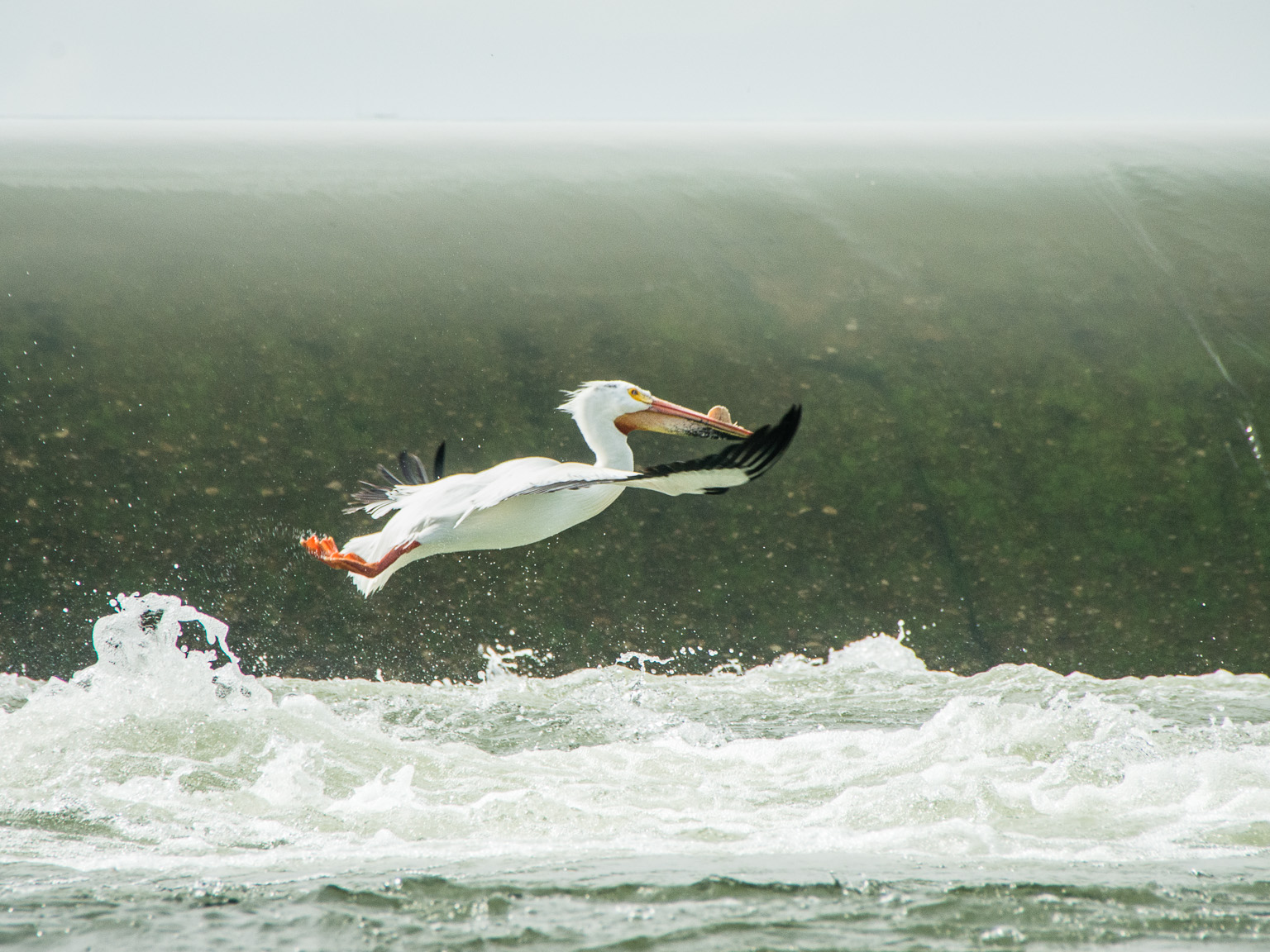
Admire the pelicans at the weir

Help pull weeds every Wednesday evening at the Garden Patch

Participate in a riverbank clean-up with Plastic Smart Saskatoon

Shelley

On the Water
Explore the history of Saskatoon’s river on a day-long canoe trip and corn roast (CanoeSki Discovery Company)

Take an overnight canoe trip on the City’s doorstep (CanoeSki Discovery Company)

Explore Chappell Marsh, a 148-acre wetland conservation area (Ducks Unlimited Canada)

Look for medicinal plants or explore Redberry Lake by canoe (Clearwater Canoeing)


On the Prairies
Visit one of our few remaining patches of native prairie at Saskatoon Natural Grasslands. Keep your eyes open for red-tailed hawks and blanket flowers (gaillardia)

Take a walk at Wanuskewin Heritage Park and keep a look out for one of the 184 species of birds or 37 different animals you may see as you walk along the creek or the cliffs

Enjoy the sun on the beaches at Cranberry Flats Conservation Area or take advantage of the wheelchair accessible boardwalk overlooking the river

Go for a walk at Beaver Creek Conservation Area. If you’re lucky, you may see a beaver or a sheep grazing demonstration

Grasslands National Park

Further Afield
Take a walk around the Kerrobert Reservoir

Walk or cycle the Trans Canada Trail as it winds its way up a hill, through a tunnel, and across the river at North Battleford

Visit the Crooked Trees whose branches twist and loop and reach out in all directions

Take a walk on the largest set of active sand dunes in Canada

Study the passive solar design, straw bale walls, and other green building techniques at the Craik Eco-Centre

Take a hike or pick berries at Redberry Lake Biosphere Reserve – you’ll find Buffaloberries, Hawthorn, and Rosehips at summer’s end

Participate in one of the Saskatchewan Outdoor and Environmental Education Association’s workshops or camps

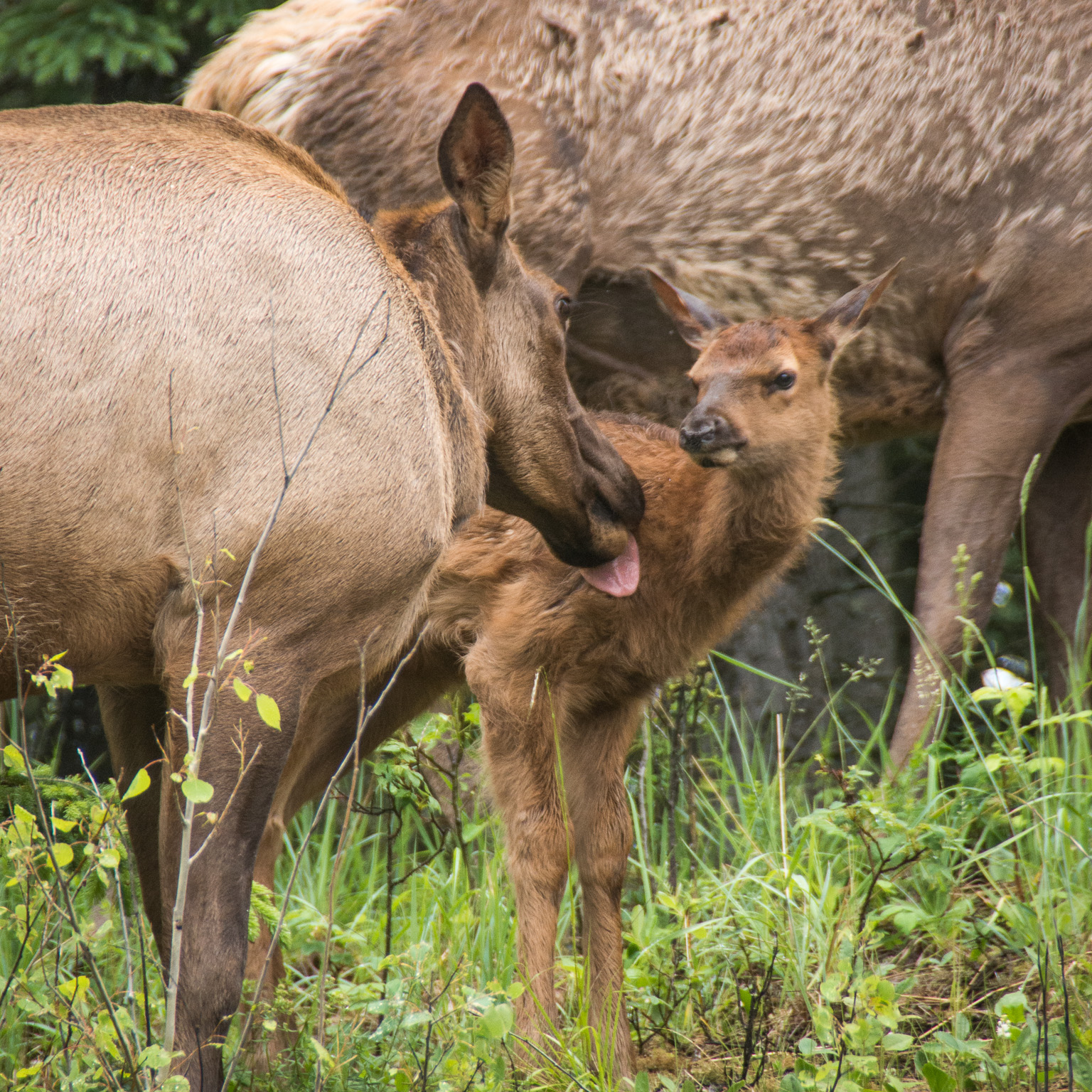
elk

Provincial and National Parks
Plan a backpacking adventure in Grasslands National Park

Visit Grey Owl’s Cabin in Prince Albert National Park

Check for cacti as you walk among the active sand dunes in Douglas Provincial Park

Admire the stars at Cypress Hills Interprovincial Park

Rent a canoe at Pike Lake Provincial Park

Untitled

Additional Resources
Nature Viewing Sites in and around Saskatoon, Saskatoon Nature Society (available from the Saskatoon Public Library)

Saskatchewan’s Best Hikes & Nature Walks and Saskatchewan Scenic Drives, Robin & Arlene Karpan (available from the Saskatoon Public Library and McNally Robinson Booksellers)

Nature in our Backyard: Saskatoon’s Naturalized Parks

The Northeast Swale: Ancient River Valley, Urban Nature Reserve

Heading out on the Water: Saskatoon Kayak/Canoe Training and Tours 2013

Pine Cree Regional Park

Last Mountain Lake Bird Sanctuary

Come Out and Play: Cypress Hills Eco-Adventures

Canoe the Bagwa Loop

Saskatchewan Tourism: Our Natural Heritage

Thursday, 27 March 2014

Turning Aside: Observing the Kerrobert Reservoir


If you are looking forward to exploring Saskatchewan this summer, consider visiting the Kerrobert Reservoir. You’ll definitely want to go after taking a look at Lois Siemens' book, Turning Aside: Observing the Kerrobert Reservoir.

The Kerrobert Reservoir (an enhancement project of the Kerrobert Wildlife Federation) covers approximately 17 acres (the size of about 43.5 ice rinks) a mile from town.


In 2004, a community group, a partnership between the Kerrobert Communities in Bloom Committee and the Kerrobert Wildlife Federation, decided to establish a trail leading out and around the reservoir. The trail was completed in 2011 and includes benches, a viewing tower, and a suspension bridge. Interpretive signage describes the birds and wildlife that can be seen along the trail and provides facts about water conservation.


Lois Siemens is a resident of Kerrobert and an avid photographer. She began sharing her photographs with friends and eventually published a book. Turning Aside: Observing the Kerrobert Reservoir, published by Friesen Press, is a collection of photographs taken at the reservoir during the four seasons. It’s accompanied by short quotes and explanations and is a delight to look at. It will definitely inspire you to take a road trip to Kerrobert.

The book is available at McNally Robinson Bookseller, the Saskatoon Public Library, and online.

“The world is more wonderful than any of us have dared to guess,
as all great poets have been telling us since the invention of poetry. 
To discover these truths we don’t need to scale Mount Everest 
or white-water raft the Colorado or take up skydiving. 
We need only go for walks.” 
Sharon Butala (excerpted from Turning Aside)

Photo credits: Lois Siemens

Tuesday, 28 January 2014

EcoSask News, January 28, 2014

Untitled

Events
Winter Cycling Workshop, Jan. 28 
It may be cold outside, but that shouldn't stop you cycling. Find out more at the USSU's Winter Cycling Workshop on Tuesday, January 28, from 4:30-5:30 pm at Louis' Loft, U of S. Chance to win a free set of winter tires!

Escape Winter – Food Gardening, Feb. 8 
Join the Prairie Master Gardeners for a day devoted to food gardening. Workshops include Small Space Gardening, Culinary Herbs, Harvesting & Storing Produce for Winter, and Starting a Horticultural Enterprise.

Global Citizen Awards, Feb. 8 
Mark Bigland-Pritchard will receive a Global Citizen Award from the Saskatchewan Council for International Cooperation at 7 pm on February 8 at Louis’ Loft, University of Saskatchewan.

Wildlife Rehab, Feb. 9 
Jan Shadick, who started Living Sky Wildlife Rehabilitation, will be speaking at the Wild Birds Unlimited store on February 9 at 1:30 pm.

Passive House Presentation, Feb. 11 
ASHRAE Saskatoon invites you to attend a presentation on Passive House and Low Energy Buildings by Certified Passive House Designer, Stuart Fix, president of ReNu Building Science. RSVP by February 7.

Native Plant Conference, Feb. 14-15 
The Native Plant Society of Saskatchewan is hosting their 19th annual meeting and conference in Regina, February 14 and 15. The theme is landscape ecology. The keynote speaker is Jessamyn Manson, University of Alberta, who will speak on the relationship between plants and their animal pollinators.

Take Action 
We can make a difference. We just need to take action. Here are a couple of ideas:
Create a butterfly habitat corridor

Use YardMap (Cornell Lab of Ornithology) to attract more birds to your backyard and share your results with others

Thought Provoking
Wind Power Hits Roadblocks 
Many people are predicting that community-based energy generation is the way of the future. But it’s difficult to initiate. As a result, Saskatoon Community Wind must tackle high start-up costs and lots of difficulties. Should the City of Saskatoon lend their support to this project?

Fashion – too trendy, too cheap, too much
“Traditional sustainable clothing has focused on the process itself, but the slow fashion movement focuses on the entire cycle from start to finish.”

Thumbs Up
Tourism Saskatoon’s newly-launched Green Stem program encourages member businesses to adopt sustainability practices and strengthen their environmental commitment

U of S students are campaigning to ban sale of bottled water

EcoSask News is a weekly round-up of local news and events. Email us if you have items you would like us to include. Additional upcoming events can be found on our Calendar.

 You can follow EcoFriendly Sask by liking us on Facebook, following us on Twitter, or by email (top right corner).

Thursday, 2 May 2013

Heading out on the Water: Saskatoon Canoe/Kayak Training and Tours


There are lots of opportunities to get out on the water this summer with training and tours for canoe or kayak. Let us know if we missed an organization or activity, and we’ll add it to the list.

CanoeSki Discovery Company
CanoeSki Discovery Company specializes in wilderness canoeing and cross-country skiing. They offer a 12-hour Learn to Canoe course as well as Beginner, Intermediate, and Advanced Paddling workshops.

A weekend Whitewater Primer in August helps participants make the transition from lake to river paddling. CanoeSki also offers Wilderness Navigation and Orienteering courses and private canoe lessons for individuals and groups.

CanoeSki offers a wide variety of different canoe trips from a fly-in rock art archaeology camp, to a women-only trip on the Churchill River, and short overnight or day trips near Saskatoon.

Clearwater Canoeing
Clearwater Canoeing has made their canoes available for rent at Redberry Lake Biosphere Reserve. Visit the Research Centre to make arrangements. The Centre is open Monday to Friday from 9 am to 5 pm and on Saturdays and Sundays from 10 am to 4 pm from June 1 to September 5.

Clearwater offers various tours, including an overnight tour to Fort Carlton, The Hobbit tour on the McLennan Lakes chain, and a Women’s Reconnect with Nature Retreat.

Coldspring Paddling
Coldspring Paddling offers short introductory paddling courses as well as Paddle Canada Certified Kayak Courses, Intermediate Kayak Clinics, and Level 1 Sea Kayak Skills.

Maskwa Paddle Co.
Mark Lafontaine has just opened Maskwa Paddle Co. He’s offering three Learn to Paddle workshops in June as well as 16-hour Paddle Canada certified canoe courses at the Intermediate and Advanced Tandem level in July. Private individual and group lessons are also available. Ask Mark to show you his hand-carved paddles.


Meewasin Canoe Tours 
Canoe tours in Meewasin Valley Authority’s 25-foot, voyageur clipper canoes are an opportunity for novice canoeists to learn about the river from the river. The tours run out of the Beaver Creek Conservation Area from June through August and last approximately 3 hours.

Tours must be booked in advance (call Gillian May at 306-665-6887) and work best for groups of 8 or 16 people (using one or two canoes). The cost is $200/canoe, but tours are free for non-profit groups.

SOEEA
The Saskatchewan Outdoor and Environmental Education Association is offering a canoe certification course from May 18 to 20 in Saskatoon. The course will include tandem and solo lake water canoe skills with an opportunity to reach Introductory and Intermediate levels.

Saskatoon Canoe Club 
The Saskatoon Canoe Club is a group of paddling enthusiasts. They offer courses and canoe trip opportunities for members. The Club has two divisions for Recreation and Marathon. They’re holding an Open House at noon on May 5 at the Victoria Park Boathouse.

Saskatoon Racing Canoe Club 
The Saskatoon Racing Canoe Club provides training in sprint canoe and kayak racing. They offer various summer classes and day camps for youth at the introductory, developmental, and high performance level, as well as a winter training program.

They also offer a two-week, evening Adult Learn-to-Kayak program, and a Masters program for people who wish to continue paddling throughout the summer.


See also:
Canoe Kayak Saskatchewan is the provincial sport governing body for canoe and kayak.

Canoe Saskatchewan provides information about routes and trip planning.

Tourism Saskatchewan will help you include canoeing and kayaking in your holiday plans.

Thursday, 26 July 2012

Grasslands National Park: Accessible to All


By Penny McKinlay

Grasslands National Park in southwest Saskatchewan is huge, offering wonderful opportunities to get away from civilization and immerse yourself in the rolling hills and grasslands. But arthritis is really limiting my mobility these days. Would I be able to enjoy the park and get a taste of what it has to offer without hiking long distances?

Yes! Despite limited mobility, you can experience the varied landscape, animals, birds, and plants in Grasslands National Park.

Frenchman River Valley Ecotour
The manager at The Convent, where I spent the night in Val Marie, recommended taking the Frenchman River Valley Ecotour.

You follow a gravel road through the park for approximately 20 kilometres, stopping at 8 interpretive stations along the way. You can either return the way you came or make an 80-kilometre loop, but I was warned that it was easy to get lost on the longer loop.

Each of the stations highlights a different aspect of the park, and I was amazed by how much the terrain could change within such a short distance. You can often get a sense of the location without getting out of your car, but I jumped at the opportunity to go for a short hike along the trails at each station.

The first station overlooks the Frenchman River Valley, and I was lucky enough to catch a glimpse of a pronghorn antelope and some bison. One bison was quite close, and he didn’t seem to be too impressed when I interrupted his grazing.

The second station was at a large black-tailed prairie dog colony. There were so many of them! It was a joy to listen to their high-pitched warning cries and to watch them standing up tall to get a better view.

Other stations took me to some of the early ranches in the area and to teepee rings left by the Aboriginal people who travelled through this area so many years ago. From the grassy heights overlooking the valley bottom, I moved on to a short trail beside a curving stream and watched a heron fly overhead until he landed much further up the valley.

There were so many songbirds and wild plants and grasses, and I thoroughly enjoyed my two and a half hour tour of the park.

Interpretive Trails
You can also follow two short interpretive trails not far from Val Marie – I’m saving these for my next visit to the Park.

The Two Trees Trail is 1.5 kilometres long and is the only marked interpretive trail in the park. There is also a short trail beside the creek, starting from the same access point.

Information
The Visitor Centre in Val Marie has lots of brochures as well as staff on hand to answer all your questions.

Val Marie
I recommend The Convent if you are looking for accommodation. It was built in 1939 and still contains the original chapel and many signs of its previous life as a school run by the Sisters of Assumption.

I was happy to sit on the long, second-storey verandah in the evening and read my book while enjoying the view. The fresh-cooked breakfast was excellent.

Friends of Grasslands operates Prairie Wind & Silver Sage, a combination coffee shop, museum, art gallery and store.

There’s wifi access, hot and cold drinks, and an amazing collection of nature books for sale (including lots of children’s books). It’s definitely worth stopping by.

Tuesday, 10 July 2012

EcoSask News, July 10, 2012

Bash a Burdock, Rescue a Plant, Bike to the Festival, Support Wildlife Rescue, 
Green your Neighbourhood - all this and more in EcoSask News


Gardens & Plants
Burdock Bash & Northern Leopard Frog Splash, July 14 
Join the Nature Conservancy of Canada (NCC) at the Burdock Bash & Northern Leopard Frog Splash on July 14 from 9 am to 4 pm. You’ll be assisting the NCC as they battle burdock, an invasive species, in the Upper Qu’Appelle Natural Area while bird-watching and searching for the elusive northern leopard frog.

Permablitz, July 15 
The Permaculture Research Institute is looking for volunteers to help with a Permablitz from 9 am to 3 pm on July 15. Transform a front yard in Saskatoon by adding a rain barrel, connecting it to swales and pathways and putting down sheet mulch for garden beds. Email permablitz@permasask.ca if you’re interested.

Hanging along the North Saskatchewan, July 21
Join experts from the Native Plant Society of Saskatchewan and Nature Saskatchewan as they help the Nature Conservancy of Canada to inventory the flora and fauna at one of the NCC’s newest protected areas along the North Saskatchewan River. The landscape supports diverse plant communities and some rare species of birds and plants.

Applied Permaculture Workshop, September 7-9 
Hatchet & Seed Contracting is offering a three-day hands-on permaculture garden design course at Ness Creek Ecological Site near Big River from September 7-9. Apply before August 1 to receive the early bird price.

Rare Plant Rescue
If you live on a farm, ranch, or acreage, you can help identify and protect rare plants. Nature Saskatchewan has operated its Rare Plant Rescue program since 2002 and has helped 68 farmers and ranchers to conserve rare plants and valuable rare plant habitat in southern Saskatchewan.

Program staff conduct rare plant searches and engage producers in voluntary conservation activities. The information has been valuable in federal assessments of species at risk. Interested landowners can contact Nature Saskatchewan at 1.800.667.4668 for more information.

Urban 
Bike to the Festival 
Saskatoon Cycles has added a Google Map to their website so that you can find out exactly when and where you can use their Bike Valet. They’ll be at Taste of Saskatchewan (Kiwanis Park at 20th Street) from July 10 to 15, SunCycle, July 28 & 29, and at the Fringe from August 2 to 11 (supported by an EcoFriendly Action Grant).

Sustainability Presentations 
Contact the Saskatchewan Eco-Network (SEN) if you would like them to make a presentation on sustainability at a community group meeting (306.652.1275, info@econet.sk.ca).

The “State of the Art in Sustainability” slideshow was shown at SEN’s annual general meeting and showcases successful models from various regions around the world.

Grants & Rebates
Green Your Neighbourhood 
CN EcoConnexions From the Ground Up will provide up to $25,000 for the greening of municipal and First Nations properties, especially areas in close proximity to its rail lines. Year One applications must be received by July 12, 2012. Year Two applications must be received by March 13, 2013.

Toilet Replacement
Replace a high-volume toilet with a dual flush or 6-litre per flush or less toilet, and you may be eligible for a $50 rebate. Additional information is available from the Saskatchewan Watershed Authority.

Pagan Lake Clean-Up
Three cheers for the Meadow Lake Junior Forest Wardens who cleaned the trail and installed birdhouses at Pagan Lake (supported by an EcoFriendly Action Grant).

Interesting Articles
8 Ways to Green Your Summer Travel 
Living Sky Wildlife Rehabilitation & Photos
Saskatoon's Urban Nature Reserves 

EcoSask News is a weekly round-up of local news and events. Email us if you have items you would like us to include. A complete listing of all upcoming events can be found on our Calendar.

You can follow EcoFriendly Sask by liking us on Facebook, following us on Twitter, or by email (top right corner).

Friday, 15 June 2012

We wish you were here in Saskatchewan - to have fun outdoors!

Saskatoon and Saskatchewan offer a wide range of outdoor adventures. Be sure to visit!


Saskatoon 
Cycle along Saskatoon’s riverbank on the Meewasin Valley trails. Be sure to visit the pelicans at the weir. Stop for an ice cream cone at River Landing.

Visit Saskatoon’s Northeast Swale, ancient river valley, urban nature reserve.

Spring is a great time to visit the Saskatoon Zoo and Forestry Farm as there are lots of baby animals. Ask one of the Saskatoon Zoo Society members to show you around.

Check out some of our community gardens. Or give Wally Satzewich, the co-founder of SPIN farming, a call and visit one of his urban farm plots.

Visit Mistik Acres, a flower farm on the Prairies, just outside of Saskatoon.


Saskatchewan
Canoe the Bagwa Loop in Prince Albert National Park. Maybe you’ll catch a glimpse of a beaver or hear the haunting cry of the loon.

If you’re here in the spring or fall, be sure to visit Last Mountain Lake Bird Sanctuary. The sheer number of birds passing through our province is spectacular.

Enjoy the night skies at Cypress Hills Interprovincial Park. There’s an observatory and a resident astronomer in the summer.

While you’re there, take a ride on the zipline with Cypress Hills Eco-Adventures. 

#WeWishYouWereHere     #Saskatchewan

Thursday, 31 May 2012

Starry Skies: Cypress Hills Interprovincial Park

As Canadians, we take pride in our starry skies, northern lights, and large stretches of wilderness. And yet, more and more, we are urban dwellers, filling our skies with artificial light that blocks out the moon and the constellations.

Stargazers and nature lovers have begun banding together to create Dark Sky Preserves, sanctuaries from artificial light where people can enjoy the splendour of the night sky.

Cypress Hills Interprovincial Park was designated as a Dark Sky Preserve in 2004, and park employees are working hard to provide a wide variety of opportunities for people to experience the park in both daylight and starlight.

Melody Nagel-Hisey is a Park Area Naturalist for Cypress Hills Interprovincial Park, where she has worked since 1993. She says that the public stargazing programs have been a popular park program for many years, but they are sure to become even more popular now that the park has an observatory, an astronomer in residence, and a Dark Sky Campground.

Park Facilities
The Friends of Cypress Hills Park first discussed building an observatory in 2007. With only a little government assistance, the Friends began constructing a 16-foot stand-alone observatory and a yurt classroom in fall 2010. A local carpenter was hired during start-up, but the volunteers did much of the work themselves.

The Friends of Cypress Hills Park have also donated several telescopes. The smaller 10” and 12” telescopes are set up outside, while a 14” Celestron telescope is set up in the observatory and connected to the yurt classroom.

There is room for about 10 people in the observatory where they can take turns viewing the night sky. Larger groups use the classroom. Images from the observatory telescope can be projected onto the screen, and a laser beam can be used to point out different constellations so that people know exactly what they are looking at.

In the daytime, visitors can use the solar telescope to view the sun without hurting their eyes.

Astronomer in Residence
Starting in 2012, a University of Regina astronomy student will be volunteering for the summer. The student will be located at the observatory and available, along with park interpretive staff and visiting astronomers, to provide public programs.

Public Stargazing
Stargazing groups meet at the observatory at dusk when there is still enough light to get organized and take a quick look at the star locator maps and other handouts.

Visitors take turns using the telescopes, which have been set up to focus on a particular star or constellation. Tour guides provide background information and discuss how First Nations people used to navigate by the stars when they were travelling and had their own set of names and myths surrounding the different constellations.

Saskatchewan Summer Star Party 
The Regina and Saskatoon chapters of the Royal Astronomical Society of Canada work closely with Cypress Hills Park, providing expertise and information. They hold an annual Summer Star Party, which includes a full program of activities, with both convention and public programming.

Dark Sky Campground 
Light and dark trigger changes in the human anatomy. When we disrupt our biological clock, we experience problems, such as jet lag or increased illness due to shift work. And yet, it is rarely fully dark.

Cypress Hills Park is now offering visitors the opportunity to camp in their Dark Sky Campground, located next to the observatory. No artificial light is allowed in this area. Interior car lights must be turned off, and flashlights and car headlights must be covered with red film. “We’ve tried to eliminate any white light that will interfere with people’s enjoyment of the night sky,” Melody explains. “The campground is geared to astronomers and people who are comfortable and enjoy camping in the dark.”

Minimizing Light Pollution 
The park is switching over to flat-lens street lights that direct the light down and not up in the Centre Block.

In addition, business operators and cabin owners are being encouraged to install dark-sky compliant lighting and to turn indoor lights off when they are not in use.

The Alberta side of the park recently distributed special light bulbs to all their patrons to encourage them to install dark-sky compliant lighting at their cottages. Melody hopes that the Saskatchewan park can find a partner in order to provide a similar program.

What can we do? 
There are many ways in which you and your family can promote and enjoy the night skies: