Katie and Aaron Suek wanted to raise their three kids in a rural setting and were looking for an acreage close to Saskatoon. They were looking for 10-15 acres, but plots that size were “crazy expensive,” Katie said. They looked at some Ducks Unlimited properties with conservation easements, but they were too far from the city. Then they found an 80-acre plot just 10 minutes from Saskatoon at half the price of smaller acreages. The land close to the road was a former crop field and full of weeds, but there was a really lovely wetland further into the property. The site had originally been crop and hayland but massive flooding had cut the land in half, severing access to the back 40 acres.
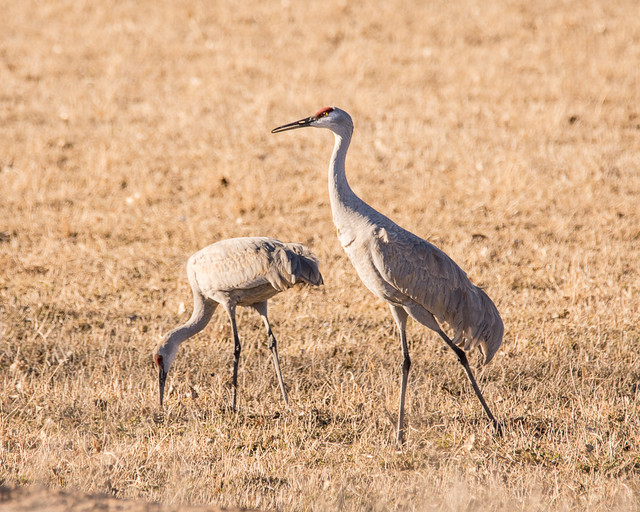
The land was purchased and Katie and Aaron knew they wanted to use a few acres for a yard site. But what could they do with the rest of the land? They waited for inspiration and it appeared one day in the form of a whooping crane. “We started to see rare species on our land,” Katie says. “There are loggerhead shrike, badgers, common nighthawk, tiger salamander, Canadian toad, Cooper’s hawk, bald eagles, porcupine, deer, and coyote. Just the number of species and individuals is really impressive.” It was an easy decision to not farm the land. They decided to allocate 9 acres to their yard site and the remaining 71 acres to the Restoring 71 Project.
With no formal training in the natural sciences, Katie and Aaron took their lead from the land which began to rejuvenate itself. There was a small patch of native prairie in a corner that couldn’t be reached by large agricultural equipment. They are slowly mowing and disturbing the hay field near it to encourage the native grasses and plants to re-emerge. The Sueks are applying strategic mowing in key areas, adding in organic matter, and planting native grasses, trees, and flowers in an effort to encourage restoration, but in general they are letting the land look after itself.

The Sueks joined Nature Saskatchewan’s Stewards of Saskatchewan program after identifying endangered species such as loggerhead shrike on their land. It’s proved valuable as they’ve received resource materials and have someone they can phone whenever they have a question. Unfortunately, they’re not eligible for any financial assistance from organizations such as Nature Saskatchewan as the grants are reserved for large-scale agricultural operations or for projects designed to restore very specific habitat features for key species at risk that have been observed on the land.
Katie and Aaron strongly believe that acreages are a missed opportunity as they have so much potential for positioning the protection and restoration of natural areas as a convenience rather than an added effort. “People want a large enough property to feel rural, but then they believe they have to create manicured, pristine, evenly-mowed yard,” Katie says. “It’s so much less work and you’ll see so much more wildlife if you let it go wild.” The Sueks encourage people to preserve what’s already there and support regrowth of native species that used to thrive there. They are happy to help people find resources.
There have been some challenges. The wetland crosses one of their property lines and a neighbour chose to plough it without the proper permits and approvals (any wetland that crosses property lines is considered provincial property). It’s hugely disappointing as, although most of the wetland is on the Suek’s land, the deepest portion was on the neighbour’s land where frogs are known to overwinter and breed so it is likely that frog populations have been significantly impacted. The Sueks believe that removing the wetland will lead to generalized flooding, which they hope will eventually restore the original wetland. They have been in talks with the province to determine an appropriate path forward for protecting the wetland.

Katie, Aaron, and their kids really enjoy getting out on the land. “In the spring, it’s almost an obsession,” Katie says. “We want to get out there and see what new species we can spot.” In October 2018, they decided to share their pleasure with the general public. They set up a Facebook page to share Aaron’s photographs and invited the public to come visit. At first, there was limited interest, but then Covid hit, playgrounds and conservation areas were closed, and people longed to be outdoors while staying safe. A booking system means that you can have the trails to yourself and you don’t have to worry about ensuring social distancing with kids and dogs. There is no charge. “It’s a niche opportunity for people who need a mental health break,” Katie says, one taken advantage of by 450 people by the end of 2020. Aaron maintains 4 km of mowed trails and they have installed some interpretive signage. When Covid permits, Katie offers guided tours, and they provide an orientation for new visitors to help ensure their safety while exploring the trails.
Katie says that keeping the trails open has helped her get through the pandemic as she is able to socialize briefly with visitors while social distancing across the parking lot. The number of visitors is monitored and adjusted weekly depending on Covid restrictions, nesting or fledgling seasons, weather and trail conditions, and family or work priorities.
This past fall, Katie and Aaron set up an outdoor classroom as they were hearing so much talk around outdoor education and home schooling. “We felt we were close enough to the city and flexible enough to provide a space and wait and see if it was used,” Katie said. Initially there was a lot of interest from teachers, but then they learned that field trips were unlikely to occur due to Covid.

The Sueks are also working with students from Montgomery School through the One School One Farm program. Students will be planting plugs of native seeds donated to the project by the Native Plant Society of Saskatchewan. Hopefully the students will be able to come out to the site this spring to plant their seeds. If not, Katie will plant them and send photographs to the students.
Katie says the message they really want to get across is that you don’t have to own 71 acres to restore it or use environmentally friendly practices. “Look for opportunities where you can,” she says, “whether it’s a small backyard or an apartment balcony. You can do it in small pieces and you don’t need a lot of resources.”
Resource Materials
Resources for Stewards, Nature Saskatchewan
Acreage Living, Native Plant Society of Saskatchewan
Restoration/Revegetation Resources, Native Plant Society of Saskatchewan
Wildlife Friendly Gardening Guide & Certification Program, Canadian Wildlife Federation
Landscaping with Native Plants (Saskatchewan) Facebook group
Photo credit: Aaron Suek, Restoring 71 Project Facebook page