Showing posts with label Europe. Show all posts

Thursday, 6 January 2022

Looking Ahead: Cities in the Next Decade

rainy view from Granville Island Hotel

With over 80% of the Canadian population now living in urban areas, how we design, build, and live in our cities has a significant impact on the environment. Cities can lead the way in addressing climate change or lag behind. We’ve found a number of reports and examples of how cities can successfully address climate change. 

A Changing Climate 
“The climate determines almost everything about how we design, build, and live in our cities. The streets and sidewalks, businesses and homes, parking lots and public transit that we use every day have been created to suit our climate. Now, with our climate changing, we need to re-think important aspects of how we live our urban lives.” [Canadian Cities and Climate Change, Climate Atlas of Canada] 
The Prairie Climate Centre’s interdisciplinary team are climate change storytellers. They’ve developed Building a Climate-Resilient City, a set of 9 reports on how we can set about building climate-resilient cities. Specifically addressing the concerns of Calgary and Edmonton, the reports cover economics and finance, agriculture and food security, urban ecosystems, transformational adaptation, transportation infrastructure, water supply and sanitation systems, electricity and information and communication technology infrastructure, the built environment, and disaster preparedness and emergency management. In addition to providing an overview of the issues, the reports share ideas and approaches that can be implemented immediately to bring about meaningful climate action in the face of a changing climate. 

Nature-based Solutions 
The Green Communities Guide from Alberta’s Land Stewardship Centre is designed to help communities plan and implement nature-based solutions and strategies to conserve water, protect water quality, preserve agricultural land, and protect critical open spaces and wildlife habitat. Nature-based solutions are actions designed to protect, manage, and restore natural ecosystems in ways that benefit both humans and biodiversity as a whole. The online guide outlines the benefits of nature-based solutions for communities, businesses, and nature, providing case studies and tools to assist with financing, recommended practices, and other practical considerations. 

Sadiq Khan, Mayor of London, England, has introduced far-reaching plans to green his city. They include: 
  • Rewilding parks and other green spaces through reintroducing lost species, rewiggling streams, creating pocket parks, and setting up nest boxes; 
  • Rain gardens, trees, and a reduction of impermeable paving to reduce flash flooding; and 
  • Living roofs and walls. 
An Urban Greening Factor will be part of all new developments. 
“The Urban Greening Factor (UGF) formula, inspired by the Swedish city of Malmö’s ‘green points’ system, scores each part of a development’s plan – including street-level areas, balconies and roofs – from 0 to 1, with trees, planters and green roofs earning high scores, while paving slabs and barren rooftops receive no score. Central government has also set out plans in the Environment Act 2021 to make developments deliver an uplift to biodiversity, which will require a 10% ‘biodiversity net gain’.”
supertrees and flower dome

In 2020 46.5% of Singapore’s land was covered in green space, with a tree canopy percentage of almost 30%. One of the greenest cities in the world, it has over 300 km of green corridors as part of the city state’s Park Connector Network. 

Tackling GHG Emissions 
As part of France’s massive Climat et Résilience bill, property owners are now expected to notify potential buyers of the home’s energy rating. Landlords will be unable to raise the rent on poorly insulated buildings and, by 2025, they will be unable to rent them out. 

Berlin-based activists are pushing hard to eliminate private vehicles in a 55-square mile area of the city centre. There are also plans to reintroduce the tram network and expand the subway system. Ghent’s city centre has been designated a low-emission zone, strictly limiting the number of cars driving through the downtown core. Oslo has removed all on-street parking from its city centre.
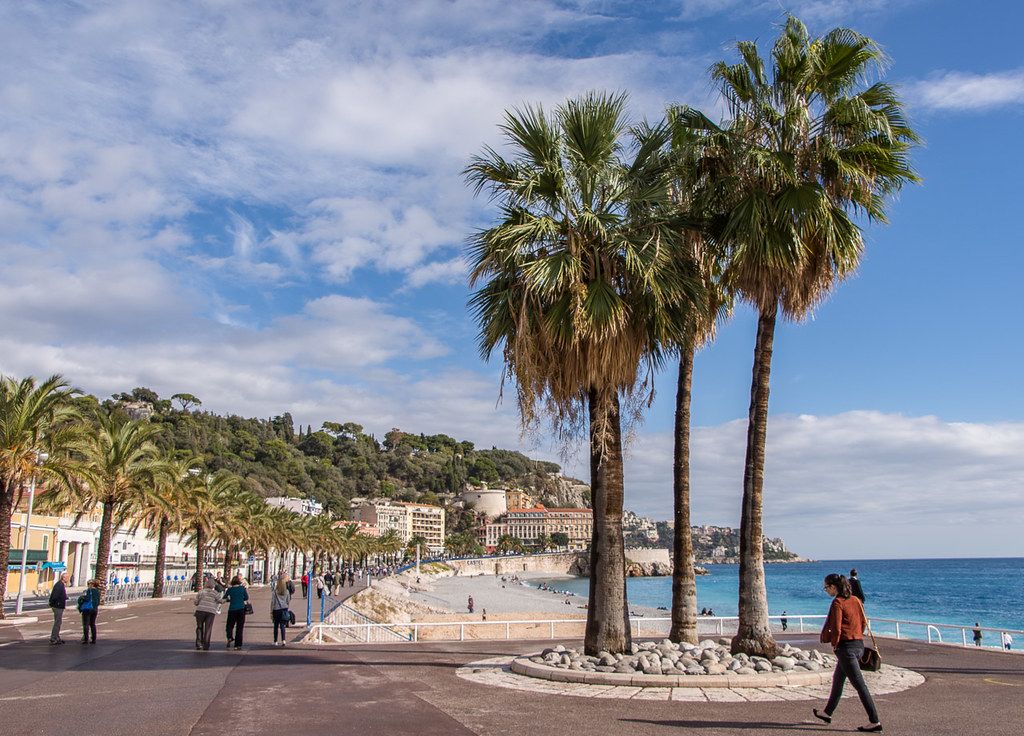
 
Nice beach

France plans to ban short-haul flights where a 2.5 hour train journey could be provided as an alternative. Both environmentalists and industry experts say it’s not enough. Too many train journeys are under 2.5 hours and the highest emissions come from long-haul flights. 

Working Together 
What may feel challenging or impossible on our own becomes doable when we band together. 

Transition Streets, a Transition Network program, brings neighbours together to implement simple household changes building community and addressing environmental issues. The 7-session handbook “empowers neighbors to improve household energy efficiency, reduce waste and water use, explore transportation options, and eat healthy, local food.” 

A network of cities, regions, and countries, have pledged to work towards producing everything they consume by 2054 as part of the Fab City Global Initiative. Canadian participants include Montreal and Bas-St.-Laurent. Local projects explore small batch design and production, open source data and technology, and novel materials, processes, and applications. 
“Addressing the regional environmental contamination and global ecological footprints associated with modern urbanisation is a historic challenge. On the positive side, it is in cities that dynamic, new ideas are often generated. In the face of the planetary emergency that is upon us, the challenge is to utilise this creativity to rethink cities as regenerative, environmentally beneficial systems, linking the wellbeing of individual urban citizens with humanity’s collective interest in the health of our home planet. Only by mainstreaming renewable energy resources and by protecting and continuously regenerating the ecosystems and soils from which they draw their sustenance can cities become a viable, long-term home for humanity.” [A New Age, Herbert Girardet, in a special issue of Resurgence & Ecologist dedicated to cities]
Untitled

EcoFriendly Sask supports Saskatchewan environmental initiatives through an online publication, an events calendar, small grants, and the Nature Companion website/app. You can follow EcoFriendly Sask by liking us on Facebook, following us on Twitter, or subscribing by email (top right corner).

Thursday, 5 March 2020

Clean Energy with Hydrogen?

cloud at sunset

The Tokyo Summer Olympics have been designed to showcase hydrogen as part of a clean energy future. The Olympic flame will be powered by hydrogen and 100 hydrogen-fuelled buses as well as 500 cars with hydrogen fuel cells will service the event.

In Europe, 13 countries and 31 regions have joined the European Hydrogen Valleys Partnership to support the development of fuel cell hydrogen projects. China has been rapidly increasing production of hydrogen fuel cell vehicles and has started introducing hydrogen-powered buses. Japan has started using hydrogen fuel cells as a residential energy source.

As countries around the world explore opportunities to exploit hydrogen as a clean energy carrier, let’s take a look at what is involved.

Grey, Green, and Blue
Hydrogen is relatively cheap and easy to produce in a number of different ways. At the moment, the majority is produced from natural gas, which generates significant carbon emissions. This is known as grey hydrogen as it continues to rely on fossil fuels.

Blue hydrogen is considered cleaner as it employs carbon capture to store or reuse the CO2 emissions. However, carbon capture has had mixed results to date and is technically unproven on a large scale.

The cleanest of all, although by far the least common, is green hydrogen, which is produced from renewable energy sources such as wind and solar.

Heavy Industry
Hydrogen is currently being used on-site by industry, particularly for the production of the ammonia in nitrogen fertilizer and in oil refining where it’s added to heavier oil for transport fuel production.

Expanded use of hydrogen by fertilizer and petrochemical industries could help develop a business case for further development of hydrogen’s role in producing green energy. “In the highly cost-focused heavy industry, the requirement is thus for a cheap power source with a high capacity factor – typically baseload production at or below spot market prices. This could come from hydro power plants” or offshore wind.

clouds

Transportation
There has been some experience with hydrogen fuel cells for powering cars and larger vehicles. “A fuel cell is an electrochemical power generation device that combines hydrogen fuel, with oxygen from air, to produce electricity, with water and heat as the only by-products.”

British Columbia is a world leader in hydrogen fuel cell technology. The province currently has 2 fuelling stations with plans for 4 more by the end of 2020.

Various projects are underway in Europe, including hydrogen boats, buses, tractors, and bicycles. Communities are experimenting with hybrid buses combining hydrogen fuel cells and batteries/capacitors. “All the energy required for the bus to operate is provided by hydrogen stored on board. Hydrogen offers higher energy density compared to electrical storage systems such as batteries, this enables a longer range compared to systems where the batteries are used as stores of energy.”

Long-Term Plans
In the short term, British Columbia plans to take advantage of the province’s natural gas industry to produce blue hydrogen. “The longer-term goal is to use B.C.’s abundant water and electricity to produce ‘green hydrogen’ through electrolysis for export, mainly to Asia, where the biggest market is.”

Japan has plans to ship hydrogen produced from brown coal via carbon capture in Australia to Japan where they hope to develop a nation-wide network of filling stations. “Get it right and hydrogen offers a way to fully decarbonise Japan’s transport sector, using fuel from a reliable strategic ally, while providing the automotive industry with a fresh source of competitive advantage over international rivals. The only problem is that this visionary infrastructure does not yet exist.”

clouds

The Benefits and Disadvantages of Hydrogen Energy
Energy from hydrogen has the potential to improve air quality and increase energy security. Using hydrogen to store large quantities of electricity from wind and solar appears promising and could address concerns about peaks and lows in renewable energy production. Hydrogen could also help to decarbonize sectors such as heavy industry, long-haul transport, chemicals, iron, and steel, which have found it difficult to reduce carbon emissions.

There are, however, a number of disadvantages to using hydrogen in green energy production.

Green hydrogen produced through electrolysis from excess electricity has the potential to be an effective way of storing excess electricity. However, this isn’t feasible until there is sufficient renewable energy to make a green hydrogen plant cost-effective.

Although hydrogen pipeline systems are already in place in some regions, that is not the case world-wide and changes to the current infrastructure could be expensive. Hydrogen’s low density increases transportation costs and experience with hydrogen refuelling stations has been mixed with serious incidents at stations in Norway, South Korea, and California.

Hydrogen cannot always compete with other energy sources on the basis of energy efficiency. “For example, hydrogen boilers for residential heating and hydrogen fuel cell cars are considerably less energy efficient than their electricity based competitors such as heat pumps and electric vehicles.”

Hydrogen has limited applicability in combustion technologies. Many see hydrogen as an intermediary in Power-to-X type of technologies where the hydrogen is further synthesized to generate carbon-neutral synthetic methane, which can be used as a direct replacement for fossil natural gas.

See Also
Geothermal Energy in Saskatchewan
Energy-Saving Options in Europe
The Transition to Renewable Energy in Saskatchewan
The Future of Renewable Energy in Indigenous and Remote Communities
Renewable Energy Success Stories from Indigenous and Remote Communities in Alaska
Wind Energy in Saskatchewan: Opportunities and Challenges
First Nations Power Authority
Saskatoon Solar Power Co-operative

Sunday, 3 March 2019

Alternatives: Energy Saving Options in Europe


It’s easy to imagine that homes in Europe operate in much the same way as homes in Canada, but that’s not the case.* From locking the door to three-pronged plugs, there are different ways of doing things. This certainly applies to energy saving options.

Heating the House
Winters are obviously warmer in Europe than on the Canadian Prairies, but many of the tactics used by Europeans to save energy when heating their homes could apply in Canada.

Many homeowners program their heating system to come on for a couple of hours in the morning and a couple of hours in the evening. They don’t heat their homes during the day when they are active or out of the house or at night. You can override the thermostat settings, but that requires thought and action as opposed to programming the heat to be on all the time automatically.

Some households supplement their household heating system with a wood stove. This is a mixed blessing, especially in cities, as wood stoves can be a major source of indoor and outdoor air pollution. There are ways of tackling this with more efficient stoves and improved fuel sources. 

Smaller homes or apartments that use electric heat sometimes save energy with a night storage heater. It looks very much like a normal radiator but operates differently. The electricity comes on for several hours during the night when electricity is much cheaper (about a third of the price) and is stored as heat in a large brick. The heat is then slowly released during the day. You can turn the heat up or down, but when the stored heat is used up, no more will be available until the following day.

Heat loss is kept to a minimum by hanging a heavy curtain in front of outside doors or closing the shutters on the windows at night. The shutters play a double role as they are closed in the summer to keep homes cool during the heat of the day.


Laundry 
Very few homes in Europe have a clothes drier and, if they do have one, they use it sparingly. Clothes are hung to dry on a clothes horse or outdoor clothesline or draped over radiators and stairwell banisters.

Some households only run the washing machine or dishwasher at night in order to take advantage of cheaper electricity rates.


Hot Water 
Many European homes have an immediate hot water supply – but not all. In some homes, you have to switch the hot water on before you have a shower or wash dishes, and you may have to wait a significant length of time before there is sufficient hot water to take a bath. It’s not as convenient as you have to plan in advance, but you save energy by not continually reheating the water stored in the tank.


Phantom Energy 
Many modern electronic devices draw energy even when they’re not in use – televisions, computers, chargers for telephones and tablets. You can avoid phantom energy by unplugging devices when not in use or by using a power bar which can be turned on and off. The British have an additional option as most socket outlets have a switch to turn power on or off at the source. They don’t always take advantage of this option, but it’s certainly more convenient than a power bar.


Lighting 
Lights in many apartment building hallways in Europe aren’t on 24/7. Instead, you turn them on when you enter a hallway or stairwell and they go off automatically a few seconds later, saving money as well as energy.

* Penny McKinlay has been housesitting in the United Kingdom and France for several months every winter for the past 5 years and has learned to adapt to different ways of operating a home.

Wednesday, 8 November 2017

EcoSask Extra, November 8-12, 2017

Canada goose

It’s a challenge to stay on top of all the upcoming events across Saskatchewan. Here are a few that we missed yesterday - but don’t want you to miss this week!

Yellowhead Flyway Birding Trail, Nov. 8 (Saltcoats)
Yellowhead Flyway Birding Trail is holding a general meeting tonight, Nov. 8, at 7 pm, in the Stirling Room, Saltcoats.

Environmental Planning in Human-Dominated Landscapes, Nov. 10 (Regina) 
Dr. Jeremy Pittman, University of Waterloo, will discuss Environmental Planning and Policy for Connectivity in Human-Dominated Landscapes from 2:30-3:30 pm, Nov. 10, at the University of Regina.

Green Drinks Saskatoon, Nov. 10 (Saskatoon) 
Green Drinks Saskatoon is meeting at 5:30 pm, Nov. 10, at Cathedral Social Hall.

Passive House Tours, Nov. 10-12 (Saskatoon) 
Join The Green Builder on a tour of 3 passive houses in Saskatoon and area:
Temperance Street Passive House 
1104 Temperance Street Saskatoon
Friday Nov 10 / 7 pm - 9 pm
Saturday Nov 11 / 10 am - 3 pm
Sunday Nov 12 / Noon - 4 pm
Grasswood Estates Passive House 
28 Grasswood Estates, Corman Park
Sunday Nov 12 / Noon - 3 pm
Lancaster Passive House
1107 Lancaster Blvd, Saskatoon
Saturday Nov 11 / 10 am - 3 pm
Sunday Nov 12 / Noon - 3 pm

Wildlife Rehab Orientation, Nov. 12 (Saskatoon) 
Find out more about volunteering with the Wildlife Rehabilitation Society of Saskatchewan from 12-1:30 pm, Nov. 12, in Saskatoon.

A full list of upcoming events can be found on the EcoFriendly Sask Calendar

In the News 
And, because there are always interesting news stories, here are a few that caught our attention in the last 24 hours.

"It’s easy to dismiss grasslands as unimportant when you only see them as wastelands of grass that stand between you and the mountains or forests you really want to see. It’s harder to dismiss them once you’ve gotten to know them a little better."

Toronto Council votes to make the Bloor Street bike lanes permanent.

How long do you expect/hope your washing machine or refrigerator will last? The United Nations reports on measures that could extend product lifetimes and reduce waste.


A European organization that advocates an end to planned obsolescence is running a campaign protesting the extremely short life of pantyhose.

You can follow EcoFriendly Sask by liking us on Facebook, following us on Twitter, or by email (top right corner).