Showing posts with label Apps. Show all posts

Tuesday, 24 August 2021

EcoSask News, August 24, 2021

Franklin's Gull

Upcoming Events 
City of Moose Jaw residents can dispose of household hazardous waste from 9 am-3 pm, Aug. 28. 

SOS Trees is holding its annual general meeting at 7 pm, Aug. 30, outdoors in Saskatoon. 

Looking Ahead 
Register to help the Nature Conservancy of Canada remove old fencing, a barrier and hazard for wildlife, from their Asquith property from 9:30 am-3:30 pm, Sept. 11. 

SaskOutdoors is offering a canoe certification course in Regina on Sept. 18-19. 

Full event details are available on the EcoFriendly Sask Calendar
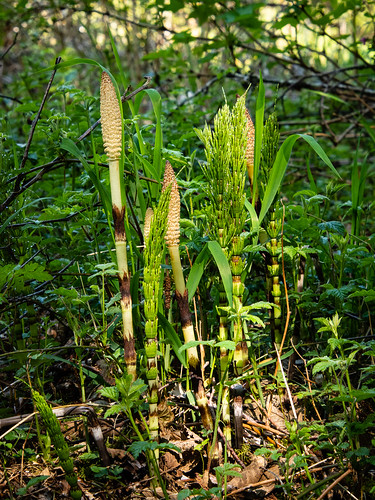
 
Northern giant horsetail (?)

Horsetail is one of the oldest plants on earth, reproducing by spore rather than seed. It can be found in or near wetland areas such as marshes, rivers, and streams throughout North America. [Nature Companion] 

Wetlands 
This could be the worst drought year ever in Saskatchewan, and wetland drainage has exacerbated the situation. “We have tax incentives for farmers to get as much land into production as possible, we need to put incentives in there to make it worthwhile financially for farmers to retain those wetlands,” says John Pomeroy, U of S hydrologist. [CKOM] 

One of our readers thought she had observed a decline in the number of Franklin’s Gulls. We did a little research and she’s quite correct. Franklin’s Gulls have declined by 95% in the United States between 1968 and 2015. A major factor has been the loss of wetlands where the gulls nest. [All About Birds] 

Climate Action 
Whether they are Canadian or US politicians, playing nice with the fossil fuel industry is climate denial. “It’s not that politicians in powerful countries have done nothing in the past two decades. The problem, rather, is that where they’ve done anything at all, it has tended to be the wrong thing, emphasizing subtle market tweaks and shiny new technologies instead of the core work of decarbonization: getting off fossil fuels as quickly as possible.” [The New Republic] 

The Canadian Standards Association (CSA) Sustainable Forest Management Standard “leaves it up to the logging companies to self-identify that their activities are sustainable. The result is akin to having the fox guard the henhouse”. [Ecojustice] 

How to Think About the Climate Crisis by Graham Parkes looks at how the way we think can either choke off climate solutions or lead us out of philosophical dead ends. There is a focus on Chinese ways of thinking such as feng shui and animism because “We can’t resolve the climate crisis without Chinese cooperation – and that requires a more open attitude to, and better acquaintance with, their ideas about politics.” [book review, The Earthbound Report] 

Appreciating Nature 
Meet 10 racialized female and non-binary trailblazers who are transforming our sense of who belongs in the natural world. They say nature is for everyone and are trying to make it more accessible. [The Narwhal] 

With their fancy colours, elaborate sex lives, and strong parenting instincts, there’s a lot we don’t know or appreciate about mosquitoes. [Smithsonian Magazine] 

Outdoor Education 
We published a list of nature and environmental educational programs for young people last year. There may be some changes, but it should still provide a solid starting point. 

Earlier this year, we did some digging on the internet and came up with some nature apps we think look great for families with kids. 
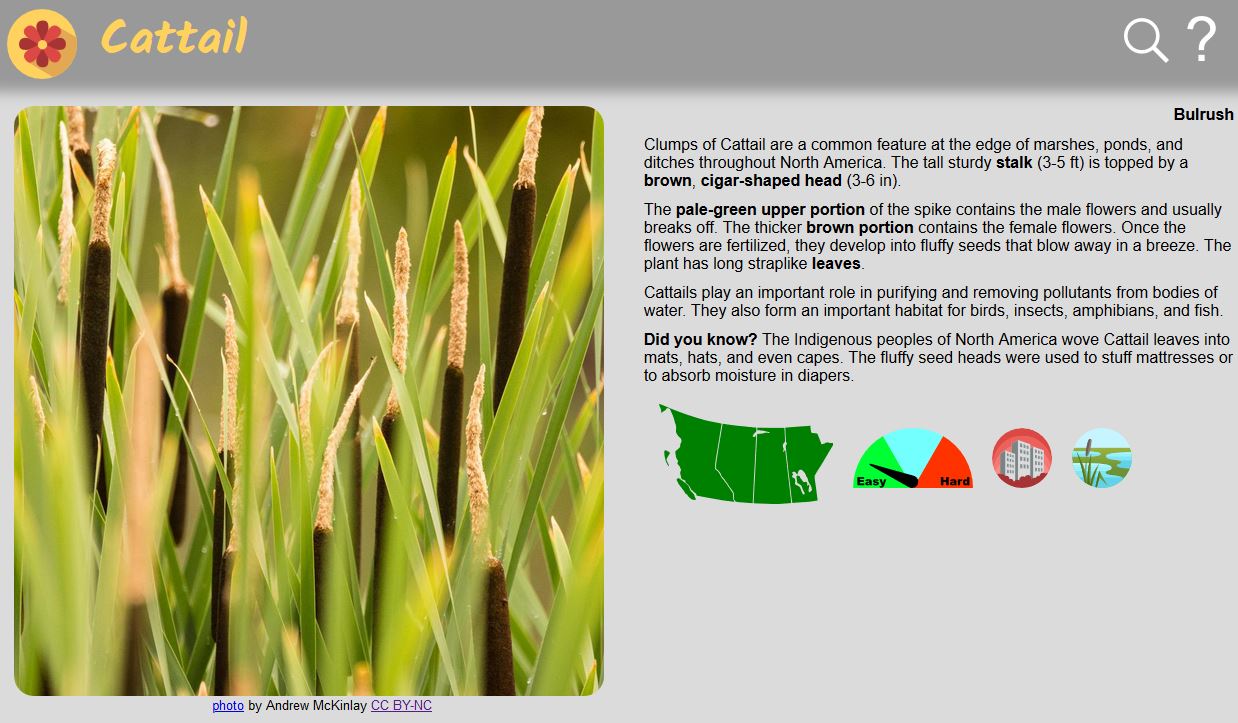

Cattails play an important role in purifying and removing pollutants from bodies of water. They also form an important habitat for birds, insects, amphibians, and fish. [Nature Companion] 

EcoFriendly Sask supports Saskatchewan environmental initiatives through an online publication, an events calendar, small grants, and the Nature Companion website/app. You can follow EcoFriendly Sask by liking us on Facebook, following us on Twitter, or subscribing by email (top right corner).

Thursday, 6 May 2021

Nature Apps for Kids

birds

We did some digging on the internet and came up with some nature apps that we think look great for families with kids. This is by no means a comprehensive list but will hopefully serve as a good starting point. 

Nature Identification Apps 
iNaturalist is a great place to share your observations of nature. If you can’t work out what something is, there’s sure to be someone on iNaturalist who will be able to help you. You can also participate in various projects, pooling your observations with those of others (e.g. City Nature Challenge). (free, android and iOS) 

Seek was developed by iNaturalist and uses image recognition software to help you identify plants and animals. Point your camera at a living thing and Seek will tell you what it is. (free, android and iOS) 

Three other apps that use image recognition software are Leafsnap (free, android and iOS), Plantsnap ($ and free, android and iOS), and Picture Insect (free, android and iOS). 

Many animals are shy and hard to spot, but with iTrack Wildlife you may be able to identify them by their tracks. iTrack Basic includes the tracks of 40 common mammals, while iTrack Pro includes over 800 track photographs. ($, android and iOS) 

Audubon Owls Guide, an interactive guide to North America’s 19 owl species, offers descriptions, range maps, and audio vocalizations to help you identify the owls in your neighbourhood. (free, iOS) 

Audubon offers a wide variety of other nature apps, including Mammals, Birds, Wildflowers, Mushrooms, and Reptiles. 

With Sky Guide/Sky Map, you can point your phone at the sky and identify stars, constellations, and satellites. Sky Guide is highly recommended for iOS ($), while Sky Map may be a better android option (free).
 
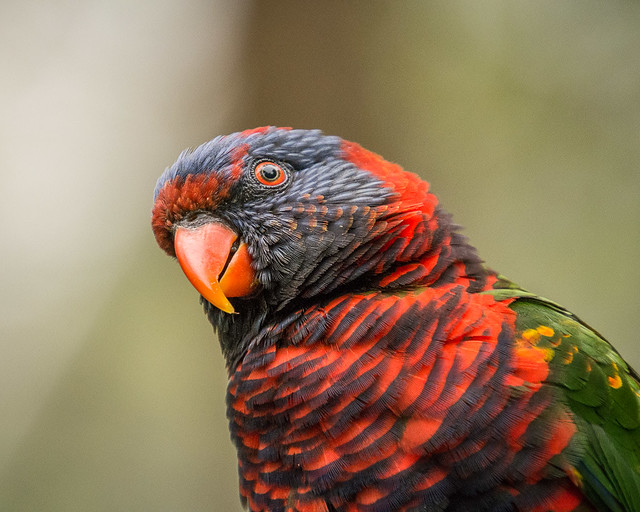
lorikeet

Nature Stories & Games 
Find the Birds brings bird watching to the screen. Visit Arizona to discover its birds. Complete conservation quests to improve the birds’ habitats, and collect information cards with photos, videos, and sounds. The next geographic region to be added to the game will be British Columbia. (free, iOS and android) 

Animals for Kids is a fun way for 1-4 year olds to learn the names and sounds of different animals. Bonus - you can learn the animals’ names in 7 different languages. ($, android and iOS) 

Care for our World, an animated story book, incorporates an animal encyclopedia, colouring pages, and a game. You can also place animals in custom habitats. ($, iOS) 

WWF Together lets you interact with endangered animals to find out how they live. You can try out “tiger vision,” flap your wings like a butterfly, and chop the panda’s bamboo. (free, iOS) 

What is your family's favorite nature app? Have you found a good app for identifying Canadian trees? Let us know and we'll add them to the list.


Nature Companion 
Last, but definitely not least, we encourage everyone to download EcoFriendly Sask’s Nature Companion, which introduces over 300 of the trees, plants, insects, reptiles, animals, and birds found in Manitoba, Saskatchewan, Alberta, and British Columbia. Nature Companion provides short, easy-to-understand descriptions and colourful photographs along with a Did you know? section with interesting, unexpected details about each species. 

We think it’s an amazing resource for children, tourists, newcomers, and curious observers who are eager to learn more about the world around them. It’s free (and ad-free) and can be downloaded directly from the Nature Companion website Help page. 

Nature Companion has “been a great teaching tool for my inquisitive kid who always asks me 1000 questions including what kind of bird or tree he's looking at...it’s nice to have that info accessible and easy to find. K. gives this app a big thumbs-up as does his mom who now knows which yellow bird is always in our yard (yellow warbler!)” [Nicole] 

See Also 
Outdoor Explorations in Saskatchewan

EcoFriendly Sask supports Saskatchewan environmental initiatives through an online publication, an events calendar, small grants, and the Nature Companion website/app. You can follow EcoFriendly Sask by liking us on Facebook, following us on Twitter, or by email (top right corner).

Sunday, 12 July 2020

Introducing Nature Companion: An Entry-Level Nature App for Canada's Four Western Provinces


“Be an explorer of your own streams and oceans . . . . It’s not what you look at that matters, it’s what you see.” Henry David Thoreau 

You’re walking in a park or by a river and you spot a small frog, an orange butterfly, a bird pecking on a tree, or a shrub with red berries. What is it? Is the animal you spotted from a distance a coyote or a cougar? What is the tall yellow flower growing beside the road?

Four years ago, Andrew McKinlay was hiking in Big Bend National Park in Texas and was frustrated. He was seeing all sorts of interesting plants, insects, trees, and other wildlife but was struggling to identify them. “What I need is one app that lists the most common plants, trees, animals, insects, reptiles, and birds that I’ll find in a particular area,” he said. “There are lots of specific bird, flower, or insect guides, but nothing together in one convenient package that I can download on my phone for easy access.”

 And so began a new EcoFriendly Sask project. Developed for curious observers, people who are interested in nature, the Nature Companion website/app will help you identify plants and animals in your community or as you travel in Canada’s four western provinces. In just one app, you’ll find basic information about over 300 common plants, trees, birds, animals, insects, reptiles, and amphibians.


Scroll through the colourful photographs and short descriptions to find out more about nature in your community and enjoy the unexpected details in the Did you know? section at the end of each description.

Nature Companion is free (no ads or sign up). It can be accessed either on or off line and can be installed on your phone or tablet.

Whether you’re travelling in another province, an expert on birds but not on reptiles, young or old, or a newcomer to Canada, we hope you will find Nature Companion a useful guide as you explore the natural world.

If you know someone - or many someones - who might be interested in Nature Companion, please share it with them.

A huge vote of thanks to our early reviewers who provided so many helpful suggestions that we've done our best to incorporate into Nature Companion. Please email us your feedback - we'd love to hear from you.

PS Check the Help (the ? at the top right) for assistance in installing the app. The initial download may be slow, but the app should be faster after that.


"The lasting pleasures of contact with the natural world are not reserved for scientists but are available to anyone who will place themselves under the influence of earth, sea and sky and their amazing life." Rachel Carson

Tuesday, 31 December 2019

New Year's Eve Special 2019

Turkey vulture

Greetings! We’ve got apps, comic strips, Instagram accounts, graphic novels, and even a game to help you welcome in a green new year.

A new generation of naturalists & environmental activists:
BirdGirl is a 17-year-old birder and environmentalist who wants to remove the barriers from visual minority ethnic (VME) people getting into nature.

Diary of a Young Naturalist chronicles 15-year-old Dara McAnulty’s world in Northern Ireland.


@glacier996girl introduces climate change to a younger audience.

Next Generation Naturalists is a Kamloops group for 17-22 year olds, facilitated by the Kamloops Naturalist Club.

Comic strips, graphic novels, games, & Instagram:
Consider the vulture: a comic strip that gently reminds us that we will all return to the earth someday.


Follow the story of two ecologists studying quail in the Sierra Nevada in a short art game.

@colinfranksphotography takes photos of birds in Victoria, BC.

@everydayclimatechange, photographers on six continents, document climate change.

Rain, a graphic novel by Mary and Bryan Talbot, is both a love story and a flood story: “ a desperate appeal on behalf of our land, our lives and the lives of our “non-human fellow earthlings.”


There’s an app for that:
Eevie is an eco habit tracker, designed to help you improve your carbon impact by making small changes every day.

Lens is designed to help us explore our surroundings - from identifying plants and animals to scanning and translating text or seeing what’s popular on menus.

They may be shy and retiring, but they still leave tracks in the snow. Find out their identity with iTrack Wildlife.


Help identify plants as part of a citizen science project with Pl@ntNet.

“The only lost cause is the one we give up on before we enter the struggle.” – Vaclav Havel

You can follow EcoFriendly Sask by liking us on Facebook, following us on Twitter, or by email (top right corner). A full list of upcoming events can be found on the EcoFriendly Sask Calendar